 Anacortes Siding
 Windows in Ship Harbor Face a Different Set of Problems
Ship Harbor sits close enough to the water that its homes deal with a combination most inland Skagit County houses never see: salt-laden air moving off the harbor, wind-driven rain that hits window walls sideways instead of straight down, and a long, damp shoulder season that keeps north- and west-facing trim wet for weeks at a time. None of that is dramatic on its own, but stacked together over years it is exactly the kind of exposure that finds every weak point in a window installation — the flashing details, the sealant joints, the frame material itself.
A window that performs fine in a drier part of the state can still fail here within a decade if it wasn't installed with this specific exposure in mind. This page walks through what that means in practice: what the climate actually does to windows in this neighborhood, what a correct installation looks like, and how we approach the job when we're working a Ship Harbor property.
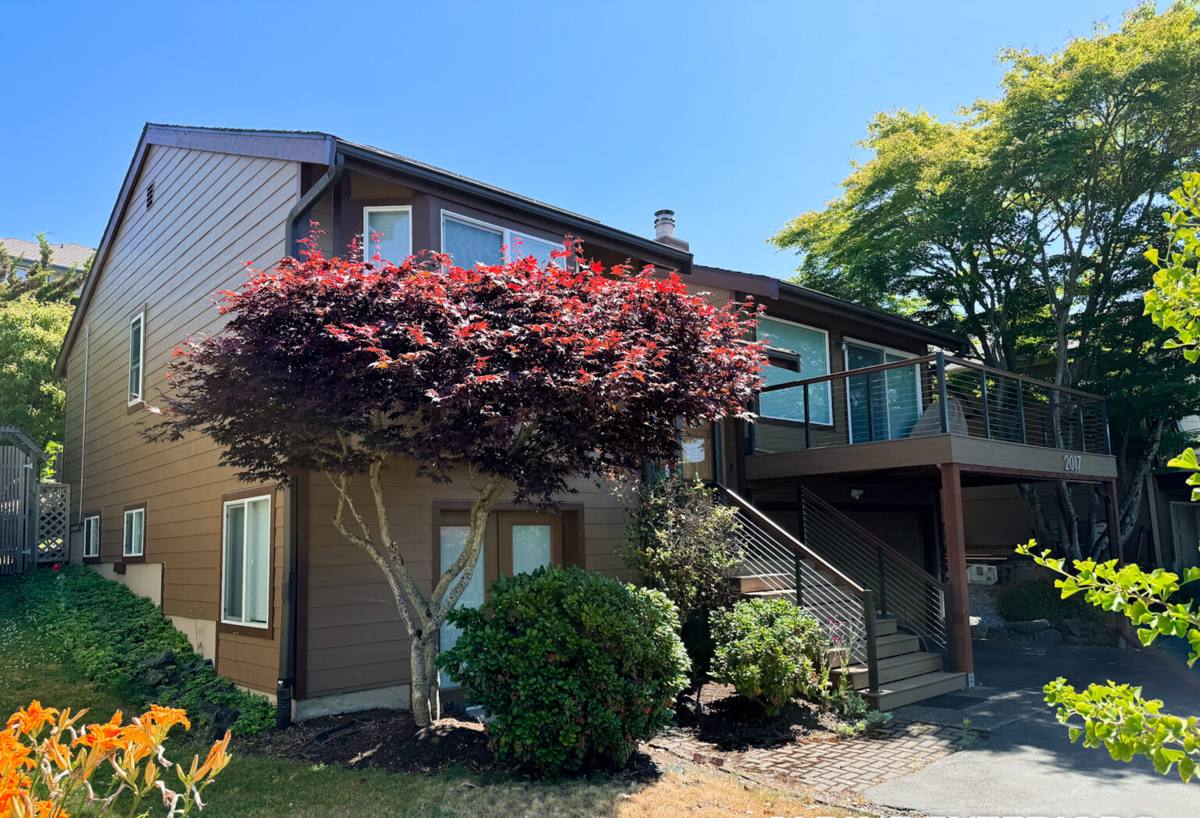
What Salt Air, Driving Rain, and Moss Season Actually Do
Salt Air and Corrosion
Airborne salt settles on everything near the water, including window hardware, screen frames, and exposed fasteners. Over time it accelerates corrosion on lower-grade metal components — hinges, cranks, and cheap screws are usually the first things to show it. It also has a way of finding its way into any gap in a poorly sealed frame, where it can slowly break down finishes and caulking faster than plain rainwater would.
Wind-Driven Rain
Anacortes gets plenty of straightforward rainfall, but the harbor-facing exposure in Ship Harbor adds wind that pushes rain sideways and upward against the building envelope. That matters because a lot of window flashing is designed with the assumption that water runs down and off — a reasonable assumption almost everywhere except where wind pressure can drive water up and under a poorly lapped flashing detail. This is the single biggest reason we see water intrusion around windows that otherwise look fine from the outside.
Moss and Prolonged Moisture
Skagit County's long wet season means shaded or north-facing wall sections can stay damp for extended stretches, and moss and algae take hold on trim, sills, and siding around windows that don't get much sun or airflow. Moss itself doesn't damage a window, but it holds moisture against wood trim and cheaper composite sills, which is a slow path to rot if the original installation didn't include proper drainage and a moisture barrier behind the trim.
What a Correct Window Installation Involves Here
None of this means Ship Harbor needs exotic windows — it means the installation details have to be right, every time, because there's less margin for error than in a drier location. The parts that matter most in this environment:
- A continuous, properly lapped weather-resistive barrier integrated with the window flange — not just caulk at the edges
- Sill pan flashing that sheds any water that does get past the window to the outside of the wall, not into the framing
- Head flashing installed so it laps over the housewrap above it, so wind-driven rain can't be pushed up and behind
- Corrosion-resistant fasteners and hardware suited to a marine-influenced environment, not standard interior-grade parts
- Sealant compatible with both the window frame material and the exterior finish, applied in the right joints and left out of the ones that need to drain
Skip any one of these and the window can still look correctly installed for years before a problem shows up as a soft spot in the sill, a stain on interior drywall below the window, or a musty smell that only appears after a hard rain.
Choosing a Frame Material for a Marine-Influenced Site
Frame material matters more in Ship Harbor than it would a few miles inland. Here's how the common options hold up against salt air, rain exposure, and long-term maintenance:
| Frame Material | Salt Air / Corrosion Resistance | Maintenance | Notes for This Location |
|---|---|---|---|
| Vinyl | Good — won't corrode or rust | Low; occasional cleaning | Solid all-around choice; verify hardware and reinforcement quality |
| Fiberglass | Very good — stable and inert | Low | Handles temperature and moisture swings well; higher upfront cost |
| Wood or Wood-Clad | Depends entirely on cladding and finish upkeep | Higher — finish and joints need attention | Can work but demands more ongoing maintenance in this exposure |
| Aluminum | Weaker unless marine-grade coated | Moderate | We steer clients away from standard aluminum here due to corrosion risk near the water |
Our default recommendation for harbor-facing walls in this neighborhood is vinyl or fiberglass with quality hardware, simply because it removes corrosion and finish maintenance from the list of things a homeowner has to stay on top of. Wood-clad windows aren't wrong for this location, but we're upfront that they come with a maintenance commitment that vinyl and fiberglass don't.
Our Installation Process for Ship Harbor Homes
- On-site assessment. We look at each window's exposure individually — a window on a sheltered south wall doesn't need the same attention as one facing the harbor directly.
- Remove and inspect. Old windows come out carefully so we can check the framing, sill, and sheathing underneath for hidden rot or past water intrusion before anything new goes in.
- Repair before replace. Any soft framing, damaged sheathing, or failed prior flashing gets fixed first. Installing a new window over a compromised opening just hides the problem.
- Flashing and drainage plane. Sill pan, jamb, and head flashing get installed in the correct shingle-lap order and tied into the existing weather barrier.
- Set and shim the window. The unit is leveled, squared, and shimmed to manufacturer spec so the frame isn't under stress that can crack seals over time.
- Seal and insulate. Low-expansion foam or backer rod and sealant around the frame — never packed solid in a way that can bow the frame.
- Exterior trim and finish. Trim is reinstalled or replaced with attention to drainage gaps so water and moss-holding moisture don't get trapped against it.
- Final check. Operation, locking hardware, and weatherstripping are tested before we consider the job done.
Signs a Ship Harbor Home May Need New Windows
Because problems here tend to develop slowly, homeowners often live with early warning signs for a while before calling anyone. Worth checking for:
- Visible fogging or a permanent haze between panes of double- or triple-glazed units
- Soft or spongy wood at the sill or exterior trim, especially on harbor-facing or shaded walls
- Persistent moss or dark staining on trim directly around a window that doesn't clear up between dry spells
- Difficulty opening, closing, or locking that wasn't there a year or two ago
- A draft you can feel at the frame edge on a windy day, even with the window fully closed
- A musty smell near a window that's noticeably stronger right after heavy rain
- Corroded or seized hardware — cranks, hinges, or locks that have gone stiff or rusty
Any one of these is worth a look. Several at once, especially on the same wall, usually points to a flashing or sealing problem rather than just an aging window.
What Drives Cost
Every Ship Harbor project is priced on the specifics of the home, but the same handful of factors move the number most:
| Factor | Why It Matters |
|---|---|
| Number and size of window openings | Directly scales material and labor |
| Frame material chosen | Vinyl, fiberglass, and wood-clad carry different unit costs |
| Condition of existing framing | Hidden rot or past water damage adds repair time before install |
| Exposure and access | Harbor-facing or upper-story windows can require more careful flashing work and staging |
| Trim and finish scope | Full trim replacement costs more than reusing sound existing trim |
We won't quote a job sight unseen for exactly this reason — a window opening that looks straightforward can turn out to have hidden rot behind the trim, and one that looks worse can turn out fine once we open it up. An honest number comes from actually looking at the openings first.
Why a Crew That Already Works Ship Harbor Makes a Difference
Window installation isn't unique to this neighborhood — the products and basic techniques are the same ones used anywhere in Skagit County. What changes is how much margin for error the environment allows. A crew that mainly works drier inland areas can install a technically correct window that still fails here in a few years, simply because the flashing and sealing details that matter most in a wind-driven, salt-air environment weren't the priority they should have been. Working this specific stretch of Anacortes regularly means we already know which walls take the worst of the weather, which materials hold up, and which shortcuts show up as callbacks two winters later. That's not a marketing point — it's the difference between a window that lasts and one that doesn't.
Maintenance After Installation
A correctly installed window in this location still benefits from basic upkeep. Rinse salt film off frames and hardware periodically, especially after storms. Keep weep holes and drainage gaps clear of debris and moss so water can actually exit the system it was designed to drain through. Check exterior caulking annually for cracking, since sealant is a wear item in this climate even when everything behind it was done correctly. None of this is heavy maintenance — it's the kind of five-minute check that keeps a properly installed window performing for its full service life instead of quietly failing behind good-looking trim.
If you're dealing with drafts, fogged glass, soft trim, or just windows old enough that you're wondering whether they're still doing their job, we're happy to take a look. Reach out for a free, no-pressure estimate — we'll assess your specific exposure and give you a straight answer on what your home actually needs, using the form below.