 Anacortes Siding
 Why Cap Sante Homes Are Harder on Windows Than Most
Cap Sante sits close to the water, with homes catching wind and spray off Rosario Strait and Guemes Channel almost year-round. That combination of salt air, driving rain, and near-constant marine moisture is a lot harder on window assemblies than what a house ten miles inland in Skagit County deals with. Salt-laden air accelerates corrosion on hardware and fasteners, wind-driven rain finds any weakness in flashing or sealant, and the long gray moss season here means anything shaded or slow to dry stays wet longer than it should.
None of that means Cap Sante homes need exotic solutions. It means the details that get skipped on an easy inland install — proper flashing laps, correct sealant chemistry, hardware rated for coastal exposure — cannot get skipped here. A window that's "good enough" somewhere drier will show its weaknesses within a few winters on this side of Anacortes.
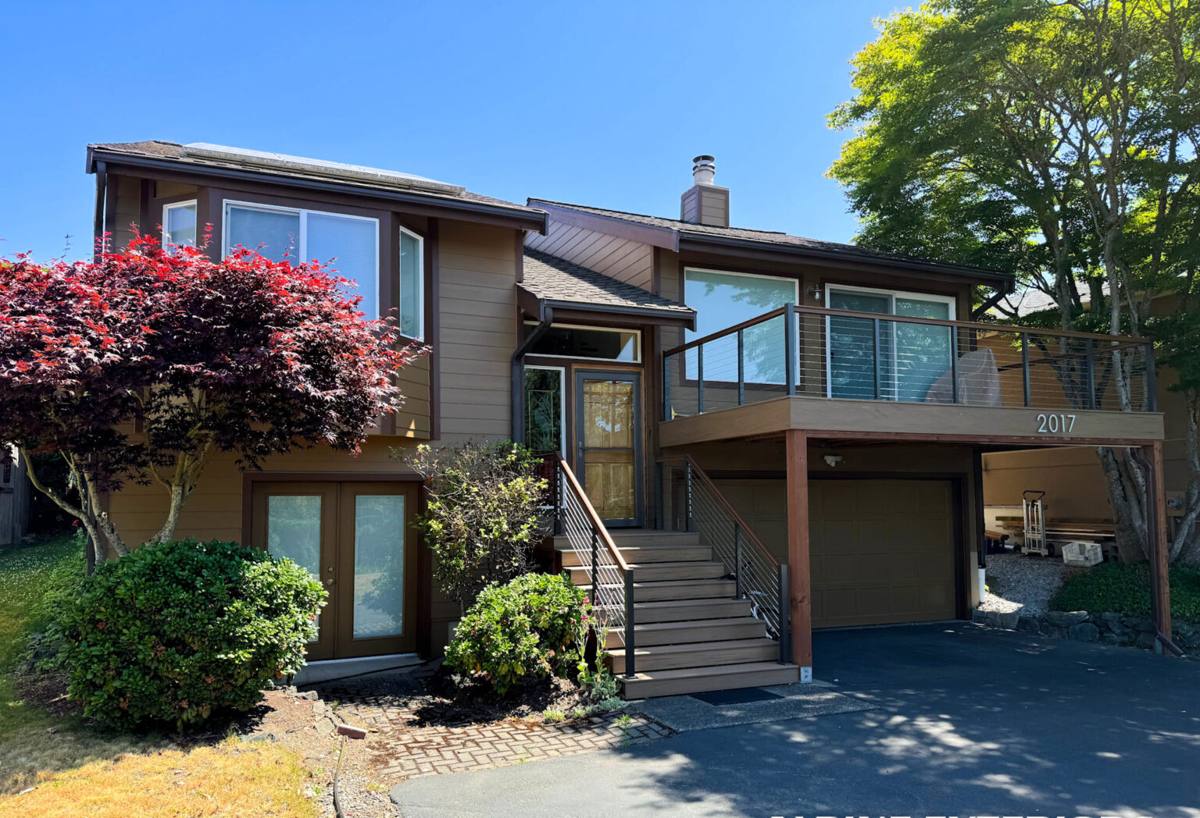
Signs a Cap Sante Home Needs Window Replacement, Not Just Repair
Not every problem window needs full replacement. But in a marine climate, certain signs point past the point where caulk and weatherstripping will hold the line.
- Fogging or a permanent haze between panes — the seal on the insulated glass unit has failed and moisture is trapped for good
- Soft or discolored wood at the sill or lower corners, a sign moisture has been getting behind the trim, not just sitting on the surface
- Corroded or seized hardware — cranks, locks, or hinges that no longer move smoothly, common on salt-exposed elevations
- Visible daylight or a draft you can feel at the frame edge when wind is blowing off the water
- Persistent moss or dark streaking on the sill or casing that keeps returning even after cleaning
- Windows original to a home built more than 20-25 years ago, especially on the sides that face prevailing weather
If you're only seeing one or two of these on a single window, a targeted repair or reseal may still make sense. When several show up across multiple windows, or on the water-facing side of the house, replacement is usually the more honest recommendation — patching a failing seal doesn't fix wood that's already started to soften underneath.
What Salt Air Does Specifically
Airborne salt is corrosive to unprotected or lower-grade metal components — screws, cranks, cladding fasteners — well before most homeowners notice a problem with the glass itself. It also degrades some sealants faster than a standard inland exposure would, which is why sealant choice and application matter more here than the product spec sheet alone suggests.
What a Correct Window Replacement Job Involves
Tear-Out and Moisture Inspection
Every old window comes out slowly enough to actually look at what's behind it. In a coastal-exposed home like the ones around Cap Sante, this step matters more than it does elsewhere — hidden rot at the sill or king studs is common when a window has been leaking slowly for years without visible interior staining. We flag anything soft or discolored before a new window ever goes in, because sealing a new unit over compromised framing just buys a few quiet years before the same problem resurfaces, worse.
Flashing and Weatherproofing
This is the part that separates a durable coastal install from one that fails early. Proper flashing integration — building paper or house wrap lapped correctly over the flange, sill pan flashing to direct any incidental water back out, and sealant placed only where it's supposed to be (not as a substitute for correct flashing sequence) — is what actually keeps wind-driven rain out during a real Skagit County winter storm off the water.
Product Selection for the Exposure
We match the window to the wall it's going into. A protected interior courtyard window doesn't need the same hardware grade as a window taking direct spray off the water on an exposed elevation. We'll tell you plainly where you can save money with a standard-grade unit and where it's worth spending more for corrosion-resistant hardware or a more weather-tolerant frame material.
Frame Material and Glass Comparison for Coastal Exposure
| Option | Coastal Durability | Maintenance | Notes for Cap Sante Homes |
|---|---|---|---|
| Vinyl | Good — won't corrode or rot | Low | Solid value option; check hardware grade on water-facing sides |
| Fiberglass | Very good — dimensionally stable, resists moisture and salt | Low | Strong pick for the most exposed elevations; higher upfront cost |
| Aluminum-clad wood | Good exterior protection, interior warmth of wood | Moderate | Needs correct cladding seams and flashing to avoid moisture intrusion behind the clad shell |
| Bare wood | Weakest in direct salt/moisture exposure without diligent upkeep | High | We generally steer exposed elevations away from this unless upkeep is a firm commitment |
| Dual-pane low-E glass | Standard performance baseline | Low | Reasonable default for most rooms |
| Triple-pane / upgraded low-E | Better thermal and sound performance | Low | Worth it on wind-exposed sides or rooms facing traffic/noise near the marina area |
We don't push bare wood on fully exposed, water-facing walls as a first recommendation — not because wood windows are a bad product, but because keeping painted or finished wood ahead of salt air and constant moisture takes upkeep most homeowners underestimate. If you want the wood look, aluminum-clad or a quality vinyl with a wood-look interior finish gets you most of the appearance with far less maintenance burden.
Our Process From Estimate to Final Walkthrough
- On-site assessment — we look at each window's exposure, current condition, and any signs of hidden moisture before recommending anything
- Honest scope and estimate — which windows need replacement now, which can wait, and why, with pricing that reflects your home's actual exposure
- Product selection — matched to the wall, not a one-size answer across the whole house
- Careful tear-out — old units removed without damaging surrounding siding or trim more than necessary
- Framing and moisture check — any soft wood or prior water damage addressed before the new window goes in
- Installation with correct flashing sequence — sill pan, house wrap integration, and sealant placed to actually shed water, not just look sealed
- Interior and exterior finish work — trim, caulking, and touch-up so the job looks finished, not patched
- Final walkthrough — operation checked on every window before we consider the job done
Cost Factors Specific to This Kind of Job
| Factor | Why It Moves the Price |
|---|---|
| Number and size of windows | The most direct driver of total project cost |
| Frame material chosen | Fiberglass and clad-wood run higher than standard vinyl |
| Exposure level of each elevation | Water-facing walls may warrant upgraded hardware or flashing detail |
| Condition of existing framing | Hidden rot found during tear-out adds repair scope before the new window can go in |
| Glass package | Standard dual-pane low-E versus upgraded triple-pane or acoustic glass |
| Trim and siding tie-in | Matching existing trim profiles or repairing surrounding siding adds labor |
Because every home's exposure and existing condition is different, we'd rather walk your specific windows than quote a number sight unseen. General ranges without seeing the actual openings tend to be more misleading than helpful.
Why It Matters That We Already Work This Area
A crew that's done window replacement across Anacortes and the rest of Skagit County knows what a Cap Sante-facing wall does to a window versus a sheltered lot a few streets back. That's not marketing — it changes real decisions on the job: which sealant holds up to this specific salt and rain exposure, how much flashing overlap is actually enough in a storm blowing straight off the water, and which hardware grade is worth the upgrade versus which is overkill. A crew unfamiliar with this specific microclimate is more likely to apply a generic inland approach that looks fine at installation and starts failing in year three or four.
We also know the practical side: how weather windows work here for scheduling exterior work, and what to expect in terms of drying time between steps during the wetter months. None of that is complicated, but it's the kind of local knowledge that only comes from doing this work in this specific area repeatedly.
Permits and Timing
Straight window replacements — same size opening, same location — typically don't require the same level of permitting as a structural change or a window being resized or relocated. We handle the determination and any required permit paperwork as part of the process, so you're not left guessing what the City of Anacortes requires for your specific project. Timing-wise, we plan around weather rather than fighting it — a dry stretch matters more for a clean install than any particular calendar month.
Get a Free, No-Pressure Estimate
If your Cap Sante-area home has windows showing wear from years of salt air and coastal weather, we're happy to take a look and give you a straight assessment — no pressure, no upsell on windows that don't need replacing yet. Use the form below to request a free estimate.