 Anacortes Siding
 Bow is a small, spread-out community in Skagit County, sitting close enough to Samish Bay that salt-laden air is just part of daily weather here, not an occasional event. Combine that with wind-driven rain and the long moss season that much of this part of the county deals with for a good chunk of the year, and siding on a Bow home is working harder than siding on a similar house somewhere inland or more sheltered. When that siding starts to fail — a soft board here, a gapped seam there, a stain that won't wash off — the repair needs to actually address what caused it, not just cover it up. That's the job we focus on in this piece: siding repair, specifically for homes in Bow.
What Bow's Climate Does to a Wall System
Salt air off the bay accelerates corrosion in fasteners, flashing, and any exposed metal trim on a house, and it travels further inland than most homeowners expect, especially during winter storms. Driving rain — rain pushed sideways by wind instead of falling straight down — finds every weak seam, loose panel edge, or under-caulked joint that would go unnoticed in calmer weather. And moss doesn't stay on the roof; it colonizes shaded, north-facing, and tree-adjacent siding too, holding moisture against the surface long after a storm has passed. None of that means siding in Bow is doomed to fail early. It means the margin for a sloppy install or a deferred repair is thinner here than it is in a drier, more sheltered part of Skagit County.
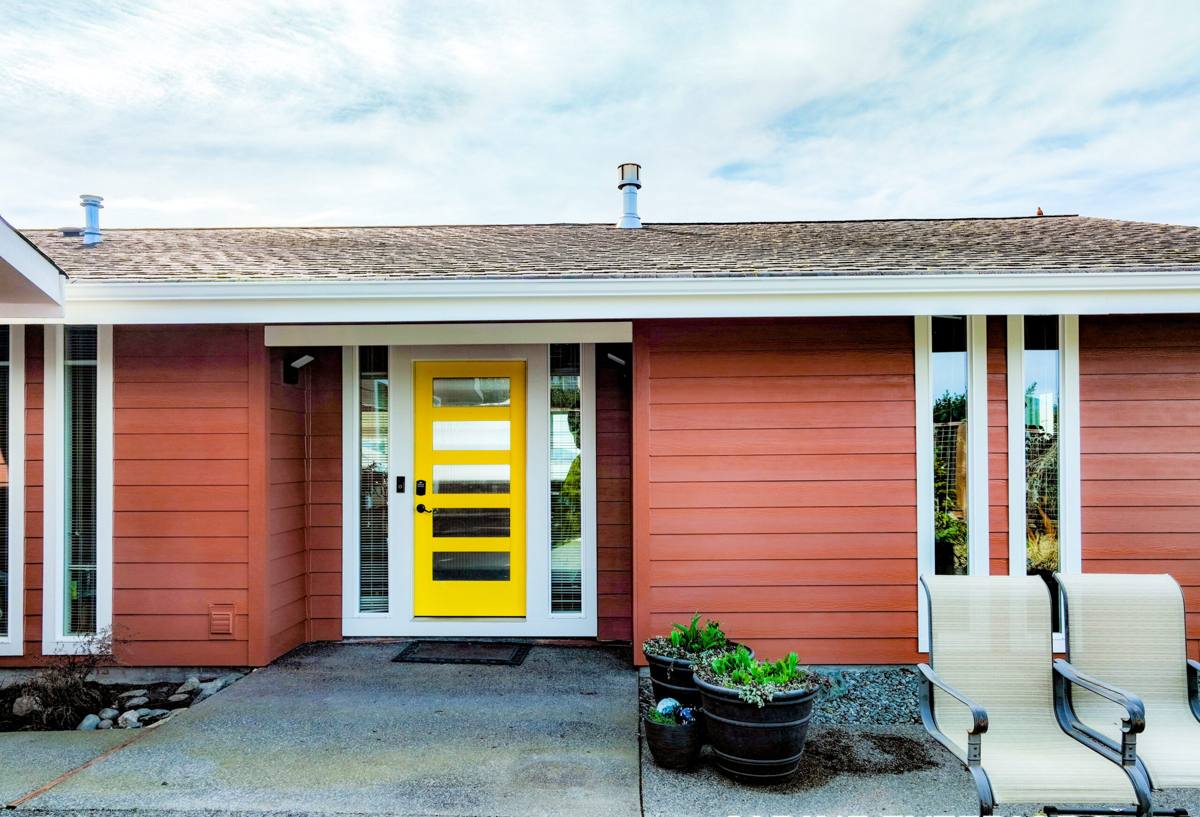
Signs a Bow Home Needs Siding Repair
Most siding problems don't announce themselves as a dramatic failure. They show up as small, easy-to-dismiss details that add up over a season or two of exposure.
- Soft or spongy spots when you press on a board, especially near the bottom courses or around window and door trim
- Visible gaps, cracks, or separated seams where panels or boards meet
- Persistent staining, dark streaking, or moss growth that keeps coming back after cleaning
- Paint or finish that's peeling, bubbling, or wearing unevenly in specific spots rather than across the whole wall
- Rust bleeding from fasteners or trim, a sign the metal is corroding faster than it should
- A musty smell or visible discoloration on interior walls that back up to an exterior wall showing damage
Any one of these on its own might be minor. Several showing up in the same area, or damage that keeps returning after a homeowner patches it themselves, usually points to a moisture problem behind the siding rather than just a cosmetic issue on the surface.
What's Usually Behind the Damage
In our experience working this corner of Skagit County, siding repair calls tend to trace back to a handful of root causes rather than the siding material simply wearing out on its own.
Failed or Missing Flashing
Flashing around windows, doors, and roof-to-wall transitions is what keeps water from getting behind the siding in the first place. When it's missing, undersized, or was never properly integrated with the weather-resistant barrier, wind-driven rain finds its way in — and by the time it shows up as visible siding damage, there's often already moisture in the wall assembly behind it.
Caulk and Sealant Breakdown
Caulking has a service life, and in a climate with this much sustained wet-dry cycling, it breaks down faster than manufacturers' general estimates assume. Once a seam opens up, it stops being a cosmetic issue and starts being a water entry point.
Material Not Suited to the Exposure
Wood-based products — cedar, primed spruce, engineered wood siding — depend on an intact finish and consistent maintenance to keep moisture out of an organic core. Vinyl depends on the barrier behind it staying sound and can become brittle with age under sun and salt exposure. When either of those maintenance schedules slips, even by a season, damage accelerates quickly in a climate like Bow's.
Original Installation Shortcuts
Not every siding problem is a maintenance issue. Sometimes it's a detail that was never right to begin with — a missing kick-out flashing, panels installed too close to grade, fasteners driven in a way that leaves a wicking path for water. A repair that just replaces the damaged board without correcting the underlying detail is likely to fail again in the same spot.
What a Correct Siding Repair Actually Involves
A repair that's done right starts with figuring out why the damage happened, not just where it is. That means pulling back enough siding to check the condition of the sheathing and weather-resistant barrier underneath, not just swapping the board that looks bad.
Matching Materials, Not Just Colors
On homes already sided in James Hardie fiber cement, repairs mean matching the existing profile and, where possible, the ColorPlus factory finish so the patched section doesn't stand out as an obvious repair. Because that finish is baked on at the factory rather than applied on site, matching an older, sun-faded run of siding sometimes means field-painting the repaired section to blend rather than assuming a brand-new plank will look identical — we'll tell you honestly which situation you're in before starting.
Correcting the Cause, Not Just the Symptom
If the damage traces back to a flashing gap, a caulking failure, or an installation detail that was never right, we fix that as part of the repair. Replacing a rotted board without addressing why it rotted just buys a homeowner a year or two before the same spot fails again.
Being Honest When a Patch Isn't the Right Call
Sometimes what looks like a localized repair turns out to be more widespread once we open the wall up — moisture that's traveled along a stud bay, or a section of sheathing that's compromised beyond a simple patch. When that happens, we tell you what we actually found and lay out real options, rather than doing a cosmetic fix on a problem that's bigger underneath.
Repair or Replace? How We Help You Decide
Not every siding problem calls for a full re-side, and not every problem is fixable with a patch. The table below covers the general factors we weigh — every property is different, so this is a starting point for the conversation, not a substitute for an on-site look.
| Factor | Repair Usually Makes Sense | Replacement Usually Makes Sense |
|---|---|---|
| Extent of damage | Isolated to one or two areas | Recurring across multiple walls or elevations |
| Underlying material | James Hardie or otherwise sound fiber cement | Original material is failing broadly (aging vinyl, deteriorated wood-based product) |
| Cause of damage | A specific, correctable flashing or sealant issue | Systemic installation problems across the exterior |
| Age of existing siding | Relatively recent, otherwise performing well | Nearing or past its practical service life |
| Sheathing condition | Sound once opened up and inspected | Compromised or showing rot beyond the immediate repair area |
When a home's siding is aging, wood-based, or vinyl and showing damage in more than one spot, we'll often walk through what a full transition to James Hardie fiber cement would look like — not because every repair call needs to turn into a replacement sale, but because a homeowner deserves to know when patching the same material is likely to be a recurring expense.
Our Siding Repair Process
- On-site assessment. We look at the damage itself along with the surrounding area — trim, flashing, grade clearance, and anything that points to a cause rather than just a symptom.
- Opening it up where needed. If there's any indication of moisture behind the siding, we check the sheathing and barrier before quoting a fix, so the estimate reflects what's actually there.
- A straight explanation of what we found. You'll hear what caused the damage, what a proper repair involves, and whether repair or a larger scope makes more sense for your situation.
- The repair itself. Matching material and finish where possible, correcting the underlying cause, and reinstalling with attention to the flashing and sealant details that keep it from happening again.
- A final check. Before we leave, we walk the repair with you so you know exactly what was done and why.
Why a Crew That Already Works in Bow Matters
Bow isn't a dense subdivision with uniform houses — it's a mix of rural properties, farmhouses, and homes with real exposure to open water and wind, each sitting a little differently relative to the weather. A crew that regularly works this stretch of Skagit County has a feel for which walls take the worst of it, which details tend to fail first in this specific climate, and which fixes are cosmetic versus which ones actually last. That's harder to get from a contractor who only occasionally works this far from a home base, and it's the difference between a repair that holds and one you're calling about again next winter.
What Siding Repair Typically Costs
Costs vary enough by scope and cause that we won't quote a number without seeing the damage, but the factors below are the ones that move the price most.
| Factor | How It Affects Cost |
|---|---|
| Size of the affected area | A single board is far less than a full wall section |
| Whether sheathing is damaged | Repairs limited to the siding cost less than ones requiring structural repair underneath |
| Material matching | Matching an older ColorPlus finish or a discontinued profile can add time and cost |
| Accessibility | Second-story or hard-to-reach areas take longer and require additional equipment |
| Root-cause correction | Fixing flashing or sealant issues alongside the visible damage adds labor but prevents repeat failures |
Small, isolated repairs on an otherwise sound wall are often a modest expense — a few hundred dollars covers plenty of straightforward jobs. Repairs that involve sheathing damage, multiple areas, or extensive flashing correction run into the low thousands. We'll give you a firm number after we've actually seen the damage, not a phone estimate based on a description.
A Quick Checklist Before You Call Anyone
- Note where the damage is and whether it's in one spot or showing up in more than one area
- Check for any interior signs — staining, musty odor, soft drywall — on the wall behind the damaged siding
- Ask any contractor you're considering whether they'll open the wall to check for underlying moisture, not just patch the visible board
- Confirm the contractor is licensed, bonded, and insured to do exterior work in Washington State
- Get a clear answer on whether the fix addresses the cause of the damage or just replaces the damaged material
If siding on your Bow home is showing damage — or you just want a second opinion before deciding whether it's a repair or something bigger — we're happy to come take a look. The estimate is free, there's no pressure either way, and you'll get a straight answer about what we actually find.