 Anacortes Siding
 Window Installation in Bow: Built for Skagit County's Coastal Weather
Bow is a quieter, more spread-out stretch of Skagit County, and homes here tend to sit more exposed than a house tucked into a denser neighborhood — fewer surrounding rooflines to break the wind, more open ground for weather to build over before it reaches the walls. Windows take the brunt of that exposure more than almost any other part of a house, because they're where the building envelope has the most seams, the most moving hardware, and the most chances for water to find a way in if the installation wasn't done right the first time. This page is about one job specifically: installing and replacing windows correctly on Bow-area homes, not a general overview of everything we do.
We install and replace windows throughout Anacortes and the surrounding Skagit County area, and on every Bow job the flashing and installation detail gets treated as at least as important as the window unit itself. A premium window with sloppy flashing behind it will eventually leak in this climate. A solid, correctly installed window — with flashing that actually ties into the surrounding wall and siding — will usually outlast it.
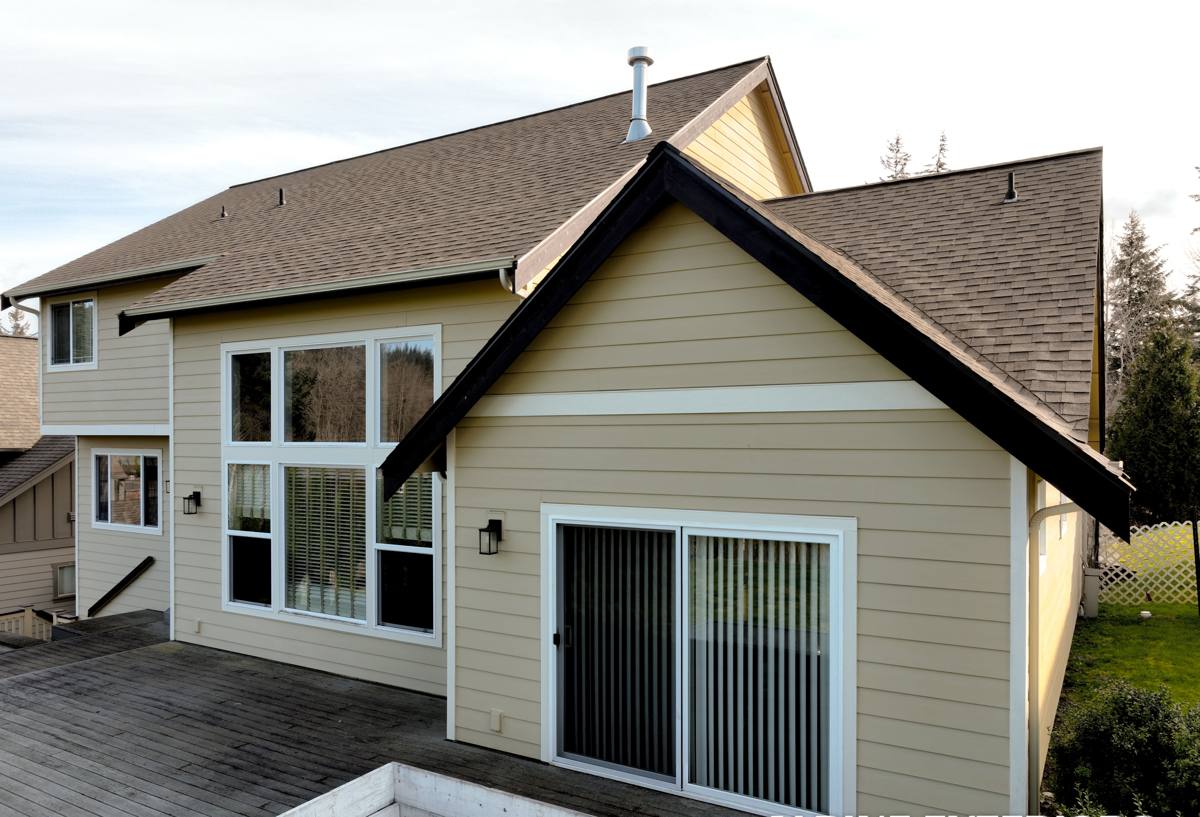
What Bow's Climate Does to Windows Over Time
Salt Air and Hardware Corrosion
Bow sits close enough to Samish Bay that salt-laden air works its way into window hardware, fasteners, and lower-grade frame components well before it would in a drier inland town. Budget hinges, locks, and screws that would hold up fine somewhere sheltered tend to show pitting, stiffness, or corrosion noticeably sooner out here.
Driving Rain and Wind-Pushed Water
Storms coming off the water don't always fall straight down — wind pushes rain sideways into wall assemblies, and that matters for windows because wind-driven rain reaches gaps and seams that would stay dry in calmer weather. The window unit is only half the defense; flashing that laps correctly and ties into the wall around it is what actually keeps that water out of the framing.
A Long Moss and Moisture Season
Mild temperatures combined with near-constant moisture from fall through spring give moss and mildew a long growing season across this part of Skagit County, and window sills, trim, and the framing around older units are common places it takes hold. Shaded elevations and windows tucked under eaves with poor drainage tend to show it first.
Signs a Bow Home Needs Window Attention
Some of these show up gradually enough that homeowners get used to them before realizing they're actually signs of a failing installation, not just an old house being an old house.
- Fogging or visible moisture trapped between the panes of a double-pane window
- Noticeable drafts or cold spots near the frame even when the window is fully closed and locked
- Sills or trim that feel soft, look discolored, or show visible rot
- Windows that stick, won't stay open, or are hard to lock the way they used to
- Visible daylight or gaps where the frame meets the siding
- Paint or finish peeling faster on window trim than on the rest of the exterior
Full-Frame vs. Insert Replacement: Which Fits Your Bow Home
Not every window job is the same kind of job. An insert (or "pocket") replacement fits a new window into the existing frame, leaving the old frame, trim, and exterior siding largely undisturbed. A full-frame replacement removes the window down to the rough opening, including the old frame, so the flashing and weather barrier can be rebuilt from scratch. Which one makes sense depends on the condition of what's already there, not just cost.
| Factor | Insert Replacement | Full-Frame Replacement |
|---|---|---|
| What it involves | New window fits inside the existing frame | Old frame removed down to the rough opening |
| Best for | Sound existing frame with no rot or flashing failure | Rotted framing, past water damage, or a frame size change |
| Access to flashing | Limited — existing flashing largely stays in place | Full access to rebuild flashing and the weather barrier |
| Exterior trim impact | Minimal disruption to surrounding siding and trim | Siding and trim around the opening are disturbed and rebuilt |
| Typical cost | Generally lower | Generally higher, reflecting the added labor |
| Long-term risk if frame is compromised | Hides rather than fixes hidden rot or flashing problems | Addresses the underlying issue directly |
On a lot of Bow jobs, an insert replacement is the honest, cost-effective answer — the existing frame is sound and the flashing behind it has held up. But if we find soft wood, past staining, or flashing that was never lapped correctly to begin with, we'll say so and recommend full-frame instead, even though it costs more. Covering up a wet frame with a new window on top of it just delays the problem and usually makes it more expensive to fix later.
What a Correct Window Installation Involves
Measuring and Ordering
We field-measure every opening rather than working off old plans or a rough guess, and we check for out-of-square or out-of-level conditions that are common on older Bow-area homes. That measurement, along with the replacement type you need, sets a realistic lead time before you commit to anything — window orders for this region can run several weeks depending on size and configuration.
Removal and Opening Prep
The old unit comes out carefully, and this is usually the first point where hidden problems show up — soft framing, old flashing that was never properly lapped, or trim that's been absorbing water longer than it looked from outside. We address what we find before the new window goes in rather than installing over it.
Flashing and Weatherproofing
This is the step that determines whether the installation actually lasts in a climate like Bow's. Correct flashing means the sill pan, side flashing, and head flashing all lap in the right order and tie properly into the weather-resistive barrier and siding around the opening, so water is directed out and away from the rough opening instead of trapped behind it. Every seam gets sealed with materials rated for sustained moisture exposure. That's standard practice on every window we install — not an upgrade you have to ask for.
Insulation and Air Sealing
The gap between a new window frame and the rough opening needs to be insulated and air-sealed correctly, not just stuffed with whatever's on hand. Done wrong, it's a source of drafts and a path for condensation to form inside the wall where nobody sees it until there's a problem.
Trim and Finish
Exterior trim gets integrated to match the rest of the house, and interior trim gets reset cleanly once the window is set, shimmed, and sealed. A window that performs well but looks like an afterthought from the street isn't a finished job.
Choosing Windows for a Marine Climate
We install vinyl and fiberglass window systems suited to western Washington's wet, mild conditions, and we'll walk through the real trade-offs for your home rather than pushing one brand as the only right answer. What matters most for a Bow property is a tight, well-built frame, a glazing package that handles both energy performance and condensation resistance, and hardware rated to hold up under sustained marine air — not a name printed on the frame.
- Frame material: Vinyl and fiberglass both resist rot in a way uncladded wood frames don't, which matters given how much moisture this part of Skagit County sees through the year
- Glazing package: Double or triple-pane options with low-E coatings help with both energy performance and interior condensation during cold, damp stretches
- Hardware grade: Corrosion-resistant hardware holds up longer against salt-influenced air than standard-grade hardware
- Warranty structure: A manufacturer warranty only covers the product — we stand behind the installation work separately, since that's usually where a failure actually starts
| Factor | Why It Matters |
|---|---|
| Number of windows | A whole-house or multi-window project has better per-unit economics than a single replacement |
| Frame material | Vinyl, fiberglass, and wood-clad units differ in upfront cost and long-term maintenance |
| Glass package | Triple-pane and specialty low-E coatings cost more than a standard double-pane package |
| Replacement type | Full-frame replacement takes more labor and materials than an insert replacement |
| Opening condition | Rot, old flashing failures, or out-of-square framing add repair work before the new window goes in |
| Access and height | Second-story or hard-to-reach openings take more time and equipment than ground-floor windows |
Why a Local Bow-Area Crew Matters
Manufacturer installation guides are written for average, sheltered conditions, and Bow's exposure to salt air and wind-driven rain off the water doesn't match that description. A crew that works this stretch of Skagit County regularly already knows how that weather behaves compared to a drier, more sheltered market, and that shows up in decisions that never make it into a sales conversation — how much lap a flashing course actually needs here, whether caulk gets treated as a real seal or just a backup, which hardware grade gets specified for a given exposure. Those are the details that decide whether a window installation is still performing cleanly in fifteen years or showing drafts and soft trim in five.
It also means fewer surprises during the job itself — realistic scheduling around the wetter months, an accurate read on lead times for ordering, and a crew that isn't guessing at how this climate treats a window opening for the first time on your house.
Our Process, Start to Finish
- On-site assessment — we check frame condition, seal integrity, hardware function, and how the existing flashing ties into the siding around each opening
- Honest recommendation — insert or full-frame replacement, explained with the reasoning, along with a written scope before any work begins
- Ordering and lead time — a realistic timeline for your windows to arrive, since it's rarely a same-week job
- Removal and opening prep — the old unit comes out carefully, and any hidden framing or flashing issues get addressed before the new window goes in
- Installation and flashing — the new unit is set, shimmed, insulated, and flashed as standard practice, not an optional upgrade
- Trim and finish — exterior trim is integrated to match the rest of the house, and interior trim is reset cleanly
If you're dealing with drafty, foggy, or stubborn windows on a Bow-area property — or you're planning a full-house replacement and just want an honest read on what it involves — we're happy to take a look. We offer free, no-pressure estimates for window installation work in Bow and the surrounding Anacortes area; use the form below to get a time on the schedule.