 Anacortes Siding
 Asphalt Shingle Roofing for Burlington Homes
Burlington sits in the Skagit Valley, close enough to the water that marine air, driving rain, and heavy valley humidity shape almost everything about how a roof performs here. Asphalt shingles are still the most common roofing material on homes in Burlington and across Skagit County, and for good reason — they're durable, cost-effective, and available in a range of styles that suit everything from older neighborhood homes to newer builds. But an asphalt shingle roof only holds up to our climate if it's installed correctly the first time. A roof that would perform fine in a drier part of the state can fail early here if the underlayment, flashing, or ventilation details are shortcut.
This page covers what an asphalt shingle roof needs to hold up in Burlington specifically, what our installation process looks like, and what to weigh when you're comparing shingle options or contractors.
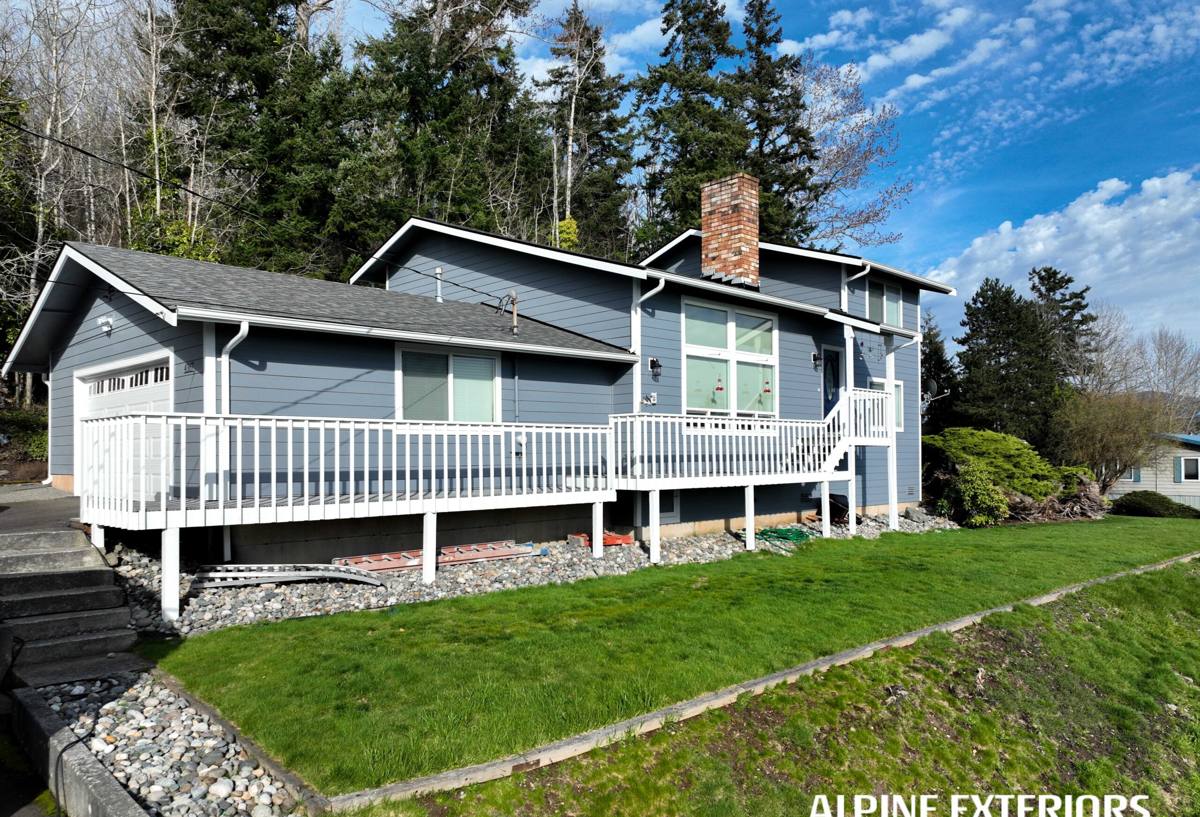
Why Asphalt Shingles Take a Beating in This Climate
Burlington doesn't get hit with hurricanes, but it gets something arguably harder on a roof: months of steady, low-intensity rain combined with wind that drives moisture sideways into seams, laps, and flashing. Add in the salt-tinged air that moves inland off Puget Sound and the Salish Sea, and you've got conditions that accelerate wear on fasteners, flashing metal, and shingle granules faster than a purely dry, sunny climate would.
Then there's moss. Skagit County's combination of shade, moisture, and mild temperatures creates a moss season that can run most of the year on north-facing slopes and shaded roof sections. Moss isn't just cosmetic — it holds water against the shingle surface, works its way under tabs and edges, and can lift shingles enough to let water underneath. Left unaddressed for a few seasons, moss growth alone can shorten a shingle roof's usable life significantly.
Finally, the valley sees real temperature swings between summer and winter, plus periods of dense fog and condensation. That kind of freeze-thaw and wet-dry cycling stresses shingles, nails, and flashing seams over time — especially if any of those components weren't installed to spec in the first place.
What This Means in Practice
A roof built for Burlington needs to handle sustained moisture exposure, resist wind-driven rain at every seam, and be detailed to shed water fast rather than let it linger. That's a different set of priorities than a roof built for a hot, dry inland climate, even though the shingle itself might look identical on the shelf.
What a Correctly Installed Shingle Roof Needs Here
Most shingle roof failures we see in this area aren't caused by bad shingles — they're caused by installation shortcuts that don't show up until years later. A correct job in Burlington's climate includes a few non-negotiable details.
Ice and Water Shield Where It Actually Matters
Self-adhering waterproof underlayment belongs at eaves, valleys, and around every roof penetration — chimneys, skylights, pipe boots, and any wall-to-roof transition. These are the spots where wind-driven rain and standing meltwater are most likely to find a gap. Skipping this step, or using it only where code minimums require it, leaves the most vulnerable parts of the roof under-protected.
Flashing Details That Get Skipped on a Rushed Job
Step flashing at sidewalls, counter-flashing at chimneys, and properly lapped valley metal are where most leaks actually originate — not in the open field of shingles. Flashing has to be installed in the correct sequence with the underlayment and shingles, not just caulked into place after the fact. Caulk is a maintenance item, not a substitute for correctly lapped metal.
Nailing and Fastening to Manufacturer Spec
Wind-driven rain events aren't rare here, and a shingle roof's wind resistance depends entirely on correct nail placement, nail count, and fastener type. Under-nailing or nailing too high on the shingle is one of the most common ways a roof loses shingles in a storm — and it also voids most manufacturer warranties, whether the homeowner knows it or not.
Balanced Attic Ventilation
Intake at the eaves and exhaust at the ridge need to work together to move moist air out of the attic. In a humid valley climate, a poorly ventilated attic traps condensation that can rot decking from underneath — a problem that has nothing to do with the shingles themselves but will still show up as a "roof failure."
Choosing the Right Shingle for a Burlington Home
Asphalt shingles come in a few performance tiers, and the right choice depends on your roof's exposure, your budget, and how long you want to go before your next re-roof. Here's how the common options compare for a home in this climate:
| Shingle Type | Typical Lifespan | Wind Rating | Moss/Algae Resistance | Best For |
|---|---|---|---|---|
| 3-tab | 15–20 years | Lower | Standard, unless upgraded | Budget re-roofs, secondary structures |
| Architectural / dimensional | 25–30 years | Higher | Often available with algae-resistant granules | Most Burlington homes |
| Premium / designer | 30+ years | Highest | Algae-resistant standard | Steep or highly visible roofs, longer hold periods |
For most homes in Burlington, we point people toward architectural shingles with algae-resistant granules as the practical middle ground — better wind performance and moss/algae resistance than 3-tab, without the premium price of a designer product. That said, the right answer depends on your roof's pitch, shading, and how long you plan to own the home, and we'll talk through the honest trade-offs during your estimate rather than upselling by default.
Ventilation and Moss: The Long-Term Maintenance Picture
Even a well-installed shingle roof needs a plan for moss over its lifespan in this climate. Moss thrives on shaded, north-facing slopes and anywhere organic debris — needles, leaves, seed pods — collects and holds moisture against the shingle surface. Algae-resistant shingles (the ones with copper- or zinc-infused granules) slow algae staining and help resist moss colonization, but they don't eliminate the need for periodic upkeep.
What actually protects a roof over time is a combination of: keeping gutters and valleys clear of debris, trimming back overhanging branches that keep a section of roof shaded and damp, and having moss treated or gently removed before it works its way under shingle tabs — never pressure-washed, which strips granules and shortens shingle life. We'll flag any moss or ventilation issues we see during an inspection, whether or not they're part of the job you called us for.
Our Asphalt Shingle Roofing Process
- Inspection and estimate. We look at your existing roof, attic ventilation, and any problem areas — not just the shingle surface — and give you a written estimate with the reasoning behind it.
- Tear-off and deck inspection. Old shingles come off down to the deck, which we inspect for soft spots, rot, or damage that needs to be repaired before anything new goes on. Roofing over a compromised deck just hides the problem.
- Underlayment and flashing. Ice and water shield goes down at eaves, valleys, and penetrations; synthetic underlayment covers the rest of the field; flashing is installed in correct sequence at every wall, chimney, and vent.
- Shingle installation. Shingles are installed to the manufacturer's nailing pattern and exposure spec, not just "close enough" — this is what protects your wind warranty and keeps the roof performing as designed.
- Ventilation check. We confirm intake and exhaust are balanced, and correct or add ventilation where the attic isn't breathing properly.
- Cleanup and walkthrough. Job site is cleared of debris and nails (we run a magnetic sweep), and we walk the finished roof with you before calling it done.
Signs Your Burlington Roof May Need Replacement, Not Just Repair
Not every roof problem means a full replacement — but a few signs point that direction, especially on an older shingle roof that's spent years in valley moisture:
- Granule loss heavy enough that shingles look bald or patchy, especially in valleys and on south- or west-facing slopes
- Shingles that are cupping, curling at the edges, or cracking when touched
- Moss or algae staining that returns quickly after cleaning
- Daylight visible through the attic decking, or water stains on attic sheathing
- Soft or spongy spots when walking the roof
- Roof is nearing or past the shingle manufacturer's rated lifespan
- Multiple isolated leaks appearing in different spots after storms
If you're only seeing one or two of these, a repair may be the right call — we'll tell you honestly rather than push a full replacement you don't need yet.
What Drives the Cost of a Re-Roof in Burlington
Every roof is different, but the same handful of factors move the price up or down on most jobs we quote in this area:
- Roof size and pitch — steeper roofs take longer and require more safety setup
- Number of layers to remove — tearing off two layers of old shingles costs more than one
- Deck condition — plywood replacement is priced separately once we can see what's underneath the old roofing
- Roof complexity — valleys, dormers, skylights, and chimneys all add flashing work
- Shingle tier — 3-tab, architectural, or premium, as outlined above
- Access — landscaping, fencing, or a second story can affect equipment and setup time
We give a written, itemized estimate so you can see exactly what's driving the number, rather than a single lump figure.
Why a Crew That Already Works Burlington and Skagit County Matters
A roof built for a dry climate and a roof built for the Skagit Valley aren't the same job, even with identical shingles. A crew that works this area regularly already knows which slopes tend to hold moss, how much ice and water shield a valley here actually needs, and what wind-driven rain does to a poorly flashed sidewall over a few winters. That's not something you can fully substitute with a generic checklist — it comes from doing the work in this specific climate, season after season.
Local also means faster response if a storm knocks something loose and you need someone out to assess damage before it turns into a bigger problem, and it means we're accountable in the community we work in, not a crew that rolled through from out of the area for one job.
Ready to Talk About Your Roof?
If your Burlington home's shingle roof is aging, showing moss, or you're just planning ahead, we're happy to take a look and give you an honest read on where things stand. Reach out for a free, no-pressure estimate using the form below.