 Anacortes Siding
 Custom Windows Built for Burlington's Climate
Burlington sits a few miles inland from Anacortes and the open water of Skagit Bay, but that distance doesn't buy much protection from the weather that defines this corner of Skagit County. Homes here still take on months of driving rain every fall and winter, damp air that never fully dries out between storms, and a moss season that can run from October well into spring. Windows are one of the first places that pressure shows up — fogged glass, swollen sashes, drafts around the frame, or trim that's gone soft and dark at the corners.
Custom windows aren't a luxury upgrade here — they're often the practical fix for openings that were never standard sizes to begin with, or for older homes where decades of settling and repainting have left the rough openings slightly out of square. A correctly sized, correctly flashed window does two jobs at once: it seals out the weather Skagit County throws at it, and it stops water from finding its way behind the siding where you can't see it.
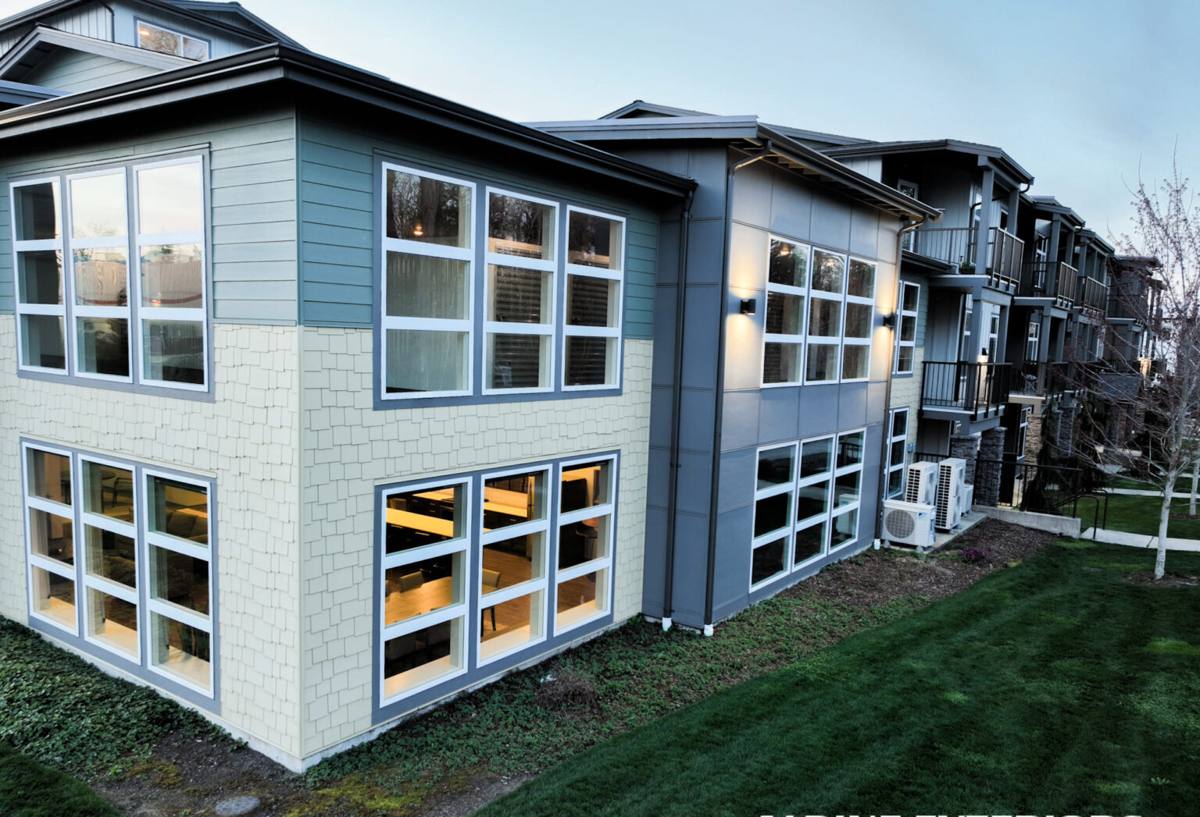
What "Custom" Actually Means
Custom doesn't just mean expensive or fancy — it means the window is built to the actual opening, not the other way around. A lot of window trouble in older Burlington homes comes from a mismatch: a stock-size replacement window gets squeezed or shimmed into an opening it wasn't really made for, and the gaps get packed with caulk and foam instead of being properly flashed and trimmed.
A true custom job starts with measuring the existing opening as it actually is — including any out-of-square corners, settled framing, or non-standard dimensions common in additions and older construction. From there we either order a window built to those exact dimensions or, where the opening allows, resize the rough opening itself so a standard unit fits correctly with proper flashing margins. Either way, the goal is the same: no gaps, no compromises, no relying on caulk to do a framing job.
When Full Custom Sizing Is Worth It
- Additions or older sections of the home where openings were framed by hand, not to a standard template
- Bay windows, corner windows, or unusual shapes that stock sizes can't fill without ugly filler panels
- Openings where the surrounding siding or trim needs to stay intact, so the window has to match precisely
- Replacing a window that's visibly larger or smaller than modern standard sizes
Materials That Hold Up in Skagit County
Frame material matters more here than in a dry climate, because the frame is what's absorbing months of moisture cycling every year. We look at three main options for Burlington homes:
| Frame Type | How It Handles This Climate | Maintenance |
|---|---|---|
| Vinyl | Won't rot or corrode from salt-influenced air; handles moisture well; can expand/contract with temperature swings | Low — occasional cleaning, no painting |
| Fiberglass | Very stable in wet/dry cycling, holds paint well if color changes are wanted later, strong against warping | Low to moderate |
| Wood-clad | Good insulating properties and appearance, but the exterior cladding and any exposed wood need consistent upkeep or moisture gets in | Higher — sealant and finish need regular attention |
None of these are the wrong choice in every case — it depends on the home's style, the budget, and how much upkeep the homeowner wants to take on. What we won't do is talk someone into a wood-exposed frame on a shaded, damp-prone wall without being upfront that it'll need more attention than vinyl or fiberglass in the same spot. That's not a knock on wood windows — it's just an honest read on what this climate does to exposed wood over time.
Signs Your Current Windows Are Losing the Fight
Most Burlington homeowners don't call about windows until something's obviously wrong, but the early signs are usually there for a season or two before that. Worth checking before winter:
- Fogging or a hazy film between panes — the seal on the insulated glass unit has failed
- Visible gaps or daylight around the frame when the window is closed
- Soft, spongy, or discolored wood trim or sill, especially on north- and west-facing walls
- Moss or dark staining building up on the sill or lower frame
- Sashes that stick, won't stay open, or are hard to lock tight
- A noticeable draft or cold spot near the window even with it fully closed
- Paint that's peeling or bubbling specifically around the window opening, not the wider wall
Any one of these on its own might just need a repair. Several at once, especially on the same wall, usually points to a flashing or sealing failure that a new window and a proper install will fix for good.
How We Handle a Burlington Job
Assessment and Measuring
We start by looking at the whole opening, not just the window itself — the sheathing, the flashing (or lack of it), and how water has been draining off that wall historically. This tells us whether we're dealing with a straightforward swap or a job that needs some framing and flashing repair before the new window goes in.
Ordering and Prep
Once the opening is measured and any repair scope is agreed on, we order the window to spec. We protect the surrounding siding, trim, and landscaping before removal starts, and we plan the work around the weather — installing a window mid-downpour in Skagit County is asking for trouble, so we watch the forecast and schedule accordingly.
Removal and Installation
Old windows come out carefully to avoid unnecessary damage to surrounding siding. We check the exposed sheathing for rot or soft spots before anything new goes in — this is the point where hidden water damage from years of a bad seal usually shows up, and it needs to be dealt with, not covered over. The new window is set, shimmed level and square, and mechanically fastened per the manufacturer's specs.
Flashing and Sealing
This is the step that decides whether the window lasts one winter or twenty. Proper flashing directs any water that gets behind the siding back out, rather than trapping it against the frame. Sealant is a backup layer, not the primary defense — a window that depends on caulk alone to stay dry will eventually fail, usually quietly, behind the wall where you won't see it until there's rot.
Why Flashing and Moisture Management Get Extra Attention Here
In a drier climate, a shortcut on flashing might not show up for years. In Skagit County, with driving rain coming off the water for months at a time, a bad flashing detail can show up as interior staining or soft trim within a single wet season. We treat flashing as the part of the job that can't be rushed, including:
- Correct layering so upper courses of flashing overlap lower ones — water always sheds down and out, never sideways or up into the wall
- Sill pans or sloped sill flashing under the window to catch and redirect any water that does get past the frame
- Proper integration with the existing house wrap or weather barrier, not just tucking flashing behind loose siding
- Sealant used at the right joints only — over-sealing can trap moisture instead of letting it drain
What a Burlington Window Project Typically Costs
Every home is different, and a firm number only comes from an actual on-site look at your openings. But the broad cost drivers are consistent from job to job:
| Factor | Why It Moves the Price |
|---|---|
| Frame material | Vinyl is generally the most budget-friendly; fiberglass and wood-clad cost more upfront |
| Custom vs. near-standard sizing | True custom-built units cost more than resizing an opening to fit a standard unit |
| Number of windows and access | Multiple windows on one visit reduce per-unit labor cost; second-story or hard-to-reach openings add time |
| Condition of the existing opening | Rot repair, reframing, or re-flashing an opening adds labor beyond a straightforward swap |
| Glass package | Upgraded glazing for noise or extra insulation costs more than standard double-pane |
We'd rather walk a homeowner through these factors honestly during a free estimate than quote a number over the phone that doesn't hold up once we're actually looking at the opening.
Why a Crew That Already Works Burlington Matters
Window installation isn't just a carpentry skill — it's a weather-management skill, and that's local knowledge. A crew that works Anacortes, Burlington, and the rest of Skagit County regularly knows which wall orientations take the worst of the winter storms, how far moss and mildew tend to creep into trim in a given season, and what flashing details actually hold up here versus what looks fine on paper but fails in year three. That's the kind of judgment that only comes from doing the work in this specific climate, on this specific housing stock, season after season — not from a one-size-fits-all install manual.
Being local also means we're not disappearing after the invoice is paid. If a seal needs a look two winters from now, or a question comes up about how a window is performing in a heavy storm, we're a short drive away, not a call center in another state.
Keeping New Windows Performing Long-Term
A correctly installed window shouldn't need much, but a little seasonal attention goes a long way in this climate:
- Clear moss, leaves, and debris from sills and tracks before the wet season sets in
- Check exterior caulking lines once a year for cracking or separation, especially after a hard winter
- Keep gutters and downspouts clear so water isn't sheeting directly down the wall above your windows
- Wipe condensation from interior glass promptly in cold snaps to protect sills and trim
- Operate locks and hardware periodically so they don't seize up from disuse
If you're in Burlington and dealing with drafty, foggy, or failing windows, we're happy to take a look and talk through honest options — no pressure, no pushy upsell. Fill out the form below for a free estimate and we'll get back to you to schedule a time to walk the property.