 Anacortes Siding
 Building New in Burlington? The Windows Deserve as Much Attention as the Foundation
Burlington sits at the crossroads of Skagit County, close enough to the water that homes here deal with the same wind-driven rain and salt-laden air that hits Anacortes, but with its own mix of open farmland exposure and tighter in-town lots. Whether your new build is a single custom home, an infill lot near downtown, or part of a larger development, the window package is one of the few components of a house that has to perform correctly on day one — there's no "settling in" period for a flashing detail. Get it right during framing and rough-in, and the windows will outlast the paint job by decades. Get it wrong, and you're chasing leaks behind finished drywall a few winters later.
New-construction windows are different from replacement windows in one fundamental way: they install with a nailing fin directly into the wall assembly, tied into the house wrap and flashing system as part of the building envelope — not retrofitted into an existing opening. That gives us more control over the water management details, but it also means the installer has to understand exactly how the wall is built, what the local code inspector expects, and how Skagit County's weather is going to test every seam.
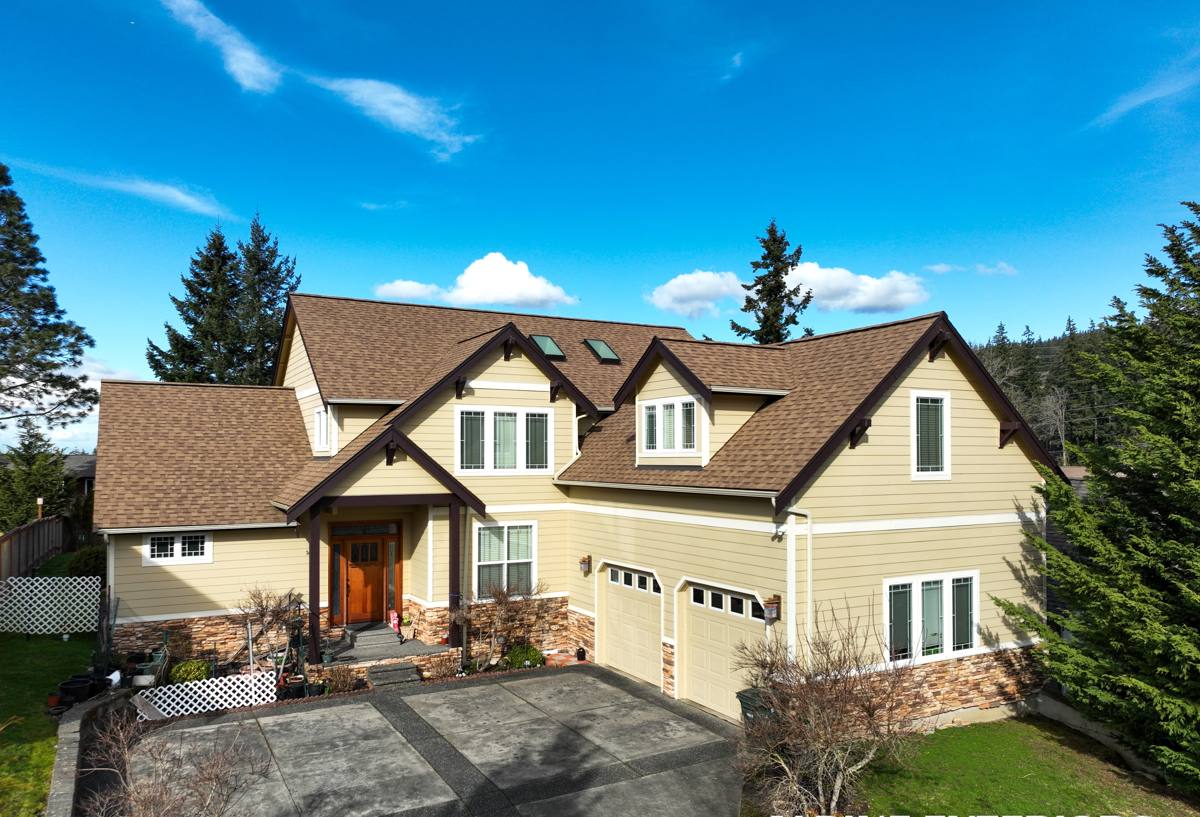
What Burlington's Climate Actually Does to a Window Opening
We don't need to oversell the drama of Pacific Northwest weather — it's the steady, repetitive exposure that causes problems, not any single storm. Three things matter most for a new build in this area:
- Driving rain: Wind off the Skagit Valley and nearby Puget Sound push rain sideways against west- and south-facing walls for days at a stretch. A window that only sheds water when it's falling straight down will eventually leak here.
- Salt air: Even set back from the water, Burlington gets enough marine air to accelerate corrosion on unprotected fasteners, hardware, and some aluminum components over the years. Material choice and flashing metal compatibility matter more here than in a dry inland climate.
- Long moss and mildew season: Cool, damp conditions persist for much of the year, which means any trapped moisture behind trim or under sills doesn't dry out quickly. A wall assembly that traps water instead of shedding it will grow problems, not just discolor.
None of this is exotic — it's normal Skagit County weather. But it means the installation details that are "good enough" in a drier climate aren't good enough here.
What a Correct New-Construction Window Installation Involves
Sequencing With the Rest of the Envelope
Windows don't get installed in isolation. The order matters: house wrap or weather-resistive barrier goes on first, then window flashing is integrated with it in the correct shingle-lap sequence — meaning every layer overlaps the one below it, so water is always directed outward and down, never trapped behind a seam. We coordinate directly with the builder or general contractor's schedule so windows go in at the right point in the framing sequence, not rushed in before the wall is ready or delayed until it's inconvenient to flash correctly.
Sill Pan Flashing
A sill pan under the window opening is standard practice on new construction here, and it's non-negotiable in our process. It creates a dedicated drainage plane at the bottom of the rough opening so that any water that does get past the window sash — through wind-driven rain, condensation, or a future failed seal — has somewhere to go besides your framing lumber.
Fastening and Fin Sealing
Nailing fins get sealed and fastened per the manufacturer's pattern, not "close enough." Skipped fasteners or gapped sealant beads are the most common cause of early leaks we find when repairing other contractors' work, and they're invisible once the trim goes on — which is exactly why they get checked before we move to the next window.
Head Flashing
Above the window, a head flashing or drip cap directs water around the opening rather than down the face of the window. On a wall that's going to take direct rain exposure — which describes most west and south elevations in this area — this detail is the difference between a dry wall cavity and a slow leak nobody notices for two winters.
Choosing the Right Window for a Skagit County New Build
New construction gives you a real choice in frame material, glazing package, and performance rating — a choice you don't get with a like-for-like replacement. For this climate, we weigh a few things with every homeowner and builder:
| Factor | Why It Matters Here |
|---|---|
| Frame material | Vinyl and fiberglass resist the corrosion that salt air can accelerate in some metal components; either can perform well when the frame and hardware are properly rated. |
| Glazing package | Double-pane, low-E glass with the right gas fill cuts down on condensation on cold, damp Skagit Valley mornings and improves comfort near the glass. |
| Water resistance rating | Windows tested and rated for higher water penetration resistance are worth the difference on exposed elevations that take direct driving rain. |
| Air infiltration rating | A tighter air seal matters for both comfort and keeping conditioned air from carrying moisture into wall cavities where it can condense. |
| Hardware and fastener finish | Corrosion-resistant hardware costs little extra at the new-construction stage and avoids sticky locks or streaking a few years down the road. |
We don't push one brand as the only correct answer — we install a range of quality window lines and help match the product to your budget, the home's exposure, and what the rest of the build calls for. What we won't do is install a window whose installation instructions or warranty terms don't hold up to how much water this area actually sees; that's a maintenance headache for you later, not a shortcut worth taking now.
How Our Process Works on a Burlington New-Construction Job
- Plan review and coordination: We look at the architectural window schedule and rough opening sizes before framing is finalized, so there are no surprises when it's time to install.
- Site walk with the builder: On most jobs we're one trade among several, so we coordinate directly with the general contractor or framer on timing and sequencing.
- Sill pan and flashing installation: Every opening gets flashed in the correct order before the window ever goes in.
- Window set and fastening: Windows are set plumb, level, and square, then fastened per manufacturer spec — not just "nailed until it feels solid."
- Fin and flashing sealing: Sealant and flashing tape go on at every layer, integrated with the house wrap.
- Quality check: Each window gets checked for operation, seal, and squareness before we move to trim and finish work.
This isn't a rushed, one-pass installation. It's a sequence, and skipping a step to save an afternoon is exactly how a new build ends up with a warranty claim in year three.
Common Mistakes We See on New Builds in This Area
- Skipping sill pan flashing because "the window has its own weep system" — weep systems handle incidental water, not a wall cavity's primary drainage plane.
- Sealing the nailing fin on all four sides instead of leaving the bottom open to drain, which traps water inside the wall instead of letting it escape.
- Using incompatible flashing metals or tapes that react with each other over time in a damp, salt-air climate.
- Installing windows before the house wrap is properly lapped, forcing an awkward and leak-prone flashing sequence afterward.
- Under-fastening because the trim will "cover it anyway" — fastener count and pattern are structural, not cosmetic.
None of these mistakes show up on inspection day. They show up two or three wet seasons later, which is exactly why the installation crew's habits matter more than any single product spec.
A Practical Checklist for Homeowners and Builders
- Confirm rough openings match the window schedule before the windows arrive on site
- Ask whether sill pan flashing is included in the bid — it should be standard, not an upcharge
- Confirm the flashing sequence (house wrap, sill pan, window, head flashing) in writing
- Check that the window's water and air infiltration ratings are appropriate for the wall's exposure
- Ask about fastener and hardware finish if the home is within a few miles of the water
- Get manufacturer installation instructions referenced in the contract, not just "industry standard"
Why Hire a Crew That Already Works Burlington and the Anacortes Area
New-construction window installation isn't a specialty product — it's a specialty process, and the process has to match the local weather and the local inspection expectations. A crew that installs windows in a drier inland climate can do competent work there and still under-build the water management details for a wall that's going to take Skagit County's driving rain and salt air for the next thirty years. We work new builds across Anacortes and the surrounding Skagit County area regularly, which means we already know the exposure patterns, the flashing sequence local building departments expect to see, and how to coordinate with framers and general contractors without slowing the job down.
We also stand behind the installation itself, not just the window product — because on a new build, the installation is the part that determines whether that manufacturer's warranty ever actually gets tested by a real leak.
Get a Straightforward Estimate
If you're framing a new home or working with a builder in Burlington, Anacortes, or elsewhere in Skagit County, we're happy to look at your plans and talk through window options, timing, and what a correct installation involves for your specific site and exposure. Fill out the form below for a free, no-pressure estimate — no obligation, just a straight answer from a crew that installs windows in this climate every day.