 Anacortes Siding
 Cap Sante Sits Right in the Path of Everything the Sound Throws at It
Cap Sante's houses look out over the marina and Rosario Strait, and that view comes with a price. The same bluff that gives you the sightline also puts your roof in direct line with wind gusts coming off the water, salt-laden air that never really lets up, and driving rain that hits at an angle most inland Skagit County roofs never have to deal with. Add in the tree cover on the shadier lots and you get a long moss season on top of everything else. None of that means a roof up there is doomed — it means it needs to be inspected and repaired with that exposure in mind, not treated like any other roof in Anacortes.
Storm damage on Cap Sante rarely shows up as one dramatic event. More often it's a wind event that lifts a run of shingles, followed by weeks of rain finding that gap before anyone notices a stain on the ceiling. By the time the damage is visible from inside the house, it's usually been developing for a while.
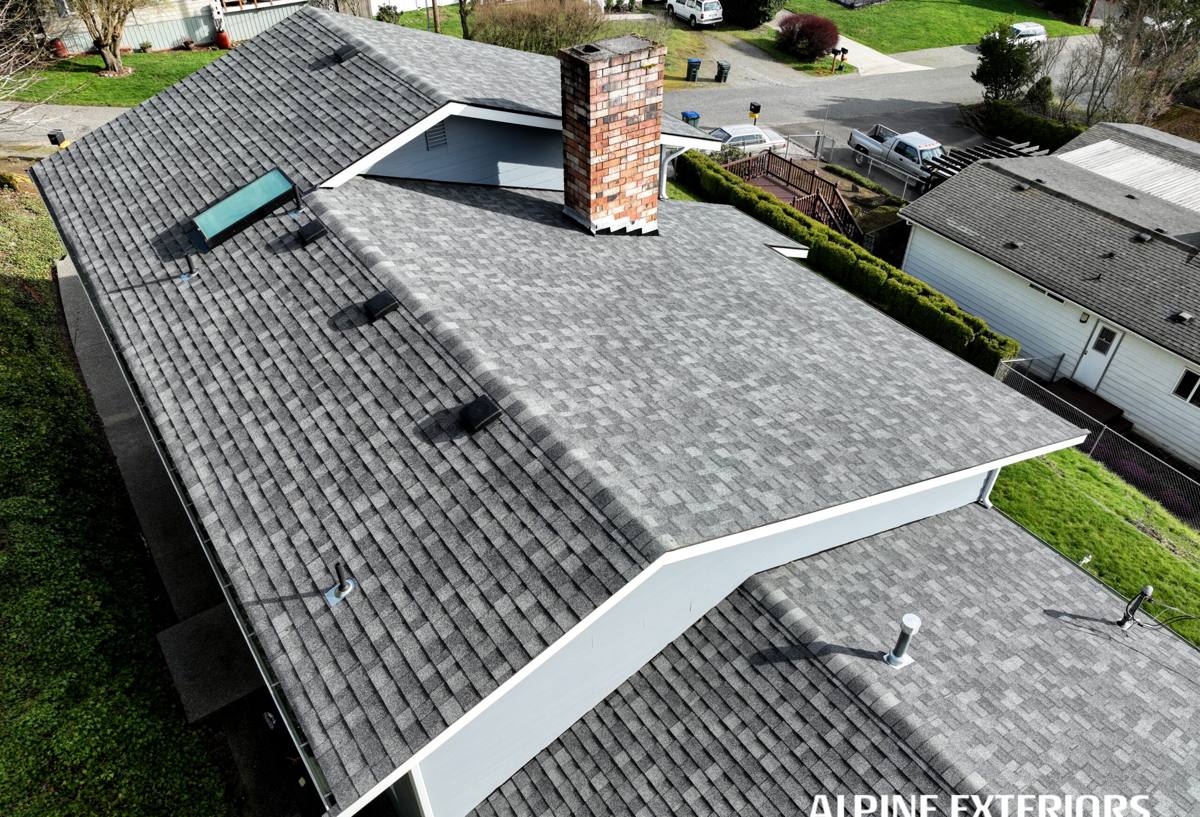
What Storm Damage Actually Looks Like Up Here
Wind Damage
Gusts funneling across the water don't hit a roof evenly — they catch edges, ridges, and corners hardest. That's where we find lifted or missing shingles first, along with creased shingles that have been flexed but not torn off yet. Creased shingles are the ones homeowners miss most often because the roof still looks intact from the ground.
Wind-Driven Rain Intrusion
A storm doesn't need to remove a single shingle to cause damage. Rain pushed sideways under a lifted tab, around a flashing edge, or through a nail hole that's worked itself loose over years of salt exposure can get underneath the roofing system entirely. This is the damage that shows up as a soft spot in the decking or a stain on a ceiling weeks after the storm has passed.
Impact and Debris Damage
Branch strikes, blown debris, and hail (less common here, but it happens) can crack shingles, dent metal flashing, or puncture underlayment. Impact damage is often small and localized, which makes it easy to underestimate — a single puncture is still an open door for water.
Moss and Moisture Damage That Compounds a Storm
A roof that already has moss holding moisture against the shingles is more vulnerable when a storm hits it. Moss traps water, breaks down the granule surface underneath it, and can lift shingle edges just enough for wind to get a grip. On shaded Cap Sante lots, moss damage and storm damage often overlap, which is why we check for both at the same time.
The Damage You Can't See From the Ground
Every storm repair call we take starts with the assumption that there's more going on than what's visible from the driveway. A proper inspection means getting on the roof, not just looking up at it.
- Underlayment condition around any missing or lifted shingles
- Decking softness or delamination where water may have tracked sideways from the original entry point
- Flashing at chimneys, vents, and valleys — the most common failure points after wind events
- Fastener condition, since salt air accelerates corrosion on exposed nails and fasteners over time
- Attic-side inspection for staining, damp insulation, or daylight showing through the decking
Water travels. A leak that shows up over a bedroom closet may have entered the roof several feet away, near a valley or a plumbing vent. We trace it back to the actual source rather than patching the spot where it became visible.
Our Storm Damage Repair Process
1. Fast Assessment and Temporary Protection
If a roof has active leaking or exposed decking, the first priority is stopping more water from getting in — tarping or temporary sealing while we plan the permanent repair. This isn't the fix itself, but it buys time and prevents a bad situation from getting worse while materials are sourced or an insurance claim is processed.
2. Full Roof Inspection, Not Just the Damaged Section
Storms rarely damage just one spot. We check the whole roof — not only the area the homeowner noticed — because wind and rain stress a roof unevenly, and there's often secondary damage on the side that took the brunt of the gusts.
3. Written Scope and Photo Documentation
Before any repair work starts, we document what we found with photos and a clear written scope. This protects you if you're filing an insurance claim, and it means you know exactly what's being repaired and why before we start.
4. The Repair
Depending on the extent of the damage, this might mean replacing a section of shingles and underlayment, re-flashing a valley or chimney, replacing sections of decking that got saturated, or a combination of all three. We match materials to the existing roof wherever possible and use fasteners and flashing rated for coastal, salt-air exposure rather than standard hardware that corrodes faster this close to the water.
5. Final Walkthrough
We walk the finished repair with you, show you what was done, and flag anything else on the roof worth keeping an eye on — even if it wasn't part of this repair.
Repair vs. Replace: How We Actually Decide
Not every storm-damaged roof needs a full replacement, and not every roof can be safely patched. The right call depends on the roof's age, how widespread the damage is, and what condition the rest of the roofing system is in.
| Factor | Leans Toward Repair | Leans Toward Replacement |
|---|---|---|
| Roof age | Under 12–15 years, remaining material still sound | Near or past manufacturer's expected service life |
| Extent of damage | Localized to one section or slope | Multiple sections, or damage found on more than one storm event |
| Decking condition | Dry, solid decking under the damaged shingles | Soft, delaminated, or rotted decking in multiple areas |
| Shingle matching | Discontinued or faded shingles that would still blend reasonably | Shingle line unavailable and mismatch would be visible from the street |
| Underlying moss/moisture history | Minor, addressed as part of the repair | Long-term moss damage across large roof areas |
We'll give you a straight answer on which category your roof falls into, and we won't push a full replacement when a targeted repair will genuinely hold up.
Working With Your Insurance Company
Most storm damage repairs on Cap Sante involve an insurance claim, and the documentation we gather during the inspection is built with that in mind — dated photos, a written scope, and a clear description of what caused the damage. We can work directly with your adjuster to walk the roof and confirm the scope of the repair, which tends to move claims along faster than a homeowner going back and forth alone. We're not the insurance company and won't promise a specific claim outcome, but we'll give you an honest, well-documented assessment to bring to them.
Why Materials and Method Matter More This Close to the Water
A repair that would hold up fine a few miles inland can fail faster on a bluff that catches salt spray and near-constant wind off the strait. That's why we default to corrosion-resistant fasteners and flashing on every Cap Sante repair, pay close attention to sealing laps and edges that face the prevailing wind and rain direction, and avoid shortcuts that save time now but mean another repair call in a year or two. It costs a little more in labor time to do a repair this way. It costs a lot more, in money and hassle, to redo it.
Why a Crew That Already Works Cap Sante Is Worth Asking For
A roofer who works Anacortes and Skagit County regularly already knows which flashing details tend to fail first on bluff-facing homes, how far moss damage typically extends before it's visible from the ground, and what wind direction actually does the damage on a given slope orientation. That's not something you can fully substitute with a generic inspection checklist. It's the difference between a repair that addresses the visible problem and one that addresses the actual cause.
After a Storm: What to Do First
- Photograph any visible damage from the ground before doing anything else — this helps with both the repair scope and any insurance claim
- Check the attic or top-floor ceilings for staining, dampness, or a musty smell, even if you don't see obvious roof damage
- Avoid walking the roof yourself, especially on wet or mossy sections — it's easy to cause more damage or get hurt
- Cover any obviously open area with a tarp only if you can do so safely, or call for temporary protection instead
- Get an inspection promptly — a small entry point left unaddressed through a few more storms turns into a much larger repair
- Keep any receipts or documentation if you've already done temporary protection yourself, for insurance purposes
If a recent storm has left your Cap Sante roof with missing shingles, a new leak, or damage you're not sure how serious it is, we'll take a look and give you a straight, no-pressure estimate — no obligation to move forward, just an honest read on what's actually going on up there.