 Anacortes Siding
 Windows Built for the Ship Harbor Waterfront
Ship Harbor sits right where Anacortes meets the water, and that location shapes everything about how windows perform here. Homes near this stretch of shoreline take a different kind of weather than houses a mile inland — more direct wind off Rosario Strait, more salt in the air, and more standing moisture clinging to siding and trim through the fall and winter. Windows in this pocket of Skagit County work harder than the manufacturer's spec sheet assumes, and that's the gap a generic installation often misses.
A custom window job for a Ship Harbor home isn't just picking a size off a shelf. It means matching frame material, glazing, and flashing detail to a house that's exposed to salt-laden wind, driving rain, and a moss season that can run six months or longer. Get any one of those wrong and you're not looking at a cosmetic problem — you're looking at water finding its way behind the frame.
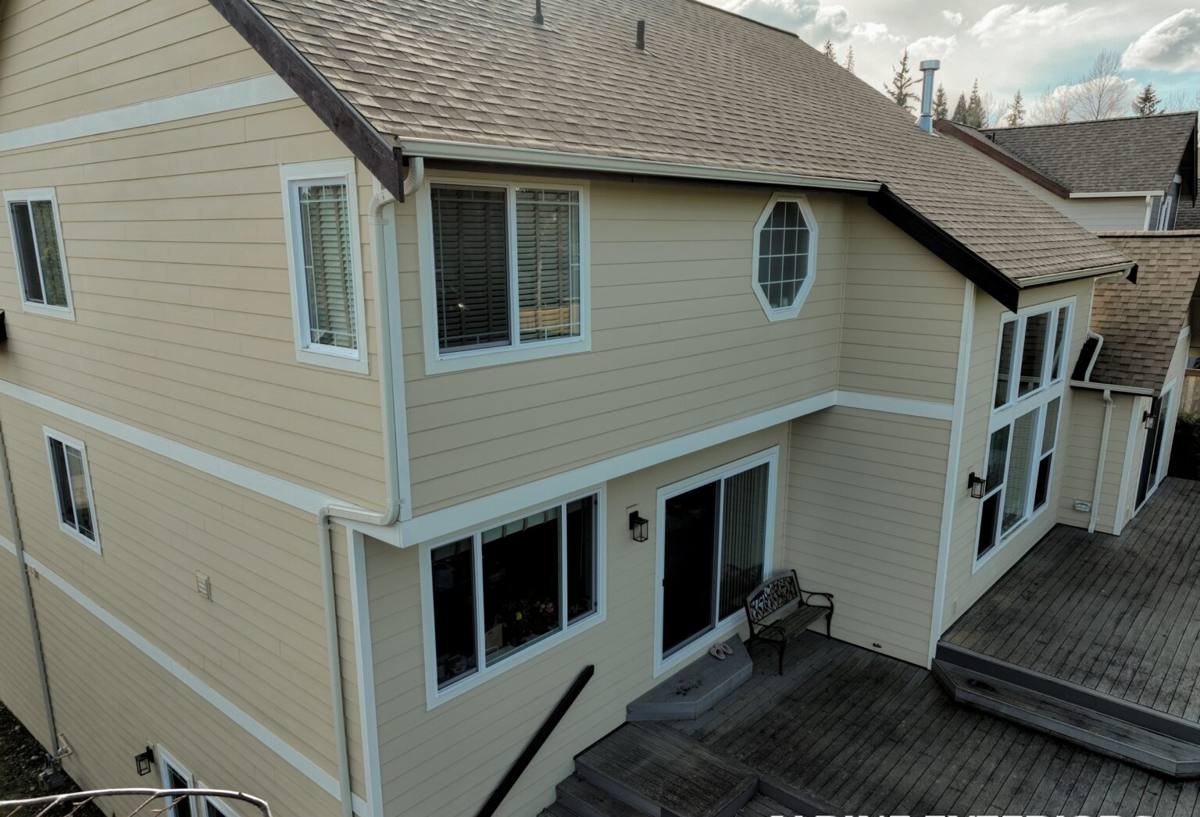
What Salt Air, Driving Rain, and Moss Season Actually Do to Windows
Salt Air
Airborne salt is corrosive to unprotected metal hardware — hinges, locks, and cheaper aluminum components break down faster near the water than they would even a few blocks inland. It also settles into microscopic pitting on lower-grade vinyl and finishes over years, dulling surfaces and giving grime and moss spores something to grip.
Driving Rain
Wind off the water doesn't just fall — it pushes. Rain gets driven sideways into window units, testing every seal, every flashing lap, and every caulk line far more aggressively than a calm rain would. A window that's watertight in a still test but installed with a lazy flashing detail will eventually leak at the corners or the sill, usually slowly enough that you don't notice until there's damage inside the wall.
Moss and Sustained Moisture
Skagit County's wet season means long stretches where wood trim, sills, and frame edges simply don't fully dry out. Moss and algae take hold anywhere moisture sits, and once established they hold water against the surface even longer — a slow cycle that rots wood trim and traps grime in frame tracks. Windows here need details that shed water fast and dry out between storms, not just materials that resist moss on the surface.
What a Correct Custom Window Installation Involves
"Custom" means the window is built and installed to fit your home's actual openings, structure, and exposure — not a stock size with gaps packed full of foam. For a Ship Harbor property, that includes a few things we treat as non-negotiable:
- Accurate field measurement of every opening, since older homes near the water often have settled or slightly irregular framing
- Flashing that integrates with your existing water-resistive barrier and siding, not just caulk around the edges
- A sill pan or sloped sill detail so any water that does get past the glazing drains back out instead of sitting on the frame
- Corrosion-resistant hardware and fasteners appropriate for a marine-influenced environment
- Sealant and backer rod at every joint, sized and applied for long-term flexibility rather than a quick cosmetic bead
- A finished interior and exterior trim-out that matches your home instead of leaving gaps for drafts or pests
Skipping any one of these is how a window that looks fine on installation day starts showing water stains or soft trim two winters later.
Choosing the Right Frame Material for a Waterfront Exposure
There's no single "best" window material — the right choice depends on your home's exposure, your maintenance appetite, and your budget. Here's how the common options generally compare for a Ship Harbor setting:
| Frame Material | Salt/Moisture Behavior | Maintenance | Typical Fit |
|---|---|---|---|
| Vinyl | Won't corrode or rot; UV-stable formulations hold color well | Low — occasional cleaning | Most homes prioritizing value and low upkeep |
| Fiberglass | Very stable in temperature swings and moisture; strong seal retention over time | Low | Homes wanting a stronger frame and tighter long-term seal |
| Wood (clad exterior) | Exterior clad protects the wood from direct weather; interior wood look preserved | Moderate — exterior clad is low-fuss, interior finish needs occasional attention | Homes prioritizing a traditional interior appearance |
| Solid wood | Most vulnerable to sustained moisture and moss without diligent upkeep | High — regular repainting/sealing needed | Historic or period-specific homes where original wood is the priority |
| Aluminum | Conducts cold and can corrode near salt air unless properly coated | Moderate | Rarely our first recommendation this close to the water |
We'll walk through these trade-offs honestly during your estimate rather than pushing whatever we happen to have on hand. For most Ship Harbor homes, vinyl or fiberglass earns its keep through decades of salt exposure with the least fuss — but if you've got a period home where the wood look matters to you, we'll tell you what that upkeep commitment actually looks like rather than glossing over it.
Single, Double, or Triple Pane — What Actually Matters Here
Glazing affects both comfort and how well a window handles this climate. Double-pane glass is the standard baseline for a reason — it dramatically outperforms single-pane for both insulation and condensation control. Triple-pane adds another layer of insulation and can help with sound (relevant if you're near ferry traffic or waterfront wind), but it adds weight and cost, and isn't always necessary depending on your home's orientation and exposure. We'll talk through what makes sense for your specific openings rather than defaulting to the most expensive option.
Low-E coatings are worth a mention too — they reflect heat rather than letting it pass through the glass, which helps regulate a room's temperature swing through the seasons without adding bulk or cost the way a full glazing upgrade would.
Our Process, Start to Finish
- On-site assessment — we look at your existing windows, framing condition, and specific exposure (direct wind, shade, proximity to the water) before recommending anything
- Honest options and pricing — you get a clear breakdown of material, glazing, and installation cost, with trade-offs explained plainly
- Precise measurement and ordering — every opening is measured individually; nothing is assumed to match a stock size
- Removal and inspection — old units come out carefully so we can check the framing and sheathing underneath for any hidden moisture damage before it's covered back up
- Installation with proper flashing and sealing — the step most corner-cutting jobs skip, and the one that determines whether the window lasts
- Interior and exterior trim finish — matched to your home, not left as a rough patch job
- Walkthrough and cleanup — we show you the finished work and clear the site before we leave
Signs Your Ship Harbor Home May Need New Windows
- Visible fogging or moisture between panes of double-pane glass — the seal has failed
- Soft, spongy, or discolored trim around the frame
- Persistent moss or algae growth on the sill or frame that comes back quickly after cleaning
- Drafts you can feel with a hand near the frame on a windy day
- Windows that stick, won't latch fully, or have hardware that's visibly corroded
- Condensation forming on the inside of the glass regularly through the wet season
- Noticeably higher heating costs compared to similar homes nearby
What Drives Cost on a Custom Window Project
| Factor | Why It Matters |
|---|---|
| Frame material | Vinyl is typically the most budget-friendly; fiberglass and clad-wood cost more upfront but often less over time in maintenance |
| Glazing package | Double-pane vs. triple-pane, and any Low-E or gas-fill upgrades, shift cost per unit |
| Number and size of openings | Larger picture windows or a full-home replacement scale cost differently than a handful of standard units |
| Condition of existing framing | Hidden rot or moisture damage found during removal adds repair work before the new window can go in |
| Access and site conditions | Second-story, tight side-yard, or waterfront-facing openings can affect labor time |
We'll give you real numbers for your home during the estimate rather than a rough guess over the phone — every house near the water has its own quirks, and pricing should reflect your actual openings, not an average.
Why a Crew That Already Works Ship Harbor Makes a Difference
Anyone can sell you a window. Fewer contractors have spent real time installing them on homes that face this exact combination of salt air, wind-driven rain, and a moss season that doesn't let up for months. That matters because the failure points here are specific — flashing details that work fine on a sheltered inland lot can fail on a waterfront-facing wall, and hardware that holds up in a dry climate can corrode within a few seasons this close to the water.
A crew that regularly works this part of Anacortes and Skagit County already knows which details need extra attention on this kind of exposure, what the local wet season does to a rushed install, and how to sequence a job around our weather rather than fighting it. That local familiarity shows up later — in whether your windows are still sealed tight five winters from now, not just on install day.
Caring for Your New Windows in This Climate
Even a correctly installed window benefits from basic upkeep in a marine climate. Rinse frames and tracks periodically to clear salt residue and organic buildup before moss gets a foothold. Keep an eye on caulk lines and sealant for any cracking after a few years, and clear debris from weep holes so water can drain the way it's designed to. None of this is heavy maintenance — it's the kind of ten-minute check that keeps a well-installed window performing the way it should for decades.
If your Ship Harbor home has windows that are drafty, fogged, showing moss you can't get rid of, or just original to a house that's due for an upgrade, we're glad to come take a look. The estimate is free, there's no pressure, and you'll get a straight answer about what your home actually needs — use the form below to get started.