 Anacortes Siding
 Windows in Bow Work Harder Than Windows Almost Anywhere Else
Bow sits close enough to Samish Bay and the open water of Skagit County that homes here take a different kind of weather beating than houses even a few miles inland. Salt-laden air corrodes hardware and finishes faster. Driving rain off the water pushes water into gaps that would stay dry in a calmer climate. And the long, gray moss season that defines a Pacific Northwest winter keeps humidity high against the building envelope for months at a time. A window that's rated "energy efficient" on a spec sheet in a showroom doesn't automatically perform that way once it's sitting in a Bow window opening facing weather off the water.
This page is about one job, done right, in one place: energy-efficient window replacement and upgrades for homes in Bow. Not a general window sales pitch — the specifics of what this climate does to windows, what a correct installation actually involves, and why the details matter more here than they would in a drier, calmer part of the country.
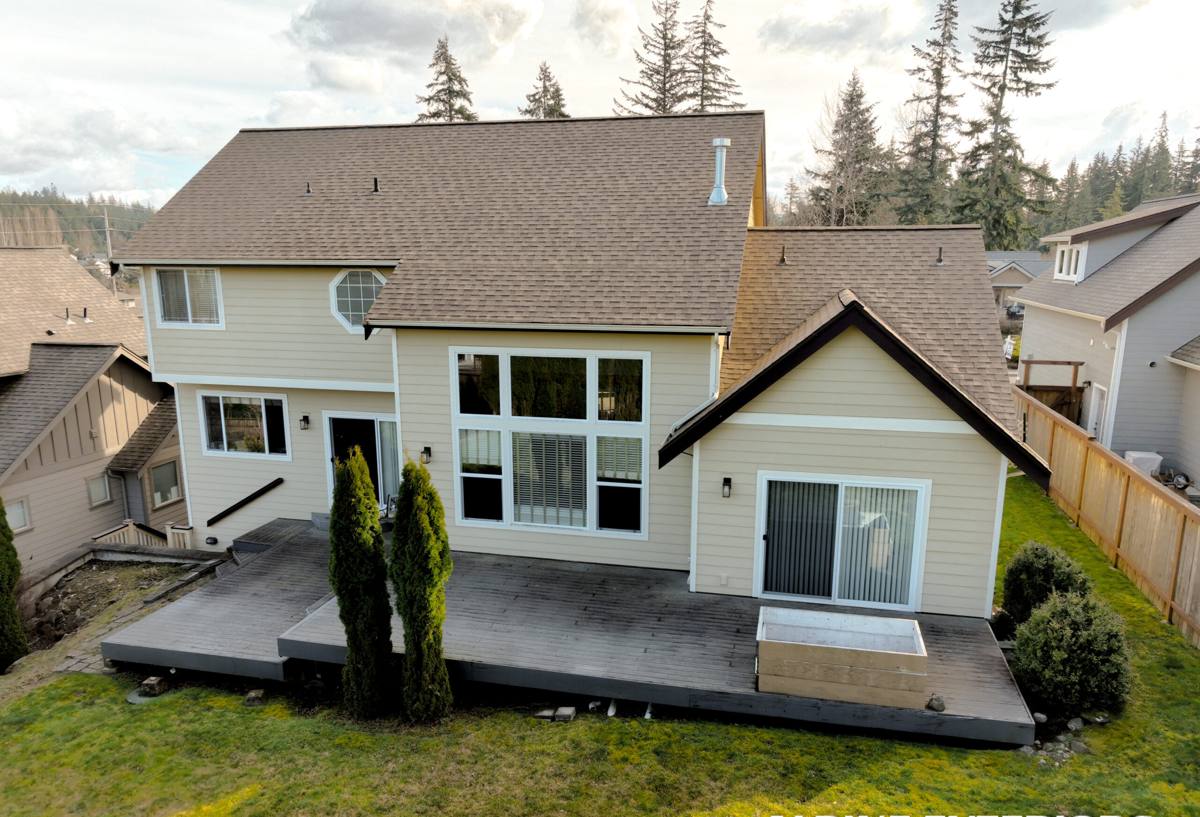
What Salt Air, Driving Rain, and Moss Season Actually Do to Windows
Each of these three conditions attacks a window differently, and understanding the failure pattern is what separates a window that lasts twenty-plus years from one that starts failing in five.
Salt air
Airborne salt is corrosive to unprotected metal — hinges, locks, balance systems, and lower-grade aluminum framing all degrade faster near open water than they do a few miles inland. Corrosion often shows up first as stiff or sticking hardware, then as pitting or white oxidation on frame surfaces, well before the glass itself fails.
Driving rain
Wind-driven rain doesn't just hit a window — it gets forced sideways and upward into any gap in the flashing, trim, or sealant. On a west- or water-facing exposure, a window that's watertight in a light rain can still leak in a real Skagit County storm if the flashing detail underneath wasn't built for wind-driven water in the first place.
Moss season
The long stretch of cool, wet months isn't just a roofing and siding problem. Persistent humidity against a home's exterior keeps wood trim and sills damp longer, which is exactly the condition mold, rot, and moss thrive in. Around windows, that shows up as soft sills, dark staining at the corners, or a musty smell at the frame — all signs that moisture is sitting somewhere it shouldn't.
What "Energy-Efficient" Actually Means for a Bow Window
"Energy efficient" gets used loosely in the window business. For a Bow home, it should mean three measurable things working together: how much heat the window lets escape, how much solar heat it lets in, and how well it's sealed against air and water intrusion. The first two are rated numbers you can actually compare between products.
| Spec | What it measures | Why it matters in Bow |
|---|---|---|
| U-Factor | Rate of heat loss through the window | Lower U-factor keeps heat inside during our long heating season |
| SHGC (Solar Heat Gain Coefficient) | How much solar heat passes through the glass | Moderate SHGC balances winter solar gain against summer overheating on south/west exposures |
| Low-E coating | Microscopically thin metallic layer on the glass | Reflects heat back in winter, out in summer, without darkening the glass noticeably |
| Gas fill (argon) | Inert gas between panes, denser than air | Slows heat transfer between panes for a better-insulating unit |
| Air infiltration rating | How much air leaks through the assembly | Directly tied to how well the unit resists wind-driven rain and drafts |
A double- or triple-pane unit with low-E coating and argon fill, paired with a tight, properly sealed installation, is the baseline we work from for most Bow homes. The glass package matters, but it only performs as well as the installation around it — a great window installed with a poor moisture seal will still leak and still lose energy at the frame.
Frame Materials: What Actually Holds Up Near the Water
Frame material choice matters more in a salt-air, high-moisture climate than it does in a lot of the country, because it determines how the window ages, not just how it performs on day one.
| Frame material | How it performs in Bow's climate | Maintenance reality |
|---|---|---|
| Vinyl | Good moisture and corrosion resistance, no rust risk from salt air | Low maintenance, occasional cleaning of tracks and weep holes |
| Fiberglass | Very stable in temperature swings and moisture, holds paint well | Low maintenance, higher upfront cost |
| Wood (clad) | Good insulator, but exposed wood is vulnerable during moss season if the cladding or finish fails | Requires ongoing finish maintenance and prompt attention to any cladding damage |
| Aluminum (uninsulated) | Prone to corrosion pitting near open water and poor thermal performance | Higher long-term maintenance, not our recommendation for Bow's exposure |
We're honest about that last row: uninsulated aluminum isn't a product we push for homes this close to the water. It's not that it's a bad product everywhere — it's that the combination of salt exposure and poor thermal performance makes it a poor match for this specific climate, and we'd rather steer a homeowner toward something that will actually hold up.
The Detail That Matters More Than the Glass: Flashing and Water Management
Most window failures we see in this area aren't glass failures — they're water management failures. The window itself can be excellent and still let water into the wall if the flashing, pan, and integration with the siding weren't done correctly. This is where being a siding contractor first actually matters for a window job.
A correct installation builds a drainage path for water that gets past the outer seal, so it exits the wall instead of sitting against the framing. That means:
- A sloped sill pan under the window that directs any water that gets in back outside, not into the wall cavity
- Proper flashing tape or membrane integrated with the house wrap or weather-resistive barrier, shingled correctly so water always sheds downward and outward
- Head flashing above the window that ties into the siding drainage plane rather than sitting on top of it
- Sealant used only where it belongs — as a backup to the flashing system, never as the primary water barrier
- Siding trim and J-channel reinstalled tight against the new window without gaps that driving rain can find
This is exactly the kind of detail a window-only installer, unfamiliar with how the surrounding siding assembly is supposed to manage water, can get wrong. Because we work on the whole exterior envelope — siding and windows together — the flashing integration isn't an afterthought bolted onto a window sale. It's built the same way we'd detail it on a full siding job.
Our Process for a Bow Window Project
The process is straightforward, but each step exists for a reason specific to this climate.
- On-site assessment. We look at existing window condition, sill and frame moisture, current flashing (where visible), exposure direction, and how much wind-driven rain and salt exposure that specific elevation of the house gets.
- Product recommendation. Based on exposure and budget, we recommend glass package and frame material — we won't upsell triple-pane argon-filled units on a sheltered, low-exposure wall where it isn't worth the cost, and we won't recommend a lighter-duty product on a wall taking the brunt of the weather.
- Careful removal. Old units come out with attention to the surrounding siding and trim so we're not creating new damage to reuse or patch.
- Inspection of the opening. Before anything new goes in, we check the rough opening and existing sheathing for hidden rot or moisture damage — common after years of moss-season exposure — and repair it before installing anything new on top of it.
- Flashing and pan installation. Sill pan, flashing tape, and integration with the house wrap, built to shed water outward.
- Window installation and shimming. Set plumb, level, and square, fastened per manufacturer spec so the warranty stays valid.
- Insulation and air sealing around the frame perimeter — a gap here undercuts the energy performance of even the best glass package.
- Exterior trim and siding integration, restoring the drainage plane and weather seal around the new unit.
- Final inspection and walkthrough — operation, seals, and a look at the finished exterior detail with the homeowner.
Signs a Bow Home's Windows Need Attention
Because failures here tend to start as water or air problems before they become obvious comfort problems, it's worth knowing what to look for early.
- Condensation building up between panes — a sign the seal on a double- or triple-pane unit has failed
- Soft, discolored, or crumbling wood at the sill or frame corners
- Visible moss or dark staining on the siding or trim directly around a window
- Stiff, corroded, or hard-to-operate locks and hardware
- Noticeable drafts or a cold radiating feeling near the glass in winter
- Higher heating bills without any other explanation
- Fogging or a musty smell at the frame during the wetter months
Any one of these on its own isn't necessarily an emergency, but a few of them together usually mean the window and its water management have started to fail.
Why a Crew That Already Works in Bow Makes a Difference
Window performance in this business is local in a way people don't always expect. A crew that mainly installs in drier, inland climates isn't necessarily thinking about salt-air hardware corrosion or wind-driven rain loads the way a crew that works Skagit County's water-facing communities does every week. Working regularly in Anacortes, Bow, and the surrounding area means we've seen how these specific conditions age windows and siding over years, not just in a showroom or a manufacturer's lab rating.
It also means straightforward logistics — permitting familiarity with Skagit County, no learning curve on the regional weather patterns that affect scheduling and installation timing, and a crew that treats the window as part of the whole exterior water-management system rather than an isolated product swap.
Protecting the Investment After Installation
A correctly installed, energy-efficient window is close to maintenance-free, but a small amount of upkeep goes a long way in this climate.
- Clear weep holes and tracks of debris and moss buildup at least once a year
- Rinse salt residue off frames and hardware periodically if the home has direct water exposure
- Check exterior caulk lines annually for cracking or separation, especially after a hard winter
- Keep gutters and downspouts clear so roof runoff isn't sheeting down across window heads
- Address any soft trim or staining around a window promptly rather than waiting for it to spread
If you're weighing whether it's time to replace or repair windows on a Bow home, we're happy to take a look and give you a straightforward, no-pressure assessment of what your home actually needs. Use the form below to request a free estimate.