 Anacortes Siding
 Flounder Bay's Waterfront Setting Puts Extra Demands on Siding
Homes around Flounder Bay sit close enough to the water that siding here works harder than siding a few miles inland. Salt-laden air off the bay accelerates corrosion on fasteners and trim, wind-driven rain finds its way into any gap or seam that isn't detailed correctly, and the shaded, damp stretches of the year in this part of Skagit County give moss and algae a long runway to take hold on north-facing walls and anything under tree cover. None of this is unique to Flounder Bay, but the combination — salt, rain, and moss, all in the same few blocks of waterfront and near-waterfront lots — is more concentrated here than in drier parts of Anacortes.
That matters when you're choosing a siding material and a crew. A product or installation that would be fine in a low-exposure inland neighborhood can fail early on a home that faces open water or sits in a moss-prone microclimate. Fiber cement siding, installed correctly, is built to handle that kind of exposure — but "installed correctly" is doing a lot of work in that sentence, and it's worth understanding what it actually means before you sign a contract.
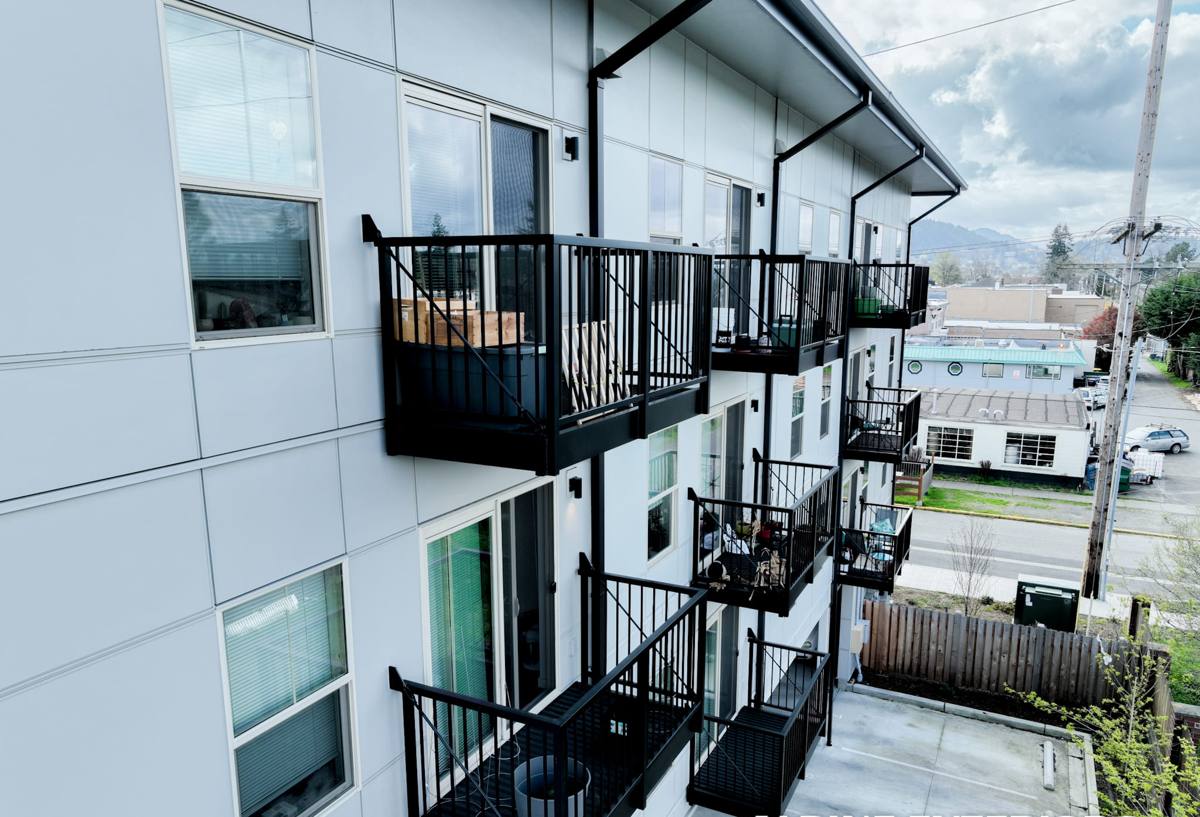
Why We Only Install James Hardie Fiber Cement
We install James Hardie fiber cement siding exclusively. We don't install vinyl, LP SmartSide, cedar, primed spruce, or other fiber cement brands like Cemplank or Allura. That's not a marketing position — it's a decision based on what holds up in this specific climate and what we're willing to warranty our labor against.
What that rules out, and why
Vinyl siding expands and contracts with temperature swings and can warp or crack in wind-driven rain events; it also isn't fire-resistant. Wood-based products like LP SmartSide and untreated cedar or primed spruce are more moisture-sensitive at cut edges and fastener penetrations — exactly the failure points that salt air and constant damp make worse over time. Other fiber cement brands may be reasonable products, but we've standardized on one system so our crews install to one spec, every time, without guessing at compatible flashing, fasteners, and touch-up paint across different manufacturers.
What James Hardie gets right for this location
Hardie fiber cement is non-combustible, dimensionally stable across wet and dry cycles, and available with a factory-applied ColorPlus finish that resists fading and doesn't rely on a field-applied paint job to hold up against salt spray and UV. It's also engineered in climate-specific formulations (the HZ5 and HZ10 lines) so the product itself is matched to the moisture and temperature profile of the Pacific Northwest rather than a one-size-fits-all mix.
Choosing the Right Hardie Product Line and Profile
Not every Hardie product is identical, and picking the right one for a Flounder Bay home depends on exposure, wall orientation, and the look you want.
| Product | Best for | Notes for this area |
|---|---|---|
| HardiePlank lap siding | Most standard walls, classic look | Most common choice; works well with proper lap exposure and caulk joints sealed against driving rain |
| HardiePanel vertical siding | Accent walls, gable ends, modern styling | Fewer horizontal seams means fewer potential water entry points on exposed elevations |
| HardieTrim boards | Corners, window and door trim, fascia | Matched expansion rate to the siding reduces gapping at joints over time |
| HZ10 vs. HZ5 formulation | Higher-exposure vs. standard climates | HZ10 is engineered for wetter, harsher climate zones and is generally the better fit for open-water exposure |
Color also matters more here than people expect. ColorPlus finishes are baked on in a factory setting, which gives better long-term color retention against salt spray and UV than a job-site paint application — and it means touch-up is done with a matched proprietary formula rather than a generic exterior paint that will visibly weather differently over time.
What a Correct Installation Actually Involves
Fiber cement siding fails prematurely almost always because of installation mistakes, not the product itself. In a high-moisture, high-salt environment like Flounder Bay, the margin for error is smaller.
Water management behind the siding
Correct installation starts with a properly lapped weather-resistant barrier, flashed and sealed at every window, door, and penetration, with the siding itself acting as the outer defense layer rather than the only defense layer. Any gap in that sequence is where wind-driven rain finds its way behind the cladding.
Clearances and fastening
Hardie's specifications call for minimum clearances from grade, roof lines, and decks, and specific fastener types and placement. Skipping these — nailing too close to panel edges, fastening through both layers at a lap without the right spacing, or letting siding sit too close to grade or a roof surface — creates the exact conditions that let moisture in and give moss and mildew a foothold.
Caulking and joint treatment
Every butt joint, corner, and trim intersection needs the right sealant, applied correctly, and Hardie has clear guidance on which joints should be caulked and which shouldn't. Over-caulking traps moisture just as badly as under-caulking lets it in.
Our Process for Flounder Bay Projects
Working this area regularly means our process is built around its specific conditions rather than a generic install checklist.
- On-site assessment — we look at wall exposure, existing moisture damage, moss and algae staining patterns, and current flashing conditions before quoting anything.
- Tear-off and inspection of sheathing — removing old siding lets us check for hidden rot or moisture intrusion before it's covered up again, which is common on older waterfront-adjacent homes.
- Weather barrier and flashing install — done to Hardie spec, with extra attention on elevations facing open water or prevailing wind and rain.
- Siding installation — correct fastener type, spacing, and clearances, verified as we go rather than checked at the end.
- Trim, caulking, and touch-up — matched ColorPlus touch-up product, not a generic paint substitute.
- Final walkthrough — reviewing the finished job with the homeowner before we consider it done.
Living With Fiber Cement Siding in a Salt Air, Moss-Prone Climate
Correctly installed Hardie siding is low-maintenance, not no-maintenance. In a Flounder Bay setting, a little routine attention goes a long way toward protecting the investment.
- Rinse salt residue off exterior walls periodically, especially on elevations facing the water
- Keep gutters clear so overflow doesn't run down and pool against siding at corners
- Trim back vegetation and tree cover that keeps walls shaded and damp longer than they need to be
- Address any moss or algae growth early with a gentle wash rather than pressure-washing directly into joints
- Inspect caulk lines every year or two and have any cracked or missing caulk redone before it lets water in
- Watch for any soft spots, staining, or paint failure at trim boards and report them early
Signs your current siding may already be failing
- Visible gaps opening up at butt joints or trim corners
- Persistent moss or dark staining that returns quickly after cleaning
- Soft or spongy spots when pressed, especially near the bottom courses
- Peeling or bubbling paint that keeps recurring in the same spots
- Visible warping, cupping, or separation from the wall
- Interior signs like musty smells or discoloration on walls that back up to exterior siding
What Drives Cost on a Flounder Bay Siding Project
| Factor | Why it matters here |
|---|---|
| Extent of existing moisture damage | Waterfront and shaded lots more often need sheathing repair once old siding comes off |
| Wall exposure and product line | High-exposure elevations may call for HZ10 formulation or extra flashing detail, adding labor |
| Home size and wall complexity | More corners, trim, and roof intersections mean more flashing and cutting time |
| Access and site conditions | Waterfront lots with limited staging area or steep grades can affect labor time |
| Color and finish choice | Factory ColorPlus finishes vary slightly in cost by color and product line |
We give honest, project-specific estimates rather than broad averages, because the variables above genuinely change the scope of work from one Flounder Bay home to the next.
Why Hiring a Crew That Already Works This Area Matters
A crew that installs siding across a range of inland climates will get the fasteners and basic technique right, but may not think in terms of salt exposure, moss cycles, or the specific wind and rain patterns that come off the water at Flounder Bay. Working this part of Anacortes regularly means we've seen where flashing details tend to get missed on waterfront-adjacent homes, which elevations need the higher-exposure product formulation, and what maintenance schedule actually holds up in this climate versus what looks fine on paper. That local pattern recognition is part of what you're paying for, alongside the installation itself.
If you're planning a siding project on your Flounder Bay home, we're happy to walk the property, look at your current siding's condition, and put together a straightforward, no-pressure estimate — just fill out the form below to get started.