 Anacortes Siding
 Roof Repair Built for Flounder Bay's Waterfront Climate
Homes in the Flounder Bay area sit close enough to the water that the roof takes on a different kind of wear than a house a few miles inland. Salt-laden air off the bay accelerates corrosion on fasteners, flashing, and any exposed metal. Wind-driven rain off Rosario Strait and the surrounding waters doesn't just fall on a roof, it gets pushed sideways and up under laps and edges that were never designed to handle horizontal water. And the shade, humidity, and mild temperatures that make this part of Skagit County so livable are the same conditions that grow moss faster than almost anywhere else in the state. Roof repair here has to account for all three at once, not just patch the spot that's leaking today.
We've worked on enough roofs in this neighborhood to know that a repair done without factoring in the local climate tends to fail again within a season or two. This page walks through what actually goes wrong on Flounder Bay roofs, what a repair should include to hold up, and how our process works when you call us out.
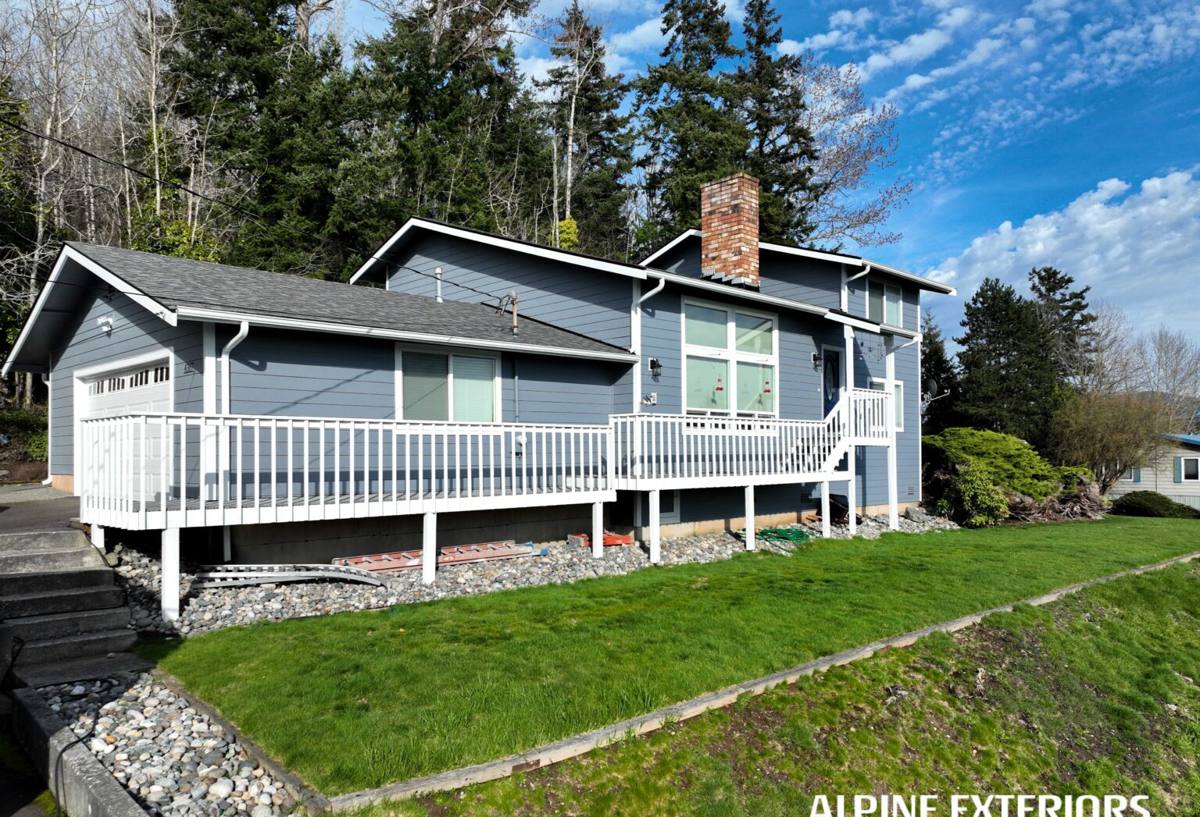
Common Roof Problems We See in Flounder Bay Homes
Moss and Organic Growth
Moss doesn't just sit on top of shingles looking bad. Its root structure lifts shingle edges, holds moisture against the roofing material around the clock, and works its way into granule loss over time. On north-facing slopes and roof sections shaded by mature trees, which are common on lots near the bay, moss can establish itself within a couple of years of a roof being installed if it isn't kept in check.
Salt Air Corrosion
Nails, screws, flashing, and any exposed metal fasteners corrode faster this close to saltwater. We regularly find rusted-through flashing at chimneys, valleys, and roof-to-wall transitions, and pull nails that have corroded enough to lose their grip. That's an easy fix if it's caught early. Left alone, it becomes the entry point for a much bigger leak.
Wind-Driven Rain Intrusion
Storms coming off the water push rain at angles that expose weak points most roofs never have to deal with inland: shingle laps, ridge caps, and vent boots. Water finds its way under materials that would stay dry in a straight-down rain, which is why leaks in this area often show up during or right after a windstorm rather than during a steady rain.
Flashing Failures
Flashing around chimneys, skylights, dormers, and roof valleys is almost always where we find the source of a leak, not the shingle field itself. Flashing that was installed with the wrong overlap, sealed with caulk instead of proper step flashing, or has simply corroded through is a leading cause of repeat leaks in older Flounder Bay homes.
What a Proper Roof Repair Actually Involves
A repair that holds up isn't just about covering the spot where water is coming through. It requires finding where the water is actually entering, which is often several feet away from where it shows up on a ceiling, and addressing the underlying cause rather than the symptom.
- Tracing the leak path from the interior stain or drip back to its actual entry point on the roof deck
- Removing and replacing damaged decking, felt, or underlayment, not just the visible shingles
- Matching shingle color, profile, and manufacturer as closely as possible so the repair doesn't stand out
- Rebuilding flashing correctly with proper step and counter-flashing rather than relying on sealant alone
- Clearing moss and treating the area to slow regrowth, rather than just shingling over it
- Checking attic ventilation and insulation near the repair, since poor airflow contributes to both moss growth and ice or condensation issues
- Inspecting fasteners and metal components nearby for salt corrosion, since one failed nail is rarely the only one
Our Roof Repair Process
1. On-Site Inspection
We start by getting on the roof, not just looking from the ground. We check the reported problem area plus adjacent flashing, valleys, and penetrations, since a single leak is often connected to a broader issue nearby.
2. Honest Diagnosis
We tell you what we actually find, including whether the issue is isolated or a sign that the roof is approaching the end of its useful life. If a repair is the right call, we'll say so. If the roof has multiple failing sections or is old enough that a patch is just delaying a bigger cost, we'll tell you that too.
3. Straightforward Quote
You get a clear scope of work and price before anything is repaired, not a surprise invoice after the fact.
4. The Repair Itself
We use materials matched to your existing roof, proper flashing techniques instead of shortcuts, and fasteners suited to a marine environment where corrosion resistance matters.
5. Cleanup and Walkthrough
We clear debris, old materials, and moss removal waste from the property, and walk the repair with you before we consider the job done.
Repair or Replace? How We Make the Call
Not every roof problem in Flounder Bay needs a full replacement, and not every leak should be treated as a simple patch. The table below reflects the general logic we use when deciding which direction makes sense.
| Situation | Usually a Repair | Usually Points to Replacement |
|---|---|---|
| Age of roof | Under 15-20 years, depending on material | Near or past manufacturer's expected lifespan |
| Extent of damage | Isolated to one section, flashing point, or vent | Multiple areas failing across different slopes |
| Moss condition | Surface growth, caught early | Heavy growth that's lifted shingles over large areas |
| Decking condition | Solid, no soft spots | Soft, spongy, or rotted decking in multiple spots |
| Prior repair history | First or second repair on this roof | Recurring leaks in the same general area despite past repairs |
What Roof Repairs Typically Cost
Repair pricing depends heavily on what's actually wrong, how accessible the roof is, and what materials need to be matched. We won't quote a number without seeing the roof, but the factors below are what tend to move the price up or down.
| Cost Factor | Why It Matters |
|---|---|
| Size and location of the damaged area | A single flashing repair costs far less than replacing a whole slope of decking and shingles |
| Roof pitch and access | Steep roofs or those requiring extra setup time take longer and cost more to work safely |
| Material match | Discontinued or uncommon shingle profiles can be harder and pricier to match than standard architectural shingles |
| Underlying decking condition | Rotted or soft decking found once shingles are pulled adds material and labor |
| Moss and debris removal | Heavy moss buildup adds cleanup time before the actual repair can begin |
| Number of penetrations involved | Chimneys, skylights, and multiple vents each require their own flashing work |
Why Local Experience in Flounder Bay Matters
A roofing crew that hasn't worked this specific stretch of Anacortes waterfront doesn't always account for how much faster salt air corrodes fasteners here compared to a roof a few miles inland, or how aggressively moss takes hold on the shaded, moisture-heavy lots common in this neighborhood. We've repaired enough roofs in this area to know which fastener types and flashing details actually hold up here, not just what works in a general Pacific Northwest climate. That local knowledge is the difference between a repair that lasts and one that reappears on your ceiling in a year.
We're also familiar with the permitting and inspection expectations that apply within Anacortes and Skagit County, so repairs are handled correctly from a code standpoint, not just a workmanship one.
Maintaining Your Roof Between Repairs
A repair holds up longer when it's not fighting the same conditions that caused the original problem. Between service visits, a few habits go a long way for homes in this area.
- Have moss treated or removed before it spreads across a full slope, not after
- Keep gutters clear so wind-driven rain has somewhere to go instead of backing up under the roof edge
- Trim back tree limbs that shade roof sections and keep them damp longer than they should be
- Schedule a roof check after major windstorms, since that's when flashing and shingle damage most often starts
- Have flashing and fasteners inspected every couple of years given how much faster salt air ages metal here
- Address small leaks immediately rather than waiting, since water tracks along decking and can damage areas well beyond the original entry point
Get an Honest Look at Your Roof
If you're dealing with a leak, moss buildup, or damage after a storm, we're happy to come take a look and give you a straight answer about what it needs. The estimate is free, there's no pressure to move forward, and you'll know exactly what we found before any work begins. Use the form below to get in touch and we'll set up a time to come out.