 Anacortes Siding
 Why La Conner Decks Take a Beating
La Conner sits right on the Swinomish Channel, and that waterside location comes with a specific set of problems for any outdoor structure. Salt-laden air moves through the area more than most inland Skagit County neighborhoods, and it works on fasteners, flashing, and any exposed metal year-round. Add in the long, wet stretch of fall through spring that's normal for this part of Washington, and a deck here spends most of the year damp, shaded, or both. That combination — moisture that doesn't dry out quickly, plus organic debris from surrounding trees and shrubs — is exactly what moss and algae need to take hold on a deck surface, and exactly what rots a poorly built substructure from underneath.
None of this makes composite decking a bad choice for La Conner. It actually holds up better than wood in these conditions when it's installed correctly. The problems homeowners run into almost always trace back to how the deck was built, not the material itself — undersized framing, no ventilation underneath, fasteners that weren't rated for this environment, or boards installed tight against siding with no gap for water to escape.
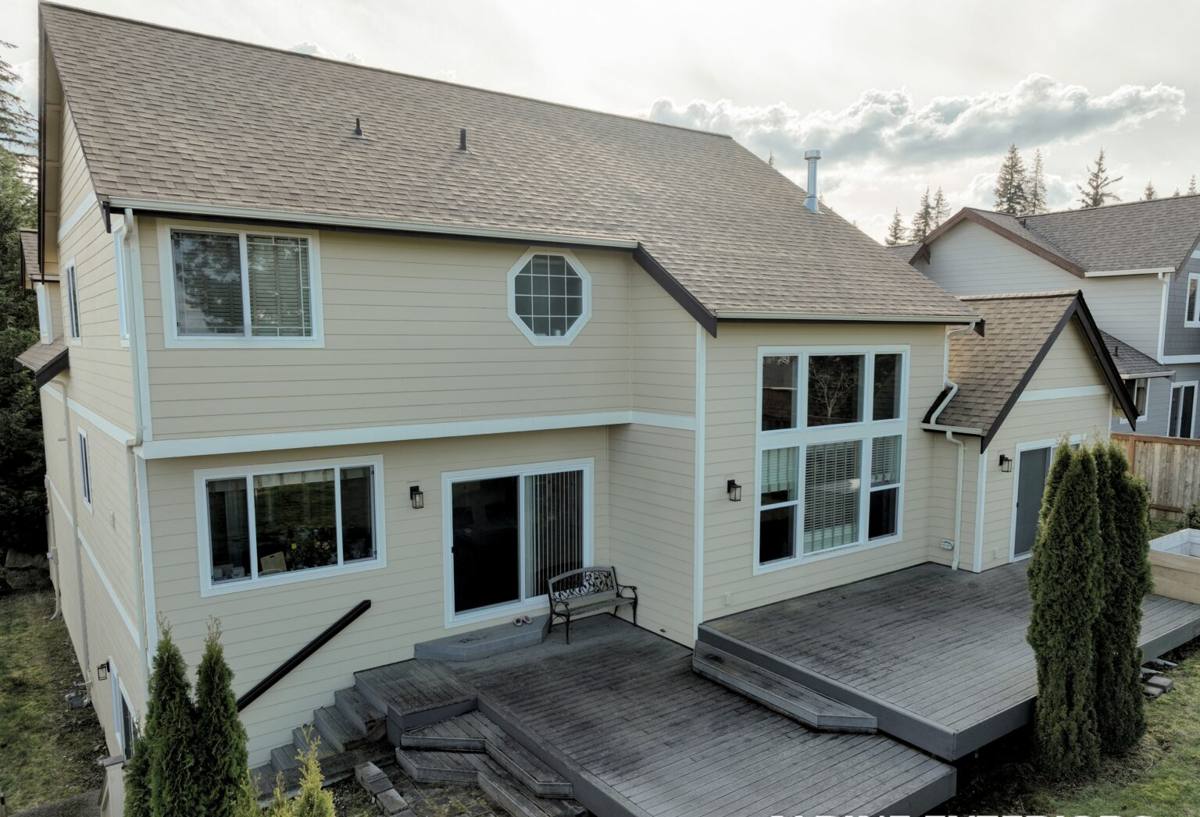
What a Correct Composite Deck Install Looks Like Here
Composite boards are more forgiving than wood in a lot of ways, but they're not forgiving of a bad substructure or careless installation. A deck that will actually perform in La Conner's climate needs attention in a few specific places.
Substructure and Ledger Attachment
Most composite board failures we get called out to inspect aren't board failures at all — they're framing problems. The ledger board attachment to the house needs proper flashing so water can't work its way behind the siding and into the wall framing. Joists need to be spaced and sized for the specific composite product going on top of them, since composite doesn't have the same span ratings as dimensional lumber. In a wet climate, we also pay close attention to joist tape and any place where a fastener penetrates the top of a joist — that's a common entry point for rot even when the decking above looks fine.
Hidden Fasteners and Board Spacing
Most composite decking today uses a hidden fastener clip system rather than face screws, which gives a cleaner look and avoids the exposed screw heads that corrode and streak over time in salt air. Board spacing has to account for both drainage and the product's expansion and contraction — composite moves with temperature more than people expect, and gaps that are too tight will bind and buckle, while gaps that are too wide collect debris and moss.
Drainage and Ventilation Underneath
Standing water and stagnant, unventilated air under a deck are the biggest reasons decks in this climate develop moss, mildew, and structural rot. A correct install grades the ground underneath away from the house, keeps the underside open enough for air to move, and avoids trapping moisture against the framing with solid skirting that has no venting built in.
Composite vs. Wood vs. PVC for This Climate
Every decking material has trade-offs. In a damp, salt-influenced environment like La Conner, the differences matter more than they would somewhere dry and inland.
| Material | Moisture Behavior | Maintenance | Typical Lifespan |
|---|---|---|---|
| Pressure-treated wood | Absorbs water, prone to cupping and rot at fastener points | Annual sealing/staining recommended | 10–15 years before major repairs |
| Capped composite | Water-resistant shell, core doesn't absorb moisture | Periodic washing to control moss/algae | 25+ years with proper install |
| PVC decking | Fully synthetic, no organic material to rot | Low, but scratches show more | 25+ years, higher upfront cost |
We install capped composite for most La Conner projects because it strikes a practical balance — the cap layer resists moisture, staining, and the surface mildew that plain wood-plastic composite is more prone to, and the core still gives the board some of the feel and workability of traditional decking. We're upfront with clients about PVC as an option too; it's a legitimate product for waterfront exposure, it just comes at a higher price point and a different look.
Our Installation Process
- Site assessment: We look at drainage, sun/shade exposure, existing framing condition, and how close the deck sits to grade or water.
- Structural check: Ledger attachment, joist spacing, and footings are inspected or built to support the specific composite product selected — not just "decking in general."
- Flashing and waterproofing: Ledger flashing and any transitions against the house are sealed before a single board goes down.
- Framing and ventilation: Joists are set with proper spacing and airflow underneath is preserved, especially on lower decks close to grade.
- Board installation: Hidden fastener clips, correct expansion gaps, and picture-frame or border detailing where it's called for.
- Finish details: Fascia, stair treads, railing attachment, and a final walk-through so you know what routine care the deck needs.
Moisture and Salt-Air Considerations for Waterside Properties
Properties closer to the channel or with more direct exposure to marine air need a bit more thought put into hardware selection. We use fasteners and structural connectors rated for coastal or high-corrosion environments rather than standard-grade hardware, since standard fasteners can start showing rust streaks on light-colored decking within a couple of seasons in this kind of exposure. Railing posts and any structural metal get the same treatment. It's a small part of the total material cost but it's the difference between a deck that still looks clean in ten years and one with rust bleeding through the boards around every post.
Keeping Moss and Algae From Taking Over
Composite decking doesn't rot the way wood does, but it can still grow moss and algae on the surface if it stays damp and shaded, which is common under trees or on the north side of a house in this part of Skagit County. A little routine care goes a long way:
- Sweep leaves, needles, and debris off the deck regularly, especially in fall — trapped organic matter holds moisture against the boards.
- Rinse the deck with a hose periodically through the wet months rather than letting a season of grime build up.
- Use a soft-bristle brush and a cleaner made for composite decking on any moss or green film — avoid pressure washers on high settings, which can damage the cap layer.
- Keep gutters and downspouts near the deck clear so water isn't dumping directly onto the surface or the substructure below.
- Trim back overhanging branches and nearby shrubs where you can, to let more sun and airflow reach shaded sections.
- Check underneath the deck once or twice a year for standing water, debris buildup, or anything blocking ventilation.
Why a Local Crew Matters
A deck built without accounting for La Conner's specific exposure — the salt air, the shade, the amount of standing moisture through fall and winter — will show problems faster than the same deck built the same way somewhere drier. We already build and repair decks throughout this part of Skagit County, so we're not guessing at how a product will hold up here; we've seen which details actually matter over multiple wet seasons and which ones are just marketing. That includes knowing which hardware grades hold up near the water, how to detail framing for houses close to grade, and what kind of maintenance schedule is realistic for a homeowner rather than aspirational.
What Affects the Cost
Composite decking costs more upfront than pressure-treated wood and less than most PVC systems, but the total project cost depends on more than just board material.
| Factor | Why It Matters |
|---|---|
| Substructure condition | Existing framing that needs repair or replacement adds labor and material before decking even starts |
| Deck size and layout | Cutouts, multiple levels, and picture-frame borders increase labor time |
| Height above grade | Taller decks need more substantial railing and stair work |
| Board tier | Composite products range from entry-level to premium capped lines with different warranties |
| Site access | Waterfront or tight-lot properties can affect equipment access and material staging |
We'd rather walk your property and give you real numbers than throw out a broad estimate that doesn't hold up once we see the actual framing and site conditions.
If you're planning a new composite deck or replacing an aging one in La Conner, we're happy to come take a look and talk through what your property actually needs — no pressure, no upsell, just a straight assessment. Use the form below to request a free estimate.