 Anacortes Siding
 Windows Built for a Marine Climate, Not a Catalog
Oak Harbor sits in a stretch of Washington where the weather doesn't take days off. Homes here deal with salt-laden air blowing in off the water, long stretches of driving rain, and a moss season that seems to start earlier and last longer every year. Stock, big-box replacement windows are built to a national average — they're not built for what a window on this coast actually has to survive. Custom windows, sized and detailed for your specific openings and exposure, hold up where generic units fail early.
When we talk about "custom" windows, we don't mean fancy shapes or luxury trim packages, though we can do that too. We mean windows made to fit your actual rough openings correctly, with hardware, glazing, and frame materials chosen for a house that sits in salt air and gets soaked on a regular basis. That distinction matters more here than almost anywhere else in the state.
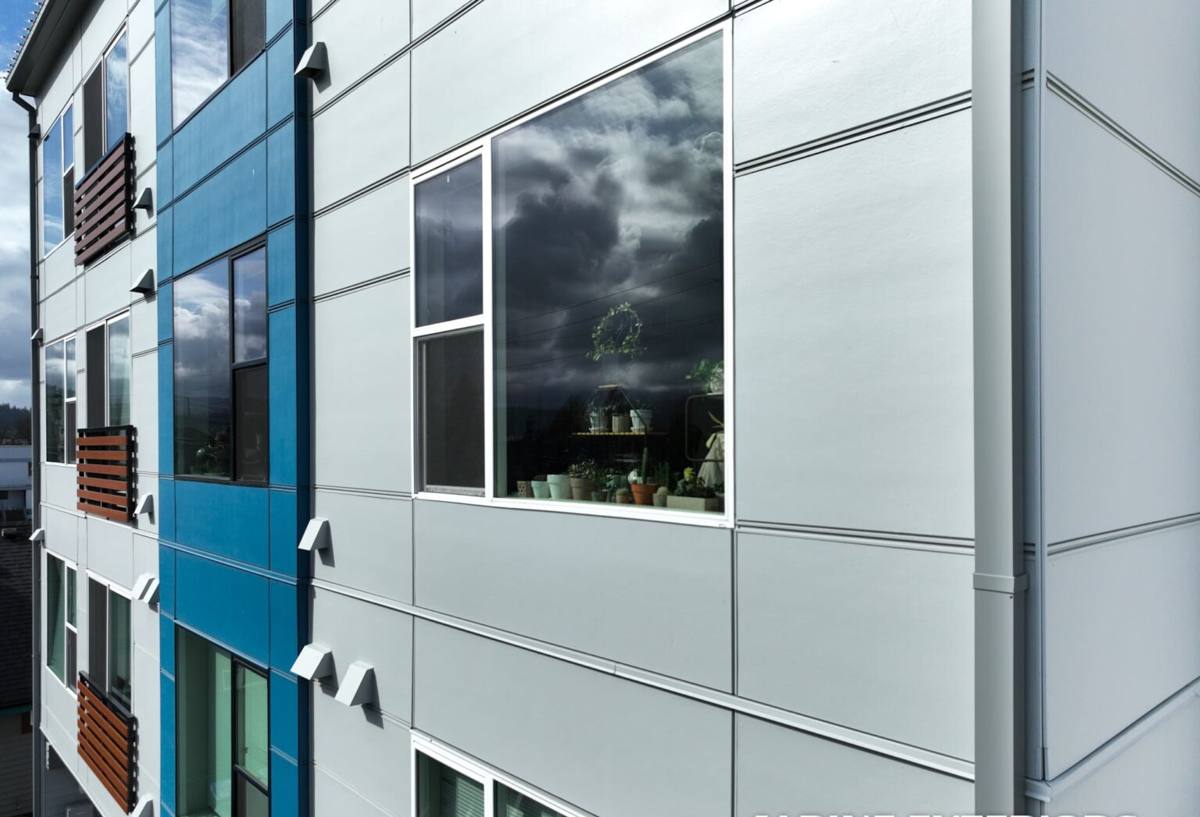
What Salt Air and Constant Moisture Do to Ordinary Windows
Marine air carries fine salt particles that settle on everything, including window hardware, weatherstripping, and exposed fasteners. Over time that salt accelerates corrosion on cheap hinges, locks, and screws — the kind of small failures that let a window stop sealing tightly long before the glass or frame itself gives out. Add near-constant moisture from rain and fog, and you get a second problem: wood that stays damp longer than it should, vinyl that flexes and gaps as it ages, and caulking that breaks down faster under repeated wet-dry cycles.
Moss and algae growth around window trim isn't just cosmetic. Moss holds moisture against wood and trim surfaces, which speeds up rot at sills and casings — often the first place a window installation actually fails, well before the glass unit itself. A correctly installed, well-detailed window resists this cycle. A poorly installed one, even an expensive one, won't.
Common Failure Points We See on Older Homes in This Area
- Sills with soft or rotted wood under peeling paint, hidden by trim
- Corroded or seized locking hardware from years of salt exposure
- Failed seals between the window unit and the wall, letting wind-driven rain in around the frame rather than through the glass
- Foggy or cloudy double-pane glass from a broken seal — the insulated glass unit has failed internally
- Moss and organic buildup on horizontal trim surfaces holding moisture against the wood
- Drafts around the sash even when the window is fully latched
What a Correct Window Installation Actually Involves
The window unit itself is only part of the job. Most window failures we get called out to fix aren't a bad window — they're a window that was installed without proper flashing, sealing, or attention to how water moves down a wall. In a climate with this much driving rain, installation detail is what determines whether a window lasts fifteen years or thirty-five.
A correct installation includes:
- Removing the old unit and inspecting the rough opening, sill, and surrounding framing for hidden rot or moisture damage before anything new goes in
- Repairing or rebuilding any compromised framing or sill material rather than installing over it
- Installing proper flashing at the sill and head so water is directed out and away from the wall assembly, not trapped behind the trim
- Setting the window level, plumb, and square, with correct shimming so the frame isn't under stress that can crack seals prematurely
- Sealing with the right materials at the right layers — housewrap integration, backer rod and sealant where appropriate, not just a bead of caulk around the outside trim
- Confirming the window operates smoothly and locks tightly before we consider the job finished
Skipping any one of these steps is how a brand-new window ends up with the same leak problem five years later.
Choosing the Right Frame Material for This Exposure
There's no single "best" window material for every home — it depends on your exposure, your budget, and how much upkeep you're willing to do. Here's how the common options actually perform in a salt-air, high-rain environment:
| Frame Material | How It Handles Salt Air & Moisture | Maintenance | Typical Trade-Offs |
|---|---|---|---|
| Vinyl | Doesn't corrode; performs well against salt exposure | Low — occasional cleaning | Can flex or discolor over many years of sun and salt cycling; frame color is baked in and not paintable long-term |
| Fiberglass | Very stable in temperature swings and moisture; strong resistance to warping | Low | Higher upfront cost than vinyl |
| Wood-clad | Good performance if the cladding seal stays intact; wood core is vulnerable if that seal fails | Moderate to high — cladding joints need periodic inspection | Best appearance option for many homeowners, but least forgiving of installation errors in this climate |
| Aluminum | Corrosion-resistant coatings help, but bare or worn aluminum can pit near salt air over time | Moderate | Thermally less efficient unless thermally broken; less common in residential retrofits here |
For most Oak Harbor homes we work on, vinyl and fiberglass are the practical choices — the corrosion resistance matters more here than in drier inland areas. Wood-clad can still be the right call for a specific look, but it demands a tighter installation and a homeowner who'll keep an eye on the cladding seams.
Signs It's Time to Replace, Not Just Repair
Not every window problem means a full replacement. Sometimes new weatherstripping, resealing, or hardware replacement solves the issue. But there are signs that point to replacement being the more honest recommendation:
- Fogging or cloudiness between the panes that won't clean off — the seal is gone and can't be fixed
- Soft, spongy, or visibly rotted wood at the sill or jambs
- Windows that won't stay open, won't latch, or have warped enough that they no longer sit square in the frame
- A noticeable draft or cold spot at the window even with it fully closed and locked
- Single-pane glass in a home you're planning to keep long-term — the energy loss and condensation issues add up
If a repair will genuinely solve the problem, we'll say so. We don't have any reason to sell a full replacement when a resealed frame and new hardware will get you another decade out of a sound window.
Our Process, Start to Finish
We keep the process straightforward because window jobs go wrong when steps get skipped or rushed.
- On-site assessment. We look at each window opening individually — not every window on a house is in the same condition, especially on homes with mixed sun and weather exposure across different walls.
- Honest scope and estimate. We tell you which windows need full replacement, which can be repaired, and why, before any work starts.
- Material selection. We walk through frame material and glazing options based on your exposure, budget, and how the house is used.
- Removal and opening inspection. Old units come out carefully, and we check the framing and sill underneath before installing anything new.
- Installation with proper flashing and sealing. This is the step that actually determines how long the window lasts — we don't shortcut it.
- Final walkthrough. We test operation, locking, and seal quality with you before calling the job done.
What Drives the Cost of a Custom Window Job
Every job is different, but a few factors consistently move the price up or down:
- Number of openings and their size — larger or non-standard sizes cost more to fabricate and install
- Frame material — vinyl generally costs less than fiberglass or wood-clad
- Condition of the existing framing — hidden rot or moisture damage adds repair time before the new window can go in
- Glass package — double vs. triple pane, low-E coatings, and impact-resistant glazing all affect price
- Access and site conditions — second-story or hard-to-reach openings take more time and equipment
- Trim and finish work — matching existing exterior trim or siding profiles adds labor
We give a straight number after seeing the actual openings and framing condition — not a ballpark that changes once we open the wall.
Why It Matters That We Already Work This Area
A crew that mostly works dry, inland jobs will still build a technically sound window installation — but they may not think twice about flashing details that matter more here than they do fifty miles east. Working regularly in this stretch of the Pacific Northwest coast means we've seen how salt air corrodes cheap hardware, how moss establishes itself on north-facing trim, and how driving rain finds every gap a rushed installation leaves behind. That experience shows up in the small decisions — where the flashing laps, how much sealant is enough versus too much, which hardware finishes actually hold up — that separate a window installation that lasts from one that doesn't.
We're not interested in overselling a job or pushing a product line because it's what we happen to stock. We'll tell you plainly what your windows need, what they don't, and what a realistic timeline and budget look like for doing it right the first time.
If your windows are showing their age or you're planning ahead for a remodel, we're happy to take a look and give you a straight, no-pressure estimate. Use the form below to get started.