 Anacortes Siding
 New-Construction Windows Are a Different Job Than Replacement Windows
Homeowners in Old Town Anacortes often lump "new windows" together as one service, but new-construction windows and replacement windows are built and installed differently, and the two jobs call for different skills. New-construction windows have a nailing flange that fastens directly to the wall sheathing before siding goes on. They're used when a wall is freshly framed — a new home, an addition, a garage conversion, or a room where the old siding and trim are coming off anyway and the opening is being rebuilt from the studs out.
Because the wall isn't finished yet, a new-construction install gives us full access to the rough opening, the weather-resistive barrier (WRB), and the flashing layers underneath. That's an advantage — it's the only point in a building's life where every part of the window-to-wall connection can be inspected and built correctly, in order, without cutting into finished siding. Get this sequence right and the window rarely causes a problem for decades. Get it wrong and the mistake gets buried behind siding and trim, where it won't show up until there's a stain on drywall or rot in the sheathing.
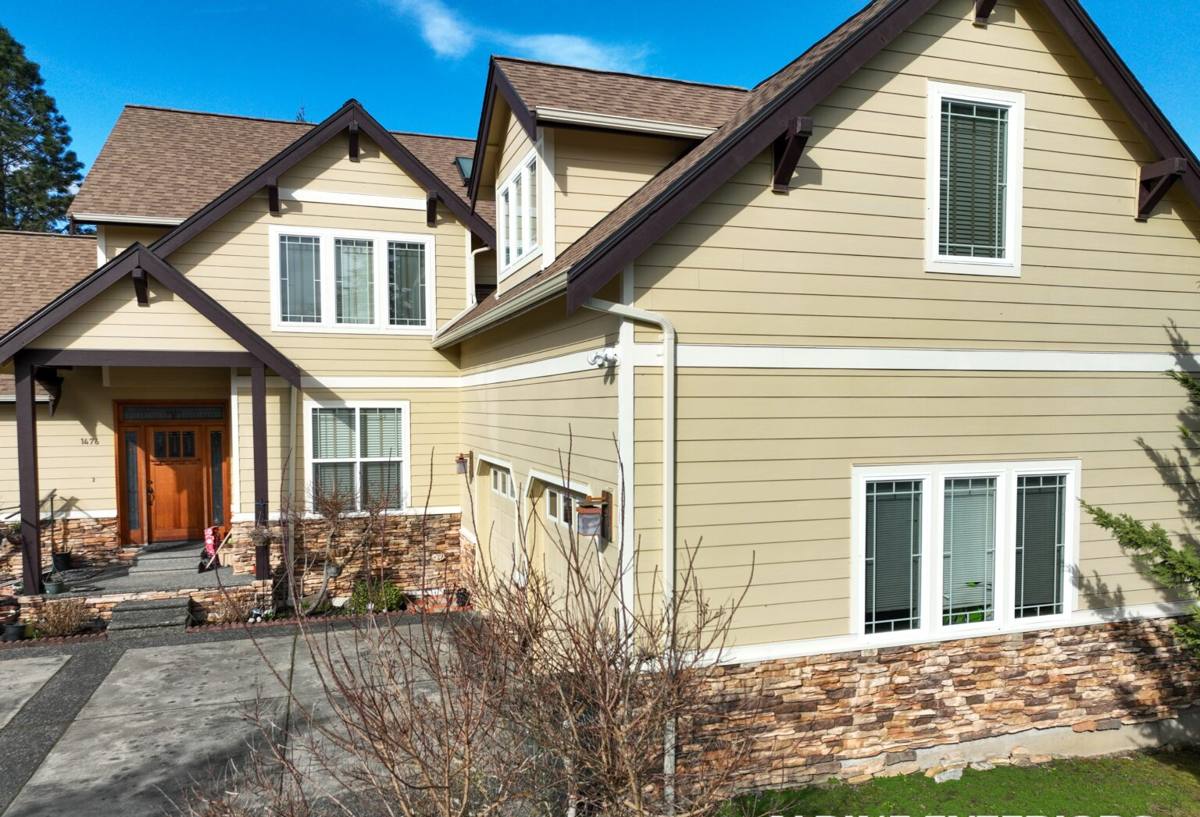
What Skagit County's Marine Climate Demands From a New Window
Old Town Anacortes sits close enough to the water that salt air is a real factor in material choice, not a marketing line. Salt-laden air accelerates corrosion on unprotected fasteners, hinges, and hardware, and it degrades some finishes faster than the same product would wear inland. We factor that into what fasteners, flashing metals, and hardware finishes we spec for a job this close to the water.
Driving rain off the Sound is the other constant. Skagit County gets wind-driven rain events where water isn't just falling straight down — it's being pushed sideways into wall assemblies, which puts real pressure on sill pans, head flashing, and the seal between window and wall. A window that's watertight on a calm day can still leak in a sideways storm if the flashing details weren't built to shed water downward and outward at every layer.
Then there's the long moss season. Extended damp, shaded stretches of the year in this part of Washington let moss, algae, and mildew take hold on horizontal surfaces — sills, trim caps, and anywhere water sits instead of draining. That's less about the window unit itself and more about how the surrounding trim and drainage details are built, but it's part of why we grade sills and plan drip caps the way we do on every install here.
The three things we're building for on every Old Town job
- Corrosion-resistant fasteners and hardware appropriate for near-marine exposure
- Flashing and sill pan details that manage wind-driven rain, not just vertical rain
- Drainage paths and sill slope that don't give moss and algae a place to sit and hold moisture
How We Sequence a New-Construction Window Install
The order of operations matters more than any single product on this job. Flashing works like shingles on a roof — each layer has to lap over the one below it so water is always directed outward and down, never trapped behind a layer where it can't escape.
- Rough opening check. We confirm the opening is square, plumb, and sized correctly before anything goes in. An opening that's out of square strains the window frame and can compromise the seal from day one.
- Sill pan flashing. A sloped, sealed sill pan goes in first, so any water that gets past the window has a built-in path back out rather than a place to pool against the sheathing.
- WRB integration. The weather-resistive barrier is cut and lapped around the opening in the correct order — sides over the sill pan, and the top layer lapped over the side flashing — so the whole assembly sheds water like a shingled roof.
- Window installation. The unit is set, leveled, and fastened per the manufacturer's instructions, which is also what keeps most manufacturer warranties valid.
- Head and side flashing. Flashing goes over the top of the window and integrates back into the WRB above, so water hitting the wall above the window is directed around it, not down behind it.
- Sealant and backer rod. Sealant is applied at the specific joints the manufacturer calls for — not everywhere, since some drainage gaps are meant to stay open on purpose.
- Final inspection. We check operation, seal continuity, and squareness before the wall gets closed in with siding.
Choosing a Frame Material for a Coastal Old Town Lot
There's no single "best" frame material — it's a real trade-off between upfront cost, maintenance, and how the material holds up to salt air and moisture over time. Here's how the common options compare for a home this close to the water.
| Frame Material | Coastal/Salt-Air Behavior | Maintenance | General Cost Tier |
|---|---|---|---|
| Vinyl | Doesn't corrode; good baseline moisture resistance | Low | Lower |
| Fiberglass | Very stable, resists corrosion and expansion/contraction well | Low | Mid to Higher |
| Wood-clad | Exterior clad protects wood, but any breach in the cladding exposes wood to rot | Moderate to High | Higher |
| Aluminum | Strong and slim sightlines, but needs a marine-grade finish to resist corrosion here | Low to Moderate | Mid to Higher |
Our default recommendation for exposed elevations in Old Town Anacortes leans toward vinyl or fiberglass because they hold up to salt air and driving rain with the least ongoing maintenance. Wood-clad windows still have a place on the design side — we just make sure the homeowner understands the maintenance trade-off going in, rather than finding out about it years later.
Cost Factors on a New-Construction Window Package
We won't quote a number without seeing the plans, but these are the variables that actually move the price on a new-construction window job:
| Factor | Why It Matters |
|---|---|
| Number and size of openings | More units and larger glass area mean more labor and material |
| Frame material tier | Vinyl, fiberglass, wood-clad, and aluminum carry different unit costs |
| Flashing and sill complexity | A standard wall assembly flashes faster than a complex one with decks, roofs, or multiple wall planes meeting near the opening |
| Site access | Tight infill lots or alley-only access can slow material staging and crew movement |
| Egress requirements | Bedroom windows have code-driven minimum size and operation requirements that can affect unit selection |
| Timing with other trades | Coordinating install day with the framer and siding crew affects scheduling but not usually cost, unless delays cause a return trip |
Working Alongside Your Builder or GC
Most new-construction window jobs happen inside a larger build, whether that's a general contractor running a new home or a homeowner managing their own addition. We're used to working inside someone else's schedule. That means showing up when the wall is framed and dried in but before siding starts, communicating clearly if the rough openings don't match the window order, and flagging framing issues before they become install-day problems instead of after. If you're a GC in the Old Town Anacortes area coordinating multiple trades on a tight timeline, we'll work directly with your schedule rather than asking you to work around ours.
Old Town Anacortes: Infill Lots, Additions, and Older Neighboring Construction
Old Town Anacortes is one of the city's older residential areas, which means new-construction window work here is more often an addition, an ADU, a garage-to-living-space conversion, or targeted infill than a full ground-up subdivision build. That changes a few things in practice: lots tend to be smaller and tighter, staging materials takes more planning, and a new opening is frequently going in next to decades-old framing and siding that won't match modern building assumptions. We check how a new wall section ties into the existing structure — not just the new opening itself — so the transition between old and new construction doesn't become the weak point in the whole assembly.
Our Install-Day Checklist
This is the short version of what we run through before we call a window install complete:
- Rough opening confirmed square, plumb, and correctly sized
- Sill pan installed with proper slope and sealed corners
- WRB laps correctly shingled — sides over sill pan, top over sides
- Window shimmed, leveled, and fastened per manufacturer spec
- Head flashing integrated back into the WRB above the opening
- Sealant applied only at manufacturer-specified joints, drainage gaps left open
- Sash operation, locks, and screens tested
- Fasteners and hardware confirmed appropriate for near-marine exposure
Warranty and What We Stand Behind
Manufacturer warranties on the glass and hardware are between you and the window manufacturer, and we make sure installation follows their instructions so that warranty stays intact. On our side, we stand behind the installation itself — the flashing, the fastening, the sealant work, and the overall integration into the wall assembly. If something we installed fails to perform the way it should, that's on us to make right.
If you're planning a new-construction window package for a build or addition in Old Town Anacortes, we're happy to take a look at your plans and talk through material and flashing details before framing goes final. Fill out the form below for a free, no-pressure estimate.