 Anacortes Siding
 Windows Built for a Ship Harbor Address
Ship Harbor sits close enough to the water that its windows live a different life than windows ten miles inland. Salt-laden air, wind-driven rain off Rosario Strait, and the shoulder seasons of near-constant damp all work on window frames, seals, and finishes faster than they do in a typical Skagit County subdivision. If you've owned a home out here for more than a few years, you've probably already noticed it: sticking sashes, fogged glass, or a draft that wasn't there when the house was new.
Window replacement in this pocket of Anacortes isn't a different product line — it's the same well-built window installed with more attention to the details that actually fail first near the water. That's the job we're describing on this page: what Ship Harbor homes need, what a correct installation looks like, and how we handle it.
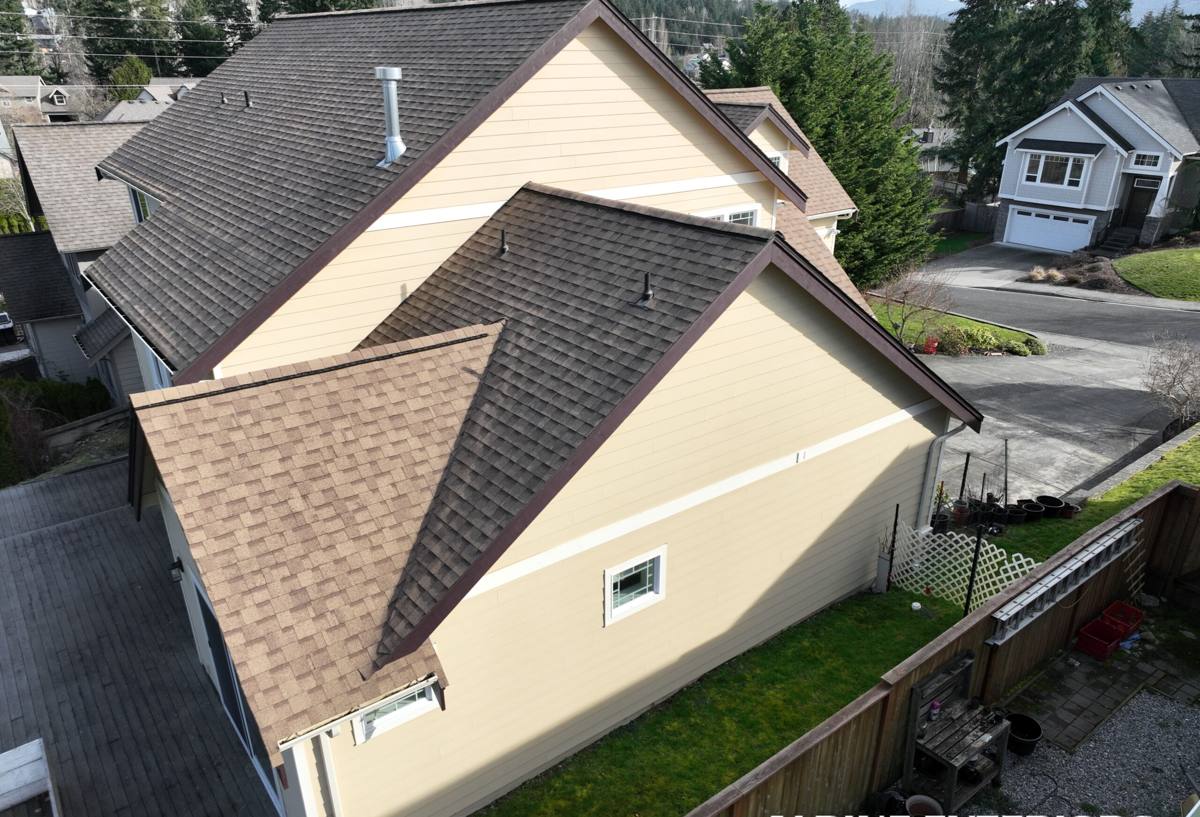
What Salt Air and Driving Rain Do to Windows Over Time
None of this is dramatic — it's slow, and that's exactly why it gets missed until a window is failing outright.
Salt Air
Airborne salt is corrosive to exposed metal hardware — hinges, cranks, balance mechanisms, and screws — and it accelerates the breakdown of some finishes on aluminum-clad and vinyl products. Homes with a direct water-facing exposure see this show up first on the windward side of the house, often years before the rest of the windows show any wear.
Driving Rain
Wind off the water doesn't just wet a window, it pushes water sideways and upward against the glass and into any gap in the flashing or sealant. A window that would stay dry in a calm rain in a sheltered neighborhood can take on water at a Ship Harbor address in the same storm. This is why flashing detail and sealant work matter more here than the window unit itself.
The Long Moss Season
Western Skagit County's damp stretches from fall through spring, and that dampness doesn't just grow moss on roofs — it keeps wood trim, sills, and any porous surface around a window wet for long periods. Wet-dry cycling is what breaks down caulk, swells wood, and eventually lets water find its way into the wall assembly behind the window.
Signs a Ship Harbor Home Needs Window Replacement
- Fogging or a visible haze between panes — the seal on the insulated glass unit has failed
- Sashes that stick, drop, or won't stay open, often from swollen or corroded hardware
- Visible gaps, soft spots, or paint failure on the wood trim or sill around the window
- A cold draft at the window edge even when it's fully closed and locked
- Water staining on interior drywall or trim below or beside a window
- Difficulty locking a window fully, which is both an efficiency and a security issue
- Visible corrosion on hinges, cranks, or screws, especially on the water-facing side of the house
Any one of these on its own might just need repair or resealing. Several together, especially on an older window, usually means the unit and its installation have reached the end of their useful life.
What a Correct Window Installation Looks Like Here
The window product matters, but in a driving-rain environment like Ship Harbor, the installation detail is what actually determines whether the window stays dry for the next twenty years. We treat the following as non-negotiable on every job in this area:
Flashing and Weather Barrier Integration
The window needs to be integrated into the house's weather-resistive barrier with proper flashing tape and a correctly lapped sill pan — not just caulked around the outside. Sill pan flashing in particular is what keeps any water that does get past the window from running into the wall framing.
Sealant Selection and Placement
Not every exterior sealant holds up to constant UV and salt exposure. We use sealants rated for the exposure and apply them at the joints that actually need them — leaving the designed weep paths open rather than sealing them shut, which is a common mistake that traps water inside the frame.
Hardware and Fastener Choice
Where budget and product allow, we favor corrosion-resistant fasteners and hardware for water-facing exposures. It's a small cost difference upfront that avoids replacing hinges and cranks again in five years.
Proper Shimming and Squaring
A window that isn't shimmed level and square will bind, won't seal evenly, and puts uneven stress on the frame — all of which shorten its service life regardless of how good the product is.
Choosing Window Materials for a Water-Facing Home
There's no single "best" window material for every house — the right call depends on your exposure, your budget, and how much upkeep you want to take on. Here's how the common options actually perform in this kind of climate:
| Material | Salt Air / Moisture Behavior | Maintenance | Notes |
|---|---|---|---|
| Vinyl | Good — doesn't corrode or rot | Low | Budget-friendly; quality varies a lot between manufacturers |
| Fiberglass | Very good — dimensionally stable, resists moisture and salt | Low | Higher upfront cost; holds paint well if you want a custom color |
| Aluminum-clad wood | Fair to good on the exterior face — cladding protects the wood, but any breach lets moisture into the wood core | Moderate | Attractive interior wood finish; exterior cladding needs to be fully sealed at joints |
| Bare wood | Poor without diligent upkeep — this exposure is hard on exposed wood finishes | High | We generally steer water-facing Ship Harbor homes away from bare exterior wood unless there's a strong preservation reason for it |
We'll walk through this table against your actual house and budget during the estimate — there's rarely a wrong answer, just trade-offs worth knowing about upfront.
Our Process for a Ship Harbor Window Job
- On-site assessment. We look at your current windows, the direction they face relative to the water, and the condition of the trim and wall assembly around them — not just the glass.
- Honest scope and options. You'll get a clear rundown of what's failing, what's still fine, and which materials make sense for your exposure and budget — no upsell on windows that don't need replacing.
- Written estimate. Materials, labor, and a realistic timeline, spelled out before any work starts.
- Removal and inspection. Once old windows come out, we check the sheathing and framing underneath for hidden water damage before anything new goes in — this is the step that gets skipped by installers rushing a "flip and go" job.
- Correct installation. Flashing, sill pan, shimming, and sealant done to the standard described above — every window, every time.
- Final check and cleanup. Every window operates, locks, and seals correctly before we call the job done, and the site is left clean.
Why a Local Crew Matters for This Job
Window replacement isn't exotic work, but doing it well in a spot like Ship Harbor benefits from crews who already know what this exposure does to a house. We've worked enough water-facing Anacortes properties to know where water actually gets in — usually not through the glass, but through flashing shortcuts and sealant gaps that don't show up until the next storm season. A crew unfamiliar with this stretch of Skagit County's coastline may build to a general spec that's fine forty miles inland and undersized for what Ship Harbor sees off the water.
Being local also means we're not driving in from out of the area for a warranty callback — if something needs a second look after a storm, we're already working this part of Anacortes.
Timing Your Project Around the Weather
Window replacement can be done in most of Skagit County's weather, but there are real advantages to timing it around the drier stretches of the year when possible. Installing during a heavy driving-rain period makes it harder to keep the wall opening dry during the swap, even with careful tarping and sequencing. If your windows are failing now, we won't tell you to wait out the whole moss season — but if you're planning ahead, timing the work for a calmer weather window reduces risk and often speeds up the job.
What to Ask Before Hiring Anyone for This Job
- Will you install sill pan flashing, or just caulk around the window?
- What sealant are you using, and is it rated for direct salt-air exposure?
- Will you inspect the framing and sheathing once the old window is out?
- What's the warranty on both the window product and your labor, separately?
- Have you worked on water-facing homes in this part of Anacortes before?
Any contractor should be able to answer these plainly. If you get vague answers on flashing or sealant, that's worth a second opinion before you sign anything.
Get a Free, No-Pressure Estimate
If your windows near Ship Harbor are showing their age — fogging, sticking, drafts, or trim that's starting to go soft — it's worth having a local crew take a look before it turns into a bigger repair. Use the form below to request a free estimate. We'll walk the property, give you a straight assessment, and lay out your options with no pressure to decide on the spot.