 Anacortes Siding
 Windows on Similk Beach Take a Different Kind of Beating
Similk Beach sits close enough to the water that homes there deal with a different set of stresses than a house a few miles inland in Anacortes. Salt-laden air moves through window hardware and finishes. Wind-driven rain off the water gets pushed sideways into gaps that would stay dry on a calmer site. And the long, damp stretch of fall through spring that Skagit County gets every year keeps trim, sills, and siding around window openings wet for weeks at a time. None of that means windows can't last a long time out here — it means the installation has to account for those conditions from the start, not just the product that gets set into the opening.
A window that's a fine choice in a dry, sheltered neighborhood can underperform on a waterfront lot if it's installed the same way. This page is about what that means in practice: what Similk Beach homes actually need from a window installation, what a correct job looks like, and how we approach it differently because we already know this stretch of shoreline.
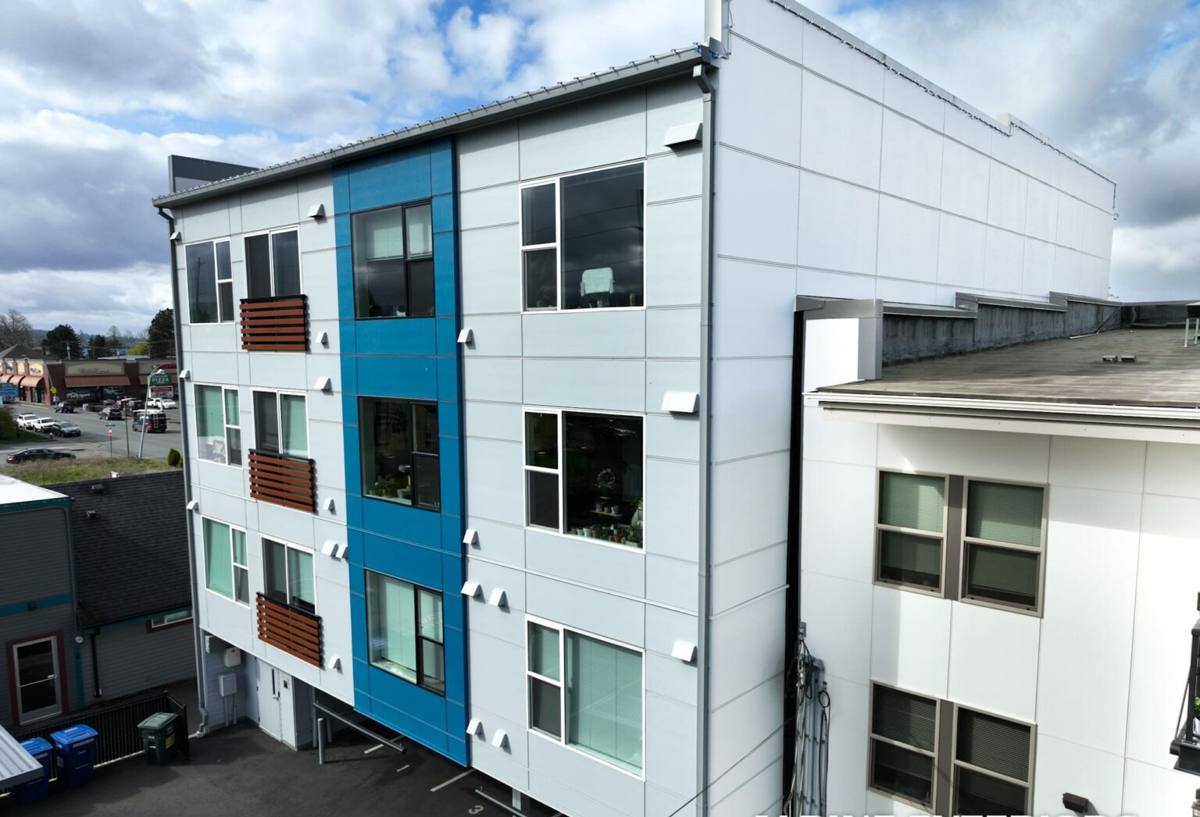
What Salt Air, Driving Rain, and Moss Season Actually Do to Windows
Salt Air and Hardware Corrosion
Airborne salt is corrosive to exposed metal — hinges, locks, cranks, and especially lower-grade fasteners. On a standard inland install, a window's hardware might go a decade or more without issue. Near Similk Beach, the same hardware can start showing pitting or stiffness in a fraction of that time if it isn't rated for coastal exposure or if the finish gets compromised during installation. This is one of the first things we check when we quote a job out here — not just the glass and frame, but what the hardware is actually made of.
Wind-Driven Rain
Rain that comes straight down is relatively easy for any window to shed. Rain that's being pushed sideways by wind off the water is a different problem — it finds its way into any gap in the flashing, sealant, or trim that a calmer site would never test. Water intrusion at a window opening rarely shows up right away. It usually shows up months or years later as soft trim, staining on interior sills, or rot in the wall framing behind the window — by which point the fix is a lot more than replacing a pane.
Moss and Prolonged Moisture
Skagit County's wet season runs long, and moss doesn't need much of a foothold — a shaded north-facing wall, a bit of debris in a sill track, or a spot where water sits instead of draining. Moss and the moisture it holds against wood trim and siding accelerate rot around window openings faster than most homeowners expect. Keeping water moving away from the window, not pooling against it, is a design consideration as much as a maintenance one.
What a Correct Window Installation Involves
The window unit itself is maybe a third of what determines how well an installation performs over time. The rest comes down to the details around it — details that matter more here than they would a few miles from the water.
- Proper flashing sequence — flashing tape and pan flashing installed in the correct shingle-lap order so water is always directed outward and down, never trapped behind the window.
- Sill pan protection — a sloped, sealed sill pan under the window so any water that does get past the exterior is directed back out rather than sitting on bare framing.
- Correct sealant, not just more of it — the right sealant in the right joints; over-sealing can trap moisture just as easily as under-sealing lets it in.
- Air sealing at the rough opening — closed-cell foam or backer rod and sealant between the window frame and the framing, both for energy performance and to keep wind-driven rain from being pushed through gaps.
- Corrosion-resistant fasteners and hardware — stainless or coated fasteners near the coast instead of standard galvanized, which can degrade faster in salt air.
- Proper shimming and leveling — a window that isn't square or plumb stresses its own seals over time, which opens the door to leaks years down the road.
Skip or rush any one of these steps and the window itself doesn't matter much — water and air will find the path of least resistance.
Choosing the Right Window for a Waterfront-Adjacent Property
There's no single "best" window material — the right choice depends on budget, the home's exposure, and how much maintenance a homeowner wants to take on. Here's how the common options compare for a Similk Beach setting specifically.
| Frame Material | Coastal Performance | Maintenance | Trade-offs |
|---|---|---|---|
| Vinyl | Good — won't corrode or rot, handles moisture well | Low | Frame color/finish can fade faster under strong sun and salt exposure over many years |
| Fiberglass | Very good — dimensionally stable, resists warping and corrosion | Low | Higher upfront cost than vinyl |
| Wood or Wood-Clad | Fair to good depending on cladding — needs good detailing to keep water off exposed wood | Higher — periodic refinishing, especially on unclad wood | Best appearance for some homeowners; more sensitive to installation quality near the coast |
| Aluminum | Fair — conducts cold and can corrode without a marine-grade finish | Moderate | We recommend it selectively here; it's a poor fit for most Similk Beach applications without upgraded finishes |
For most Similk Beach homes we work on, vinyl or fiberglass ends up being the practical choice — both hold up to salt air and driving rain without the added upkeep that wood cladding requires this close to the water. Where a homeowner wants the look of wood, we'll talk through what that maintenance commitment actually looks like so there are no surprises.
Glass and Frame Performance Options Worth Discussing
Beyond the frame material, a few glass and frame features are worth asking about during your estimate:
- Dual or triple-pane glass with a low-E coating, for both energy performance and comfort near drafty older openings.
- Warm-edge spacer systems, which resist condensation better than older aluminum spacers — relevant given how much humidity this area holds through the wet months.
- Reinforced or multi-point locking hardware, particularly for larger openings exposed to wind.
Our Installation Process for Similk Beach Homes
- On-site assessment. We look at each opening individually — sun and wind exposure, existing flashing condition, any signs of past water intrusion or rot in the trim and sheathing.
- Removal and inspection. Once the old window is out, we check the rough opening and surrounding framing for hidden moisture damage before anything new goes in. This is often where problems that weren't visible from outside get caught.
- Repair before install. Any soft framing, damaged sheathing, or compromised weather barrier gets addressed first. Installing a new window over a damaged opening just hides the problem.
- Flashing and sill pan installation. Built in the correct sequence to direct water out, with attention to how each opening's exposure to wind and rain factors in.
- Window setting, shimming, and fastening. Set level, plumb, and square, with corrosion-resistant fasteners appropriate for a coastal-adjacent property.
- Air sealing and interior/exterior finishing. Insulation at the gap, sealant at the joints, and trim work that sheds water rather than holding it.
- Final walkthrough. We check operation, seals, and finish work with the homeowner before calling the job done.
Signs Your Current Windows May Already Be Struggling
Homeowners often reach out about a specific window that's clearly failing, but it's worth checking the whole house — problems near the water tend to show up in more than one spot at a similar age.
- Soft or discolored trim or sill wood around a window frame
- Visible moss or persistent green staining near window edges
- Difficulty opening, closing, or locking a window that used to operate smoothly
- Fogging or condensation between panes on double-pane units
- Drafts or noticeable temperature difference near a closed window
- Peeling paint or bubbling finish on interior sills, which often points to moisture getting in from outside
- Visible corrosion or stiffness on hardware, cranks, or locks
Any one of these on its own isn't necessarily an emergency, but a few showing up together — especially soft trim plus staining — usually means water has been getting past the seal for a while.
What Affects the Cost of a Window Installation Here
| Factor | Why It Matters in This Area |
|---|---|
| Frame material | Vinyl is generally the most budget-friendly; fiberglass and wood-clad cost more but bring different maintenance profiles |
| Number and size of openings | Larger or custom-sized windows and multi-window projects affect both material and labor cost |
| Condition of the existing opening | Hidden rot or past water damage found during removal adds repair scope before the new window can go in |
| Exposure of the opening | Windows on the water-facing or wind-exposed side of a home may warrant upgraded flashing details or hardware |
| Glass package | Triple-pane, upgraded low-E coatings, or impact-resistant options add cost but can be worth it depending on exposure and goals |
We don't quote window jobs off a flat per-window rate, because two openings on the same street can need very different amounts of work depending on their condition and exposure. A walkthrough and honest look at each opening is how we get you a number you can trust.
Why It Matters That We Already Work Around Similk Beach
A lot of window installation mistakes aren't visible on day one — they show up two or three winters later, after enough wind-driven rain and enough freeze-thaw cycles have tested the seals and flashing. A crew that mostly works drier, more sheltered sites can do a perfectly competent job by their own usual standard and still leave a coastal home under-protected, simply because that standard wasn't built for this kind of exposure.
Working regularly in and around Anacortes and along the Skagit County shoreline means we've seen what actually fails first out here — which hardware corrodes early, which trim details let moss get a foothold, which flashing shortcuts show up as a leak a couple of winters later. That's the kind of knowledge that doesn't come from a spec sheet; it comes from opening up enough old installations near the water to see what held up and what didn't.
Get an Honest Look at Your Windows
If you're dealing with a window that's sticking, drafty, fogged, or showing soft trim, or you're planning ahead for a full replacement project on a Similk Beach property, we're glad to come take a look. The estimate is free, there's no pressure attached to it, and you'll get a straight answer about what your windows actually need — whether that's a full replacement or something simpler. Use the form below to get started.