 Anacortes Siding
 Board & Batten Siding for Burlington Homes
Board and batten has become one of the most requested siding styles in Skagit County, and it's easy to see why. The bold vertical lines read as modern farmhouse on a new build and as classic Pacific Northwest on an older home, and it pairs well with the mix of pole barns, converted outbuildings, and newer construction you see around Burlington. But board and batten isn't just a look. The way it's built, fastened, and flashed determines whether it holds up to Skagit Valley weather for decades or starts causing problems within a few winters.
We install board and batten siding for homeowners in Burlington and the surrounding valley using James Hardie fiber cement exclusively. That's not a marketing preference — it's a decision about what actually survives this climate without turning into a maintenance project every fall.
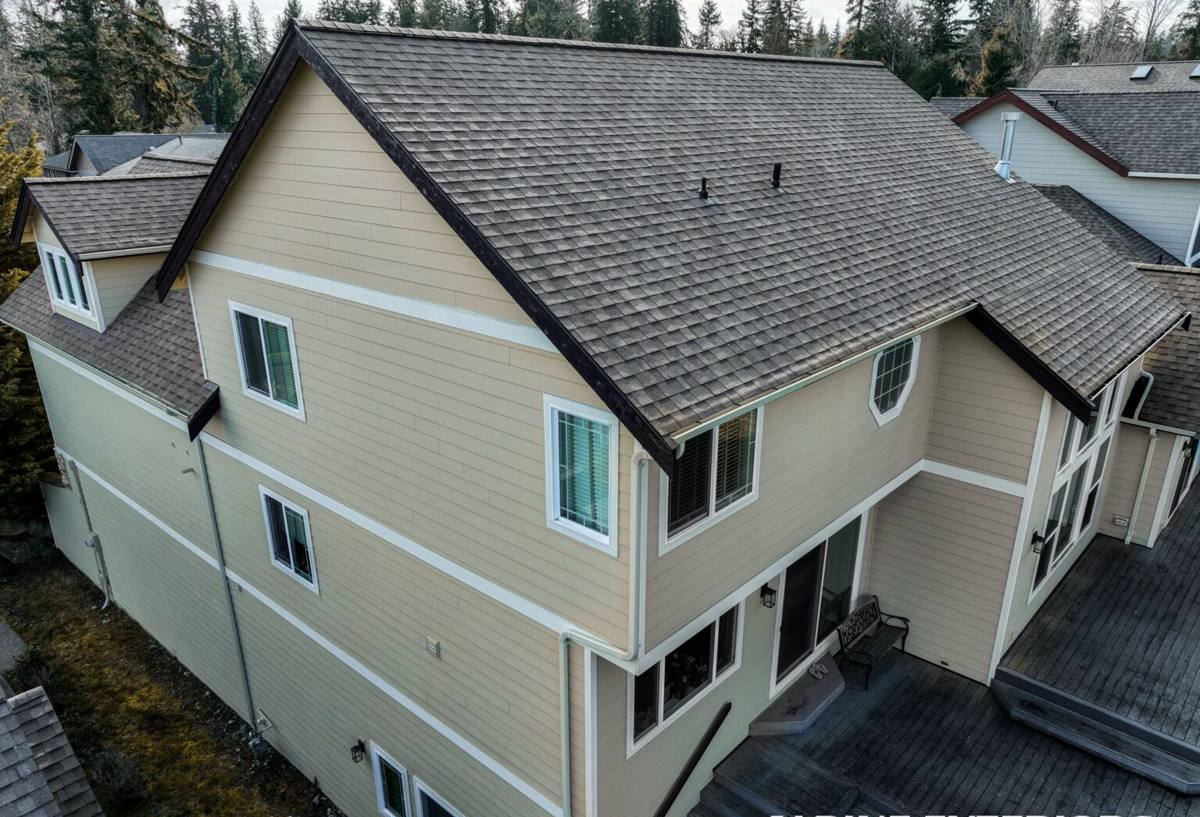
What Burlington's Climate Does to a Board & Batten Wall
Burlington sits inland in the Skagit River valley, but it's still very much a Puget Sound climate — marine air moves in off the water, rain arrives sideways more often than straight down, and the valley holds humidity longer than homes up on higher, more exposed ground. Add in the salt-tinged air that reaches inland from the Sound and Fidalgo Bay, and you've got a combination that's tough on any exterior material, but especially tough on a siding style built around vertical seams and applied trim.
Board and batten depends on overlapping joints and batten strips to shed water down the wall. Every one of those joints and every batten-to-panel seam is a place where wind-driven rain can push moisture sideways instead of letting it run off. In a climate with a long wet season and a long moss season, any seam that isn't detailed correctly becomes a spot where moisture sits against the wall instead of draining away. Over a few seasons, that's how you get soft trim, streaking, and eventually rot at the bottom edges of boards and window trim.
Moss and Algae Are a Material Test, Not Just a Cleaning Chore
Moss and algae growth on north-facing and shaded walls is common throughout Skagit County, and board and batten's texture — with its shadow lines and trim edges — gives organic growth more surface to cling to than a flat lap profile. A siding material that absorbs moisture will feed that growth from the inside; a material that stays dimensionally stable and doesn't wick water will just need an occasional rinse.
Where Board & Batten Installations Go Wrong
Board and batten is more installation-sensitive than standard horizontal lap siding, mainly because there are more places to make a small mistake and more consequences when one is made in a wet climate. We see the same handful of issues on homes we're asked to evaluate or replace siding on around Burlington.
Common Failure Points
- Battens face-nailed directly through both layers without allowing for drainage behind the joint
- No rain screen gap, so moisture that gets behind the siding has nowhere to go and no way to dry
- Missing or undersized flashing at window and door heads, letting water track behind the trim
- Butt joints between vertical boards that aren't backed or sealed correctly
- Bottom edges set too close to grade, decks, or roof lines, so splash-back keeps the lowest boards wet
- Using a material — like uncoated wood or certain composite panels — that swells, cups, or delaminates when it takes on moisture repeatedly
None of these are exotic problems. They're the ordinary result of treating board and batten like a cosmetic trim job instead of a full water-management system.
What a Correct Board & Batten Installation Involves
A board and batten wall that's going to hold up in Burlington's climate needs to be built with drainage in mind from the first layer out. That means a proper weather-resistant barrier against the sheathing, a rain screen or drainage gap so any incidental moisture behind the siding can drain and dry, correctly lapped and sealed flashing at every penetration, and fastening that follows the manufacturer's schedule rather than "wherever it looks even."
Details That Matter Most in a Wet, Salt-Influenced Climate
| Detail | Why It Matters Here |
|---|---|
| Rain screen / drainage gap | Lets wind-driven rain that gets past the surface drain and dry instead of sitting against the sheathing |
| Head flashing at windows and doors | Prevents water from tracking behind trim during driving rain, the most common failure point on board and batten |
| Sealed and backed butt joints | Keeps vertical seams from becoming wicking points during long wet stretches |
| Bottom clearance from grade, decks, roofs | Reduces splash-back and standing moisture that feeds moss and rot at the lowest boards |
| Factory-cured, factory-finished panels | Removes the field-painting variable that leaves raw cut edges and fastener heads exposed to salt air and rain |
James Hardie Board & Batten Systems
We install James Hardie's board and batten options exclusively — no vinyl, no LP SmartSide, no primed wood, no cedar. Hardie's vertical panel systems are engineered specifically for this look, using fiber cement panels paired with battens rather than relying on a soft substrate that depends entirely on paint film to stay dry.
Why Fiber Cement Holds Up Where Other Materials Don't
Fiber cement doesn't swell, cup, or absorb water the way wood-based products can, and it won't soften at cut edges the way some engineered wood panels do if a seal gets compromised. James Hardie's HZ5 product line is engineered for climates like ours — freeze-thaw cycles, sustained moisture, and coastal-influenced air — rather than a generic national spec. Panels come with a factory-applied ColorPlus finish baked on under controlled conditions, which holds color and resists the fading and moisture intrusion that field-applied paint is more prone to, especially on a style with this many exposed edges and seams.
Non-Combustible, Too
Fiber cement is non-combustible, which matters given the wildfire smoke and dry-season fire risk that's become a more regular part of late-summer conditions across the Pacific Northwest, even in a generally wet county like Skagit.
Board & Batten Material Comparison
Homeowners in Burlington often ask why we won't install board and batten in vinyl, LP SmartSide, or unfinished wood. Here's the honest comparison, factor by factor.
| Factor | Vinyl Board & Batten | LP SmartSide / Engineered Wood | James Hardie Fiber Cement |
|---|---|---|---|
| Moisture behavior | Doesn't absorb water, but seams and battens can trap it behind the panel | Absorbs moisture at cut edges and fastener points if seal fails | Doesn't swell or wick; engineered for wet climates (HZ5) |
| Fire rating | Combustible | Combustible (engineered wood core) | Non-combustible |
| Finish durability | Molded-in color, can fade and chalk | Field or factory paint, needs repainting over time | Factory-baked ColorPlus finish, longer color retention |
| Installation sensitivity | Moderate — expansion gaps critical | High — sealing every cut edge is essential | Moderate — correct flashing and fastening critical |
| Warranty structure | Varies widely by manufacturer | Varies, often prorated | Strong non-prorated transferable warranty when installed to spec |
Vinyl board and batten is inexpensive and low-maintenance in a general sense, but it relies on gaps and channels behind the panel that can hold moisture in a climate this wet, and it's not a material we stand behind for this application. Engineered wood products can look and cost similar to fiber cement up front, but their long-term performance depends entirely on every seal and cut edge staying intact — a bigger bet in a climate with this much sustained moisture and moss pressure.
Our Process for Board & Batten Installs in Burlington
Every board and batten project starts with an on-site look at the existing wall assembly, not just the siding surface. We check for existing moisture damage, current flashing details, and how water currently moves off the roof and around windows before we ever talk panel color.
- Site assessment — check sheathing condition, existing moisture issues, and drainage paths around the home
- Remove old siding and inspect/repair sheathing as needed before anything new goes on
- Install weather-resistant barrier and rain screen furring for a drainage gap behind the new siding
- Install and flash James Hardie vertical panels and battens to manufacturer fastening specs
- Detail all window, door, and roofline flashing before trim goes on
- Final inspection of seams, fastener lines, and caulking before walkthrough
We don't skip the sheathing and drainage steps to save time, because those are the parts of the job you can't see or fix later without pulling the siding back off.
Maintaining Board & Batten Siding in This Climate
Fiber cement board and batten is genuinely low-maintenance compared to wood, but "low-maintenance" isn't "no-maintenance" in a valley that sees this much rain and moss pressure. A short annual routine keeps it looking right and catches small issues before they become repairs.
- Rinse siding annually, focusing on north-facing and shaded walls where moss and algae collect fastest
- Walk the exterior each fall and check caulking at window and door trim for cracking or gaps
- Keep gutters clear so overflow doesn't run down the wall face during heavy rain events
- Trim back vegetation and tree cover that keeps any wall section shaded and damp longer than the rest of the house
- Check the bottom courses near grade, decks, and patios for splash-back staining or debris buildup
Why Hire a Crew That Already Works in Burlington
Board and batten done wrong doesn't usually fail in year one — it fails in year four or five, after enough wet seasons have worked their way into a seam that wasn't detailed right the first time. A crew that already works throughout Skagit County has seen how local moisture, shade patterns, and marine air actually behave on a wall over time, not just on paper. That's the difference between a spec sheet and a siding job that's still tight a decade from now.
We also know what correct James Hardie installation requires in this specific climate — the fastening schedule, the flashing sequence, the drainage gap — because it's the only product we install and the only standard we hold every crew to.
If you're weighing board and batten for a home in Burlington, we're glad to take a look and walk you through what your home specifically needs. There's no pressure and no cost to get a straight answer — just fill out the form below to schedule a free estimate.