 Anacortes Siding
 Windows Built for Cap Sante's Exposure
Cap Sante sits up on the bluff above the marina, which means the homes there get more of everything the Salish Sea throws at Anacortes — more wind, more salt-laden air, more driving rain coming off the water sideways instead of straight down. That exposure is part of what makes the neighborhood beautiful, and it's also exactly what wears out windows faster than almost anywhere else in Skagit County. A window that would coast along for twenty-five years in a sheltered inland yard can start showing seal failure, frame corrosion, or wood rot in half that time up here if it wasn't specified and installed correctly in the first place.
We install custom windows for homes in Cap Sante and the surrounding Anacortes waterfront on a regular basis, so this page isn't a generic rundown of window options. It's specifically about what this location does to a window over time, what we build in to counter that, and what a correct installation looks like when salt air, wind, and moss are part of the daily environment rather than an occasional storm event.
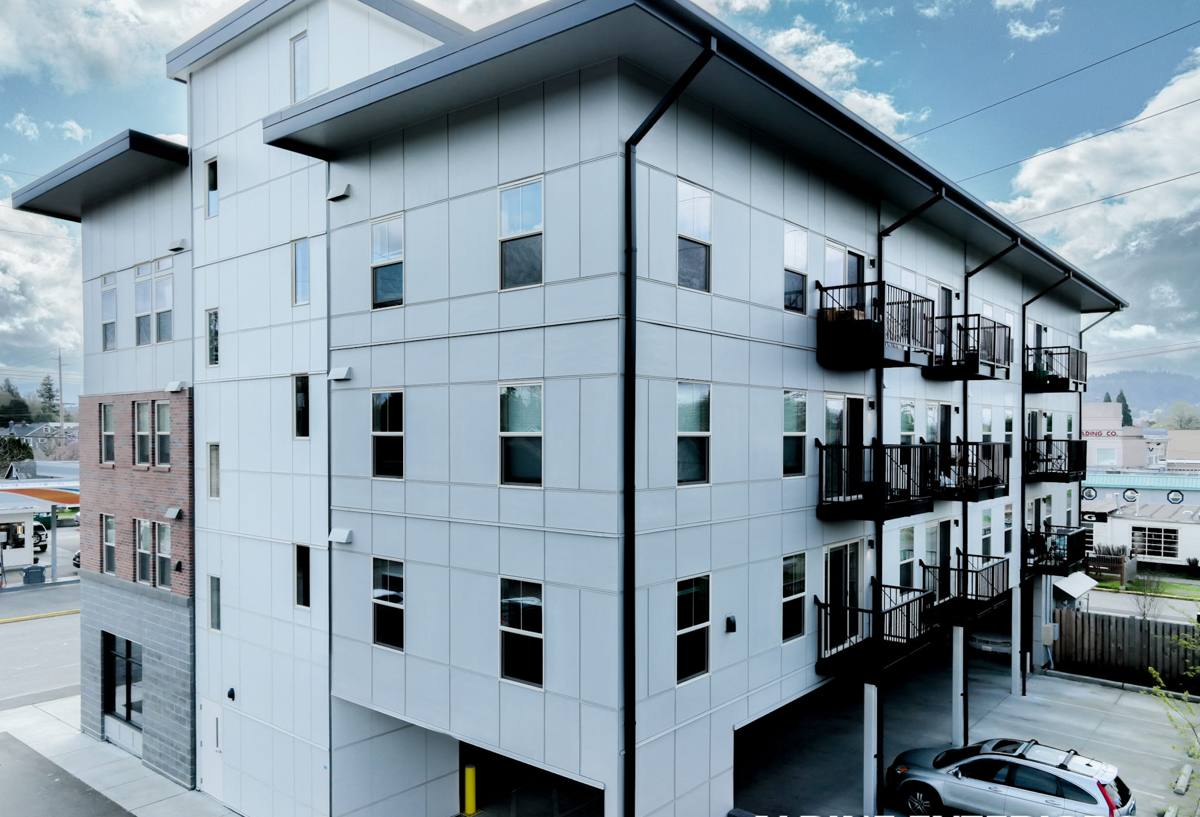
What the Local Climate Actually Does to a Window
It helps to be specific about the mechanisms, because "salt air is tough on windows" undersells it. A few things are happening at once on an exposed Cap Sante property:
- Salt deposition on hardware and frames. Airborne salt settles on window exteriors and works into hinges, cranks, and locking hardware. Left unaddressed, it accelerates corrosion on lower-grade metal components and can pit or dull finishes over time.
- Wind-driven rain hitting at an angle. Rain that comes in horizontally, rather than falling straight, tests flashing and sill details that a standard installation never has to deal with. Water finds its way in at the weakest point in the flashing sequence, not necessarily the most obvious one.
- Extended damp periods that feed moss and mildew. Skagit County's long wet season means exterior wood trim, sills, and even window gaskets stay damp longer than they would in a drier climate. That moisture supports moss and algae growth on anything that doesn't shed water cleanly, and it keeps wood-based materials at elevated moisture content for weeks at a stretch.
- UV and temperature cycling on top of the moisture load. Even with our relatively mild temperatures, sun exposure on south- and west-facing glass combined with constant damp-dry cycling stresses seals and caulking faster than a purely dry or purely wet climate would.
None of this means windows can't last on the bluff — it means the product, the flashing detail, and the maintenance plan all have to account for it instead of assuming average Pacific Northwest conditions.
What "Custom" Actually Means Here
Custom windows aren't just about non-standard shapes or oversized openings, though we do plenty of that on older or architecturally distinct Cap Sante homes. Custom, in the context we mean it, covers:
Sizing to the Actual Opening
Older homes in this part of Anacortes often have rough openings that don't match anything off a standard size chart. Rather than force a stock size and pack the gap with excess shim and caulk, we build to the opening that's actually there, which gives the flashing and insulation a clean, consistent path all the way around the frame.
Glass Package Matched to Exposure
A window on a sheltered inland wall and a window facing open water off Cap Sante don't need the same glass package. For direct water-view exposure we typically talk through impact considerations, solar heat gain control for west-facing glare off the water, and dual- versus triple-pane tradeoffs based on how that particular wall performs.
Frame Material Chosen for Corrosion and Moisture Resistance
This is where a lot of window jobs go wrong on the waterfront. We steer homeowners toward frame materials and hardware finishes that are rated to hold up under coastal salt exposure, and we're upfront when a product looks good on paper but has a maintenance burden or moisture sensitivity that doesn't suit this specific exposure.
How We Approach a Cap Sante Window Project
- On-site assessment. We look at the wall's actual exposure — which direction it faces, how much wind and rain it takes on, whether moss or algae staining is already visible on trim or siding nearby — before recommending anything.
- Precise measurement of each opening. Every opening gets measured individually rather than assumed to match its neighbors, especially in older construction where settling and prior remodels can throw openings out of square.
- Removal with attention to what's behind the old window. Before the new unit goes in, we check the sheathing, sill, and framing for hidden moisture damage — a real possibility on any bluff-facing wall that's taken decades of wind-driven rain.
- Correct flashing sequence. Flashing tape and building paper get layered so water sheds down and out, never trapped behind the new window. This is the single most important step for a coastal installation and the one that's easiest to rush.
- Air sealing and insulation around the frame. Gaps get filled with appropriate low-expansion foam or backer rod and sealant, not just caulk smeared over a visible seam.
- Exterior trim and finish work. Trim gets sealed and finished in a way that sheds water and resists the moss growth that thrives in constant dampness.
- Final walkthrough. We check operation, locking hardware, and weatherstripping with the homeowner before calling the job done.
Signs a Cap Sante Home May Need New or Replacement Windows
- Moss or dark staining building up on the sill or exterior trim even after cleaning
- Visible condensation between panes, which usually means a failed seal on a dual-pane unit
- Hardware that's stiff, corroded, or won't lock smoothly anymore
- Drafts or a noticeable temperature difference near the window on windy days
- Soft or discolored wood on the interior sill or exterior trim
- Paint or finish that's peeling faster around the window than on the rest of the wall
Comparing Frame Materials for Waterfront Exposure
There's no single right answer for every home — budget, architectural style, and how directly a wall faces the water all factor in. Here's how the common options generally perform under Cap Sante's conditions:
| Frame Material | Salt Air / Corrosion Resistance | Maintenance Burden | Typical Fit |
|---|---|---|---|
| Vinyl | Good — won't corrode or rust | Low; occasional cleaning of salt film | Budget-conscious replacement, most home styles |
| Fiberglass | Very good — dimensionally stable, resists warping | Low to moderate | Higher-exposure walls, larger custom openings |
| Aluminum-clad wood | Good exterior protection if detailing is correct | Moderate; wood interior still needs occasional attention | Homes wanting a wood interior look with exterior durability |
| Solid wood | Weakest without diligent upkeep in this climate | High; regular refinishing needed | Historic or architecturally specific projects only, with eyes open on upkeep |
We'll walk through this table in person with the specifics of your wall and budget rather than push one material across the board — a shaded, sheltered opening and a wide-open water-view wall on the same house can reasonably end up with different recommendations.
What Drives Cost on a Custom Window Job
| Factor | Why It Matters |
|---|---|
| Opening size and shape | Non-standard or oversized openings require custom-built units rather than stock sizes |
| Frame material | Fiberglass and clad-wood options generally cost more upfront than vinyl |
| Glass package | Solar control coatings, upgraded pane counts, and impact-rated glass all add cost |
| Condition behind the old window | Hidden moisture damage found during removal can add repair scope |
| Number of openings | Whole-house projects typically bring a better per-window rate than single replacements |
| Trim and exterior finish work | Matching existing trim profiles or upgrading finish adds labor |
We don't quote broad numbers without seeing the actual openings — a single small window and a wall of custom water-view glass aren't in the same conversation — but we're always upfront about what's driving the price on your specific project before any work starts.
Why It Matters That We Already Work This Neighborhood
A crew that mostly installs windows on sheltered, inland lots can do fine work and still miss something specific to a bluff-top exposure like Cap Sante — a flashing detail that needs an extra layer, a hardware finish that won't hold up to the salt load, a trim profile that traps moisture instead of shedding it. Having installed windows on this stretch of Anacortes repeatedly means we already know which details matter here and don't have to learn them on your house. It also means we're a known, findable local contractor if a warranty question or a follow-up adjustment ever comes up down the road — not a name from an out-of-area company that's hard to reach once the job is done.
Maintenance That Actually Extends Window Life Here
Even a correctly installed, well-chosen window benefits from a little seasonal attention on an exposed Cap Sante property:
- Rinse salt film off exterior glass and frames periodically, especially after storms with strong onshore wind
- Keep exterior sills and trim clear of moss and organic debris so moisture doesn't sit against the wood or finish
- Lubricate hardware — hinges, cranks, locks — on an annual basis to keep salt-related stiffness from setting in
- Check and refresh exterior caulking at the trim-to-siding joint every couple of years rather than waiting for a visible gap
- Watch for early condensation between panes, which is the first sign of a seal starting to fail
None of this is complicated, but skipping it is exactly how a well-installed window ends up with a shorter life than it should have on a site like this.
Get a Straightforward Look at Your Windows
If you're dealing with drafts, fogged glass, stiff hardware, or trim that just won't stay clean no matter how often you scrub the moss off, it's worth having someone look at the actual openings rather than guessing from the symptoms. We're happy to come out, take a look at what Cap Sante's exposure has done to your current windows, and walk you through honest options — no pressure, no obligation. Use the form below to request a free estimate.