 Anacortes Siding
 Deck Repair Built for Cap Sante's Marine Climate
Cap Sante sits close enough to the water that its homes take a different kind of weathering than decks a few miles inland. Salt-laden air off the marina and channel settles into wood grain and fastener heads, driving rain comes in sideways often enough that "covered" decks still get wet, and the long stretch of gray, damp months each year gives moss and algae plenty of time to establish themselves on any surface that doesn't get direct sun. A deck built without those specific stresses in mind will show it within a few seasons — soft spots near the house wall, rust bleeding from nail heads, boards that stay slick well into a dry afternoon.
We repair decks in Cap Sante regularly, and the patterns repeat often enough that we can usually tell what we're dealing with before we finish a walk-around. That familiarity matters, because deck repair done without accounting for Anacortes's coastal exposure tends to fail again in the same spots within a year or two.
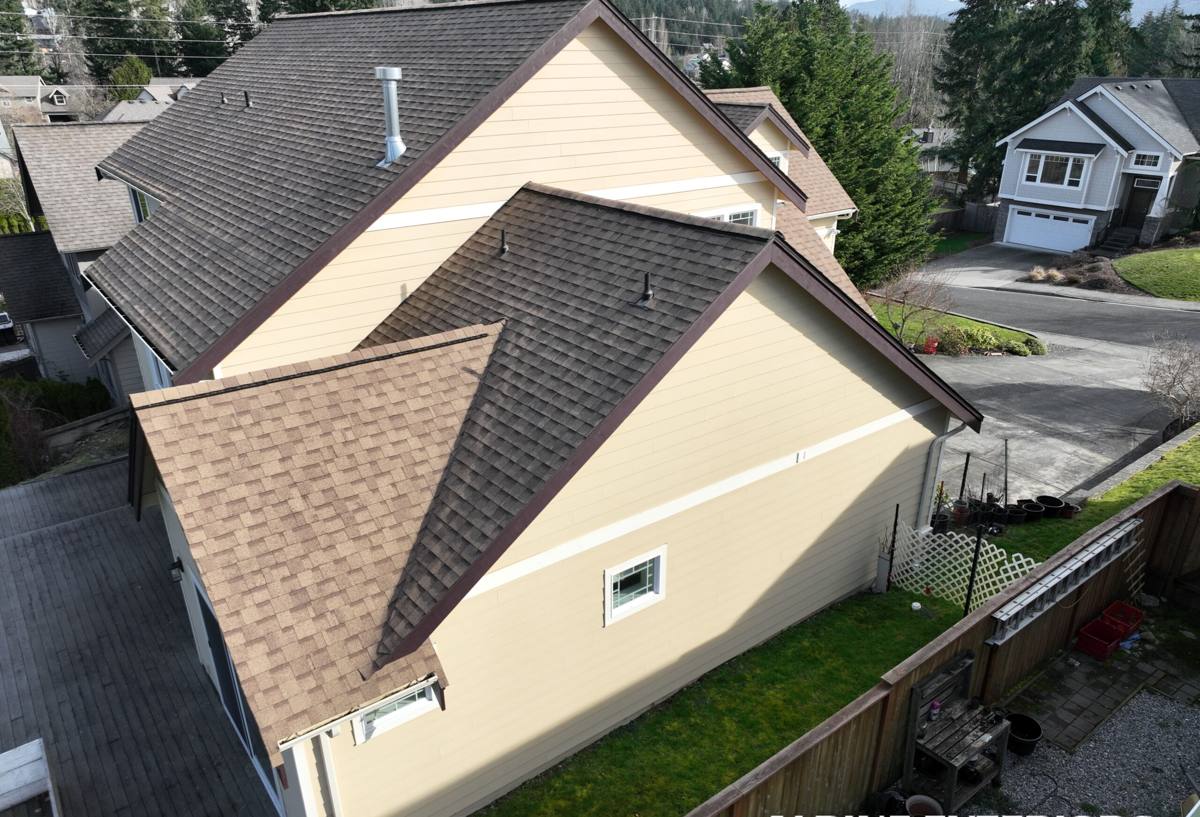
What Cap Sante Decks Are Up Against
Salt Air and Metal Fasteners
Airborne salt accelerates corrosion on anything that isn't rated for coastal exposure. Standard galvanized nails and screws can start rusting from the inside out within a few years this close to the water, which shows up as dark staining around fastener heads long before the board itself looks bad. Once a fastener corrodes, it loses grip, and that's when boards start to lift, squeak, or work loose underfoot.
Driving Rain and Wind-Driven Moisture
Skagit County storms don't always fall straight down. Wind off the water pushes rain under railings, into ledger board connections, and behind fascia trim — areas that a lot of standard deck construction assumes will stay relatively dry. Over time, that moisture finds its way into end grain and joist hangers, which is where rot usually starts, not on the open, sun-exposed decking boards themselves.
Moss, Algae, and Extended Damp Season
Anacortes gets long stretches of overcast, damp weather, especially in shaded areas or under trees near the water. Moss and algae take hold on any surface that stays wet for days at a time, and once established they hold moisture against the wood surface even after the weather clears. Beyond looking bad, a mossy deck surface is a real slip hazard, especially on stairs.
Signs a Cap Sante Deck Needs Repair, Not Just Cleaning
- Soft or spongy decking boards, especially near the house or along the perimeter
- Rust streaking from nail or screw heads onto the wood surface
- Railings or posts that flex or wiggle when you push on them
- Persistent moss or black algae staining that comes back within weeks of cleaning
- Gaps opening up between boards, or boards that have cupped or crowned
- Visible daylight or water staining under the deck near ledger board connections
- Stair stringers that feel bouncy or make cracking sounds under weight
- Discoloration or swelling at butt joints where two deck boards meet
Any one of these on its own might be a minor fix. Several together usually mean the underlying structure has been absorbing moisture for a while, and a surface-level repair won't hold.
How We Diagnose a Deck Repair
Before we quote anything, we get underneath the deck if access allows, not just walk the surface. Most of the damage that actually matters — rot at ledger connections, corroded hardware, undersized or missing joist hangers — is invisible from above until it's already failed. We probe suspect boards and framing members with an awl or screwdriver rather than guessing from appearance, because painted or stained wood can look fine right up until it doesn't.
We also check how the deck ties into the house. In a marine climate like Cap Sante's, the ledger board connection is one of the most common failure points, since it's where wall moisture, deck moisture, and fastener corrosion all meet in one spot. A repair that replaces boards but ignores a compromised ledger is a repair that will need to happen again.
What a Correct Repair Involves
Structural Assessment First
Joists, beams, posts, and the ledger connection get checked for rot, corrosion, and undersizing before any decking is touched. If the frame is sound, repair can often focus on the surface and railings. If it isn't, patching boards on top of a weak frame just delays a bigger problem.
Matched or Compatible Materials
Wherever possible, we match existing board dimensions and species so repaired sections don't stand out or behave differently than the rest of the deck. Where the original material isn't a good long-term fit for this climate, we'll say so and explain the trade-off rather than just replacing like-for-like out of convenience.
Coastal-Grade Fasteners and Hardware
Given the salt exposure around Cap Sante, we use stainless steel or coated fasteners and hardware rated for coastal or marine exposure rather than standard galvanized. It costs more up front and pays for itself by not needing to be redone in five years.
Proper Drainage and Flashing
Ledger boards get flashed correctly to shed water away from the house wall, and we check that the deck surface has enough slope and gap spacing to drain rather than pond. Standing water is one of the fastest ways to shorten a deck's life in this climate.
Repair Options by Situation
| Deck Condition | Typical Repair Approach | What to Expect |
|---|---|---|
| Isolated soft boards, sound frame | Board-by-board replacement, matched material and fasteners | Fastest repair, lowest cost, good option when caught early |
| Surface graying, moss, minor cupping | Cleaning, sanding or resurfacing, refinishing | Restores appearance and slip resistance without structural work |
| Loose or wobbly railings and posts | Hardware replacement, post reinforcement or resetting | Addresses a safety issue that's often cheaper to fix than people expect |
| Rot at ledger board or rim joist | Partial reframing, new flashing, corrected fastener spec | More involved, but prevents the most common source of repeat failure |
| Widespread rot, undersized original framing | Full or near-full rebuild of affected section | Higher cost but resets the clock instead of chasing symptoms |
Our Process for Cap Sante Deck Repairs
- On-site walk-through: we inspect the deck surface, railings, stairs, and accessible framing, and probe any suspect areas.
- Honest scope discussion: we explain what's cosmetic, what's structural, and what can reasonably wait versus what shouldn't.
- Written estimate: broken out by area of work so you can see what you're paying for and where, without vague lump-sum pricing.
- Material and fastener selection: matched to the deck's exposure, with coastal-rated hardware as the standard for anything near the water.
- Repair work: structural fixes first, then decking, then railings and finish work, in that order.
- Final check: we walk the deck with you before calling the job done, so nothing gets discovered after the fact.
Maintenance That Extends the Life of a Cap Sante Deck
Repair work holds up longer when it's paired with basic seasonal upkeep, especially in a climate that stays damp for months at a stretch.
- Sweep debris off the deck surface regularly so it doesn't trap moisture against the wood
- Clean moss and algae buildup before it has a chance to stain or soften the surface
- Check railings and stair connections for looseness once or twice a year
- Reapply sealant or stain on the schedule the product actually calls for, not just when it looks faded
- Keep gutters and downspouts clear so runoff isn't dumping directly onto or under the deck
- Trim back vegetation that's shading the deck and keeping it damp longer than it needs to be
Why Hire a Crew That Already Works in Cap Sante
Deck repair in a coastal Skagit County neighborhood isn't quite the same job as deck repair inland. Fastener specs, flashing details, and which failure points to check first all shift once salt air and near-constant marine moisture are part of the picture. A crew that hasn't worked this specific stretch of coastline may default to standard specs that are fine elsewhere but undersized for Cap Sante's exposure.
Working locally also means we're not guessing at how a repair will hold up — we've seen how decks in this area age, what tends to fail first, and what actually lasts. That's the difference between a repair that's cosmetic and one that solves the underlying problem.
Get a Free, No-Pressure Estimate
If your Cap Sante deck has soft spots, loose railings, rust staining, or a moss problem that keeps coming back, it's worth having someone take a real look underneath before deciding what it needs. We offer free, no-pressure estimates and will tell you plainly what's cosmetic, what's structural, and what your options are — no upsell, no scare tactics. The form below is the quickest way to get us out to take a look.