 Anacortes Siding
 Why Cap Sante Siding Wears Differently Than Inland Homes
Cap Sante sits up on the bluff above the marina and boat basin, which means homes here get a version of Anacortes weather that inland Skagit County properties don't see as intensely. The elevation catches wind off Rosario Strait and Guemes Channel, carrying salt spray onto siding, trim, and fasteners. Add in the long stretches of driving rain that come sideways off the water, and Cap Sante exteriors are working harder than a typical suburban wall assembly was ever designed for.
Then there's moss season, which in this part of Western Washington isn't really a season — it's most of the year. Shaded north and west-facing walls, tree cover, and the persistent damp mean organic growth gets a head start on any siding material that holds moisture at the surface or in its joints. On a bluff property with salt exposure on one side and shade-driven moss pressure on the other, a lot of homes are getting hit from two directions at once.
None of this means Cap Sante is a bad place to own a home — it's one of the more desirable pockets of Anacortes for a reason. It just means the siding has to be chosen and installed with that combination of salt, wind-driven rain, and moss in mind, not treated like a generic product install.
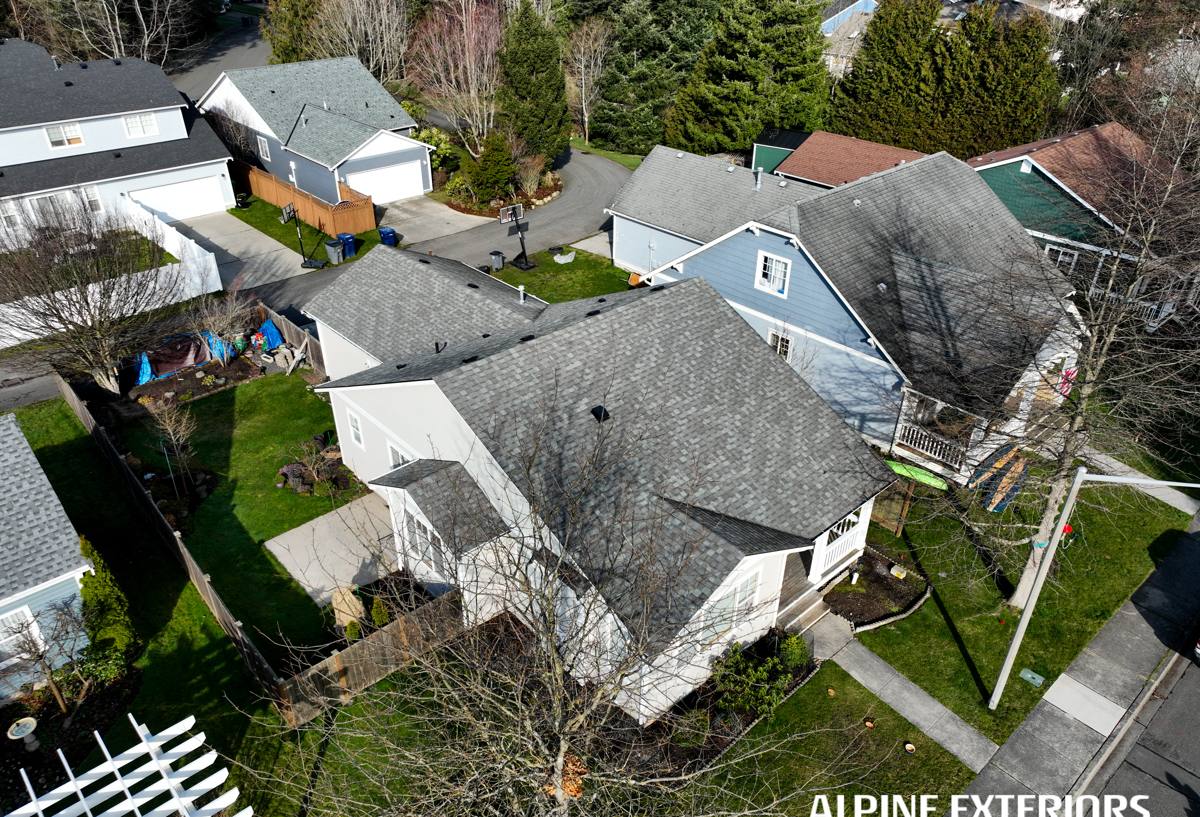
Signs a Cap Sante Home Needs Siding Replacement, Not Just Repair
Homeowners often call us after noticing one visible problem, but by the time siding shows damage on the surface, the issue has usually been developing underneath for a while. On bluff and near-water homes specifically, we watch for:
- Soft or spongy spots when you press on lower courses or areas near ground contact
- Persistent moss or algae staining that comes back within weeks of cleaning
- Paint that's bubbling, peeling, or chalking faster than the rest of the house
- Visible gaps, warping, or cupping boards, especially on the windward (water-facing) side
- Corroded or rust-streaked fasteners, a common sign of salt air working on old nail heads
- Rising utility bills or drafts that suggest the weather barrier behind the siding has failed
One or two of these on a small area can sometimes be a repair. Multiple signs across different walls, or moisture damage you can see in the sheathing once a section is opened up, usually means the whole assembly has reached the end of its service life and patch repairs would just be delaying a bigger cost.
Why We Only Install James Hardie Fiber Cement
We made a decision a while back to stop installing vinyl, LP SmartSide, and other engineered wood or composite sidings, and to install James Hardie fiber cement exclusively. That's not a marketing angle — it's a standard we hold because of what we see come off houses in exactly these salt-air, high-moisture conditions.
Vinyl handles rain fine but it's a thin, flexible material that can warp, crack, or fade under sustained UV and temperature swings, and it isn't rigid enough to resist wind-driven debris the way a bluff-top home sometimes needs. LP SmartSide and other wood-based composites are engineered to resist moisture far better than raw wood, but they're still wood-fiber products at their core — if a seam, cut edge, or fastener point isn't sealed and maintained exactly right, moisture can find its way in over time, and that risk goes up in a place like Cap Sante where the wall is fighting damp air for most of the year.
Fiber cement doesn't have that vulnerability. It's cement, sand, and cellulose fiber, non-combustible, and dimensionally stable, so it doesn't expand and contract the way wood-based products do when it swings between soaked and dry. James Hardie's ColorPlus factory finish is baked on under controlled conditions, which holds up to salt air and UV better than field-applied paint, and it comes backed by a strong transferable warranty on both the product and the finish. That combination is why it's the only siding we put on homes, full stop.
What a Correct Siding Replacement Actually Involves
Replacing siding is not just pulling old boards off and nailing new ones on. On a Cap Sante home dealing with salt exposure and constant moisture, the work that happens before the new siding goes up matters as much as the siding itself.
Tear-Off and Sheathing Inspection
Old siding comes off in sections so we can see the sheathing underneath before covering it back up. This is where hidden rot, soft spots, or old moisture damage actually get found — and it needs to be dealt with now, not sealed behind new siding and left to keep spreading.
Weather-Resistive Barrier
A properly lapped, correctly taped weather-resistive barrier is what actually stops wind-driven rain from reaching the sheathing. On a bluff property catching direct exposure off the water, corners, seams, and penetrations get extra attention because that's where driving rain finds its way in first.
Flashing at Windows, Doors, and Penetrations
Flashing details around openings are one of the most common places we find failures on older homes. Rain doesn't need much of a gap to get behind siding, and once it's in, it travels — often showing up as damage far from where the water actually entered.
Fastening to Manufacturer Spec
James Hardie siding has specific fastener type, placement, and spacing requirements, and following them isn't optional if you want the product warranty to be valid. Corrosion-resistant fasteners matter even more in a salt-air environment, where the wrong fastener can start rusting and staining within a couple of seasons.
Caulking and Joint Treatment
Joints, corners, and butt seams get treated according to Hardie's installation guidelines, not just caulked generically. Done wrong, joints become the first place moss and moisture take hold; done right, they're one of the more weather-resistant parts of the wall.
How Our Process Works, Start to Finish
Every job starts with an in-person walk of the exterior, not a drive-by estimate. On Cap Sante homes we're specifically looking at which walls take the most direct water and wind exposure, what the current siding and trim condition tells us about moisture history, and whether there are ventilation or drainage issues contributing to the problem.
- On-site assessment and honest evaluation of whether the home needs full replacement or targeted repair
- Written estimate with product line recommendation based on exposure on each side of the house
- Scheduling that accounts for Anacortes weather windows, since fiber cement installation goes best in dry stretches
- Tear-off, sheathing inspection, and repair of any rot or moisture damage found underneath
- Weather barrier, flashing, and James Hardie installation to manufacturer specification
- Final walkthrough with the homeowner before we consider the job done
We don't oversell scope. If a section of your home just needs trim repair or targeted board replacement rather than a full re-side, we'll tell you that directly.
Choosing the Right Hardie Product Line for a Bluff and Marine Setting
James Hardie makes several siding profiles and climate-engineered HZ formulations, and the right choice depends on the specific exposure of your walls, not just personal style preference.
| Product | Best suited for | Why it fits Cap Sante conditions |
|---|---|---|
| HardiePlank lap siding | Most wall areas, classic and modern styles | Traditional look, wide color range, strong track record in wet coastal climates |
| HardiePanel vertical siding | Accent walls, gables, modern designs | Clean lines that pair well with view-oriented homes near the water |
| HardieTrim boards | Window and door surrounds, corners, fascia | Matches siding durability so trim doesn't fail before the field siding does |
| HZ5 climate formulation | Homes with heavy direct exposure to wind-driven rain | Engineered for wetter, harsher climates like the Pacific Northwest coast |
On a lot of Cap Sante homes, we end up recommending a mix — HZ5-rated lap siding on the walls that take the brunt of the weather off the water, paired with trim and accent choices that match the rest of the house. That's a conversation we have on-site, looking at your actual exposure rather than applying one answer to every home in the area.
Cost Factors for Siding Replacement in This Area
We don't publish flat pricing because every home is different, but the factors that move the number up or down are consistent. Homes with more wall area, more corners and window openings, and more trim detail cost more in labor regardless of material. Hidden moisture damage found during tear-off is the biggest wildcard — it's impossible to know the full extent until the old siding comes off, which is one reason we walk homeowners through what we find before proceeding rather than assuming and re-quoting later.
Access also matters more on bluff lots than flat inland ones. Steeper grades, retaining walls, and limited staging space around a hillside home can add time compared to a straightforward flat-lot install. We account for that in the estimate rather than surprising you with it partway through the job.
Maintenance That Actually Matters After Installation
Fiber cement is low-maintenance compared to wood or vinyl, but "low-maintenance" doesn't mean zero-maintenance, especially with the moss and salt exposure Cap Sante deals with. A short annual routine goes a long way:
- Rinse siding once or twice a year to clear salt residue and early moss growth, especially on shaded and north-facing walls
- Keep gutters clear so overflow doesn't run down the siding face repeatedly
- Trim back vegetation and tree cover that keeps walls damp and shaded longer than necessary
- Inspect caulking at joints and trim every year or two, and have gaps resealed before they become entry points
- Touch up any paint chips or dings promptly so the factory finish isn't compromised at that spot
Homeowners who stay on top of this short list tend to get the full service life out of their siding and keep the warranty coverage intact, since most manufacturer warranties assume basic reasonable maintenance was performed.
Why Hiring a Crew That Already Works Cap Sante Matters
Siding installation quality depends heavily on understanding the specific conditions a home faces, and a crew that regularly works Anacortes and Skagit County properties already knows what driving rain off the water does to a wall assembly, how aggressive moss growth gets in the shaded pockets around the bluff, and which flashing and fastening details actually hold up here versus on paper in a manufacturer's general installation guide.
That local experience shows up in small decisions — where to add extra flashing attention, which walls get the higher climate-rated product, how to sequence a job around the wetter stretches of the year so materials aren't installed in conditions that compromise the work. It's the difference between a technically correct install and one that's actually built for where it sits.
If your Cap Sante home is showing signs of siding wear, or you're simply due for a replacement and want it done with a product built for this exposure, we're happy to walk the exterior with you and give you a straight answer. There's a free, no-pressure estimate available through the form below — no obligation, just an honest look at what your home needs.