 Anacortes Siding
 Building Decks for La Conner's Coastal Climate
La Conner sits close to the water, and that changes what a deck has to survive. Homes here deal with salt-laden air off the Swinomish Channel and Puget Sound, long stretches of driving rain through the fall and winter, and a moss season that can run most of the year in shaded yards. A deck built the same way you'd build one in a drier inland climate will show problems early — soft spots at the ledger board, corroded fasteners, slick moss growth on the walking surface, and finish failure on anything left unprotected. We've built and repaired decks throughout Skagit County long enough to know which details actually hold up out here, and which ones are just extra cost with no payoff.
This page is about one job in one place: new deck construction for La Conner homeowners. It covers what the climate does to a deck over time, what a correctly built deck needs to resist it, and how we approach the project from first visit to final walkthrough.
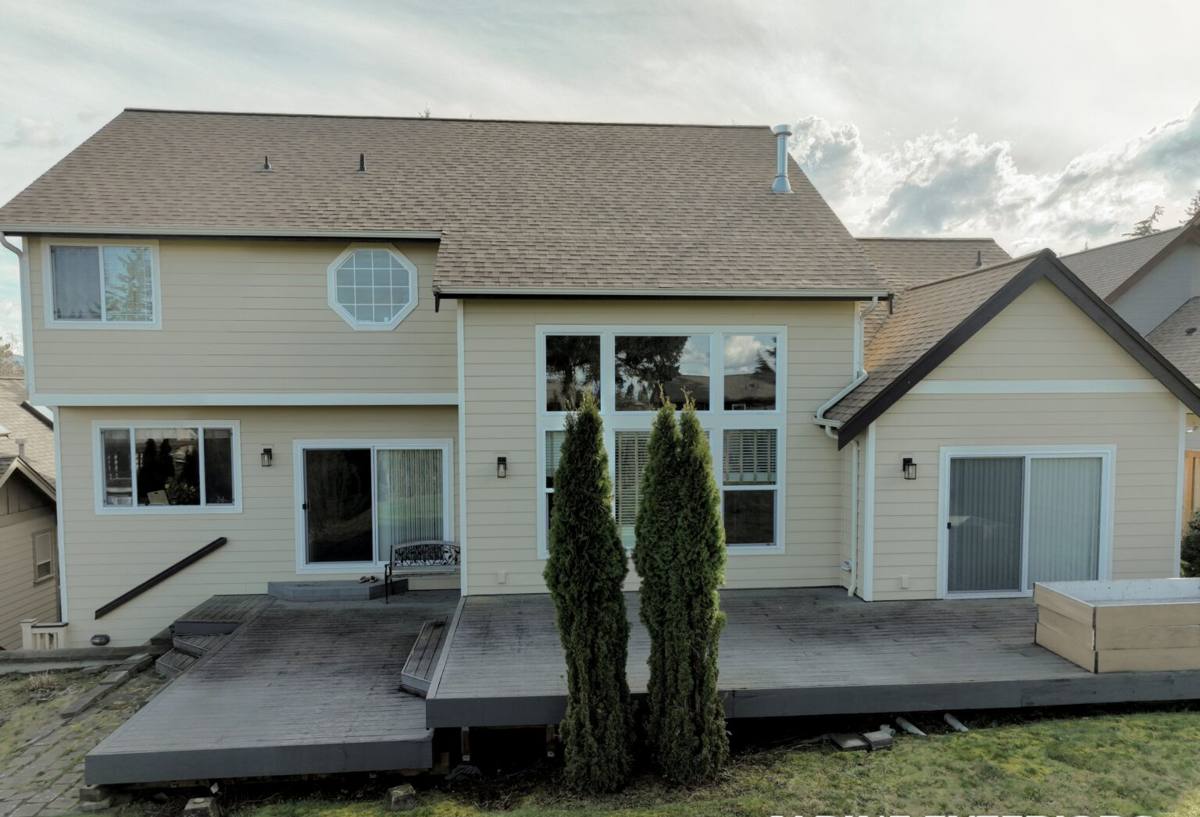
What Salt Air, Rain, and Moss Actually Do to a Deck
None of these are dramatic, one-time failures. They're slow, and that's what makes them dangerous — by the time a homeowner notices, the damage is usually past the point of a simple fix.
- Salt air accelerates corrosion on any exposed metal — fasteners, joist hangers, railing brackets — especially on decks facing open water or prevailing wind. Standard hardware can start rusting years before a wood-grade product would in a drier, inland setting.
- Driving rain pushed sideways by wind gets under flashing, behind ledger boards, and into end grain and fastener holes that aren't sealed. Water that gets trapped rather than shed is what causes rot — not rain itself.
- Moss and algae take hold anywhere a deck stays damp and shaded, which describes a lot of Skagit County yards for a good chunk of the year. Beyond looking bad, moss holds moisture against the board surface and makes the deck genuinely slippery underfoot.
What a Correctly Built La Conner Deck Requires
Ledger Board and Framing
The ledger board — where the deck attaches to the house — is the single most common failure point on decks in this climate. It needs proper flashing that directs water away from the house band board, not just caulk, which fails long before the deck's life is over. We use flashing tape and metal flashing together, sloped to shed water, with a gap left for airflow behind the ledger where the design allows it. Joists get sealed on top with joist tape before decking goes down, so water that reaches the frame can't sit in the fastener holes and start rot from the inside out.
Footings and Drainage
Footings need to be set below frost depth and sized for the soil they're going into — Skagit County has plenty of variation in soil type and drainage from lot to lot, so this isn't a one-size answer. Grading and drainage under and around the deck matter just as much as the footings themselves; a deck sitting over standing water will stay damp longer after every rain, which feeds both rot and moss growth.
Fasteners and Hardware
This is where cutting corners costs the most later. Hot-dip galvanized or stainless steel fasteners and structural hardware are worth the upcharge on any deck within reach of salt air, which in La Conner is most of them. Mixing metals — say, a coated screw in an uncoated hanger — sets up galvanic corrosion that can weaken a connection years before the wood itself would fail.
Decking Material Comparison
| Material | Moisture & Moss Behavior | Maintenance | Typical Lifespan |
|---|---|---|---|
| Pressure-treated wood | Absorbs water, prone to moss/mildew if not sealed regularly | Annual cleaning and re-sealing recommended | 10–15 years with upkeep |
| Cedar | Naturally rot-resistant but still needs sealing in this climate | Periodic cleaning and finish maintenance | 15–20 years with upkeep |
| Composite decking | Doesn't absorb water like wood, but can still grow surface moss/algae if shaded and damp | Occasional washing, no sealing or staining | 25+ years, varies by brand and product line |
| PVC decking | Fully moisture-resistant, least hospitable surface for moss | Lowest maintenance of the group | 25+ years, varies by brand and product line |
There's no universally "right" material — it's a trade-off between upfront cost, maintenance tolerance, and appearance preference. What we won't do is install any of these products in a way that ignores how they actually behave once salt air and rain get involved; that's a standard we hold regardless of what material a homeowner chooses.
Our Deck Building Process
- Site visit and design. We look at sun and wind exposure, drainage, grade, and how the deck ties into the house before recommending a layout or material.
- Permitting. We handle the permit application for the jurisdiction the property falls under, including any setback or, where applicable, shoreline-related requirements tied to properties near the water.
- Footings and framing. Footings set to depth, ledger flashed and sealed, joists taped, all hardware matched and rated for the exposure.
- Decking and railing. Installed per the manufacturer's spacing and fastening specs — this matters more than it sounds, since incorrect gapping is a common cause of moisture problems and warranty denial on composite and PVC products.
- Final walkthrough. We go over the finished deck with the homeowner, including what maintenance (if any) the chosen material needs going forward.
Permits and Local Considerations Around La Conner
Deck projects in and around La Conner typically require a building permit, and depending on the exact parcel, may fall under either county or town jurisdiction. Properties near tidal areas or wetlands can also carry additional review. We sort out which permits apply to a given address before work starts rather than leaving the homeowner to figure that out — it's part of the job, not an add-on.
Maintaining a Deck in This Climate
Even a well-built deck needs some seasonal attention out here. A short annual routine prevents most of the problems this climate causes:
- Sweep off leaves and debris regularly, especially in shaded corners where moisture and moss build up fastest
- Rinse or wash the deck surface at least once a year to slow moss and algae growth
- Check railing posts and stair connections for looseness, which can signal a fastener or framing issue starting
- For wood decks, re-seal or re-stain on the schedule appropriate to the product — skipping this is the single biggest cause of early wood deck failure here
- Keep gutters and downspouts near the deck clear so runoff isn't dumping extra water onto or under it
- After major windstorms, do a quick visual check of ledger flashing and railing hardware
Why Hire a Crew That Already Works in La Conner
A deck built by a crew that mostly works drier, inland jobs will often use the same details everywhere, because those details work fine in that climate. Out here, that approach leaves gaps — literally, in flashing and fastener choices — that don't show up as problems until a few winters in. We work throughout Anacortes and the surrounding Skagit County communities, including La Conner, and we build every deck assuming it has to handle salt air, sideways rain, and a long damp season, because around here it does. That's not a marketing line — it's just what the climate requires, and it's cheaper to build for it once than to rebuild a rotted ledger board or replace corroded hardware in ten years.
What Affects the Cost of a La Conner Deck
| Factor | Why It Matters |
|---|---|
| Size and shape | More square footage and multiple levels or angles increase framing and labor time |
| Decking material | Wood costs less upfront; composite and PVC cost more but need less ongoing maintenance |
| Height and stairs | Elevated decks need more substantial framing, railing, and stair structure than a low, grade-level deck |
| Railing style | Basic wood or metal railing costs less than glass panel or cable railing systems |
| Site access and grading | Difficult access or poor drainage can add site prep work before the deck itself goes in |
| Hardware grade | Stainless steel and marine-grade hardware cost more than standard galvanized but pay off in this climate |
We give homeowners a real number after seeing the site and talking through material choices — not a rough figure that changes once we're on-site.
If you're planning a new deck in La Conner and want a straight answer on what it'll take to build it right for this climate, we're happy to take a look and put together a free, no-pressure estimate using the form below.