 Anacortes Siding
 Building a Deck for Flounder Bay's Marine Climate
Flounder Bay sits close enough to the water that homes here deal with a different set of conditions than decks built further inland in Skagit County. Salt-laden air, wind-driven rain off Rosario Strait, and a long stretch of gray, wet months mean a deck built to a generic spec sheet will show its age faster here than almost anywhere else in the county. A deck that holds up in Flounder Bay has to be built with that environment in mind from the framing up, not just picked out of a catalog for its color.
This page covers what that actually means: which materials make sense, how the structure underneath needs to be handled, and what our process looks like when we build a custom deck for a home in this part of Anacortes.
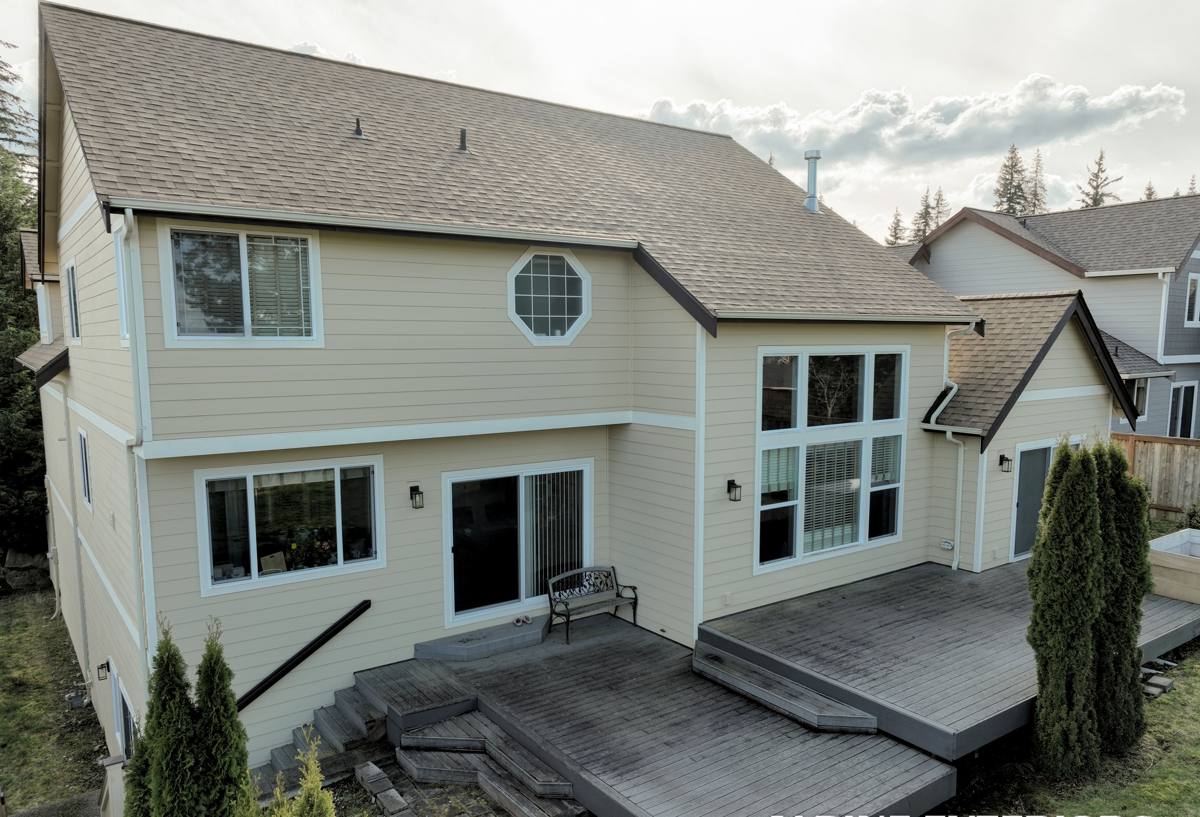
What Salt Air, Rain, and Moss Actually Do to a Deck
Salt and corrosion
Airborne salt doesn't just sit on the surface — it works into fastener heads, hinges, and any exposed metal, accelerating rust and corrosion well beyond what you'd see in a landlocked neighborhood. Standard hardware store screws and brackets are usually the first thing to fail on a coastal deck, often years before the decking material itself shows wear.
Moisture and rot
Anacortes gets a long wet season, and Flounder Bay's exposure adds wind-driven rain that finds its way into joints, end grain, and any spot where water can collect instead of shed. Wood that isn't properly sealed, flashed, or spaced for drainage will start to soften and rot from the inside before it looks bad on top.
Moss and algae growth
Shade, moisture, and mild temperatures are exactly what moss wants, and this region gives it all three for months at a time. Moss on a deck isn't just cosmetic — it holds moisture against the surface, makes boards slick and dangerous underfoot, and speeds up the very rot and staining problems it grows on top of.
Choosing Decking Material for a Coastal Lot
There's no single "best" decking material for every home — it depends on your budget, how much upkeep you want to do, and how close you are to the water. Here's how the common options actually perform under Flounder Bay conditions:
| Material | Salt air performance | Moss/moisture resistance | Maintenance |
|---|---|---|---|
| Pressure-treated wood | Fine if fasteners and hardware are corrosion-rated | Needs regular cleaning and sealing to resist moss and rot | Annual cleaning, re-sealing every 1-3 years |
| Cedar | Naturally more rot-resistant, but still needs finish maintenance near salt air | Prone to moss without upkeep; finish helps | Regular cleaning, periodic oiling or staining |
| Composite decking | Good — most modern composites resist salt corrosion well | Better moss resistance than wood, but still needs washing in shaded, damp spots | Low — periodic washing, no sealing |
| PVC/capped polymer | Excellent — fully synthetic surface holds up well to salt exposure | Best resistance to moss and moisture staining | Lowest — occasional washing |
We don't push one product on every job. A cedar deck can absolutely work in Flounder Bay if the owner is willing to keep up with finish maintenance, and plenty of homeowners prefer the look and the price point. Composite and PVC decking cost more up front but trade that for less time spent scrubbing and resealing every year — worth discussing honestly based on how you actually want to spend your weekends.
Fasteners and hardware
Whatever decking material you choose, the hardware underneath matters just as much. On a coastal build like this, we spec stainless steel or hot-dip galvanized fasteners and structural connectors rather than standard coated screws — the difference in corrosion resistance over ten-plus years of salt exposure is significant, even though the parts themselves are a small piece of the total cost.
Framing and Structure — What's Underneath Matters Most
Ledger attachment and flashing
Where a deck attaches to the house is the single most common failure point on any deck, and it's worse near the water. Proper ledger flashing keeps rain from tracking behind the board and into the rim joist and wall framing, where rot can go unnoticed for years. We flash this connection correctly every time, not as an upsell — it's the difference between a deck that lasts and one with a hidden structural problem behind a nice-looking surface.
Footings and post bases
Skagit County soil and moisture conditions mean footings need to be sized and set to spec, with post bases that keep wood off the concrete and away from standing water. Metal post bases that hold the post above grade reduce the wicking that causes rot at the base — a small detail that has an outsized effect on the life of the structure.
Joist spacing and hidden fasteners
Tighter joist spacing than the bare minimum code allows gives the deck surface more support and less flex over time, which matters more in a wet climate where boards move seasonally. Hidden fastener systems, where used, also reduce the number of exposed screw heads that can trap water and rust.
Railings and Guards Built for Salt Exposure
Railing systems take the same salt and moisture punishment as the deck surface, sometimes worse because they're more exposed to wind-driven rain. Aluminum and vinyl railing systems generally outperform raw wood railings in a marine environment, and any metal balusters or cable rail hardware should be stainless or otherwise rated for coastal use. If you want a wood-look railing, we'll talk through what that means for long-term upkeep versus a low-maintenance alternative — it's your call, but you should make it with the full picture.
Drainage, Slope, and Airflow — Heading Off the Moss Problem
Most of the moss and standing-water issues we see on decks in this area come down to the same root cause: water that has nowhere to go. A deck built with proper slope away from the house, correct board spacing for drainage, and enough airflow underneath dries out faster after our long rainy stretches, which starves moss and algae of the damp conditions they need to take hold.
- Decking installed with consistent gapping so water drains through rather than pooling on top
- Slight slope built into the frame to shed water away from the house
- Skirting designed with ventilation gaps rather than sealed solid, so air can move underneath
- Shaded or low-sun areas flagged during design so we can plan for extra airflow or material choices there
Our Process for a Flounder Bay Deck Project
- On-site assessment — we look at sun exposure, prevailing wind and rain direction, existing drainage patterns, and how close the build site is to salt spray.
- Design and material selection — we walk through decking, railing, and hardware options against your budget and how much maintenance you actually want to take on.
- Permitting — we handle the permit application with the City of Anacortes or Skagit County, whichever applies to your property.
- Framing and structural work — footings, ledger flashing, and framing done to spec, with corrosion-rated hardware throughout.
- Decking, railing, and finish work — installed with drainage and airflow built in, not added as an afterthought.
- Final walkthrough — we go over the finished deck with you, plus what maintenance (if any) your chosen material needs going forward.
Permits and Code Considerations
Most new decks and significant deck rebuilds in Anacortes and unincorporated Skagit County require a building permit, and requirements can shift depending on deck height, size, and proximity to property lines or shoreline setback rules — which matter more in a waterside neighborhood like Flounder Bay than in most other parts of the county. We handle the permit process as part of the job so you're not left guessing what's required or chasing down inspections yourself.
Maintenance Checklist for a Coastal Deck
Whatever material you choose, a little seasonal attention goes a long way toward avoiding early repairs. This is the routine we recommend to homeowners in this area:
- Sweep off debris and standing leaves regularly, especially in fall
- Rinse salt residue off the surface and railings a few times a year, more often if you're right on the water
- Check and clear gaps between boards so water keeps draining freely
- Inspect fasteners and railing hardware annually for early rust or looseness
- Clean and reseal wood decking on the schedule your material calls for — don't wait until it looks gray and dry
- Look underneath the deck once a year for moisture buildup or blocked airflow
Why Local Experience Matters for This Job
A deck builder who hasn't worked near the water will often use the same specs they'd use anywhere else in Skagit County — and that shows up as premature rust, moss buildup, or a soft ledger board a few years down the road. Building decks in and around Flounder Bay means knowing which hardware grade to spec without being asked, where drainage tends to be a problem on waterside lots, and how much of a head start moss gets in shaded, damp corners here compared to elsewhere in Anacortes. That's the kind of judgment that only comes from actually working this specific stretch of coastline, not from a general contractor's checklist.
If you're planning a new deck or replacing one that's showing its age, we're happy to take a look and talk through what makes sense for your home and budget. Fill out the form below for a free, no-pressure estimate.