 Anacortes Siding
 Deck Replacement Built for Flounder Bay Conditions
Flounder Bay sits close enough to the water that decks here take a different kind of beating than decks a few miles inland. Salt-laden air accelerates corrosion on fasteners and hardware, driving rain off Rosario Strait and Guemes Channel drives moisture into every seam and joist connection, and the long gray stretch of fall through spring keeps wood surfaces damp and shaded long enough for moss and algae to take hold. None of that is unusual for this stretch of Skagit County, but it does mean a deck built to a generic spec sheet often fails years before it should. A deck replacement done right for Flounder Bay accounts for all of it from the framing up, not just the decking surface.
We've worked on homes throughout the Flounder Bay area and understand the pattern: decks that look fine on top but have soft framing underneath, ledger boards that were never properly flashed, or fastener corrosion that shows up as rust streaks years before any structural issue is visible. Replacement is the right call when that damage has moved past what a repair or re-deck can fix — and it's also the chance to correct the original build's weak points so the next deck actually lasts.
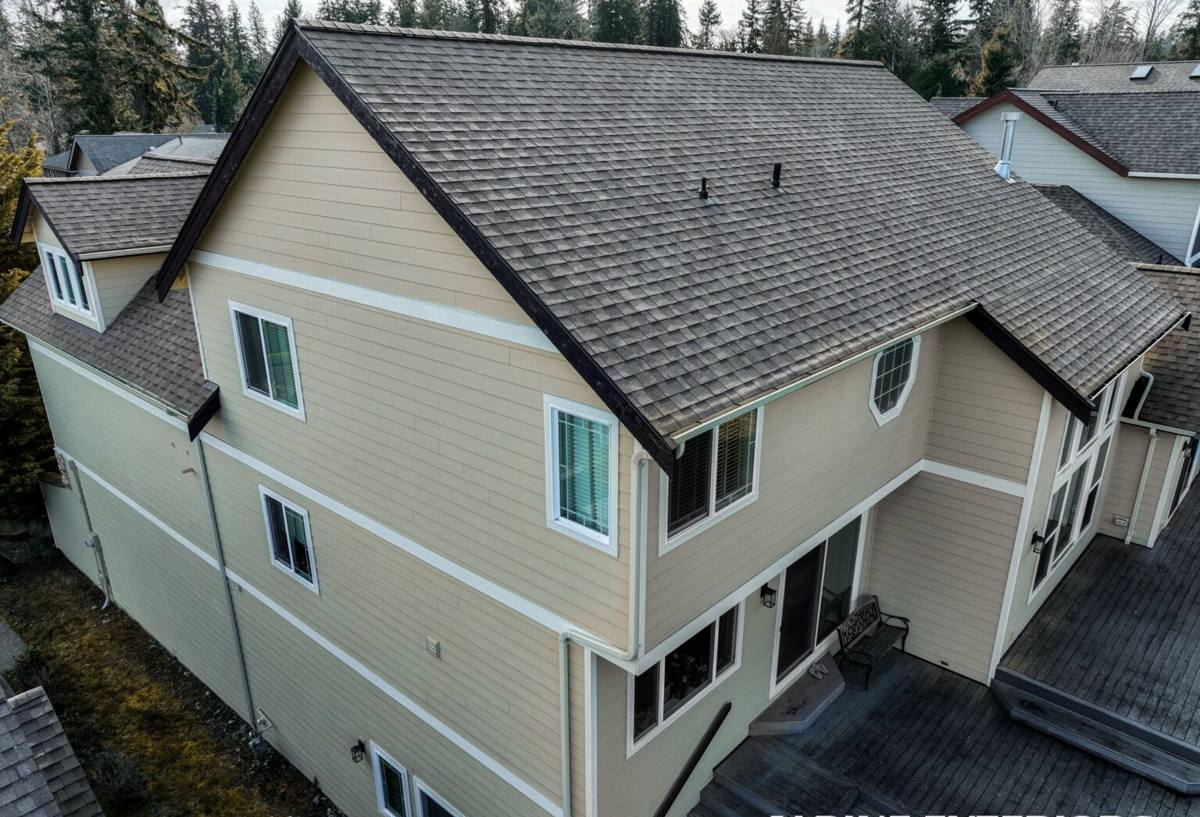
Signs a Deck Needs Full Replacement, Not a Repair
Not every tired deck needs to be torn out. But there's a point where patching individual boards or sistering a joist just delays a bigger project and spends money on a structure that's still failing underneath. Here's how we tell the difference during an inspection.
- Soft, spongy, or spring-back decking across multiple boards, not just one or two isolated spots
- Visible rot or dark staining at the ledger board where the deck attaches to the house
- Joists or beams that flex noticeably when walked on, or show soft wood when probed with a screwdriver
- Rust-streaked or failing fasteners, especially on structural connectors and joist hangers
- Posts that have shifted, settled unevenly, or show rot at the base near grade
- Railings that wobble or have lost solid attachment to the frame — a safety issue, not a cosmetic one
- A deck older than 20-25 years built without proper flashing at the house connection
If what you're seeing is limited to a few worn boards on an otherwise sound frame, we'll tell you that honestly and scope a repair instead. Full replacement is for decks where the structure itself is compromised or has reached the end of its practical service life.
Why Coastal Framing Fails Faster
The biggest difference between a deck failure in Flounder Bay and one further inland is usually the fasteners and hardware, not the lumber itself. Salt air oxidizes exposed metal faster than it does in drier, inland parts of the county, and once a fastener starts to corrode, it loses holding strength well before it looks obviously bad. Combine that with framing that stays damp longer because of shade, low airflow underneath the deck, or a north-facing exposure, and you get structural wood decay working from the inside out while the surface still looks presentable.
What a Correct Flounder Bay Deck Replacement Involves
A deck replacement is more than pulling up old boards and screwing down new ones. The parts that actually determine how long the deck lasts are mostly the parts you won't see once it's finished.
Full Tear-Out and Structural Inspection
We remove the decking, railings, and as much of the substructure as needed to get an honest look at the ledger, joists, beams, and posts. This is where hidden rot and past shortcuts get found — and where we make sure nothing gets buried under a new deck surface.
Ledger Flashing Done Properly
The ledger-to-house connection is the single most common failure point on decks in wet climates. Proper flashing — installed so water sheds away from the house framing rather than getting trapped behind the ledger — is non-negotiable on every replacement we do, even if it wasn't done on the original build.
Corrosion-Resistant Hardware Throughout
Given the salt air exposure this close to the water, we use fasteners and structural connectors rated for coastal or wet-climate use rather than standard-grade hardware. It costs a little more up front and saves you a premature failure down the road.
Framing Spaced and Ventilated for Drainage
Where the design allows it, we build in airflow underneath the deck and proper drainage gaps between boards so water doesn't sit and pool against the frame. Standing moisture, more than rain itself, is what accelerates decay.
Decking Material Matched to the Site
Sun exposure, shade from trees or the house, and how close the deck sits to grade all factor into what decking material makes sense. We'll walk through the honest trade-offs for your specific spot rather than pushing one product for every job.
Decking Material Options: Honest Trade-Offs
There's no single "best" decking material — there's the material that fits your site, budget, and how much upkeep you want to take on. Here's how the common options actually compare for a shaded, salt-air, high-moisture environment like Flounder Bay.
| Material | Moisture & Salt Air Behavior | Maintenance | Typical Lifespan |
|---|---|---|---|
| Pressure-treated lumber | Good if properly sealed and re-coated; end grain and fastener points are the weak spots | Annual cleaning and periodic sealing recommended | 15-20 years with upkeep |
| Cedar | Naturally moisture- and insect-resistant, but still needs sealing near salt air to hold color and resist checking | Regular sealing/staining to prevent graying and moss growth | 15-25 years with upkeep |
| Composite decking | Doesn't absorb moisture or rot; won't need sealing, though some boards can still support surface algae/moss if kept damp and shaded | Periodic washing to keep organic growth off; no staining or sealing | 25-30+ years, per manufacturer warranty |
| PVC decking | Fully moisture-resistant, unaffected by salt air corrosion | Lowest — occasional washing | 25-30+ years, per manufacturer warranty |
For heavily shaded lots or spots that catch a lot of wind-driven rain off the water, composite or PVC decking generally makes the most sense long-term — the reduced maintenance burden offsets the higher material cost. For sunnier, more open sites, a well-maintained cedar or treated deck can still perform well and costs less upfront. We'll give you a straight read on which fits your specific lot rather than defaulting to whatever's easiest to install.
Railings, Stairs, and Code Considerations
Deck replacement is also the right time to bring railings and stairs up to current code, especially on older decks built before current guard height, baluster spacing, and stair requirements were in place. Anacortes and Skagit County permitting follows the state building code for structural work like this, and we handle the permit process as part of the job so you're not left figuring out inspections on your own. Railings near the water also benefit from the same corrosion-resistant hardware approach as the deck frame — a wobbly or under-built railing is a safety issue we won't leave unaddressed just to save a step.
Our Deck Replacement Process
- On-site assessment — We inspect the existing deck's framing, ledger connection, and hardware to confirm replacement is the right call and identify site-specific factors like shade, drainage, and wind exposure.
- Material walkthrough — We go over decking and railing options suited to your site and budget, with straight talk on maintenance and expected lifespan for each.
- Written estimate and permit handling — You get a clear scope and price before any work starts, and we pull the required permit through the local building department.
- Tear-out and structural rebuild — Old decking, railings, and any compromised framing come out; ledger flashing, joists, and hardware get rebuilt to current standards.
- Decking, railing, and stair installation — New materials go in per manufacturer spec, with attention to drainage gaps and proper fastening.
- Final walkthrough — We check the completed deck with you and confirm everything meets code and matches what was scoped.
Why Local Experience in Flounder Bay Matters
A deck built to a national average spec sheet, with standard hardware and no extra attention to flashing or airflow, can still pass a basic inspection when it's new. The problems show up three, five, ten years later — after the crew that built it is long gone. Working regularly in Flounder Bay and the surrounding Anacortes waterfront means we've seen how decks here actually age, not just how they're supposed to perform on paper. That shapes real decisions: which hardware grade to use, how much drainage gap to leave, where flashing gets extra attention, and which decking materials are worth the added cost for this specific microclimate.
It also means we're not guessing at permitting requirements or driving in from out of the area for warranty work. We're a phone call away if something needs a look after the job is done.
Planning Your Deck Replacement
Timing matters for deck work in this climate. Drier stretches in late spring through early fall give framing and any sealed materials the best chance to cure properly before the wet season sets back in, though tear-out and rebuild can be scheduled around weather windows outside that range too. If you're weighing repair versus full replacement, or just want an honest read on what shape your current deck is in, that's exactly what an on-site assessment is for.
If your deck in Flounder Bay is showing signs of wear, or you're ready to plan a replacement before another wet season adds to the damage, we're happy to take a look. Request a free, no-pressure estimate using the form below and we'll walk the site with you and give you a straight assessment.