 Anacortes Siding
 Flounder Bay's Waterfront Climate Puts Real Stress on Siding
Flounder Bay sits on the water in Anacortes, and homes here take on a combination of weather stresses that inland Skagit County properties simply don't deal with the same way. Salt-laden air off the bay works its way into seams, fasteners, and any exposed wood or composite edge. Driving rain off Rosario Strait and the surrounding waterways hits siding at an angle, not just straight down, which pushes moisture into joints and behind poorly flashed trim. And the long, wet Pacific Northwest fall-through-spring stretch means moss, algae, and lichen have months on end to establish themselves on any surface that stays damp and shaded.
None of this is unique to one house on Flounder Bay — it's the baseline condition for anything built near the water on Fidalgo Island. But it means siding installation here isn't a one-size-fits-all job. The product, the flashing details, and the installer's attention to moisture management all matter more here than they would on a dry-side property fifty miles east.
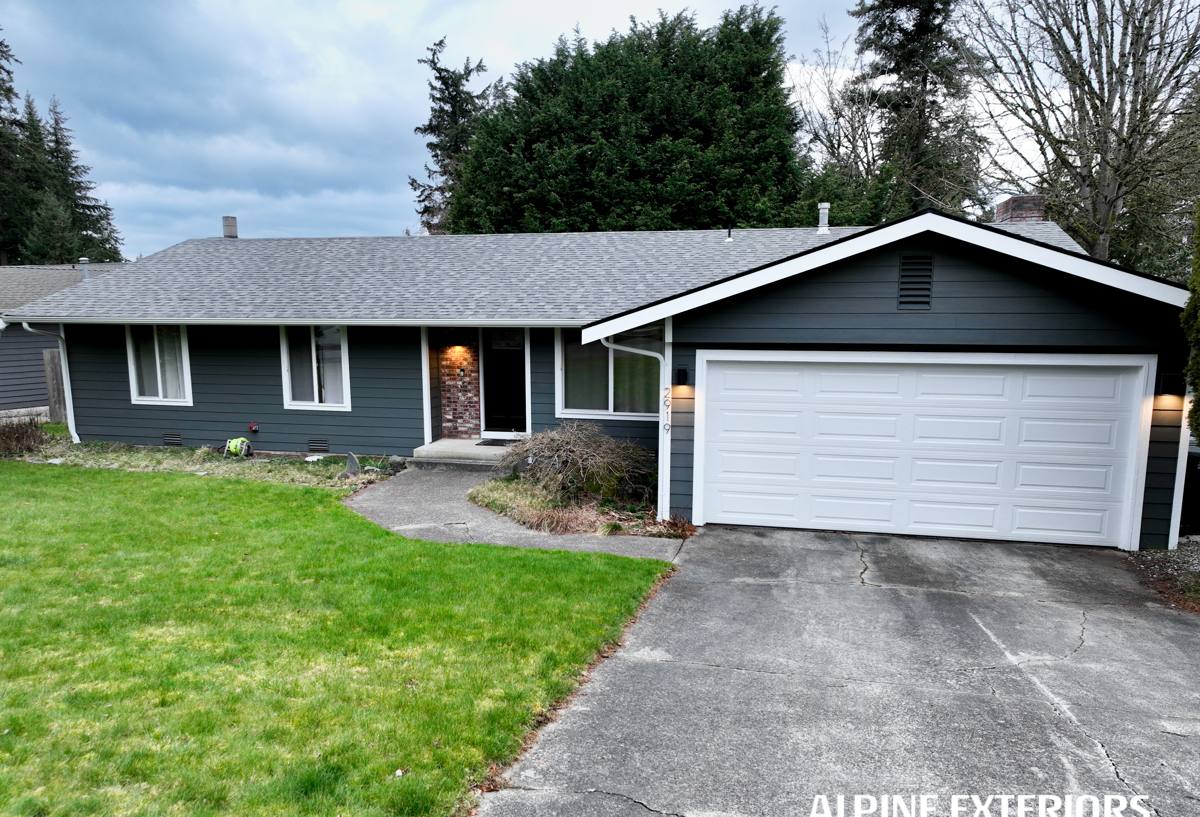
What Homes in This Area Actually Need From Their Siding
Resistance to Salt Air and Corrosion
Salt air accelerates corrosion on fasteners, trim, and any metal flashing that isn't rated for coastal exposure. It also degrades certain paints and coatings faster than manufacturers' standard warranties assume, which is part of why factory-applied, baked-on finishes hold up better here than field-applied paint on wood or composite siding.
Moisture Management, Not Just Water Resistance
The bigger risk in a wind-driven rain environment isn't the siding surface itself — it's what happens behind it. Water that gets past a poorly lapped joint or an unflashed window head has nowhere to go if the wall assembly underneath isn't built to drain and dry. Correct installation is as much about house-wrap integration, flashing, and drainage gaps as it is about the siding material itself.
A Surface That Doesn't Feed Moss and Algae
Moss and algae need moisture and a surface they can grip. Dense, factory-finished fiber cement gives them far less to hold onto than raw wood grain or some composite surfaces, and it doesn't wick and hold water the way wood-based products can. That doesn't mean a Flounder Bay home will never need a wash-down — it will, eventually, like anything on the water — but the material shouldn't be actively working against you.
Why We Install Only James Hardie Fiber Cement
We made a decision a while back to standardize on James Hardie fiber cement siding and stop installing everything else — no LP SmartSide, no vinyl, no Cemplank or Allura, no primed spruce or cedar. That's not a marketing angle; it's a professional standard based on what actually holds up on homes like the ones around Flounder Bay.
Fiber cement is non-combustible, which matters increasingly to insurers and to homeowners thinking about wildfire exposure even on the west side of the state. James Hardie's ColorPlus finish is baked on at the factory under controlled conditions, rather than field-painted on site, which gives it more consistent coverage and better long-term color retention in UV and salt exposure than a job-site paint job can match. Hardie also engineers regional product lines — its HZ5 line is built for climates like ours, with moisture and freeze-thaw performance tuned to the Pacific Northwest, rather than a generic national spec.
We're not going to tell you vinyl or engineered wood siding are bad products — they're not, and they work fine in plenty of applications. But we've seen enough of the maintenance burden, moisture sensitivity, and warranty gaps that come with them in a marine climate that we stopped putting them on homes we stand behind. Fiber cement, installed correctly, is the product we're willing to warranty our workmanship against here.
Material Comparison for a Waterfront Climate
| Material | Salt Air Behavior | Moisture/Moss Resistance | Finish Longevity |
|---|---|---|---|
| James Hardie Fiber Cement | Non-combustible, dimensionally stable, doesn't corrode | Dense surface, low moss attachment, engineered HZ lines for wet climates | Factory ColorPlus finish, long repaint interval |
| Vinyl Siding | Can become brittle with UV and temperature swings over time | Sheds water but seams and J-channels can trap moisture | Color is molded-in but fades unevenly; not repaintable easily |
| LP SmartSide / Engineered Wood | Wood-based core is more sensitive to prolonged moisture exposure | Requires diligent sealing at cuts and edges to prevent swelling | Field or factory finish, shorter repaint cycle in wet climates |
| Cedar / Primed Spruce | Natural material, needs ongoing sealing against salt and moisture | Highest moss/algae attachment risk without regular maintenance | Shortest finish life of the group; repainting/resealing is frequent |
What a Correct Installation Involves
The siding itself is only part of the job. A large share of whether a Flounder Bay home stays dry and looks good in ten years comes down to details most homeowners never see once the siding is up:
- Proper weather-resistive barrier (house wrap) installed and lapped correctly, with no gaps at penetrations
- A drainage plane or rainscreen gap behind the siding so any moisture that does get in can drain and dry out
- Correctly flashed windows, doors, and any roof-to-wall transitions, with head flashing that actually sheds water outward
- Manufacturer-specified fastening — proper nail type, spacing, and penetration depth for James Hardie panels, not a generic approach carried over from other siding types
- Correct clearance from grade, decks, and roof lines so siding isn't sitting in standing water or constant shade and moisture
- Caulking and sealant used only where Hardie's installation guidelines call for it — over-caulking can trap moisture just as easily as under-caulking lets it in
Skipping any one of these doesn't necessarily show up right away. It shows up in three or five years, as staining, soft trim, or moss establishing itself in places it shouldn't. That's the real argument for hiring a crew that installs Hardie to spec, not just a crew that can hang siding panels.
Our Process for Flounder Bay Projects
Assessment and Scope
We start with a walk-around of the home, looking at existing siding condition, trim, window flashing, and any areas already showing moisture or moss problems. On a waterfront property we pay particular attention to the sides facing prevailing wind and rain, since those often need different flashing detail work than the more sheltered elevations.
Prep and Moisture Barrier
Old siding comes off, sheathing is inspected for existing damage, and a new weather-resistive barrier goes on correctly lapped, with flashing integrated at every window, door, and penetration before a single piece of new siding goes up.
James Hardie Installation
Panels, fastening, and trim are installed to James Hardie's published specifications for our region — proper nailing pattern, gapping, and clearances — because that's what keeps the manufacturer's warranty intact and what actually performs in a wind-driven rain environment.
Final Walkthrough
We go over the finished work with the homeowner, including how to care for ColorPlus finish siding and what a normal maintenance schedule looks like on a property this close to the water.
Cost Factors on a Waterfront Property
| Factor | Why It Affects Cost |
|---|---|
| Existing wall condition | Hidden moisture damage behind old siding adds repair scope before new siding can go on |
| Home size and complexity | More corners, dormers, and roof-wall transitions mean more flashing and trim work |
| Trim and accessory selection | Hardie trim boards, soffit, and fascia to match add material cost but keep the whole envelope consistent |
| Access and site conditions | Waterfront lots, steep grades, or limited staging space can affect labor time |
| Color and finish selection | ColorPlus factory-finished panels cost more upfront than field-painted options but reduce repainting over the life of the siding |
We won't quote a number without seeing the actual property — anyone who does is guessing — but these are the variables that move a bid up or down, and we'll walk through each one with you during the estimate.
Why Local Experience in Flounder Bay Matters
A crew that already works waterfront properties around Anacortes knows what to look for before a tear-off even starts — where moisture tends to collect on homes exposed to Rosario Strait weather, which elevations take the worst of the driving rain, and how much clearance a wall assembly here actually needs versus a generic inland install. That's not something you can fully learn from a manufacturer's install guide alone; it comes from doing the work on this specific stretch of coastline, in this specific climate, repeatedly.
It also matters for accountability. A local, established contractor is the one who's still around in five years if a warranty question comes up — which is worth more on a waterfront home than almost anywhere else in the county, given how much harder the climate is on a poor installation.
What to Expect After Installation
James Hardie fiber cement, installed correctly, is a low-maintenance product — but "low-maintenance" isn't "no-maintenance," especially on the water. Expect to occasionally rinse off surface dirt or the beginnings of algae growth, particularly on north-facing or shaded walls. Check caulking at trim joints periodically, since UV and salt exposure will wear sealant faster here than inland. Keep an eye on anything touching grade, decking, or dense landscaping, since those are the spots where moisture tends to linger longest.
Beyond that, a correctly installed Hardie system on a Flounder Bay home should hold its color and shape for a long time without repainting, which is the entire point of choosing a factory-finished fiber cement product for a house that takes this much weather.
If you're planning a siding project on a Flounder Bay property, we're happy to come take a look and walk you through what your home specifically needs — no pressure, no obligation. Reach out using the form below for a free estimate.