 Anacortes Siding
 Why La Conner Roofs Age Differently Than Roofs Twenty Miles Inland
La Conner sits right on the Swinomish Channel, with open water, tide flats, and marsh on nearly every side. That location is part of what makes it beautiful, and it's also exactly what shortens the life of an ordinary asphalt shingle roof. Homes here take a steady dose of salt-laden air, wind-driven rain off the water, and long stretches of shade and dampness under mature trees that never fully dry out between Skagit County storms. A shingle roof built to a generic spec — the kind that would be fine in a dry inland subdivision — tends to show staining, granule loss, and moss within a few years out here. One built correctly for this specific environment holds up for decades.
We work throughout Anacortes and the surrounding Skagit County waterfront communities, and La Conner is one of the areas where we see the clearest gap between "installed" and "installed right." This page covers what that gap actually consists of, so you know what to look for whether you're replacing a full roof or just trying to understand what's happening on the one you have.
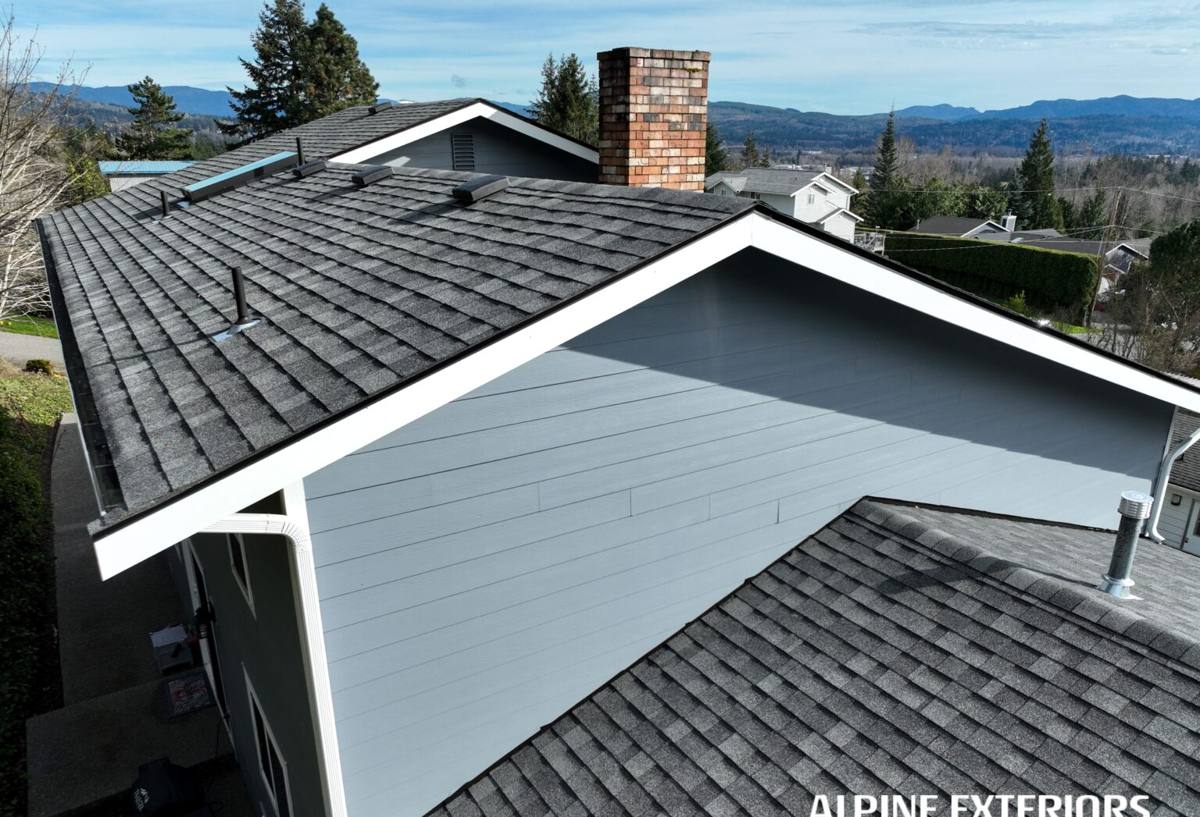
What Salt Air, Rain, and Moss Actually Do to a Shingle Roof
Salt Air and Corrosion
Airborne salt doesn't damage the asphalt shingle mat itself very much — the bigger risk is to the metal components around it. Nail heads, flashing, drip edge, and gutter hardware all corrode faster near open water than they do a few miles inland. Once flashing starts to pit or a nail head rusts through its seal, water finds a path underneath the shingle course instead of running off the surface, and that's when a small, invisible problem becomes a ceiling stain.
Wind-Driven Rain
Rain that comes in sideways off the channel behaves differently than rain that falls straight down. It gets pushed up and under shingle edges, into open valleys, and around anything with a seam — chimneys, skylights, plumbing vents. A roof that would shed a calm rain just fine can leak in the same spot during a windy Skagit County storm if the underlayment and flashing details weren't built for driving rain in the first place.
Moss and Algae
Between the marine humidity, shaded lots, and a wet season that runs long here, moss and black algae streaking are close to unavoidable without the right shingle and a little upkeep. Moss isn't just cosmetic — its root structure works into the shingle mat and lifts tabs, which breaks the seal and lets water in underneath. Algae staining won't damage the roof structurally, but it's a sign the shingle surface is holding moisture longer than it should.
What a Correctly Built Shingle Roof Looks Like for This Area
There's no single "best" shingle for every house, but for La Conner conditions there's a clear baseline we won't go below. That means an algae-resistant (AR) shingle rated for the wind exposure this location actually sees, a synthetic underlayment instead of old-style felt, and ice-and-water shield membrane at the eaves, valleys, and any roof-to-wall transition — the places wind-driven rain actually gets in.
| Component | Standard Approach | What We Use in La Conner |
|---|---|---|
| Shingle type | Basic 3-tab, no algae protection | Algae-resistant architectural shingle, wind-rated for coastal exposure |
| Underlayment | Standard felt paper | Synthetic underlayment, fully lapped and sealed |
| Valleys & eaves | Underlayment only | Self-adhering ice-and-water membrane |
| Fasteners & flashing | Standard galvanized | Corrosion-resistant fasteners and flashing sized for the actual metal exposure |
| Ventilation | Whatever exists already | Balanced intake/exhaust calculated for the roof, not assumed |
None of this is exotic material — it's the difference between building to a minimum code spec and building for the specific conditions the roof will actually face on this stretch of Skagit County waterfront.
How We Approach a La Conner Shingle Roof, Step by Step
- Roof and attic inspection. We look at the deck, existing ventilation, flashing condition, and any moss or moisture already present before we talk product or price.
- Tear-off and deck check. Old material comes off down to the deck so we can see and fix any soft or water-damaged sheathing rather than roofing over it.
- Membrane and underlayment. Ice-and-water shield goes down first at eaves, valleys, and penetrations, then synthetic underlayment across the full field.
- Flashing. New flashing at chimneys, walls, skylights, and vents — this is the single most common failure point on older shingle roofs we replace out here, and it's not something to reuse.
- Shingle installation. Correct nailing pattern, exposure, and starter course — installation error is the most common reason a good shingle underperforms its rating.
- Ventilation tie-in. Ridge and intake ventilation balanced to the attic space, not just installed as an afterthought.
- Final walk-through. We show you what was done and what to watch for going forward, including moss.
Ventilation: The Part of the Roof You Never See but Always Pay For
A shingle roof doesn't fail from the top down as often as people assume — a lot of premature shingle failure starts from the underside, where trapped attic moisture cooks the shingle mat from below and shortens its life regardless of how good the shingle itself is. In a marine climate like this one, an attic that can't breathe properly holds onto humidity longer, which also feeds condensation, mold risk, and ice buildup at the eaves during a cold snap. Balanced ventilation — enough intake at the soffits to match the exhaust at the ridge — is not an upgrade, it's a requirement for the shingle warranty to mean anything and for the roof to last as long as it's rated to.
Moss: Prevention Beats Removal Every Time
Moss is the single most common call we get from La Conner homeowners, usually on the shaded, north-facing slope of the roof. Once moss has taken hold and started lifting tabs, the fix is a roof replacement in that section, not a cleaning. The good news is that moss growth is largely preventable with the right shingle and a little routine attention.
- Choose an algae-resistant (AR) shingle rated for the shaded and humid sections of the roof, not just the sunny ones.
- Keep overhanging branches trimmed back so the roof surface gets airflow and sun where possible.
- Clear gutters and valleys each fall before the wet season settles in — trapped debris holds moisture against the shingle.
- Have moss physically removed (never pressure-washed) as soon as it appears, before it roots into the shingle mat.
- Consider zinc or copper strips at the ridge on heavily shaded roofs — they release trace metal ions with rainfall that inhibit new moss growth over time.
- Schedule a roof check every year or two, especially after a rough winter, so small issues get caught before they become deck damage.
What Drives Cost on a La Conner Shingle Roof
Every roof is priced on its own specifics, but the factors that move the number up or down are consistent. We'll walk through all of these with you during an estimate so there are no surprises.
| Factor | Why It Matters Here |
|---|---|
| Roof size and pitch | Steeper roofs take longer to work safely and use more material per square |
| Deck condition | Water-damaged sheathing found during tear-off needs to be replaced, not covered |
| Number of valleys, chimneys, skylights | Each one is a flashing detail, and flashing detail is where leaks start |
| Shingle class chosen | Algae-resistant, higher wind-rated shingles cost more up front and less in the long run |
| Existing ventilation | Adding or correcting ridge/soffit ventilation is often needed but not always obvious until we're up there |
| Access and site conditions | Waterfront lots, tight setbacks, and mature landscaping can affect staging and disposal |
Why a Crew That Already Works La Conner Makes a Difference
A roofing crew that mostly works dry, inland jobs doesn't run into salt-air corrosion or shaded-slope moss often enough to build habits around it. We're based in Anacortes and work this stretch of Skagit County regularly, so the details that matter here — corrosion-resistant fasteners, wind-driven-rain flashing details, algae-resistant shingle selection, ventilation sized for a marine climate — aren't an afterthought, they're the starting spec. That matters just as much for a straightforward re-roof as it does for a roof with existing moss or leak damage to work around.
Ready for a Straight Answer on Your Roof
If you're dealing with moss, staining, a leak, or you just know your shingle roof is getting old and want an honest read on where it stands, we're happy to take a look. There's no pressure and no sales script — just a clear explanation of what we see and what it would take to fix it right. Fill out the form below to request a free estimate for your La Conner home.