 Anacortes Siding
 Board & Batten Siding, Built for an Oak Harbor Home
Board and batten has become one of the most requested siding profiles for homes on and around Whidbey Island, and it's easy to see why. The clean vertical lines read as modern farmhouse on a new build and as classic coastal cottage on an older home, and it works with the mix of architecture you find in Oak Harbor — from close-to-the-water cottages to newer construction set back on wooded lots. But the look is only half the story. Out here, siding also has to survive salt-laden air, sideways rain off the Sound, and a moss season that can run most of the year. A board and batten installation that isn't built for that environment will show it within a few winters, no matter how good it looks the day it goes up.
We install board and batten siding using James Hardie fiber cement exclusively. That's not a marketing line — it's a decision we made after years of seeing what wood, engineered wood, and vinyl versions of this profile actually do once they've spent a few seasons a short drive from saltwater.
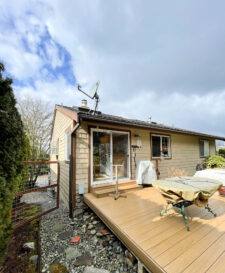
What Oak Harbor's Climate Actually Does to Vertical Siding
Board and batten siding has more vertical seams than a standard lap profile, and more seams mean more places for water to find a way in if the job isn't done right. In a marine climate like this, that detail matters more than it would somewhere dry and inland.
Salt Air
Airborne salt accelerates corrosion on fasteners, flashing, and any metal trim tied into the siding system. Over time it also breaks down cheaper paint films and coatings faster than a factory-cured finish, leaving raw material exposed at the edges and seams first.
Driving, Wind-Driven Rain
Storms coming off the water don't just fall straight down — they push rain sideways into vertical battens and butt joints. Board and batten siding is more forgiving of this than plain panel siding when the battens are installed and flashed correctly, but it's less forgiving when they aren't, since water pushed behind a batten has fewer places to drain back out.
Moss and Sustained Moisture
Shaded north walls and tree-lined lots around Oak Harbor stay damp for long stretches of the year, which is exactly the environment moss and mildew need. Porous or untreated materials give moss something to grip and feed on; a dense, factory-finished fiber cement surface gives it much less to hold onto.
Why the Material Underneath the Battens Matters More Than the Look
Board and batten is a profile, not a material — you can build it out of cedar, engineered wood, vinyl, or fiber cement, and from the curb they can look similar. Their long-term behavior in a place like Oak Harbor is not similar at all.
| Material | Behavior in Salt Air & Rain | Moss/Mildew Resistance | Long-Term Maintenance |
|---|---|---|---|
| Cedar / primed spruce boards | Absorbs moisture, prone to cupping and checking as it wets and dries repeatedly | Low — organic material moss readily colonizes | Regular refinishing and caulk upkeep required |
| Engineered wood (OSB-based) | Vulnerable at cut edges and seams if moisture gets past the coating | Moderate, depends on coating condition | Coating must be inspected and maintained yearly |
| Vinyl board and batten | Doesn't rot, but flexes and can pull loose in sustained wind; seams rely on lap-and-lock fit rather than sealed joints | Moderate — smooth surface, but can trap moisture behind panels | Low upkeep but limited repair options if damaged |
| James Hardie fiber cement | Dense, non-organic composition holds up to repeated wetting without swelling | High — factory ColorPlus finish resists moss growth better than porous materials | Occasional wash; no refinishing cycle under normal conditions |
Fiber cement isn't automatically the right choice because of the material alone — installation quality determines whether any of these advantages actually show up on your house. That's the piece homeowners often don't get told about.
What a Correct Board & Batten Installation Involves
Board and batten is more installation-sensitive than standard horizontal lap siding, because every vertical seam is a potential water path. A correct job on a home exposed to Oak Harbor's weather includes:
- A drainage plane behind the siding — a weather-resistive barrier, and in most cases a rainscreen gap, so any water that gets past the surface has somewhere to go besides your sheathing.
- Proper batten spacing and fastening — battens fastened into structural framing or furring, not just into sheathing, with spacing that follows manufacturer specification rather than "close enough."
- Flashing at every horizontal transition — window and door heads, roof-to-wall intersections, and any place the siding meets a different material.
- Correct fastener type — corrosion-resistant fasteners rated for coastal exposure, set to the depth and pattern James Hardie specifies, not just whatever's fast.
- Sealed and caulked joints where required — using sealants rated for the exterior exposure, not general-purpose caulk that will fail in a season or two.
- Proper clearance at the base — siding held up off decks, patios, and grade so it isn't sitting in standing water or snow.
Skip any one of these and the siding can look fine for a year or two while moisture works its way in behind it. By the time it shows on the surface, there's often already damage to the sheathing or framing behind it.
The James Hardie Board & Batten System
The board and batten look can be built two ways with James Hardie products: true individual battens installed over HardiePanel vertical siding, or a pre-finished vertical panel product that reads as board and batten from a distance with a lower parts count. We'll walk you through both options and which one fits your home, budget, and roofline.
Either way, the material itself is engineered specifically for this kind of climate. James Hardie's HZ5 product line is formulated for wetter, harsher climates like the Pacific Northwest coast, and the ColorPlus finish is a factory-applied, baked-on coating rather than a field-applied paint job — it's more consistent and more resistant to fading and moisture intrusion than paint applied on site. It also carries a long, transferable warranty, which matters on a home near the water where you want a siding decision that still holds up — and still has coverage — well down the road, including if you sell the house.
Our Process, Start to Finish
We keep the process straightforward because board and batten jobs go wrong most often from rushed steps, not complicated ones.
- On-site assessment. We look at your home's exposure — which walls take the most wind and rain, where moss is already established, and the condition of the sheathing and trim underneath the existing siding.
- Detailed estimate. You get a clear breakdown of the scope, product line, and what's involved — no vague allowances that turn into surprise change orders.
- Tear-off and inspection. Removing the old siding lets us actually see what's underneath before anything new goes up, and address any rot or water damage before it's covered again.
- Water management first. Weather-resistive barrier, flashing, and rainscreen components go in before a single piece of visible siding is installed.
- Board and batten installation to spec. Fastener pattern, spacing, and sealing follow James Hardie's installation requirements, not shortcuts.
- Final walkthrough. We go over the finished job with you in person before we consider it done.
Why It Matters That We Already Work This Coastline
Oak Harbor sits out on Whidbey Island, a bridge crossing from our home base in Anacortes, and that drive is part of why hiring a crew that already services this area is worth something. A contractor who mostly works inland doesn't always think about rainscreen gaps or corrosion-resistant fasteners as non-negotiable, because they haven't watched what happens to a job that skipped them here. Crews who work this stretch of Skagit and Island County waterfront regularly know which walls on a typical property take the worst of the weather, how much moss buildup to expect on shaded siding, and what it actually takes for a board and batten installation to still look right in ten years, not just on install day.
There's also a practical side: a crew already routed through this area can schedule your job efficiently and be reachable if you have a follow-up question or warranty item down the line, instead of being a one-time visit from someone who was never planning to come back this way.
Keeping Board & Batten Siding Looking Right After Installation
Fiber cement board and batten needs very little upkeep compared to wood, but "very little" isn't "none." A short seasonal routine keeps it performing the way it's designed to:
- Rinse the siding with a garden hose once or twice a year to clear salt residue and airborne grime, especially on walls facing the water.
- Check shaded and north-facing walls for early moss or mildew growth and address it before it spreads across a panel.
- Keep gutters clear so overflow isn't running down the siding face during heavy rain.
- Trim back shrubs and trees that keep a wall in constant shade and moisture.
- Have caulking and sealant at joints and trim inspected every few years, since sealant is the one component that ages faster than the siding itself.
- Walk the exterior after major windstorms and check for any loose battens or trim, especially near roof lines and corners.
Is Board & Batten the Right Choice for Your Home?
Board and batten works especially well on gable ends, dormers, entry accents, and full elevations where you want strong vertical lines, and it pairs naturally with the kind of coastal and farmhouse-style homes common around Oak Harbor. It's not always the right call for every wall or budget, though — sometimes a mix of board and batten as an accent with standard lap siding elsewhere gives you the look you want at a more manageable cost. We'll give you an honest read on what fits your home rather than pushing one profile because it's trendy.
If you're weighing board and batten siding for a home in Oak Harbor, we're happy to take a look and walk the property with you. There's no cost and no pressure for a free estimate — just a straight assessment of what your home needs and what it would take to do the job right.