 Anacortes Siding
 Deck Replacement Built for Oak Harbor's Marine Climate
Oak Harbor sits close enough to the water that every deck in the area deals with the same slow, patient enemy: moisture. Salt-laden air off the Salish Sea, long stretches of driving rain through fall and winter, and a moss season that can run six months or more all work against wood and fasteners in ways that inland decks never have to handle. A deck that would last two decades in a drier part of the state can start failing in half that time here if it wasn't built with this climate in mind.
We're an Anacortes-based crew that works Skagit County regularly, including Oak Harbor and the surrounding areas. That matters for a project like a deck replacement because so much of getting it right depends on understanding how the local weather actually behaves — not just in a brochure sense, but in the specific way it degrades ledger boards, corrodes hardware, and hides rot under a mossy surface until it's a structural problem instead of a cosmetic one.
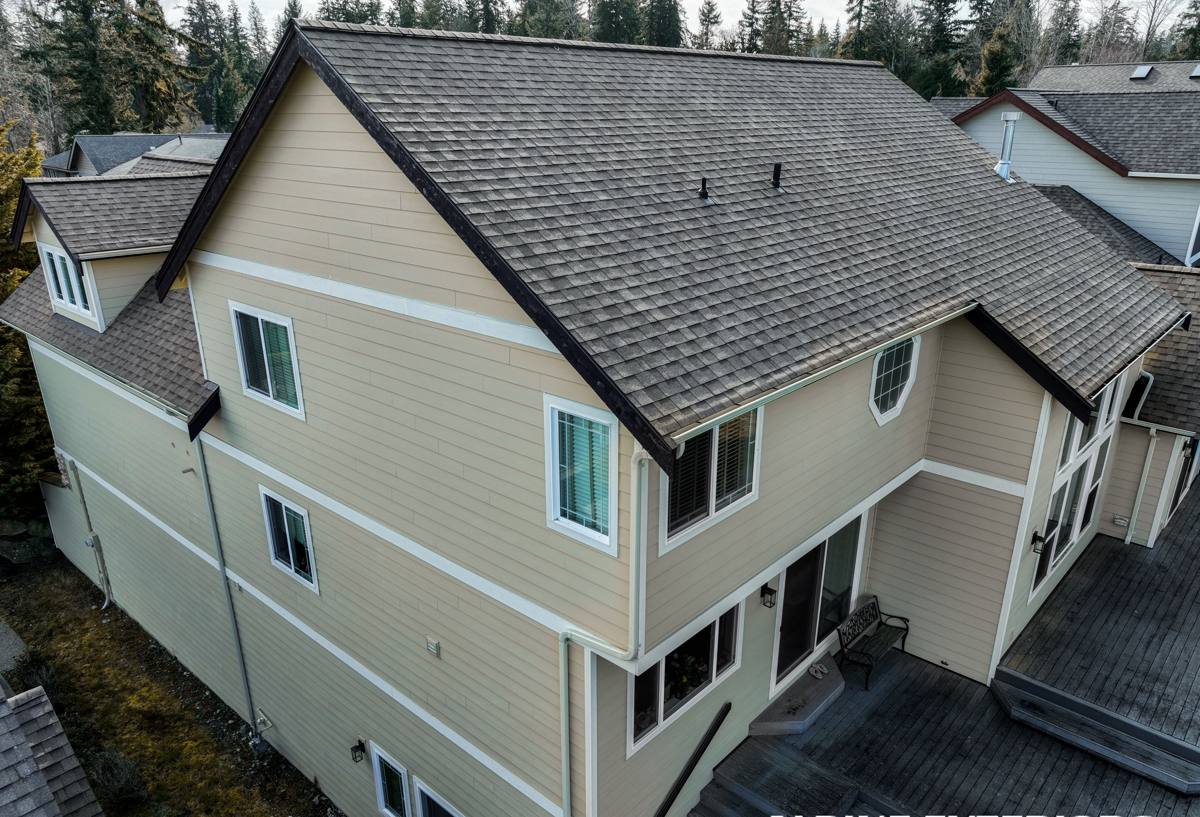
Why Decks Fail Faster Near the Water
Most deck failures we find during inspections aren't dramatic. They're slow, and they usually start in one of a handful of predictable places.
Salt Air and Metal Fasteners
Salt-laden air accelerates corrosion on anything that isn't rated for coastal exposure. Standard fasteners, brackets, and joist hangers can start rusting from the inside out within a few years, long before the wood around them shows obvious damage. Once a fastener corrodes, it loses holding strength — and on a deck, that's the kind of failure you don't want to discover by surprise.
Driving Rain and Water Intrusion
Rain that comes in sideways off the water finds its way into joints, ledger connections, and end grain that a straight-down rain never would. Over time this drives moisture into places the deck's original construction never accounted for, especially around the house-to-deck ledger connection, which is one of the most critical structural points on any deck.
Moss and Trapped Moisture
A long moss season means organic growth gets a real foothold on horizontal surfaces — decking boards, stair treads, anywhere water sits even briefly. Moss holds moisture against the wood surface far longer than open air would, which speeds up rot underneath even when the top of the board still looks intact.
What a Correct Deck Replacement Actually Involves
Replacing a deck isn't just swapping old boards for new ones. Done right, it's a chance to fix the structural and moisture problems that shortened the life of the last deck in the first place.
Inspecting and Correcting the Substructure
Before any new decking goes down, we evaluate the ledger board, posts, footings, and framing. In a marine climate, this is where problems most often hide — a deck can look fine on the surface while the substructure underneath has been quietly deteriorating for years. Any compromised framing gets replaced, not patched over.
Flashing and Water Management
Proper ledger flashing is one of the most important — and most commonly skipped — parts of a deck build. It's what keeps rain from working its way behind the house siding and into the rim joist. We treat this as a non-negotiable step, not an upgrade.
Fastener and Hardware Selection
Given the corrosion risk from salt air, we use fasteners and structural hardware rated for coastal or wet-climate exposure rather than standard-grade hardware. It costs a bit more up front and it's worth it — replacing corroded hardware on a finished deck means tearing into boards that are otherwise fine.
Decking Material Choice
Whether a homeowner goes with wood or composite decking, the right choice depends on how much maintenance they're willing to put in versus how much they want to spend up front. We walk through the honest trade-offs rather than pushing one product as a default.
Decking Material Comparison for This Climate
| Material | Moisture Behavior | Maintenance | Typical Lifespan Here |
|---|---|---|---|
| Pressure-treated wood | Resists rot when properly sealed and maintained; vulnerable if maintenance lapses | Needs re-sealing every 1-3 years in this climate | 10-15 years with upkeep |
| Cedar | Naturally moisture- and insect-resistant, but still needs sealing to slow graying and moss growth | Regular cleaning and periodic sealing | 15-20 years with upkeep |
| Composite decking | Doesn't absorb water or rot, but can stay damp on the surface longer, which encourages moss and algae | Periodic cleaning to prevent surface growth; no sealing needed | 20-25+ years, varies by product |
None of these is the "right" answer for every homeowner. Wood costs less up front and can be repaired board by board. Composite costs more initially but trades ongoing sealing for occasional cleaning. We'll walk through what fits your budget and how much maintenance you actually want to do.
Signs an Oak Harbor Deck Needs Replacing, Not Repairing
- Soft, spongy, or spring-feeling deck boards, especially near the ledger or stairs
- Visible rust staining around fasteners, brackets, or joist hangers
- Persistent moss or algae that returns quickly after cleaning
- Gaps or separation where the deck meets the house
- Posts that feel loose or that have visible rot at the base near ground contact
- A deck more than 15-20 years old that has never had the substructure inspected
- Cracking or splintering across multiple boards rather than a few isolated spots
If only one or two of these show up and the framing underneath checks out, a repair may be enough. When several of these are present, or when the ledger connection or framing is compromised, replacement is usually the more honest recommendation — and the safer one.
Our Process for a Deck Replacement
- On-site assessment. We look at the existing deck, the framing underneath, the ledger connection, and how the deck sits relative to drainage and sun exposure.
- Honest scope discussion. We explain what's structural versus cosmetic, what materials fit your budget and maintenance preference, and what a realistic timeline looks like.
- Removal and structural correction. Old decking and any compromised framing come out. Posts, footings, and the ledger connection get corrected as needed before anything new goes up.
- Flashing and hardware installation. Proper flashing and coastal-rated fasteners go in before decking, not as an afterthought.
- Decking installation. New boards go down with attention to spacing and drainage, since standing water is what drives moss growth and rot in this climate.
- Final walkthrough. We go over the finished deck with you, including basic maintenance guidance specific to the material you chose.
Why a Local Crew Makes a Real Difference
A deck replacement isn't a product you order off a shelf — it's a build that has to answer to the specific conditions of the site it sits on. A crew that works Anacortes and Skagit County regularly has already seen how ledger connections fail near the water, which fastener grades actually hold up, and how fast moss takes over a horizontal surface in this particular climate. That's not something a contractor who occasionally drives out from somewhere inland picks up quickly.
Local also means accountability. If something needs a follow-up visit, or if a homeowner has a question a year or two after the project wraps up, we're not far away. That's part of why Skagit County homeowners tend to prefer a contractor with an established local presence over a crew that's just passing through for one job.
Budgeting for a Deck Replacement
Costs vary based on deck size, material choice, substructure condition, and site access. Wood decking generally costs less up front than composite, but that gap narrows over the life of the deck once ongoing sealing and maintenance are factored in. The condition of the substructure also matters — a deck with rotted framing or a compromised ledger will cost more to correct than one where the framing is sound and only the surface decking needs replacing. We give straightforward, itemized estimates so you know exactly what you're paying for and why, without vague allowances that turn into surprises later.
Maintenance After Replacement
Even a well-built deck needs some ongoing attention in this climate. A few habits go a long way:
- Clean surface moss and algae buildup at least once a season, more often on shaded or north-facing sections
- Reseal wood decking on the schedule recommended for the specific product used
- Keep gutters and downspouts clear so runoff isn't draining directly onto the deck surface
- Check the ledger flashing and any visible fasteners annually for early signs of corrosion or gaps
- Trim back overhanging vegetation that keeps the deck surface shaded and damp
If you're considering a deck replacement in Oak Harbor or elsewhere in the Anacortes area, we're happy to take a look and give you a straightforward, no-pressure estimate. There's a form below — reach out and we'll get a time on the calendar.