 Anacortes Siding
 Oak Harbor's Climate Is Hard on Siding — Here's Why That Matters
Oak Harbor sits on Whidbey Island, close enough to the water that salt-laden air, wind-driven rain, and long, damp winters are simply part of owning a home there. Homes across the Whidbey and greater Anacortes area face the same combination of marine exposure and near-constant moisture, and siding takes the brunt of it. Salt air accelerates corrosion on fasteners and trim, driving rain finds its way behind poorly flashed panels, and the region's extended gray, wet season keeps north- and shade-facing walls damp long enough for moss and algae to take hold and stay there for months at a time.
None of that is a defect in any one product — it's just what this stretch of the Salish Sea does to a house. The difference between siding that holds up for decades and siding that fails early almost always comes down to two things: the material itself, and whether it was installed correctly for this specific climate. We focus on both, and we focus on nothing else.
Signs an Oak Harbor Home Needs Siding Replacement, Not Just a Patch
Homeowners often call us after noticing one visible problem, only to find the underlying damage extends much further once we open up the wall. In a wet, salt-exposed climate, siding problems rarely stay small. Watch for:
- Soft, spongy, or crumbling spots when you press on the siding, especially near the bottom courses and around windows
- Paint that keeps failing within a year or two of repainting, even with quality paint
- Persistent moss, algae, or black streaking that comes right back after cleaning
- Visible cupping, warping, or delamination of panels or boards
- Gaps opening up at seams, corners, or trim where caulk has failed
- Rusted or popping fasteners, particularly on walls that face prevailing wind and rain
- A musty smell or damp feeling in interior rooms along an exterior wall
If you're seeing two or more of these, it's usually a sign that moisture has been getting behind the siding for a while, not just that the surface looks tired. A proper inspection — not a quick look from the driveway — is the only way to know whether you're looking at a repair or a full replacement.
Why We Install Only James Hardie Fiber Cement Siding
We don't install LP SmartSide, vinyl, Cemplank, Allura, primed spruce, or cedar. That's a deliberate standard, not a lack of options. In a climate like this one — salt air, sustained rain, and months of damp shade — the material has to resist moisture intrusion, hold paint, and not feed the organic growth that thrives here. James Hardie fiber cement is engineered specifically for that job:
- Non-combustible core — fiber cement doesn't burn, rot, or provide a food source for pests, which matters over a multi-decade lifespan
- ColorPlus factory finish — a baked-on finish applied under controlled conditions, which holds color and resists fading and peeling far better than field-applied paint on wood or engineered wood products
- Climate-engineered HZ product lines — Hardie manufactures different formulations for different climate zones, and this region falls in a wet, moderate zone where moisture and mold resistance are the priority, not extreme heat or freeze-thaw
- Dimensional stability — fiber cement doesn't swell, warp, or cup the way wood-based products can when they take on moisture repeatedly over years of Pacific Northwest winters
- A strong, transferable warranty — backed by the manufacturer, not just the installer, and it stays with the house if you sell
Every product we've chosen not to install has real strengths — that's why they're common. But wood-based and engineered-wood sidings depend on paint film integrity to keep water out, and vinyl depends on flexible seams and fasteners that can loosen with wind and temperature swings. In a marine environment with this much sustained moisture, those are the exact failure points that show up first. Fiber cement removes that weak link.
What This Looks Like on an Actual Home
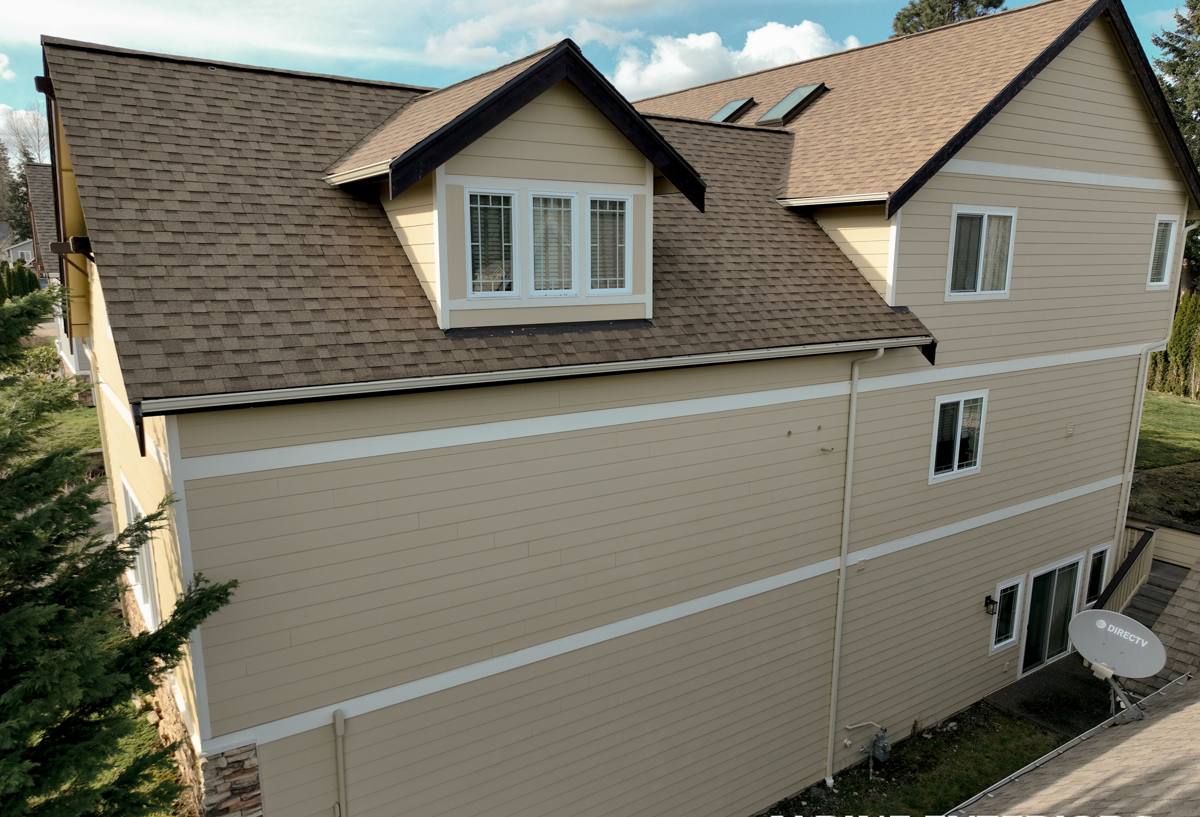
In practice, that means an Oak Harbor home gets a siding system that isn't fighting the climate — it's built for it. The board doesn't rely on a perfect paint job to stay water-resistant, and the factory finish means the color you pick is the color that's still there in fifteen years, not a shade lighter and starting to chalk.
What Correct Installation Involves in a Wet, Salt-Exposed Climate
Even the right material fails early if it's installed wrong, and this is where a lot of siding jobs — on any product — go sideways. In a climate that sends rain sideways for days at a time, the details behind the siding matter as much as the siding itself.
Rainscreen and Drainage
A proper install creates a drainage gap behind the siding so any moisture that does get past the surface can drain and dry out instead of sitting against the sheathing. This is especially important on walls that take direct weather.
Flashing and Water Management
Windows, doors, and every horizontal trim piece need correct flashing sequencing so water is directed out and down, never trapped behind the siding. This is the single most common source of hidden rot we find when we tear off old siding.
Fastening and Gapping
Fasteners need to be the correct type, driven to the correct depth, and panels need proper gapping at joints and corners so the material can expand and contract without cracking caulk or pulling seams open.
Caulking and Sealant Choice
Not every sealant holds up to constant damp-dry cycling and salt exposure. Using the wrong caulk at joints is a small shortcut that shows up as a big problem within a couple of years.
Our Siding Replacement Process
We walk every Oak Harbor project through the same sequence, because skipping steps is exactly how moisture problems get built back into a wall.
- On-site inspection — we look at the existing siding, check for soft spots and hidden moisture, and assess what's happening behind the surface, not just what's visible
- Tear-off and sheathing check — old siding comes off and we inspect the sheathing and framing underneath for rot before anything new goes up
- Weather barrier and drainage plane — a correctly installed water-resistive barrier and rainscreen gap go in before any siding touches the wall
- Flashing at every penetration — windows, doors, vents, and trim get flashed and sequenced to shed water outward
- James Hardie installation to manufacturer spec — correct fastening, gapping, and sealant, following Hardie's published installation requirements so the warranty stays valid
- Final walkthrough — we go over the finished work with the homeowner before calling the job done
Choosing the Right Hardie Line and Color for This Climate
James Hardie offers several product lines, and the right choice depends on the look you want and how much of the wall faces direct weather.
| Hardie Product | Best Suited For | Why It Fits Oak Harbor |
|---|---|---|
| HardiePlank Lap Siding | Most homes, traditional or modern look | Widest color and texture range; proven long-term performance in wet climates |
| HardieShingle | Accent areas, gables, coastal-style homes | Classic shingle look without the moisture susceptibility of real cedar shakes |
| HardiePanel | Modern vertical-siding designs | Clean lines for contemporary homes, same fiber cement durability |
| HardieTrim | Window, corner, and fascia trim | Matches the siding's moisture resistance so trim isn't the weak point |
ColorPlus finishes are worth the upgrade over field-painted material in this climate specifically because the factory finish is more consistent and more resistant to the fading and chalking that constant damp weather and salt air accelerate on site-applied paint.
What Drives the Cost of a Siding Replacement
Every home is different, so we don't quote broad numbers without seeing the house, but the same factors drive cost on nearly every Oak Harbor project:
| Factor | Why It Matters |
|---|---|
| Extent of hidden damage | Rotted sheathing or framing found during tear-off adds repair work beyond the siding itself |
| Home size and wall complexity | More corners, dormers, and trim details mean more labor and material cuts |
| Product line and finish | HardieShingle accents or premium ColorPlus colors cost more than standard lap siding |
| Access and site conditions | Steep lots, limited staging area, or multi-story walls affect labor time |
| Existing siding removal | Layers of old siding or extensive tear-off add time before installation even starts |
The only way to get an accurate number is a walk-through, which is why we start every project with a free, no-obligation estimate rather than a phone quote.
Why a Crew That Already Works Oak Harbor Makes a Difference
Siding installation isn't identical everywhere. A crew that mostly works drier inland climates can install a technically correct system that still isn't built for what Oak Harbor's weather actually does over a winter of driving rain and a summer of lingering moss. Working this area regularly means we know which walls take the worst weather, why moss keeps coming back on certain exposures, and where a house needs extra attention to flashing and drainage rather than a standard install. That familiarity — not a sales pitch — is what keeps a siding job from turning into a callback two winters later.
If your Oak Harbor home is showing signs of siding failure, or you're planning ahead before the next wet season sets in, we'd be glad to take a look. Reach out for a free, no-pressure estimate using the form below — we'll walk the exterior with you and give you an honest read on what your home actually needs.