 Anacortes Siding
 Building Decks for Ship Harbor's Shoreline Conditions
Ship Harbor sits close enough to the water that every deck we build there has to answer to salt air, near-constant winter moisture, and the shade-and-moss cycle that comes with mature evergreen cover. A deck that would hold up fine on the dry side of Anacortes can start showing corrosion streaks, soft spots, or slick green growth within a couple of seasons out here if it's built with the wrong materials or the wrong assumptions about drainage.
This page is about what we've learned building and repairing decks specifically in this pocket of Skagit County — not a generic rundown of deck options. If you own a home in or near Ship Harbor and you're thinking about a new deck, a rebuild, or replacing boards on an aging structure, the details below are the ones that actually matter for your address.
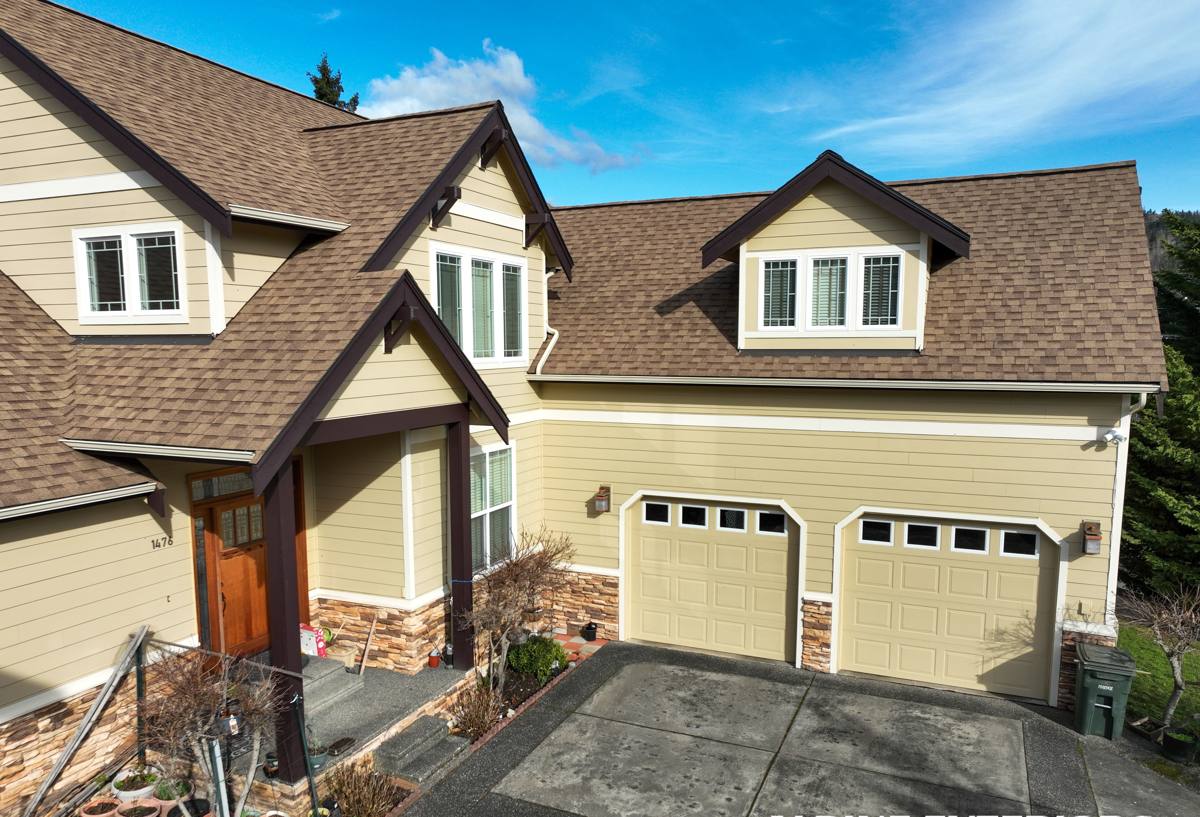
What Ship Harbor's Climate Does to a Deck
Three things drive almost every deck problem we see in this neighborhood:
- Salt-laden air off the harbor accelerates corrosion on exposed fasteners, brackets, and any hardware that isn't rated for coastal exposure.
- Driving rain that comes in sideways during winter storms gets pushed under railings, into end-grain cuts, and behind ledger boards if flashing details are done casually.
- Extended moss and algae season, thanks to tree cover and persistent damp shade, which turns decking surfaces slick and, over time, holds moisture against the wood or composite cap far longer than a sunnier lot would.
None of these are exotic problems. They're just persistent, and a deck built without them in mind will show its age faster here than the same deck would three miles inland.
Corrosion — the One Homeowners Notice Too Late
The most common failure we're called out to inspect in this area isn't rotten wood — it's corroded fasteners. Standard galvanized screws and joist hardware can start rusting within a few years this close to salt water, and once a fastener weakens, the board around it works loose, water gets into the hole, and the damage spreads. By the time you see rust streaks bleeding down a fascia board, the fastener underneath has usually already lost meaningful holding strength.
What a Correct Deck Build Looks Like Here
Fasteners and Hardware
For any deck we build in Ship Harbor, we default to stainless steel or coated fasteners rated for coastal/marine exposure, along with joist hangers and structural hardware in a matching corrosion-resistant coating. It costs more up front than standard galvanized hardware. It's also the single biggest factor in whether a deck out here looks the same at year ten as it did at year one.
Framing and Ledger Details
Where the deck attaches to the house (the ledger board) is the most water-sensitive connection on the whole structure. We flash that connection properly — meaning water that reaches it is directed out and away from the house framing, not trapped behind the board. We also make sure joist spacing and beam sizing are set for our snow and wind load requirements, not just whatever the decking manufacturer's minimum spec allows.
Decking Surface Choice
Wood and composite decking both work in Ship Harbor — but they demand different maintenance habits, and we'll tell you honestly which one fits how you actually plan to take care of the deck.
| Decking Material | How It Handles Salt Air & Moss | Maintenance Reality |
|---|---|---|
| Pressure-treated wood | Holds up well if sealed regularly; end grain and fastener points are the weak spots | Needs re-staining/sealing every 1-2 years in this climate to stay ahead of moisture and moss |
| Cedar | Naturally rot- and insect-resistant, but still needs protection from constant damp shade | Periodic oiling or sealing; will silver naturally if left untreated |
| Composite decking | Doesn't rot, but can trap moisture under surface grime and grow algae/moss film if never cleaned | Low maintenance overall; needs an occasional wash to keep the surface from getting slick |
| PVC decking | Fully resists moisture absorption; least prone to moss taking hold | Highest material cost; minimal upkeep beyond cleaning |
Railings, Stairs, and Structural Support
Railings take a beating from the same salt air that attacks fasteners, and they're also the part of the deck most exposed to driving rain because they have nowhere to shed water except down their own posts and connections. We use hardware and post-mounting details built for that exposure, and we pay close attention to where railing posts meet the deck frame — that's a common spot for water to sit if it isn't detailed correctly.
Stairs on a sloped Ship Harbor lot also need proper footing depth and drainage underneath, since standing water under a stair stringer freezes and thaws differently than open ground and can shift footings over time.
Footings on Sloped or Wooded Lots
A lot of Ship Harbor properties sit on grades with tree roots nearby, which changes how we approach footing placement and depth. We dig to solid, undisturbed soil and size footings for the actual loads the deck will carry, rather than defaulting to whatever the minimum code footing happens to be.
Dealing with Moss and Shade Once the Deck Is Built
Even a well-built deck in this neighborhood will grow some moss or algae film if it sits in deep shade most of the year — that's the nature of the area, not a sign something was done wrong. What matters is designing for it up front:
- Board spacing and airflow underneath the deck to help it dry out between rains
- Decking material chosen with your actual cleaning habits in mind (composite and PVC forgive neglect better than bare wood)
- Railing and post details that don't create flat surfaces where standing water and debris collect
- A realistic conversation, before we build, about how often you're willing to clean or reseal the surface
We'd rather tell you upfront that a low-maintenance material makes more sense for your lot than sell you a wood deck that needs more attention than you're planning to give it.
Our Process for a Ship Harbor Deck Project
- On-site assessment — we look at sun exposure, tree cover, slope, drainage, and how close the lot sits to salt air exposure to inform material and hardware choices.
- Design and material selection — we walk through decking, railing, and fastener options honestly, including the maintenance trade-offs of each.
- Permitting — deck permits and inspections go through the applicable Anacortes/Skagit County process; we handle that paperwork as part of the job.
- Framing and structural work — footings, ledger flashing, joists, and beams built to the loads and exposure your specific site requires.
- Decking, railing, and finish work — installed with corrosion-resistant fasteners and hardware throughout.
- Final walkthrough — we go over basic maintenance expectations for your specific materials so there are no surprises in year two or three.
Repair, Rebuild, or Replace?
Not every aging deck in Ship Harbor needs to be torn out. If the framing is sound and the problems are limited to surface boards, fasteners, or railings, a partial rebuild can extend the life of the structure for a fraction of full replacement cost. The determining factor is almost always the framing and footings — if those are solid, we can usually work with them.
Signs a deck is past the point of partial repair usually include soft or spongy framing (not just surface boards), significant fastener corrosion throughout the structure, or footings that have visibly shifted or heaved. We'll tell you plainly which category your deck falls into rather than pushing a full rebuild when a repair would genuinely do the job.
Cost Factors for a Ship Harbor Deck
Every deck project is different, but the same handful of factors drive most of the cost variation we see on jobs in this area:
| Factor | Why It Matters Here |
|---|---|
| Decking material | Wood costs less upfront but needs more upkeep; composite/PVC cost more but resist moss and moisture better |
| Fastener and hardware grade | Marine-grade stainless costs more than standard galvanized but is worth it this close to salt air |
| Site access and slope | Sloped or wooded lots often need deeper footings and more site prep |
| Size and layout complexity | Multi-level decks, built-in benches, or custom railing designs add labor time |
| Existing structure condition | Repair vs. full rebuild changes scope significantly if you're replacing an older deck |
We give straightforward, itemized estimates so you can see exactly where the cost is going rather than one lump number.
Why Hire a Crew That Already Works Ship Harbor
Building a deck that lasts here isn't about following a generic manufacturer spec sheet — it's about knowing which corners actually matter in this specific microclimate. A crew that's worked Ship Harbor knows which fastener grade holds up, which ledger details keep driving rain out of the wall, and which decking materials handle a shaded, damp lot without turning into a maintenance headache. That local track record is the difference between a deck that needs attention every year and one that quietly does its job for a couple of decades.
We're a Skagit County crew, and Anacortes' salt air, rain patterns, and moss season are conditions we build around every day, not occasional exceptions we have to research.
If you're considering a new deck, a rebuild, or just want an honest read on what shape your current one is in, we're happy to come take a look. The estimate is free, there's no pressure, and you'll get a straight answer about what your Ship Harbor property actually needs — just fill out the form below to get started.