 Anacortes Siding
 Siding Built for Ship Harbor's Exposure
Ship Harbor sits close enough to the water on the west side of Anacortes that homes there take a steadier beating from the weather than properties further inland in Skagit County. Wind comes off the Salish Sea with salt in it, rain arrives sideways more often than straight down, and the tree cover that makes the area attractive also keeps things shaded and damp for long stretches of the year. Siding that would hold up fine in a drier part of the state gets tested harder here, and it shows in the tear-offs we've done on homes where the wrong product, or the right product installed loose to spec, gave out well before it should have.
This page is specifically about James Hardie fiber cement siding for Ship Harbor properties: what the local climate actually does to an exterior wall, what a correct installation involves, and why a crew that already knows this area's exposure patterns matters as much as the material you choose.
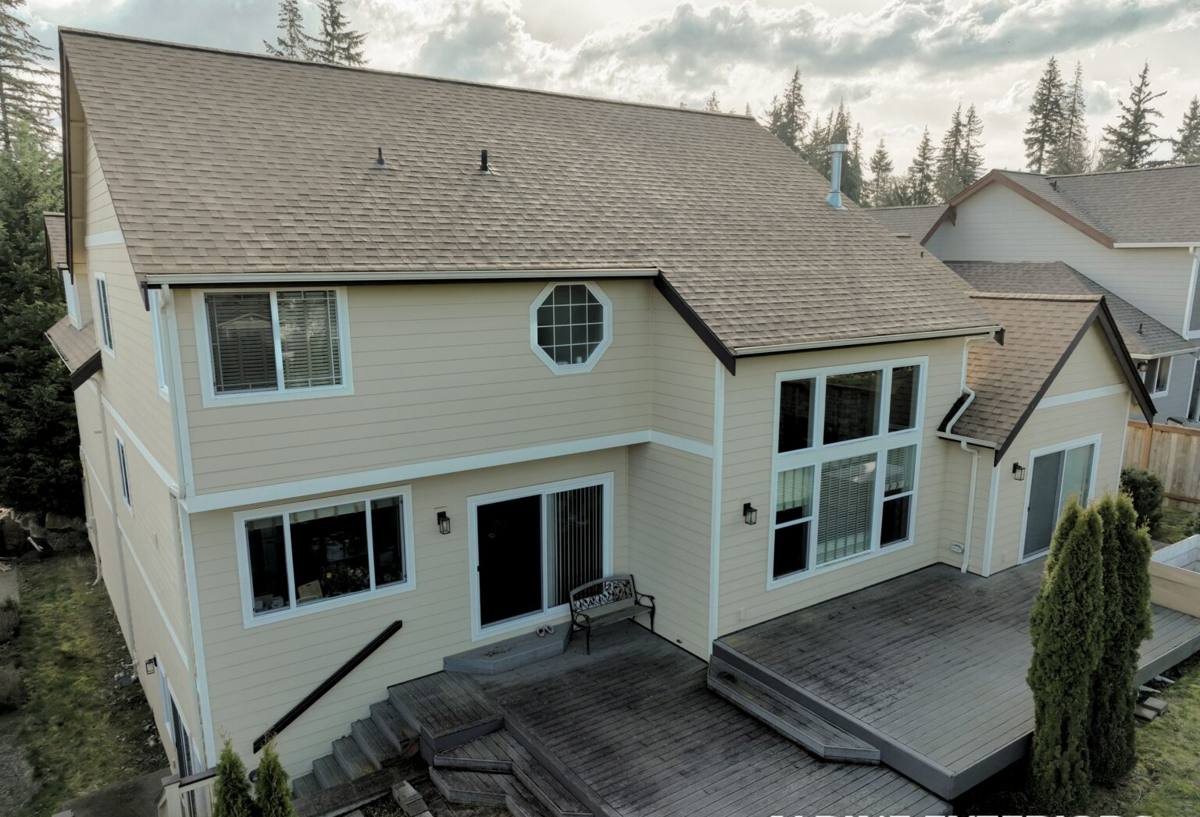
What Ship Harbor's Climate Does to a Home's Exterior
Three conditions define exterior wear here, and none of them is dramatic in isolation. Together, over a decade or two, they add up to a tougher environment than most siding is marketed for.
Salt Air Off the Water
Proximity to the harbor means salt-laden air reaches most of the neighborhood, not just the homes with a direct water view. Salt exposure speeds up the breakdown of surface finishes and accelerates corrosion on fasteners, trim hardware, and anything metal left exposed. A coating system that performs well in an inland market doesn't automatically hold up the same way this close to the Sound, and that gap tends to show up gradually rather than as an obvious early failure.
Driving, Wind-Pushed Rain
Rain here rarely falls straight down for long. Wind pushes it sideways into lap joints, under trim, and into any seam where the water management detailing isn't right. That's a harder test for caulked joints and any material that depends on an intact surface coating than a simple annual rainfall total would suggest, and it's one of the main reasons installation quality matters as much as the product itself.
A Long Moss and Mildew Season
Mild temperatures and consistent moisture keep moss and mildew active for most of the year on shaded, tree-lined lots, which describes a good share of Ship Harbor. Organic growth on a siding surface traps moisture against the wall behind it, and that trapped moisture is where a lot of long-term siding failures actually start, well before the siding itself looks obviously bad from the street.
Why James Hardie Fits This Specific Environment
James Hardie siding is fiber cement: a blend of Portland cement, sand, and cellulose fiber cured into rigid boards and panels. Because it's an inorganic material, it doesn't have a wood-based or petroleum-based core that can absorb water, swell, rot, or feed insects the way organic siding materials can. That matters directly in a place where damp conditions are the norm rather than the exception for much of the year.
The HZ5 Product Line
James Hardie engineers different product lines for different climate zones, and the HZ5 line is built for regions with freeze-thaw cycles and sustained moisture exposure, which matches western Skagit County's winters better than a product engineered primarily for hot, dry conditions. That's a concrete, climate-specific reason to choose this manufacturer over fiber cement as a generic category.
ColorPlus Factory Finish
Instead of relying on paint applied on site, Hardie's ColorPlus finish is baked on in a controlled factory environment in multiple coats before the boards ever reach a job. That finish carries its own warranty, separate from the substrate warranty, and it's formulated specifically to resist fading and hold color consistency under UV and salt exposure better than a field-painted surface typically does.
Non-Combustible Core
Fiber cement doesn't burn the way wood-based siding does. That's a relevant consideration anywhere in Washington given wildfire seasons in recent years, and it's a genuine, permanent property of the material rather than a treatment that wears off over time.
What a Correct James Hardie Installation Involves
Fiber cement's reputation depends heavily on installation quality. The material itself resists moisture and fire, but a rushed or out-of-spec install can undercut all of that. We're upfront that the product doesn't do all the work by itself.
| Installation Detail | Why It Matters in Ship Harbor |
|---|---|
| Manufacturer-specified clearances from grade, roofline, and decks | Keeps splash-back and standing moisture away from board edges during heavy rain events |
| Correct fastener type, spacing, and depth | Prevents cracking and keeps the water-resistive barrier behind the siding intact |
| Proper flashing at windows, doors, and roof intersections | Directs wind-driven rain away from seams instead of letting it collect there |
| Factory-cut edges used wherever possible; field cuts sealed per spec | Preserves the factory finish's protection at every cut edge, not just the flat faces |
| Rain screen or drainage plane behind the siding | Lets any moisture that gets past the surface drain and dry instead of sitting against the sheathing |
| Caulking and sealant limited to manufacturer-approved joints only | Over-caulking traps moisture in fiber cement just as easily as gaps let it in |
This is why we send certified installers to every Ship Harbor job rather than treating fiber cement as an interchangeable swap for whatever a crew is used to hanging. A material that resists moisture and combustion in its core can still underperform badly if the details around it are wrong.
How We Approach a Ship Harbor Siding Job
The process is straightforward, but the sequencing matters, especially with the moisture conditions this close to the water.
- Site walk and assessment. We look at sun and wind exposure on each elevation, existing moss or moisture staining, trim and window conditions, and how the current siding has actually performed, not just how it looks from the curb.
- Tear-off and sheathing check. Old siding comes off and we inspect the sheathing underneath for rot or hidden moisture damage before anything new goes up. This step is where problems that started years ago usually get found.
- Water-resistive barrier and drainage plane. A proper weather barrier and rain screen go on before any siding, giving moisture that gets past the surface a way to drain and dry instead of sitting against the wall.
- Flashing at every penetration. Windows, doors, hose bibs, vents, and roof intersections all get flashed to direct water outward, not just caulked and hoped for.
- Hardie board and panel installation to spec. Correct clearances, fastener placement, and factory-finished edges throughout, with field cuts sealed per manufacturer instructions.
- Final walkthrough. We go over the finished job with the homeowner, including what maintenance (if any) is actually needed going forward.
Why Hiring a Crew That Already Works This Area Matters
Ship Harbor's mix of water exposure, elevation, and tree cover isn't uniform even within the neighborhood, and it's not something you can fully judge from a spec sheet or a drive-by estimate. A crew that has worked homes in this specific part of Anacortes knows which elevations take the worst of a winter storm, where moss keeps coming back no matter what gets done, and which flashing details are the ones that actually prevent water intrusion versus the ones that are just code minimums. That local pattern recognition shapes how we scope a job before a single board goes up, and it's the difference between a siding job that looks right at handoff and one that actually performs for the next twenty-plus years.
It also matters for warranty support. James Hardie's warranty coverage depends on the product being installed to manufacturer spec by a certified installer. A contractor unfamiliar with the product's requirements can install siding that looks correct but voids or weakens that coverage without the homeowner ever knowing until there's a problem.
Why We Don't Install Vinyl, Engineered Wood, or Cedar
We standardized on James Hardie fiber cement and don't install vinyl, LP SmartSide, primed spruce, or cedar siding. That's a deliberate professional standard, not a claim that those products have no place anywhere.
- Vinyl siding is affordable and low-maintenance in mild climates, but its lapped, non-sealed joints aren't built to shed wind-driven rain the way this area regularly delivers it, and it can warp under sustained direct heat exposure.
- Engineered wood (LP SmartSide and similar) uses a treated wood-fiber core that performs fine as long as the factory coating and every field-cut edge and fastener penetration stay fully sealed for decades. In a climate where wet weather is the default, that's a lot of ongoing maintenance riding on a wood-based core.
- Cedar and primed spruce have genuine traditional appeal, but they're organic, combustible, and dependent on a paint or stain schedule that has to be kept up consistently. Moss and mildew find an organic surface especially hospitable in a climate that stays damp most of the year.
Fiber cement as a category is the right direction for this environment, and we chose James Hardie specifically within that category for its climate-engineered HZ5 line, its factory-applied ColorPlus finish, and the strength of its warranty and certified installer support in this region.
Cost Factors to Weigh
Every property is different, but these are the factors that actually move the number on a Ship Harbor siding job, beyond a flat per-square-foot estimate.
- Sheathing condition. Homes with hidden moisture damage from a prior siding failure need repair work before new siding goes on, which affects both cost and timeline.
- Board versus panel selection. Lap siding, shingle-style panels, and board-and-batten all have different material and labor costs.
- Trim and detail work. Homes with more window and door openings, dormers, or architectural detail require more flashing and cutting labor.
- Site access. Steep lots, limited driveway access, or tight setbacks near neighboring structures can add labor time.
- Color and finish selection. ColorPlus factory finishes come in a standard palette; custom colors typically cost more and may affect warranty terms.
What to Check Before You Commit to Any Siding Job
Whether you end up hiring us or another contractor, these are worth confirming before signing anything:
- Ask what climate zone the specific Hardie product line is engineered for, and whether that matches this area's coastal exposure.
- Ask whether the installer is manufacturer-certified for James Hardie specifically, not just generally experienced with siding.
- Ask what the warranty covers, whether it's prorated, and whether it transfers to a future buyer if you sell.
- Ask how the crew handles hidden rot or sheathing damage discovered after tear-off, and get that answer in writing.
- Ask to see the manufacturer's installation spec sheet and compare it to what's actually planned for your home.
- Confirm current Washington state contractor licensing and liability insurance.
Get a Free, No-Pressure Estimate
If you're planning a re-side in Ship Harbor or anywhere else around Anacortes, we're glad to walk the property, look at what's on the walls now, and give you a straight answer about what we'd recommend and why. Reach out using the form below to schedule a free estimate, no pressure and no upsell script.