 Anacortes Siding
 Cap Sante's Exposure Is Different From Inland Anacortes
Homes on and around Cap Sante sit close to open water, elevated above the boat basin with little to break the wind coming off Fidalgo Bay and the Guemes Channel. That position has real advantages — views, light, air — but it also means the siding on these homes takes a harder hit than a house tucked into a sheltered inland lot a few miles away. Salt-laden air, wind-driven rain that comes in sideways rather than straight down, and long stretches of damp, shaded moss season all combine to stress exterior materials faster than most manufacturers' generic warranty language accounts for.
None of that means siding on Cap Sante is doomed to fail early. It means the installation has to be done with that exposure in mind from the first course to the last piece of trim. A siding job that would hold up fine in a drier, more sheltered part of Skagit County can fail years ahead of schedule here if the water management details are skipped or rushed.
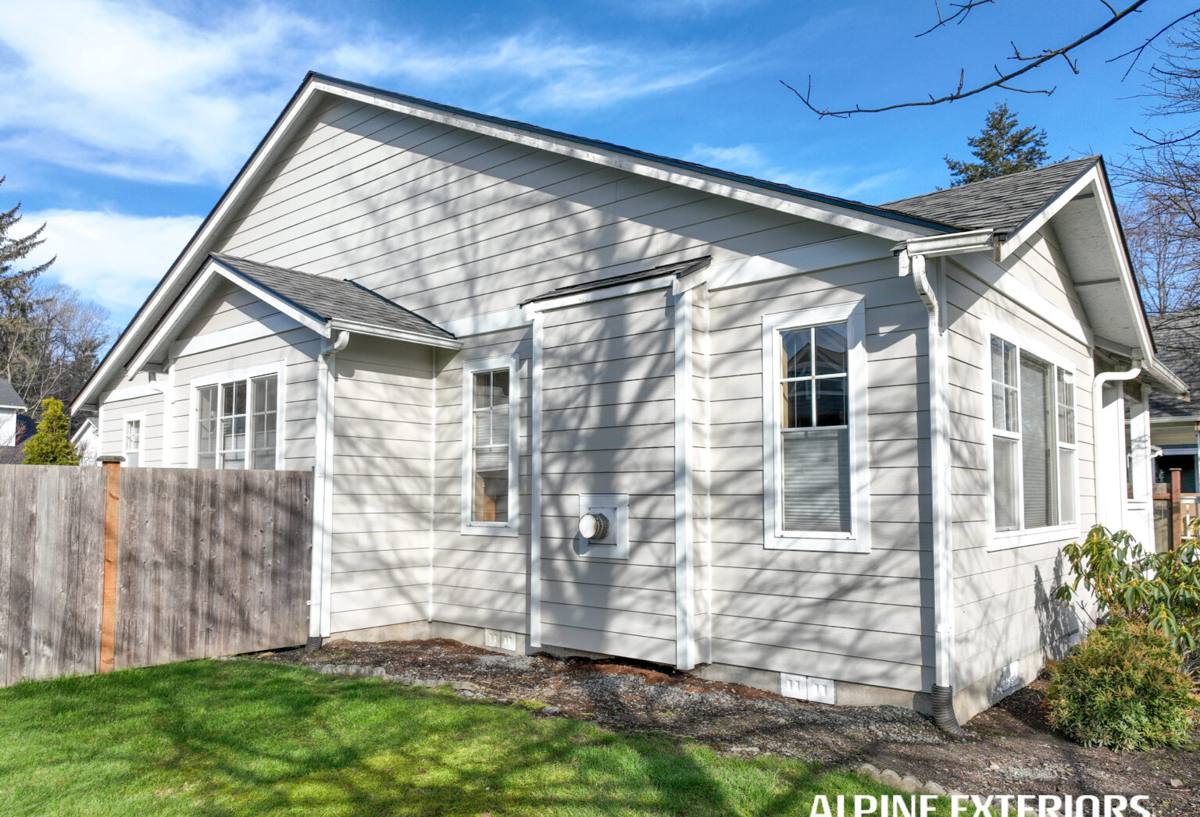
What Salt Air, Driving Rain, and Moss Actually Do to Siding
Salt Air
Airborne salt is corrosive to fasteners, flashing, and any metal trim that isn't rated for coastal exposure. It also accelerates the breakdown of paint films and cheaper composite materials, dulling finishes and encouraging surface degradation years before an equivalent product would show wear inland.
Wind-Driven Rain
Rain that hits siding at an angle, rather than falling straight, gets forced up and under laps, around window and door openings, and into any gap where flashing or caulking is undersized. Standard installation tolerances that work fine in calmer conditions can leave just enough of a gap for wind-driven rain to find its way behind the cladding.
Moss and Persistent Moisture
Anacortes' long damp season, especially on north- and west-facing walls that don't get much direct sun, gives moss, algae, and mildew plenty of time to establish themselves. Beyond the cosmetic issue, moss holds moisture against the siding surface for extended periods, which is a problem for any material that isn't dimensionally stable or that swells and holds water.
Why We Only Install James Hardie Fiber Cement
We standardized on James Hardie siding for every home we work on, including the ones on Cap Sante, because it's the product that best matches this specific set of stressors. Fiber cement is non-combustible, dimensionally stable in wet-dry cycling, and doesn't feed mold or rot the way wood-based products can. Hardie's ColorPlus factory finish is baked on and warranted against fading and flaking, which matters directly in a salt-air, high-UV-reflection waterfront environment where field-applied paint tends to break down faster.
We don't install LP SmartSide, vinyl, Cemplank, Allura, primed spruce, or cedar. Each of those has a legitimate place in the market, but every one of them asks a coastal home to tolerate a trade-off — moisture sensitivity, expansion and contraction, a maintenance schedule, or a finish that isn't engineered for this kind of exposure — that we don't think is worth accepting when a better-suited option exists. Hardie's HZ5 product line in particular is engineered for harsher climate zones, which lines up with what Cap Sante's exposure actually demands.
| Material | Behavior in salt air / driving rain | Moss and moisture resistance | Long-term finish |
|---|---|---|---|
| James Hardie fiber cement | Dimensionally stable; won't corrode or rust | Doesn't rot or feed organic growth; cleans up well | Factory ColorPlus finish, warranted against fading |
| Vinyl | Can warp or crack under wind load and temperature swings | Traps moisture behind panels if installed loosely | Color is through-body but fades and chalks over time |
| Wood / cedar / primed spruce | Absorbs moisture readily in driving rain | Prone to rot and moss growth without diligent upkeep | Needs repainting or refinishing on a recurring cycle |
| LP SmartSide / other engineered wood | Vulnerable at cut edges and joints if sealing isn't perfect | Can swell or degrade if moisture gets behind the panel | Field or factory finish, variable coastal track record |
What a Correct Installation Actually Involves
The siding itself is only part of the job. On a Cap Sante home, the water management system built underneath and around the siding is what determines whether the installation holds up over the long run.
- A drainable weather-resistant barrier installed correctly, lapped shingle-style so water sheds downward and outward
- A rainscreen gap where conditions call for it, so any moisture that does get behind the cladding can drain and the wall can dry rather than staying damp
- Corrosion-resistant fasteners and flashing rated for coastal use, not standard-grade hardware that will pit and stain over time
- Properly flashed and sealed window and door openings, since these are the most common entry points for wind-driven rain
- Correct nailing patterns and clearances per James Hardie's published installation specifications — this is what keeps the warranty valid and the siding performing as engineered
- Adequate clearance between the bottom of the siding and grade, decks, or roof lines, so splash-back and standing water don't sit against the material
Skipping or shortcutting any one of these doesn't usually show up as a problem in year one. It shows up in year five or eight, as staining, trapped moisture, or premature finish failure — which is exactly why installation quality matters more here than the brand name on the box.
Our Process on a Cap Sante Home
1. On-Site Assessment
We walk the exterior and look specifically at exposure — which walls take the brunt of the weather off the water, where moss and staining are already showing, where existing flashing or trim has failed, and what the substrate looks like once we can see it.
2. Tear-Off and Substrate Check
Old siding comes off and we inspect the sheathing underneath for rot or water damage before anything new goes on. Covering up a compromised substrate is one of the most common ways a siding job fails early, and it's not something you can catch without pulling the old material.
3. Weather Barrier and Flashing
This is the step that matters most for a waterfront exposure. We install the drainable barrier, flashing, and rainscreen components to spec, with particular attention to window and door openings and any wall that faces the prevailing wind and rain.
4. Hardie Installation
Siding, trim, and fastening go in per James Hardie's installation guidelines — the correct nail type, spacing, and clearances, done consistently across the whole home, not just where it's easy.
5. Final Walkthrough
We check caulking, trim lines, and finish quality, and walk the job with the homeowner before calling it done.
What It Costs
Every home is different, and the honest answer is that cost depends on square footage, the condition of what's underneath the old siding, how much trim and detail work is involved, and how the home is laid out. That said, the factors below are what actually move the number on a Cap Sante project.
| Cost factor | Why it matters here |
|---|---|
| Substrate condition | Water-damaged sheathing found during tear-off adds repair scope before new siding can go on |
| Wall exposure | Walls facing open water need more careful flashing and rainscreen detailing than sheltered walls |
| Home height and access | Hillside lots and multi-story elevations affect staging, scaffolding, and labor time |
| Trim and architectural detail | Corners, window surrounds, and fascia detail add material and installation time |
| Hardie product line and finish | HZ5 boards and specific ColorPlus color selections vary in material cost |
What to Look for in a Cap Sante Siding Crew
Skagit County has plenty of siding contractors, but not all of them are used to detailing for direct waterfront exposure. Before hiring anyone for a home on Cap Sante, it's worth asking a few direct questions.
- Do they install a drainable weather barrier and rainscreen as standard practice, or only when asked?
- Are they James Hardie certified or factory-trained, and can they explain their nailing and clearance specs without checking a manual?
- Do they use corrosion-resistant fasteners and flashing appropriate for coastal exposure?
- Will they inspect and address substrate condition before covering it with new siding?
- Can they speak specifically to how they handle wind-driven rain at window and door openings?
A crew that already works this part of Anacortes will have answers ready, because they've seen what happens when those details get skipped on a house exactly like yours.
Why Local Experience Matters Here
Anacortes isn't a uniform climate. A house a few blocks inland, protected by terrain and tree cover, deals with a noticeably gentler set of conditions than a house exposed to open water off Cap Sante. A crew that mainly works sheltered inland lots may build good habits that simply aren't tuned for this level of wind and salt exposure — not out of carelessness, but because it's never been tested against it. Working regularly in this specific pocket of Skagit County means knowing which walls need extra attention before you even get a ladder up, and building that into the estimate and the install from day one rather than discovering it later.
If you own a home on Cap Sante and your siding is showing moss, staining, or signs of moisture behind the surface, we're happy to take a look and walk you through what we're seeing. Reach out for a free, no-pressure estimate — no obligation, just a straight assessment of what your home needs.