 Anacortes Siding
 Why Similk Beach Homes Wear Out Siding Faster
Similk Beach sits close enough to the water that homes here take a different kind of beating than siding just a few miles inland in Anacortes proper. Salt-laden air off the water accelerates corrosion on fasteners and trim, wind-driven rain forces moisture into every seam and joint that isn't detailed correctly, and the long gray stretch of fall through spring keeps exterior walls damp for weeks at a time. That combination is exactly what breeds the moss and algae staining you see creeping up the north- and west-facing walls of houses in this area.
None of that is unusual for Skagit County waterfront and near-waterfront properties, but it does mean siding replacement here isn't a cosmetic project. It's a functional one. The right material, installed with the right details, is what keeps a Similk Beach home dry, structurally sound, and looking decent between now and the next time anyone has to think about it.
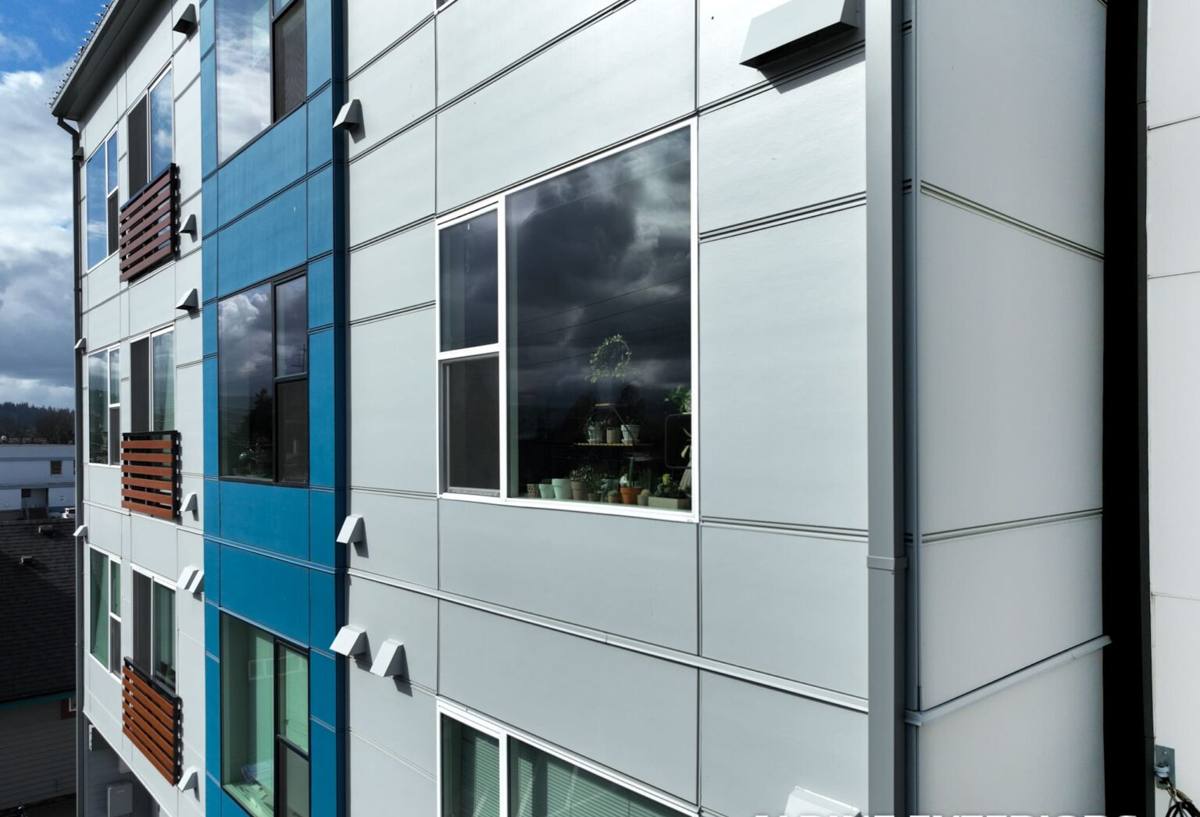
Signs Your Siding Has Reached the End of Its Useful Life
Homeowners often wait too long because siding failure doesn't always look dramatic from the ground. A few things worth checking for, especially on walls facing the water or prevailing wind:
- Soft or spongy spots when you press on the siding, especially near the bottom courses and around window trim
- Paint that keeps failing within a year or two of repainting, even with quality paint
- Persistent moss or black streaking that comes back within months of cleaning
- Visible cupping, warping, or delamination in the boards themselves
- Gaps opening up at seams, corners, or where siding meets trim
- Musty smell or visible staining on interior walls that share an exterior wall with siding problems
Any one of these can sometimes be spot-repaired. Several of them together, especially on a home more than 15-20 years old with the original siding, usually means the material and the water-resistive barrier behind it are both past the point where patching makes sense.
What a Correct Siding Replacement Actually Involves
Siding replacement is not just pulling off old boards and nailing up new ones. Done right, it's a full building-envelope project, and the parts you can't see matter more than the parts you can.
Water-Resistive Barrier and Flashing
Once the old siding is off, the sheathing gets inspected for rot or water damage before anything new goes on. A new water-resistive barrier (housewrap or an equivalent code-compliant system) gets installed in proper shingle-lap fashion so water sheds outward and downward at every seam. Flashing gets integrated at every window, door, deck ledger, and roof-to-wall transition. In a location like Similk Beach, where driving rain regularly hits walls at an angle instead of falling straight down, sloppy flashing work is the single most common cause of hidden rot behind siding that "looked fine" from the outside.
Fastening and Installation to Manufacturer Spec
Fiber cement siding has specific fastener type, spacing, and penetration requirements, and those requirements exist for a reason — get them wrong and you void the warranty and shorten the life of the installation. Corrosion-resistant fasteners matter even more this close to the water, where standard fasteners can start showing rust streaks within a few seasons. Proper clearance is also left at the bottom of the siding above grade, decks, and roof lines so water has somewhere to go instead of wicking up into the board ends.
Caulking and Joint Treatment
Butt joints, trim intersections, and penetrations get sealed with a high-quality, paintable sealant rated for exterior use — not general-purpose caulk that will shrink and crack within a couple of years. This is a small detail that has an outsized effect on how well a home resists wind-driven rain.
Why We Install Only James Hardie Fiber Cement
We standardized on James Hardie fiber cement siding and don't install vinyl, LP SmartSide, primed spruce, cedar, or other fiber cement brands. That's not a marketing position — it's a decision based on what holds up in this specific climate.
Fiber cement is non-combustible, which matters more every year given wildfire smoke and ember exposure concerns across the Pacific Northwest. It doesn't absorb water the way engineered wood products can, which is a real advantage in a marine climate where siding stays damp for extended stretches. James Hardie's HZ5 product line is specifically engineered for climates with more moisture exposure, and the factory-applied ColorPlus finish resists the fading, chalking, and peeling that plague field-painted siding exposed to salt air and UV. The finish is baked on in a controlled factory environment rather than brushed or sprayed on-site, which gives far more consistent coverage and adhesion.
We're not going to claim other products are junk — they're not, and each has situations where it's a reasonable choice. Vinyl is inexpensive and low-maintenance in mild climates but can crack in cold snaps and fade unevenly under sun exposure. Engineered wood products like LP SmartSide perform well when installation and maintenance are kept up but are more sensitive to moisture intrusion at cut edges and joints if that upkeep lapses. Cedar and primed spruce are beautiful but demand ongoing painting and sealing that most homeowners underestimate, especially in a climate that gives you a narrow dry-weather window each year to do that maintenance. For Similk Beach conditions specifically — salt air, sustained dampness, moss pressure — fiber cement's combination of moisture resistance, factory finish durability, and low ongoing maintenance is why it's what we put on homes.
Material Comparison for Similk Beach Conditions
| Material | Moisture Resistance | Salt Air Durability | Maintenance | Fire Rating |
|---|---|---|---|---|
| James Hardie Fiber Cement | Excellent | Strong, factory finish resists degradation | Low | Non-combustible |
| Vinyl Siding | Good, but can trap moisture behind it | Fades and can become brittle over time | Low | Combustible, can warp near heat |
| LP SmartSide / Engineered Wood | Fair, sensitive at cut edges and seams | Moderate, depends on maintenance upkeep | Moderate | Combustible |
| Cedar / Primed Spruce | Fair, requires sealing to perform | Weathers quickly without upkeep | High, regular painting/sealing needed | Combustible |
This table reflects general product characteristics, not a claim about any specific competitor's installation quality — installation practices affect real-world performance for every material listed.
Our Process for a Similk Beach Siding Replacement
Because we already work in and around Anacortes and Skagit County, we're familiar with the permitting expectations, typical wall assemblies found on homes in this area, and the weather windows that make sense for tear-off and installation. In general, the process looks like this:
- On-site assessment of existing siding, sheathing condition, and any moisture or rot issues, with photos and a written scope
- A clear, itemized estimate covering material, labor, flashing, and any sheathing repair contingencies
- Scheduling around a realistic weather window — we don't rush tear-off into a stretch of forecasted rain
- Removal of old siding and inspection of sheathing, with any damaged sections replaced before moving forward
- Installation of new water-resistive barrier, flashing at all penetrations and transitions, and James Hardie siding to manufacturer specification
- Final caulking, trim work, and a walkthrough before we consider the job finished
What Affects the Cost of a Siding Replacement Here
| Factor | Why It Matters |
|---|---|
| Sheathing condition underneath old siding | Rot or water damage discovered during tear-off requires repair before new siding can go on |
| Home size and wall complexity | More corners, gables, and window/door openings mean more labor and trim detail |
| Siding profile and accessory selection | Lap width, trim style, and accent details affect material cost |
| Access and site conditions | Slopes, tight setbacks, or limited staging area near the water can affect labor time |
| Existing flashing and window condition | Some window and door flashing may need updating as part of a proper installation |
We won't quote a number without seeing the house, but we can say that a full siding replacement is a meaningful investment, and part of what you're paying for is the labor and detail work that determines whether it lasts 10 years or 40.
Why Hiring a Crew That Already Works Similk Beach Matters
A contractor who regularly works this specific stretch of Skagit County already understands the wall assemblies common to homes built in different eras around here, knows how aggressive the moss and algae growth gets on shaded, water-facing walls, and has a feel for how much clearance and drainage detailing this climate actually demands versus what a generic installation manual assumes. That local pattern-recognition shows up in small decisions — how flashing gets lapped, where extra sealant makes sense, how much starter strip clearance to leave — that a crew unfamiliar with marine exposure might not think twice about.
It also matters for accountability. A contractor with an ongoing local presence in Anacortes and the surrounding area has a reputation to protect in this community and is easier to reach if a question comes up after the job is done.
Vetting a Siding Contractor: What to Ask
- Are you licensed and insured in Washington, and can you provide proof?
- Do you carry manufacturer certification or training specific to the siding brand you install?
- Will you inspect and repair sheathing if damage is found during tear-off, and how is that priced?
- What water-resistive barrier and flashing details do you use, and why?
- Is the manufacturer's product warranty registered in the homeowner's name after installation?
- Can you walk me through your fastening and joint-sealing approach for this specific product?
A contractor who can answer these clearly and specifically, without vague reassurances, is usually one who understands the building science involved rather than just the cosmetic side of the job.
Caring for Your Siding After Installation
James Hardie siding is low-maintenance, not zero-maintenance. A yearly rinse-down helps keep moss and salt residue from building up, especially on north- and west-facing walls closer to the water. Keep an eye on caulking at joints and trim over the years and have it refreshed if it starts to crack or pull away. Trim back vegetation that's shading walls and keeping them damp longer than they need to be — that's often the single biggest driver of moss growth in this area. None of this is intensive, but a little attention goes a long way toward getting the full lifespan out of a properly installed system.
If your Similk Beach home's siding is showing its age or you're planning ahead for a replacement, we're happy to take a look and walk you through what we'd recommend — no pressure, no obligation. Use the form below to request a free estimate.