 Anacortes Siding
 Why West Anacortes Roofs Wear Differently Than Roofs Inland
A roof on a home near the water in West Anacortes lives a harder life than the same roof would ten miles inland. Salt-laden air off Fidalgo Bay and the surrounding waterways accelerates corrosion on fasteners, flashing, and any metal component that isn't rated for a marine environment. Add Skagit County's long stretch of wet weather — driving rain that comes in sideways during winter storms, and a moss season that can run from late fall through spring under heavy tree cover — and you have a roof that's tested constantly, not just during the occasional big storm.
None of this means West Anacortes homes need exotic materials. It means the installation details that get glossed over on an easier job — fastener selection, underlayment layering, flashing sequencing, and ventilation — matter more here than they would in a drier, inland part of the state. A new roof installed correctly for this location should shrug off decades of salt exposure and wet winters without the shortcuts showing up as leaks five years later.
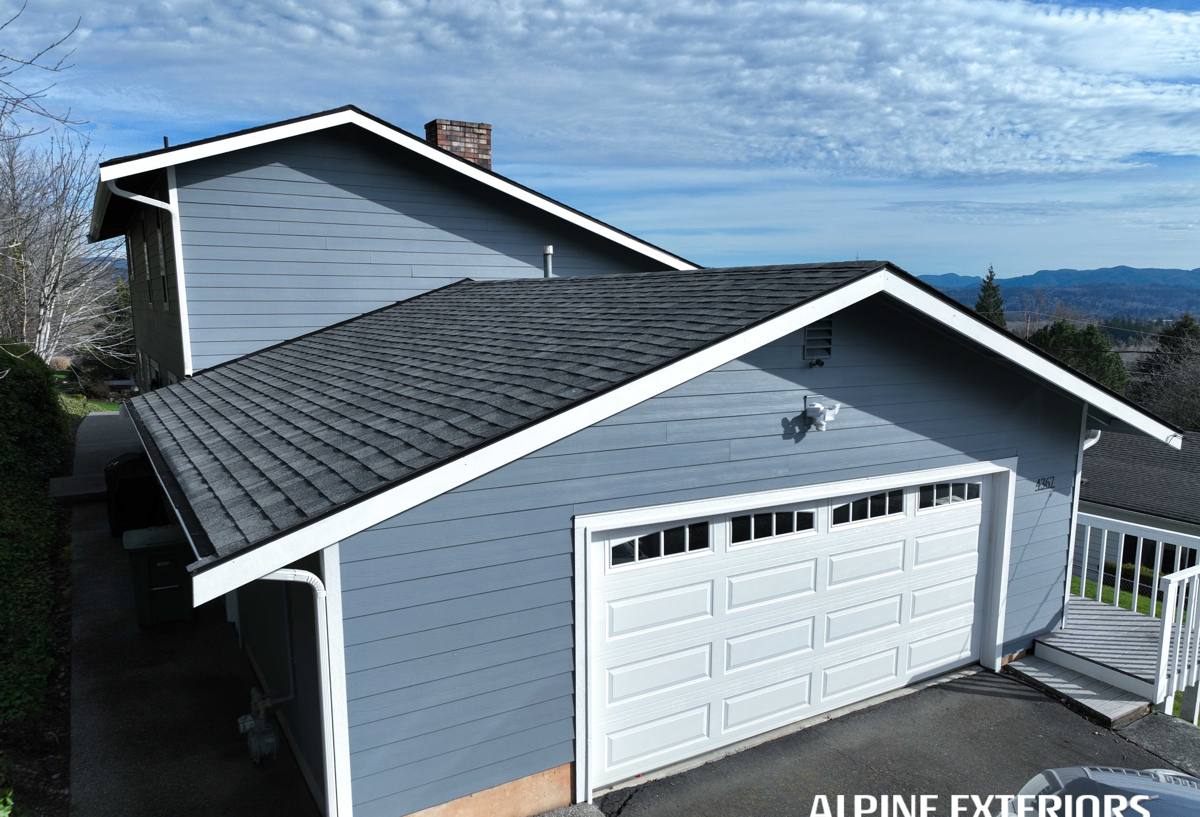
What a Correct New Roof Installation Actually Involves
"New roof" sounds simple, but a proper installation is really a stack of individual systems that all have to work together. Skipping or rushing any one of them is usually where premature failures start.
Tear-off and deck inspection
We remove the old roofing down to the deck rather than layering over it. That lets us actually see the sheathing — soft spots, rot, or delamination from long-term moisture intrusion don't show up until the old material is off. Any damaged deck sections get replaced before anything new goes down; roofing over a compromised deck just hides the problem and shortens the life of the new roof.
Underlayment built for wet climates
In a region that sees as much sustained rain as Skagit County, underlayment is not a formality. We use synthetic underlayment as the primary water-resistive barrier, with self-adhered ice-and-water shield at the eaves, valleys, and any low-slope transitions where wind-driven rain is most likely to work its way backward under shingles.
Flashing that accounts for salt air
Flashing around chimneys, skylights, sidewalls, and roof-to-wall transitions is where most roof leaks actually originate — not the field of the roof itself. Given the corrosion pressure from salt air this close to the water, we favor flashing materials and fasteners rated to resist that exposure rather than the cheapest option that would be fine further inland.
Ventilation that matches the home
Balanced intake and exhaust ventilation keeps the attic temperature and moisture level in check, which protects both the new roofing material and the wood structure underneath it from the inside out. We size ventilation to the specific attic, not a generic rule of thumb.
Choosing a Roofing System for This Specific Location
There's no single "best" roofing material for every West Anacortes home — it depends on the home's exposure, roof pitch, tree cover, and budget. Here's how the common options stack up against the conditions that matter most in this location.
| Material | Salt air / corrosion resistance | Moss resistance | Typical lifespan here |
|---|---|---|---|
| Architectural asphalt composition shingle | Good with corrosion-resistant fasteners and flashing | Moderate — benefits from algae-resistant granules and periodic cleaning | 25-30 years |
| Standing seam metal | Excellent when finish and fasteners are marine-rated | Very good — smooth surface sheds moss and debris well | 40-50+ years |
| Synthetic/composite shake | Good | Good — resists the moisture retention that feeds moss growth | 30-40 years |
Asphalt shingles remain the most common choice for good reason: reasonable cost, wide color range, and solid performance when the installation details are handled correctly. Metal carries a higher upfront cost but performs exceptionally well against both salt exposure and moss, which is worth weighing for homes with heavy tree cover or a very exposed waterfront-facing roof plane. We'll walk through the honest trade-offs for your specific roof rather than pushing one system across the board.
Our Installation Process, Start to Finish
- On-site assessment — we walk the roof and attic, note pitch, exposure, existing ventilation, and any deck concerns before quoting anything.
- Written estimate — material options, scope, and a clear price, explained in plain terms.
- Material delivery and site protection — landscaping, gutters, and siding are protected before tear-off begins.
- Full tear-off — old roofing removed down to the deck, debris hauled off daily.
- Deck repair — any soft or damaged sheathing is replaced, not covered over.
- Underlayment and flashing installation — ice-and-water shield at vulnerable areas, synthetic underlayment across the field, new flashing at every penetration and transition.
- Roofing installation — shingles, metal panels, or synthetic material installed to manufacturer specification, with fastener patterns and nailing lines checked, not just eyeballed.
- Ventilation tie-in — ridge and soffit ventilation confirmed to work together as a system.
- Final cleanup and walkthrough — magnetic sweep for stray fasteners, gutters checked, and a walkthrough of the finished roof with you.
Ventilation and Moisture Control in a Marine Climate
Attic moisture problems are common in this part of Washington, and they're often invisible until they've been causing damage for years. Warm, moist air from inside the home rises into the attic; if it can't escape through properly balanced ventilation, it condenses against the underside of the roof deck. Over time that moisture feeds rot in the sheathing and framing, and it also creates the damp, shaded conditions where moss and algae take hold on the roofing surface itself.
Correcting this isn't complicated, but it does require sizing intake (soffit vents) and exhaust (ridge or roof vents) to work together rather than installing whichever is easiest to fit. On a new roof installation, this is the point where it's cheapest and easiest to get ventilation right — retrofitting it later usually means additional work.
Moss, Algae, and the Long Wet Season
Anacortes' moss season is long enough that it shapes roofing decisions in a way that drier parts of the state don't have to think about. Moss holds moisture against the roofing surface, and over years that moisture retention shortens the life of asphalt shingles in particular. A few practical points worth knowing:
- Algae-resistant shingle granules (often labeled "AR") help slow the black streaking common on north-facing and shaded roof planes, though no shingle is fully immune in a heavily wooded lot.
- Zinc or copper strips near the ridge can help suppress moss regrowth over time as rainwater washes trace metal down the roof plane.
- Overhanging branches that keep a roof shaded and damp are one of the biggest contributors to moss — trimming back tree cover where practical extends the life of any roofing material.
- Pressure washing shingles is not a safe cleaning method — it strips granules and shortens shingle life. Soft washing or manufacturer-approved cleaning methods are the safer option if moss buildup needs to be addressed on an existing roof.
Signs a West Anacortes Home May Need a New Roof
Roofs in this climate don't always fail with an obvious leak first. Watch for these signs, especially on a roof that's approaching 20-25 years old or has heavy moss coverage:
- Granules collecting in gutters or at downspout outlets
- Shingles that are curling, cupping, or losing their flat profile
- Visible daylight through the attic roof deck
- Soft or spongy spots when walking the roof
- Moss growth thick enough to lift shingle edges
- Rusted or deteriorating flashing around chimneys and vents
- Rising energy bills tied to poor attic ventilation or insulation gaps
- Interior ceiling stains, even faint or intermittent ones
Why Local Installation Experience Matters Here
A roofing crew that works Skagit County regularly already knows how this climate behaves on a roof — which flashing details tend to fail first near the water, how much ice-and-water shield coverage the local building department expects, and how moss actually develops on roofs under the tree cover common in West Anacortes. That's different knowledge than a crew that mostly works dry, inland installations and treats every roof the same way.
It also means a straightforward relationship after the job is done. A crew that's local and plans to keep working in this community has every incentive to install the roof correctly the first time and stand behind it if a question comes up later — not just move on to the next town.
Permits, Timeline, and What to Expect
Most new roof installations in this area require a building permit, which we handle as part of the project rather than leaving it to the homeowner. Timeline depends on roof size and weather, but a typical single-family home re-roof runs one to three days of active work once material is on site and weather cooperates. Given the region's rain patterns, we watch the forecast closely and plan tear-off days around dry windows so the deck isn't left exposed longer than necessary.
Material lead times vary by manufacturer and color, so we build those into the schedule during the estimate stage rather than surprising you with delays after the contract is signed.
Cost Factors to Understand Before You Get Quotes
Roofing quotes can vary widely, and the differences usually come down to a handful of factors rather than one company simply being "cheaper." Understanding these helps you compare quotes accurately.
| Factor | Why it affects price |
|---|---|
| Roof pitch and complexity | Steeper pitches and roofs with many valleys, dormers, or penetrations take longer and require more safety equipment |
| Deck condition | Rot or soft sheathing found during tear-off adds material and labor not visible in a pre-tear-off estimate |
| Material choice | Standard architectural shingle, premium shingle, metal, and synthetic materials carry very different material costs |
| Underlayment and flashing scope | Full ice-and-water shield coverage and all-new flashing cost more upfront than minimum-code coverage, but reduce future leak risk |
| Access and site conditions | Tree cover, tight lot access, or multi-story homes can add time and equipment needs |
A quote that comes in noticeably lower than others is worth a closer look — it often means reduced underlayment coverage, minimum-code flashing, or lower-grade fasteners that won't hold up as well against salt air over time.
If your West Anacortes home is due for a new roof, or you're just not sure how much life is left in the one you have, we're glad to take a look. There's no obligation and no pressure — just a straightforward estimate and an honest read on what your roof actually needs.