 Anacortes Siding
 Roofing on the Cap Sante Hill Is Its Own Challenge
Cap Sante sits up on a bluff at the edge of Anacortes, with clear exposure to the water and the weather that comes off it. That elevation and waterfront proximity are part of what makes the area desirable, but they also mean homes here take a harder hit from wind, salt-laden air, and driving rain than houses just a few blocks inland. An asphalt shingle roof that would hold up fine in a sheltered part of Skagit County can wear out early on this hill if it wasn't installed with that exposure in mind.
We work in Anacortes and across Skagit County regularly, and Cap Sante is one of the neighborhoods where we see the clearest gap between a roof that was installed "to code" and one that was installed correctly for the site. This page is about that gap — what the climate actually does to a shingle roof up here, what a correct installation looks like, and how we run the job from estimate to cleanup.
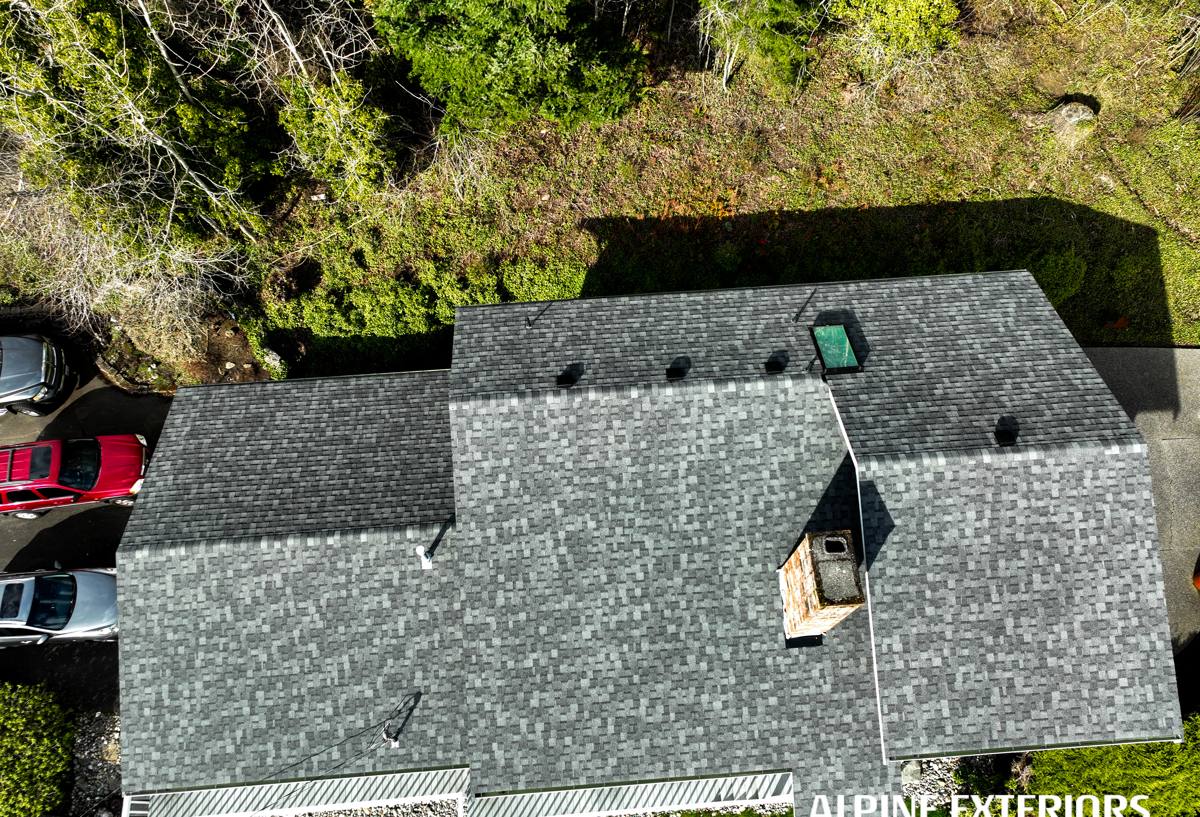
What Salt Air, Wind, and Moss Actually Do to a Roof
Salt Air and Metal Components
Asphalt shingles themselves tolerate salt air reasonably well, but the metal parts of a roofing system don't. Flashing, nail heads, drip edge, and vent housings are all vulnerable to accelerated corrosion when they're exposed to airborne salt day after day. Once a fastener or a flashing edge starts to corrode, it stops doing its job quietly — you get a slow leak path long before anything looks obviously wrong from the ground.
Wind-Driven Rain
Cap Sante's exposure means wind doesn't just blow rain sideways occasionally — it does it often enough that "sideways" needs to be treated as normal, not an edge case. Rain driven at an angle can work its way up under shingle tabs, into open valleys, and around vent penetrations if those details weren't sealed and lapped correctly during installation. A roof built for a calmer site, with minimal attention to wind-driven water, tends to show its weaknesses first at penetrations and valleys.
The Long Moss Season
Skagit County's overcast, wet stretch runs long, and shaded or north-facing roof sections stay damp for weeks at a time. That's exactly the environment moss and algae need. Moss isn't just a cosmetic issue — as it establishes itself, it lifts shingle edges, holds moisture against the roof deck, and accelerates granule loss. Left alone through a few wet seasons, a moss problem becomes a shingle-life problem.
Choosing a Shingle System Built for This Exposure
Not every asphalt shingle product is a good match for a bluff-top, marine-exposed site. The differences that matter here are wind rating, algae resistance, and how well the shingle's sealant strip bonds in cooler, damper conditions.
| Shingle Type | Wind Performance | Algae/Moss Resistance | Best Fit for Cap Sante |
|---|---|---|---|
| Standard 3-tab | Lower wind rating, lighter profile | Standard granules only, unless specified | Budget option; not our first recommendation on exposed sites |
| Architectural (laminated) | Higher wind rating due to added weight and lamination | Available with algae-resistant granules | Our default recommendation for this area |
| Impact-resistant architectural | High wind rating, reinforced mat | Available with algae-resistant granules | Worth considering for fully exposed, unshaded roof planes |
For most Cap Sante homes, we recommend an architectural shingle with algae-resistant (copper- or zinc-infused) granules as standard, not an upgrade. The added cost over basic 3-tab is modest relative to the extra wind rating and moss resistance, and on a site with this much exposure, that difference shows up in how the roof actually performs — not just on paper.
What a Correct Installation Involves
The shingle brand and line matter less than most homeowners assume. What actually determines whether a roof holds up on this hill is the installation detail underneath and around the shingles. A correct job includes:
- Full ice-and-water membrane at eaves, valleys, and around penetrations — not just the minimum code strip, given how much wind-driven rain this site sees.
- Synthetic underlayment across the full deck, lapped and fastened to shed water even if wind gets under a shingle tab.
- Corrosion-resistant flashing at chimneys, walls, and any roof-to-wall transitions, since standard galvanized flashing degrades faster in salt air than it would inland.
- Correct nailing — proper nail count, placement, and pattern per the manufacturer's high-wind installation instructions, not just the minimum.
- Sealed and lapped valleys, either woven, closed-cut, or open metal valley depending on roof design, done to shed wind-driven water rather than just gravity-fed rain.
- Balanced ventilation, covered in more detail below, so the underside of the deck isn't fighting moisture on top of what the weather is doing outside.
Any one of these done poorly can undercut an otherwise good shingle product. We treat all of them as non-negotiable, not optional upgrades.
Ventilation: The Half of the Job You Don't See
A shingle roof doesn't fail in isolation — what's happening in the attic matters just as much as what's happening on the surface. Warm, moist attic air that can't escape properly condenses against the underside of the roof deck, which accelerates deck rot, promotes moss and algae growth from underneath, and can void a shingle warranty outright. On a site like Cap Sante, where the roof already handles more exterior moisture than average, an attic that's also fighting trapped humidity is asking for trouble twice over.
A correctly vented roof balances intake (typically at the soffits) with exhaust (typically at or near the ridge), so air actually moves through the attic space rather than stagnating in pockets. We check and correct ventilation balance as part of every shingle roofing job here — it's not an add-on, it's part of doing the roof right.
How We Handle a Cap Sante Roofing Project
- On-site assessment. We walk the roof (weather permitting) and the attic, check current ventilation, look for existing moss or moisture damage, and note any wind-exposure or shade patterns specific to your lot.
- Honest scope and estimate. You get a clear breakdown of what's being replaced, what shingle and underlayment system we recommend and why, and a straightforward number — no inflated add-ons, no pressure to decide on the spot.
- Tear-off and deck inspection. Old roofing comes off down to the deck, and we check for soft spots, rot, or prior water damage that needs to be addressed before new roofing goes on.
- Underlayment and flashing installation. Ice-and-water membrane, synthetic underlayment, and corrosion-resistant flashing go in per the details above, matched to this site's exposure.
- Shingle installation. Installed to manufacturer high-wind specifications, with attention to nailing pattern, valley treatment, and penetration sealing.
- Ventilation check and correction. Intake and exhaust balance is verified and corrected if the existing setup is insufficient.
- Cleanup and walkthrough. Job site cleared of debris and old materials, magnetic sweep for stray nails, and a walkthrough so you know exactly what was done.
Cost Factors Worth Understanding Before You Decide
Every roof is priced based on the specifics of the job, but a few factors consistently move the number on Cap Sante homes more than homeowners expect:
| Factor | Why It Affects Cost |
|---|---|
| Roof pitch and access | Steeper roofs and limited access on hillside lots take longer and require more safety setup |
| Existing deck condition | Rot or soft decking found during tear-off requires repair before new roofing goes on |
| Number of penetrations | Chimneys, skylights, and multiple vents each need individual flashing work |
| Shingle class chosen | Architectural and impact-resistant shingles cost more upfront than 3-tab, but reduce long-term wind and moss-related wear |
| Ventilation corrections | Adding or upgrading soffit and ridge venting is sometimes needed on older homes and adds to scope |
We break out these factors clearly in every estimate so you understand what's driving the number, rather than getting a single lump figure with no explanation.
Maintenance That Actually Extends the Life of a Cap Sante Roof
A well-installed shingle roof still needs some basic upkeep in this climate. This is the short list we give homeowners after every install:
- Have moss and algae growth treated or removed at the first sign of it — don't wait for it to spread across a full slope.
- Keep gutters clear, especially heading into the wet season, so water isn't backing up under the shingle edge.
- Trim back overhanging branches where possible to reduce the shade and debris that feed moss growth.
- After any significant windstorm, do a visual check (or have us check) for lifted or missing shingles rather than waiting for a leak to show up inside.
- Have flashing around chimneys, vents, and walls inspected every few years, since that's where corrosion and sealant failure tend to show up first.
Why It Matters That We Already Work This Neighborhood
A crew that only does the occasional job in Anacortes tends to treat every roof the same, regardless of where it sits. A crew that works Cap Sante regularly already knows which slopes hold moss longest, which orientations take the worst of the wind-driven rain, and where salt exposure has historically shortened the life of flashing and fasteners. That familiarity shows up in the small decisions during installation — where extra membrane goes, how a valley gets detailed, what ventilation correction is worth recommending — not just in the final invoice.
We also handle the Anacortes and Skagit County permitting and inspection process as a normal part of the job, so there's no separate hassle on your end beyond approving the work.
Ready for a Straightforward Look at Your Roof?
If your Cap Sante roof is showing moss, missing granules, curling shingle edges, or you're simply due for a replacement, we're glad to come take a look. The estimate is free, there's no pressure attached to it, and you'll get a clear explanation of what we find and what we'd recommend. Use the form below to get started.