 Anacortes Siding
 Roofing in a Marine Climate Isn't Optional Detail Work
Homes in the Oak Harbor area sit close enough to the water that the roof over your head deals with conditions a lot of asphalt shingle products were never really tested for on the label. Salt-laden air corrodes exposed metal faster than it would forty miles inland. Driving rain, pushed sideways by wind off the Salish Sea, finds every weak lap and short nail. And the long, wet, low-sun stretch from October through April is exactly what moss and algae need to get established on a north-facing slope. None of this means asphalt shingles are the wrong choice — they're still one of the most practical, cost-effective roofing systems for this region. It means the installation details matter more here than they would in a drier, calmer climate, and cutting corners shows up faster.
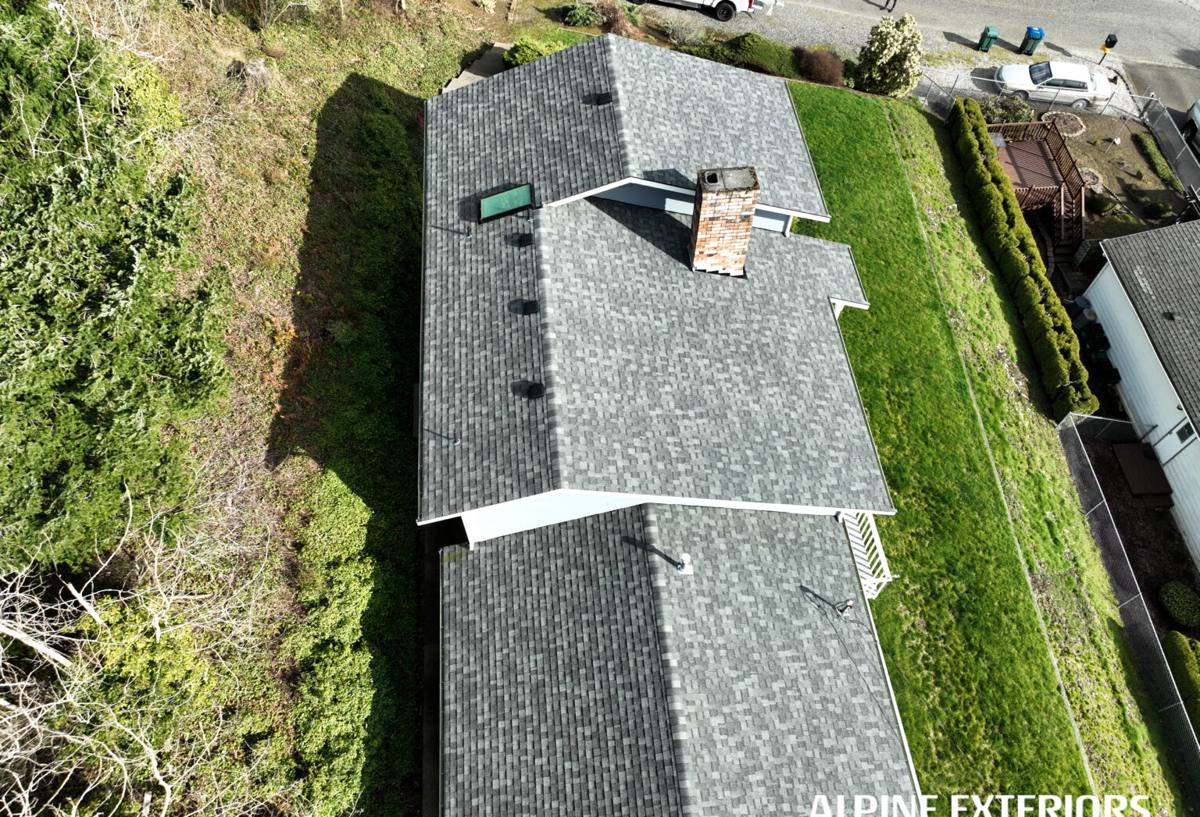
We install and repair asphalt shingle roofs for homes in and around Oak Harbor, Anacortes, and greater Skagit County, and the patterns are consistent: roofs that fail early almost always failed at the details — ventilation, flashing, underlayment, or nailing — not because asphalt shingles are a bad product for this area.
What Oak Harbor Homes Actually Need From a Roof
Wind and Driving Rain
Wind here doesn't just blow — it drives rain sideways against exposed slopes and up under shingle edges where a standard installation might get away with less. That means proper shingle sealing (thermal or hand-sealed in colder install windows), correctly lapped underlayment, and sufficient nailing to hold shingles flat against uplift. A roof that would perform fine in a calmer inland climate can start lifting at the edges here within a few seasons if it was installed to the minimum instead of to the conditions.
Salt Air and Metal Corrosion
Proximity to saltwater accelerates corrosion on anything unprotected — nail heads, flashing, vent stacks, and drip edge. We spec corrosion-resistant fasteners and flashing metals for roofs in this zone rather than treating it the same as a roof twenty miles from the water. It costs a little more up front and saves you a roof-shortening failure at the flashing years before the shingles themselves are due.
Moss, Algae, and Shade
Mature trees and cooler, damp conditions mean moss and algae growth is a real maintenance factor for most Oak Harbor roofs, not a hypothetical. Algae streaking is mostly cosmetic; moss is not — moss holds moisture against the shingle mat, lifts tabs as it grows, and can work granules loose over time. A roof system chosen and installed with this in mind holds up noticeably better over its lifespan than one that ignores it.
Choosing the Right Asphalt Shingle for This Climate
Not all asphalt shingles are built the same, and the differences matter more in a wet, algae-prone climate than they would somewhere dry. The two broad categories homeowners choose between are traditional 3-tab shingles and architectural (dimensional) shingles.
| Factor | 3-Tab Shingles | Architectural Shingles |
|---|---|---|
| Typical lifespan | 15-20 years | 25-30+ years |
| Wind resistance | Lower rated | Higher rated, better for exposed sites |
| Moss/algae resistance options | Limited | Widely available with algae-resistant granules |
| Appearance | Flat, uniform | Dimensional, shadow-line look |
| Upfront cost | Lower | Higher, but lower cost per year of service |
For most homes in this area, we recommend architectural shingles with an algae-resistant (AR) rating, usually built with copper- or zinc-infused granules that inhibit algae growth over the life of the roof. Given how much moisture and shade this region gets, that upgrade tends to pay for itself in reduced staining and maintenance over the roof's life — it's one of the few upgrades we'd call close to a no-brainer here rather than a nice-to-have.
Cost Factors for an Oak Harbor Roof
Every roof is priced on its own specifics, but the variables that move the number most in this area are consistent. We won't quote a number without seeing the roof, but here's what drives cost up or down:
| Factor | Why It Matters Here |
|---|---|
| Roof pitch and access | Steeper roofs and limited access add labor and safety equipment time |
| Tear-off vs. layover | Removing old layers costs more but is the only way to inspect and fix the deck underneath |
| Decking condition | Moisture-damaged sheathing found during tear-off needs replacing before shingles go on |
| Shingle class chosen | Algae-resistant, higher wind-rated architectural shingles cost more per square than 3-tab |
| Ventilation upgrades | Adding or correcting ridge/soffit venting on an older home adds cost but protects the new roof |
| Flashing and metal work | Corrosion-resistant metal and full flashing replacement (vs. reuse) add cost but matter near saltwater |
Broadly, a full asphalt shingle roof replacement on a typical single-family home runs from the low thousands into the high five figures depending on size, pitch, and the factors above — there's no honest way to give a tighter range without seeing your roof.
What Goes Into a Correct Installation
Tear-Off and Deck Inspection
We don't install new shingles over old ones on roofs we replace. A full tear-off is the only way to actually see the roof deck, catch soft or water-damaged sheathing, and confirm the structure underneath is sound before it gets covered up again for another 20-30 years.
Underlayment and Ice-and-Water Protection
Synthetic underlayment goes down as the primary water barrier beneath the shingles, and self-adhering ice-and-water shield goes in the vulnerable spots — eaves, valleys, and around penetrations — where wind-driven rain is most likely to work its way underneath. This is one of the details that separates a roof that shrugs off a bad storm from one that develops a slow leak nobody notices until there's a stain on the ceiling.
Ventilation
Balanced intake (soffit) and exhaust (ridge) ventilation keeps the attic dry and temperature-regulated. In a damp climate, poor ventilation traps moisture against the underside of the deck, which can lead to rot, mold, and premature failure from the inside — something a homeowner won't see until it's already a problem. We check and correct ventilation as part of every full replacement, not as an upsell.
Flashing and Fastening
Flashing around chimneys, valleys, vent stacks, and wall intersections is where most leaks actually start, not in the open field of shingles. We use corrosion-resistant metal appropriate for a coastal-influenced climate and install shingles with the correct nail count and placement for the wind exposure of your specific roof — not just the manufacturer's minimum spec.
Our Process, Start to Finish
- Inspection and honest assessment — we look at your current roof, attic ventilation, and any problem areas before recommending repair or replacement.
- Written estimate — a clear scope of work and price, no vague allowances.
- Material selection — we walk you through shingle class, color, and algae-resistance options suited to your home's exposure and shade.
- Tear-off and deck repair — old roofing removed, deck inspected, any damaged sheathing replaced.
- Underlayment, flashing, and shingle installation — installed to the standard this climate requires, not the bare code minimum.
- Cleanup and final walkthrough — site cleaned, debris and nails cleared, and we walk the job with you before calling it done.
Signs Your Oak Harbor Roof Needs Attention
Because so much of a roof's condition is invisible from the ground, it's worth knowing what to actually look for:
- Granules collecting in gutters or at downspout outlets
- Curling, cracked, or missing shingle tabs, especially on wind-exposed slopes
- Visible moss growth, particularly on shaded or north-facing sections
- Dark streaking that doesn't wash off with light rain (algae staining)
- Soft spots or noticeable sagging when walked or viewed from a distance
- Daylight visible through the roof deck from inside the attic
- Water stains on ceilings or in the attic after heavy rain or wind events
- Rusted or lifted flashing around chimneys, vents, or valleys
Any one of these on its own might not mean an emergency, but a roof showing two or three at once is usually past the point where a small repair fixes the underlying issue.
Maintenance That Actually Extends Roof Life Here
A correctly installed asphalt shingle roof still benefits from basic upkeep in this climate. Keeping gutters clear so water isn't backing up under the eaves, trimming back branches that keep a slope shaded and damp, and having moss physically removed (not power-washed, which can strip granules) rather than left to spread are the highest-value habits for a homeowner here. We're happy to point out what your specific roof needs during an inspection rather than selling a one-size-fits-all maintenance plan.
Why Hiring a Crew That Already Works in Oak Harbor Matters
A roofing crew that works this specific stretch of coastline regularly already knows which details aren't optional — the fastener grade, the flashing metal, the ventilation balance, the underlayment coverage at valleys and eaves. That's the difference between a roof installed to a generic spec sheet and one installed for the conditions it will actually face for the next two to three decades. It also means we're a known, reachable local business if you ever need a warranty question answered or a follow-up look after a bad storm — not a crew that worked your street once and moved on to the next region.
If your roof is showing its age or you're planning ahead rather than reacting to a leak, we're glad to take a look and give you a straight answer about what it needs. Reach out for a free, no-pressure estimate using the form below.