 Anacortes Siding
 Roof Repair Built for Burlington's Weather, Not Just Any Roof
Burlington sits close enough to the water and to the Skagit Valley floor that its roofs take on a specific combination of punishment: salt-tinged marine air drifting in off Puget Sound, long stretches of driving rain that comes in sideways during fall and winter storms, and a moss season that seems to run nearly year-round in the shaded, damp conditions common to this part of Skagit County. A roof repair here isn't just patching a leak. It's addressing the actual cause of failure for this climate, so the same spot doesn't fail again in six months.
We work on homes throughout Anacortes, Burlington, and the surrounding Skagit County communities, and the repair calls we get in Burlington tend to follow a pattern: moss-related shingle damage, flashing that's corroded or come loose from years of moisture cycling, and gutter or valley problems that let water sit where it shouldn't. Knowing that pattern in advance means we can diagnose faster and repair the actual problem instead of just the symptom.
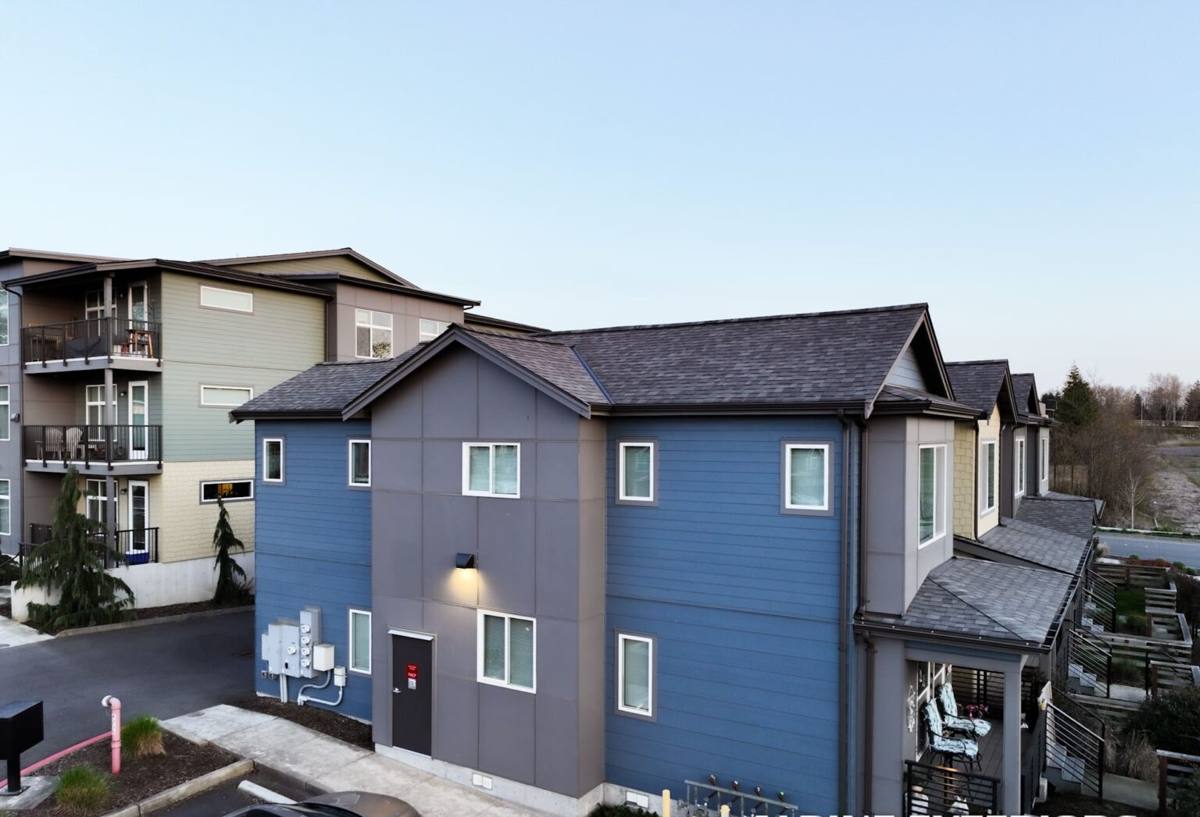
Why Local Climate Drives Every Repair Decision
Salt Air and Corrosion
Homes closer to the water deal with airborne salt that accelerates corrosion on any exposed metal — flashing, nail heads, gutter fasteners, vent boots with metal collars. A repair that ignores this and uses standard, unprotected fasteners or flashing will corrode again faster than it should. We factor in corrosion resistance on every repair here, not just on homes directly on the waterfront, because salt air travels further inland than most homeowners expect.
Driving Rain and Wind-Driven Water
Skagit County storms don't always drop rain straight down. Wind-driven rain gets pushed sideways and upward under shingle edges, around chimney flashing, and into any gap that a calmer climate might tolerate. Repairs need to account for that lateral water movement — meaning flashing laps, underlayment overlaps, and sealant placement all matter more here than they would in a drier, calmer region.
Moss and Prolonged Moisture
A long moss season means shingles stay damp longer, moss roots work into the granule surface and shingle mat, and organic debris builds up in valleys and behind chimneys where it holds water against the roof deck. Left alone, this is one of the most common causes of premature shingle failure we see on Burlington roofs.
Signs a Repair Is Needed — And Signs It's Already Past That Point
Most roof problems give some warning before they become a full leak. Catching them early is what keeps a job a repair instead of a replacement.
- Dark streaking or visible moss growth concentrated on north-facing or shaded slopes
- Granules collecting in gutters or at downspout outlets
- Shingles that look cupped, curled, or lifted at the edges
- Rust staining or visible gaps at flashing around chimneys, skylights, or roof-to-wall transitions
- Water stains on interior ceilings, especially after a windy rainstorm rather than a calm one
- Sagging or soft spots noticeable when walking the roof during inspection
- Daylight visible through the attic roof deck at joints or nail penetrations
If you're only seeing the first few items on that list, a targeted repair is usually enough. Once you're into soft decking, widespread granule loss, or repeated leaks in different spots, it's worth an honest conversation about whether repair still makes sense — we'll tell you plainly if that's the case rather than stringing along a roof that needs full replacement.
What a Correct Repair Actually Involves
A roof repair that holds up in this climate is more than swapping a shingle or squeezing in a bead of sealant. Here's what we actually check and address on a Burlington repair call.
Diagnosis Before Anything Gets Touched
Leaks rarely show up directly below their source — water travels along the deck or rafters before it drips through a ceiling. We trace the path from the interior stain or attic evidence back to the actual entry point on the roof surface, rather than guessing based on where the stain appears indoors.
Underlying Deck Condition
Any repair involving removed shingles is a chance to check the roof deck underneath for soft spots, delamination, or rot. Skipping this step and just replacing shingles over a damaged deck is a common shortcut that fails again quickly in a wet climate like ours.
Flashing and Transition Points
Most persistent leaks originate at flashing — around chimneys, skylights, plumbing vents, and roof-to-wall intersections — rather than in the open field of shingles. We replace or properly re-lap flashing rather than just caulking over failed metal, since sealant alone is a short-term fix at best in driving-rain conditions.
Moss and Debris Removal Done Correctly
Moss removal matters, but how it's done matters just as much. Aggressive scraping or pressure washing can strip granules and shorten shingle life. We remove moss with methods that clear growth without damaging the shingle surface, then address the conditions — usually shade and poor airflow — that let moss take hold in the first place.
Matching Materials
Shingle color and profile change over the years, and mismatched patch repairs stand out and can also perform differently in weather. We do our best to match existing materials closely, and we'll tell you upfront if an exact match isn't realistic so there are no surprises.
Our Repair Process, Start to Finish
- Inspection and diagnosis — a full roof walk (or ground/attic inspection where a roof walk isn't safe) to trace the actual source of the problem, not just the visible symptom.
- Written scope and estimate — a clear explanation of what's being repaired, why, and what it should cost, before any work starts.
- Repair execution — removal of damaged materials, deck check, correct flashing and underlayment work, and shingle replacement or reinforcement as needed.
- Moss and debris cleanup — clearing growth and organic buildup from valleys, behind chimneys, and shaded slopes as part of the same visit when applicable.
- Site cleanup — old materials and debris removed, gutters checked for anything that fell in during the work.
- Follow-up check — a plain explanation of what was done and what, if anything, to keep an eye on going forward.
Repair vs. Replacement: How We Help You Decide
| Factor | Repair Usually Makes Sense | Replacement Should Be Considered |
|---|---|---|
| Roof age | Under roughly 15 years, or well-maintained older roof | Near or past typical material lifespan |
| Leak history | First occurrence or isolated to one clear cause | Recurring leaks in multiple, unrelated areas |
| Deck condition | Solid, no rot found during inspection | Soft spots or rot found in more than one area |
| Shingle condition | Localized damage, rest of roof intact | Widespread granule loss, curling, or brittleness |
| Moss/moisture history | Manageable with cleaning and minor repair | Chronic moss regrowth despite repeated treatment |
We'll walk through where your roof actually falls on that table with you, in plain terms, rather than defaulting to whichever option is more profitable for us.
Cost Factors for a Burlington Roof Repair
Every repair is different, but the price of a job in this area is generally driven by a consistent set of factors. We won't quote a number without seeing the roof, but here's what moves the estimate up or down.
| Factor | Why It Matters |
|---|---|
| Size and location of the damaged area | Larger areas or multiple separate repair spots take more material and labor |
| Roof pitch and accessibility | Steep or hard-to-access roofs require more safety setup and time |
| Flashing vs. shingle-only repair | Flashing work involves more precise metal fabrication and fitting |
| Deck condition once opened up | Rotted decking adds material and labor beyond the original scope |
| Moss and debris severity | Heavy buildup takes longer to clear safely without damaging shingles |
| Material match availability | Discontinued or specialty shingle profiles can affect sourcing and cost |
Preventing the Next Repair Call
A good repair should buy you real years, not months. A few habits make a measurable difference in a climate like Skagit County's:
- Keep gutters and downspouts clear, especially before the fall rains pick up
- Trim back overhanging branches that keep roof sections shaded and slow to dry
- Have moss addressed early, before it works into the shingle surface
- Check attic ventilation — poor airflow keeps the underside of the deck damp and speeds deterioration
- Schedule a roof check after any major windstorm, even if you don't see an obvious leak
Why Hiring a Crew That Already Works in Burlington Matters
Roofing crews that mainly work drier or less coastal-influenced regions don't always account for the salt exposure, wind-driven rain, and moss pressure that define roofing conditions around Anacortes and Burlington. A crew that already services this part of Skagit County knows which flashing details tend to fail first here, which slopes hold moss longest, and how to sequence a repair around our weather windows instead of getting caught mid-job by an incoming system off the Sound. That familiarity shows up in fewer repeat callbacks, not just faster estimates.
We also believe in being straightforward about scope. If a repair is genuinely all your roof needs, that's what we'll recommend and do. If we find deck rot or damage that goes beyond a simple patch once we're up there, we'll explain exactly what we found, show you why it matters, and let you make the call on how to proceed — no pressure, no upsell script.
If you're dealing with a leak, visible moss, or roof damage on a Burlington-area home, we're happy to take a look and give you a straightforward, no-pressure estimate. Use the form below to get in touch and we'll schedule a time to come out.