 Anacortes Siding
 Roofs on Cap Sante Work Harder Than Most
Homes on and around Cap Sante sit up on a bluff exposed to the open water of the Salish Sea, and that position comes with a trade-off. The views are hard to beat, but the roof over your head is taking a steady beating from salt-laden wind, wind-driven rain that hits shingles and flashing sideways instead of straight down, and a wet, shaded climate that grows moss faster than almost anywhere else in Skagit County. A roof repair here isn't the same job as a roof repair in a dry inland town, and treating it that way is how small problems turn into big ones.
Salt air corrodes exposed metal fasteners and flashing faster than it would inland, driving rain finds any gap in a seal or lap and pushes water uphill under shingles, and moss holds moisture against the roof surface long after a storm has passed. None of these things cause a leak overnight. They cause slow, quiet damage that shows up as a stain on a ceiling months or years after the actual failure point developed.
Why "Just Patch It" Often Isn't Enough
A lot of roof repair calls we get start with someone wanting a specific spot patched — a stain in a bedroom, a soft spot near a chimney, a shingle that blew loose in a windstorm. That's the right instinct. But on a Cap Sante roof, the visible problem and the actual source of water intrusion are frequently not in the same place, because wind-driven rain and moss both move water sideways and under materials before it finally drips through somewhere lower or downhill. A repair that only addresses the visible symptom without tracing the water back to its source tends to come back within a season or two.
What Correct Roof Repair Looks Like Here
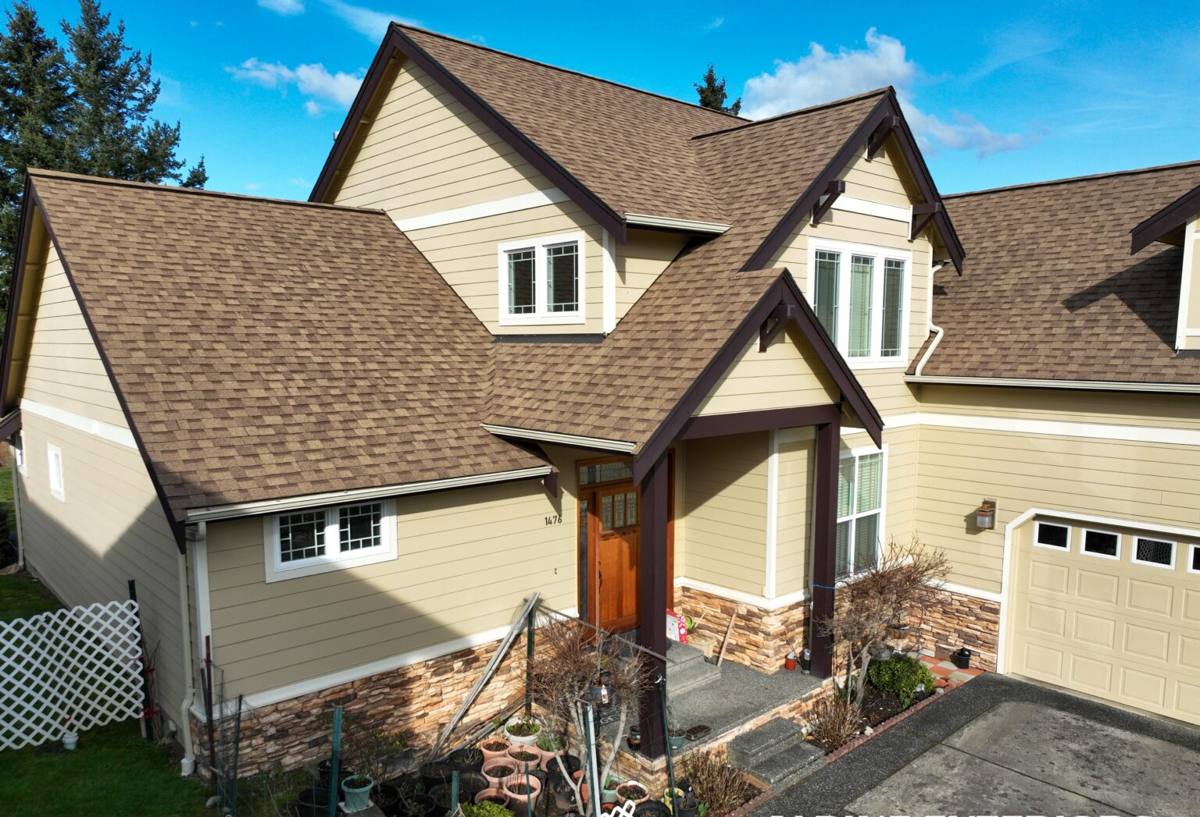
A proper repair on a home exposed to this kind of weather starts with figuring out how water is actually getting in, not just where it's showing up inside. That means checking flashing at every roof-to-wall transition, every valley, and every penetration — chimneys, vents, skylights — before touching a single shingle. Most leaks we trace back on homes in this area start at a flashing failure or a moss-clogged valley, not a shingle failure.
The Areas That Fail First in This Climate
- Valleys and low-slope transitions where moss and debris collect and hold water against the roofing material
- Flashing around chimneys, skylights, and roof-wall intersections, where salt air accelerates corrosion of exposed metal and fasteners
- Ridge caps and hip lines exposed directly to wind-driven rain coming off the water
- Fascia and eave edges, where trapped moisture from moss growth leads to soft, rotting wood under the roofing material
- Nail pops and lifted shingle tabs from repeated wind exposure, which open small gaps that rain finds during storms
A repair that only covers the first item on this list — the stain the homeowner actually noticed — without checking the rest is not a complete job. It's a temporary fix that will need to be revisited.
Our Repair Process
We keep the process straightforward and don't skip steps, because on an exposed roof like this, skipped steps are exactly what causes repeat leaks.
- Inspection from the roof, not just the ground. We walk the roof surface to check flashing, valleys, and fastener condition up close, since salt air corrosion and moss damage aren't always visible from a ladder.
- Tracing the water path. We follow staining and moisture patterns from the interior back to the actual entry point on the exterior, which is often uphill or to the side of where the damage shows inside.
- Removing moss and debris from the repair area. Moss has to come off before we can see the real condition of the roofing material underneath, and we do this without pressure-washing techniques that can drive water further under shingles.
- Replacing damaged materials, not just covering them. Rotted decking, corroded flashing, and compromised underlayment get replaced — not sealed over.
- Re-sealing and re-flashing with materials rated for coastal exposure. Fasteners and flashing get matched to the corrosion resistance the location actually needs.
- Final walk-through. We show you what we found, what we fixed, and what to keep an eye on going forward.
Repair or Replace? How We Make That Call
Not every roof that's leaking needs to be replaced, and not every roof that looks fine from the ground is actually sound. We look at a combination of factors before recommending one path over the other.
| Factor | Leans Toward Repair | Leans Toward Replacement |
|---|---|---|
| Age of roofing material | Under 12-15 years, isolated issue | Near or past manufacturer's expected service life |
| Extent of moss/moisture damage | Localized to one valley or section | Widespread across multiple slopes |
| Decking condition | Solid, no soft spots found | Soft, rotted, or delaminated in several areas |
| Flashing condition | Sound elsewhere, one failure point | Corroded or failing throughout |
| Number of past repairs | First or second repair call | Recurring leaks in different spots each year |
When a roof is a genuine repair candidate, we say so — there's no reason to sell a full replacement when a targeted fix will hold up. When the underlying material is past its service life or the damage is spread across the roof, we'll tell you that too, along with why, so you can make the call with real information instead of guessing.
Materials and Our Standard for This Location
What we use for flashing, fasteners, and underlayment on a Cap Sante repair is chosen specifically for salt-air exposure, not just whatever's standard inland. Galvanized or painted steel fasteners that would hold up fine a few miles inland can corrode noticeably faster this close to open water, so we favor corrosion-resistant flashing and fastener options for repairs in this area as a matter of standard practice, not an upsell.
A Note on Moss Treatments
We don't recommend aggressive pressure-washing or harsh chemical moss removal as a repair strategy on its own. Pressure washing can drive water and granule loss under shingles and shorten the life of the roofing material, and some moss treatments left too concentrated can affect gutters, landscaping, and metal flashing over time. Our standard is mechanical removal by hand in the repair area, combined with proper flashing and drainage so moss has less opportunity to take hold again — treating the cause of moss retention, not just the moss itself.
Maintenance That Actually Extends Repair Life
A good repair on a Cap Sante home is only as durable as the maintenance that follows it. A few habits make a real difference in how long a repair — or a whole roof — lasts in this climate.
- Have gutters and valleys cleared of debris and moss at least once a year, ideally after fall leaf drop
- Trim back tree limbs that shade sections of the roof, since shaded areas hold moisture longer and grow moss fastest
- Schedule a roof check after any major windstorm, since wind-driven rain off the water can lift or loosen materials without obvious signs from the ground
- Watch for granule buildup in gutters and downspouts, an early sign of shingle wear from repeated wetting and drying
- Address small leaks immediately rather than waiting for a full season, since water tracks sideways under materials before it shows up inside
Why Local Experience on Cap Sante Matters
A roofing crew that mostly works drier, inland parts of Skagit County can still do competent work, but they haven't necessarily seen how fast salt air chews through unprotected fasteners here, or how aggressively moss re-establishes itself on a shaded, damp roof this close to the water. That's not a knock on general roofing skill — it's just a different set of conditions than most of the county deals with. Working regularly on homes exposed to this specific mix of wind, rain, and salt air means we know which flashing details tend to fail first, which materials hold up, and which shortcuts show up as callbacks two winters later. That's the difference between a repair that lasts and one you're paying for twice.
Get an Honest Look at Your Roof
If you're seeing a stain, a soft spot, heavy moss buildup, or you just want a second opinion on a repair another crew quoted, we're glad to come take a look. There's no pressure and no obligation — just a straight answer about what's actually going on and what it would take to fix it right. Use the form below to request a free estimate.