 Anacortes Siding
 Building a Deck That Holds Up in West Anacortes' Marine Climate
West Anacortes sits close enough to the water that salt air is part of daily life, not an occasional nuisance. Combine that with Skagit County's long wet season, driving rain off Rosario Strait and the Guemes Channel, and the shaded, damp conditions that grow moss on nearly every horizontal surface, and you have a climate that is genuinely harder on outdoor structures than most of the country. A deck built here has to do more than look good on a sunny afternoon in July — it has to survive nine months of moisture exposure a year without rotting, corroding, or turning into a slip hazard.
A custom deck built for West Anacortes is not the same project as a deck built for a dry inland climate, even if the blueprints look similar. The material choices, the fasteners, the flashing details, and the drainage plan all need to account for salt-laden air and near-constant dampness. This page covers what that actually means for a deck project in this specific area, and what a correctly built one involves from the ground up.
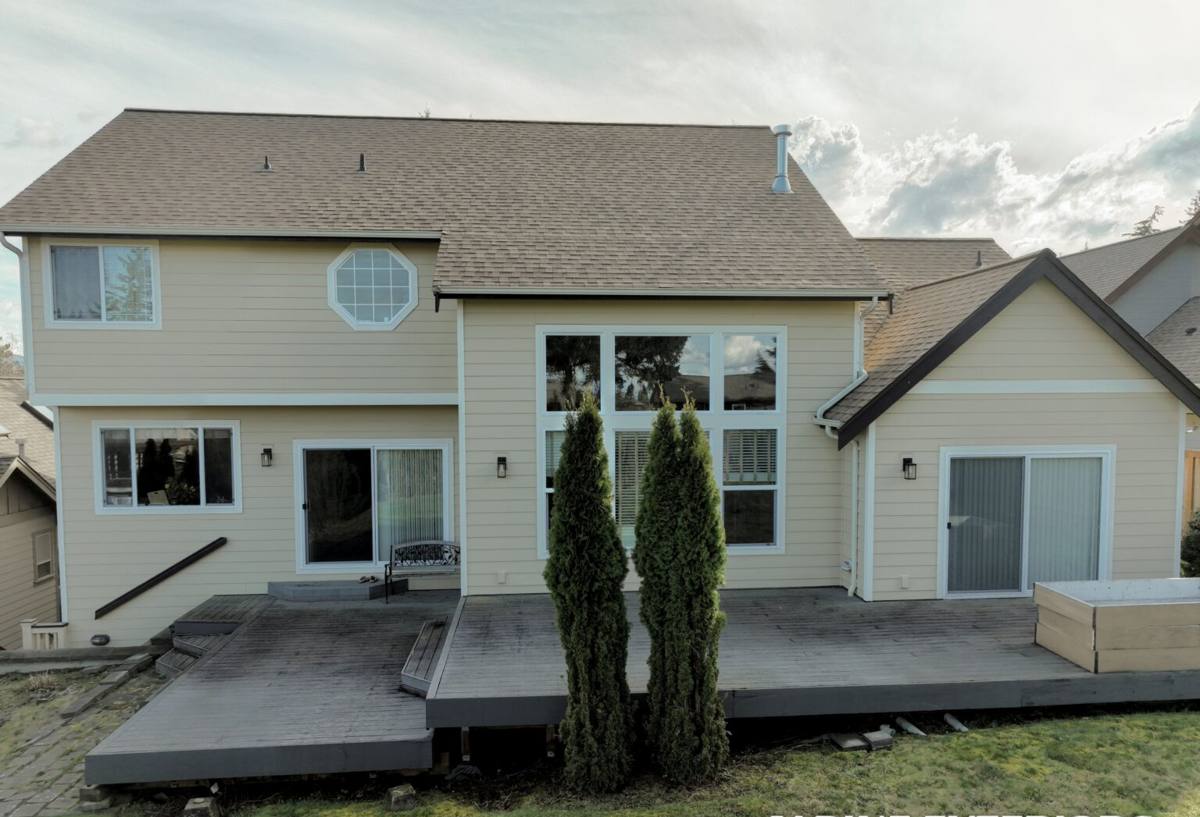
What Local Conditions Demand From a Deck
Salt Air and Corrosion
Airborne salt accelerates corrosion on anything metal — fasteners, joist hangers, railing hardware, and structural connectors. A deck built with standard hardware in a coastal-influenced area like West Anacortes can show rust and pitting years before an identical deck built further inland. This isn't a cosmetic issue; corroded fasteners and hangers lose holding strength, and that's a structural problem, not just an appearance one.
Driving Rain and Sustained Moisture
Anacortes gets rain that comes in sideways off the water often enough that vertical surfaces — house siding, ledger boards, the underside of rim joists — get wet in ways that a purely "top-down" waterproofing approach doesn't address. Water finds its way behind ledger boards, into end grain, and into any gap in flashing. Once it's in, the long stretch of cool, damp weather here means wood stays wet for extended periods instead of drying out quickly between storms.
Moss, Algae, and Shade
Many West Anacortes lots have mature trees and homes close enough together that decks sit in partial shade for a good part of the day. Add regular moisture and you get ideal conditions for moss and algae growth on decking surfaces, stairs, and railings. Beyond looking unkempt, a mossy deck surface is genuinely slick and dangerous, especially on stairs.
Choosing Decking Material for This Climate
There's no single "best" decking material for every home — it depends on budget, maintenance appetite, and how much shade and moisture the specific deck location gets. Here's how the common options actually perform in West Anacortes conditions:
| Material | Moisture Performance Here | Maintenance | Typical Lifespan |
|---|---|---|---|
| Pressure-treated pine | Good if properly sealed and re-sealed; end grain and fastener holes are the weak points | Annual or biannual cleaning and sealing | 15-25 years with upkeep |
| Cedar | Naturally rot- and insect-resistant, but still needs sealing in this much rain to prevent graying and moss uptake | Sealing every 1-2 years, regular cleaning | 20-25 years with upkeep |
| Composite decking | Doesn't absorb water like wood, but lower-quality boards can still trap moisture at fastener points and grow surface algae | Periodic cleaning, no sealing required | 25-30+ years, varies by product |
| PVC/capped polymer | Fully moisture-resistant surface; best option for constant shade and heavy rain exposure | Occasional cleaning only | 25-30+ years |
For a shaded, damp West Anacortes lot, we're often steering homeowners toward composite or capped polymer decking specifically because it removes the moss and rot equation from the wear surface. That said, plenty of homeowners still want the look and feel of real wood, and cedar can be a solid choice as long as the maintenance schedule is realistic and actually followed. We'll walk through the honest trade-offs — cost, maintenance, and how the specific spot on your property drains and dries — before you commit to a material.
Framing and Structure: Where Decks Actually Fail
Most deck failures we get called out to inspect aren't decking-surface problems — they're framing and connection problems that started small and went unnoticed for years. This is the part of a deck build that determines whether it lasts two decades or needs major repair in five years.
Ledger Board Attachment and Flashing
The ledger board — where the deck attaches to the house — is the single most common point of water intrusion and structural failure on any deck, and it's made worse by driving rain climates like this one. Correct construction means proper flashing that directs water out and away from the house band joist, not just a bead of caulk. This detail matters more here than almost anywhere in the build.
Joist Protection
Untreated cut ends and fastener penetrations on joists are where rot typically starts, even on pressure-treated lumber. Self-adhering joist tape over the tops of joists and beams sheds water before it can pool at fastener holes, which matters a lot given how many wet days this area sees in a typical year.
Fasteners and Hardware
Given the salt air exposure, we spec stainless steel or heavy-duty coated fasteners and connectors rated for coastal or treated-lumber use, not generic hardware. It costs more up front and it's the right call for a structure meant to last decades near the water.
Footings
Skagit County soil conditions and frost depth requirements determine footing depth, and this is one of the areas local building departments check closely. Footings poured too shallow or undersized are a common source of deck movement and settling over time.
Drainage and Under-Deck Water Management
A deck sitting low to the ground, or one with living space underneath, needs a real plan for where water goes once it hits the surface. Simple gaps between boards work fine for a deck over open grass, but decks over patios, walkways, or basement entries usually need a proper under-deck drainage system to keep that space usable and dry. We assess grading and drainage around the deck's footprint as part of design, not as an afterthought — poor drainage against the house foundation is a problem we see created by decks that weren't planned with water flow in mind.
Permits, Code, and Guardrails
Most custom deck projects in Anacortes require a building permit, and elevated decks have specific guardrail height, baluster spacing, and stair requirements under Washington building code. Skipping the permit process might save time upfront, but it creates real problems at resale — unpermitted structural work is a common flag during home inspections and can hold up a sale. We handle permitting and inspections as part of the build so you're not left sorting it out later.
- Guardrails are generally required once a deck surface is a certain height above grade — we confirm the exact threshold and spacing requirements for your project
- Stair stringers, rise, and run have to meet code, not just "look right"
- Attachment to the house (ledger connections) is one of the most closely inspected details on a permitted deck
- Footing depth and size are checked against local frost line and soil requirements
Our Custom Deck Process
Every property is different, but the process for a West Anacortes deck generally follows the same sequence:
- Site visit and design conversation — we look at sun/shade exposure, existing drainage, house attachment point, and what you actually want to use the space for
- Material and layout selection — honest conversation about wood versus composite versus PVC based on your budget, maintenance preference, and how much shade the deck sits in
- Permitting — we prepare and submit what's needed for your project and coordinate inspections
- Framing — footings, ledger flashing, joist protection, and corrosion-resistant hardware built to hold up in coastal conditions
- Decking, railing, and stairs — installed to code with attention to fastener placement and drainage gaps
- Final walkthrough — we go over care and maintenance specific to the material you chose
Maintenance That Actually Matters Here
The maintenance a West Anacortes deck needs is different from what's needed in a drier, sunnier climate — moss and moisture management matter more than UV protection.
- Sweep debris and standing leaves off the deck surface regularly, especially in fall — trapped organic matter holds moisture and feeds moss growth
- Clean the surface at least once or twice a year with a deck-safe cleaner to remove algae and moss before it gets established
- Check and re-seal wood decking on the manufacturer's recommended schedule — don't wait until it visibly grays
- Inspect fasteners and hardware periodically for rust or corrosion, particularly on railings and stair connections
- Keep gutters and downspouts near the deck clear so runoff isn't draining directly onto or under the structure
- Trim back vegetation that's keeping the deck in constant shade, if that's practical for your property
Why a Crew That Already Works This Area Matters
A deck contractor who builds across a wide range of climates might default to generic specs — standard hardware, standard flashing, standard sealing schedules. That's the kind of build that looks fine at handoff and starts showing problems in year three or four once the salt air and rain have had time to work on it. Building decks specifically in Anacortes and around Skagit County means we already know which details can't be skipped here: the flashing at the ledger, the fastener grade, the drainage plan, and the framing choices that hold up through a genuinely wet, salt-influenced climate rather than just an average one.
If you're planning a new deck or replacing one that's showing its age in West Anacortes, we're happy to take a look at your property and talk through honest options for material, layout, and budget. Reach out for a free, no-pressure estimate using the form below.