 Anacortes Siding
 Roofing on Fidalgo Island's Waterfront Edge
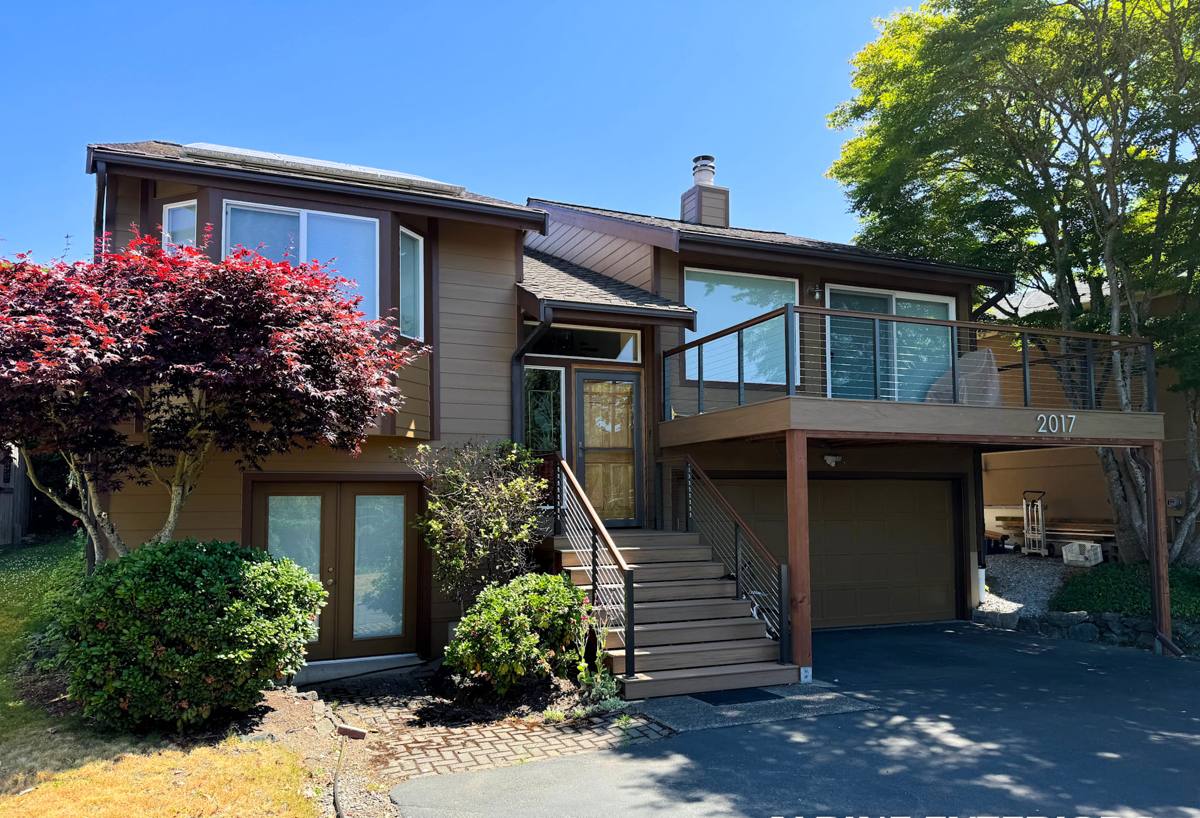
Flounder Bay sits close to open water on Fidalgo Island, and that proximity shapes everything about how a roof ages here. Homes near the bay take a steady diet of salt-laden air, wind-driven rain off the water, and heavy shade from the fir and cedar cover that lines so many of the lots around Anacortes. A roof that would last 25 trouble-free years in a dry inland subdivision can show real wear a decade earlier out here if it wasn't built for these conditions in the first place. This page is about one job, done right, in one place: full roof replacement for houses in and around Flounder Bay.
Why Flounder Bay Roofs Wear Differently
Three things drive most of the roof failures we see in this part of Skagit County, and they compound each other.
Salt Air and Metal Fatigue
Airborne salt accelerates corrosion on exposed fasteners, flashing, and any metal roofing components that aren't rated for coastal exposure. Standard galvanized nails and unrated trim can start rusting years before they would inland. On a bay-adjacent property, every metal component on the roof — flashing, drip edge, vents, fasteners — needs to be chosen with that exposure in mind, not just picked from whatever's cheapest at the supply house.
Driving Rain
Storms off the water don't just fall straight down — wind pushes rain sideways and up under laps, edges, and flashing that would stay dry in a calmer, more sheltered spot. That means underlayment quality, flashing detail, and fastening pattern matter more here than on a roof tucked away from the water. A roof that's "basically fine" on paper can still leak at the eaves or valleys if it was installed to a minimum-code standard instead of a coastal one.
Moss and Shade
Heavy tree cover around many Flounder Bay properties means roofs stay damp longer after every rain and get less direct sun to dry out. That's ideal growing conditions for moss, which lifts shingle edges, holds moisture against the roof deck, and shortens the life of whatever's underneath it. Anacortes' long wet season — often October through May — gives moss months at a time to work on a roof that isn't kept clear.
Repair or Replace? Reading the Signs
Not every aging roof needs full replacement, but out here the margin for waiting is thinner than in drier parts of the state. Watch for:
- Granule loss showing bare, shiny patches on asphalt shingles, especially on south- and west-facing slopes
- Curling, cupping, or cracked shingles — a sign the roofing material has reached the end of its useful life
- Moss buildup that keeps returning within a season or two of cleaning, even after treatment
- Soft spots, sagging, or staining on the underside of the roof deck visible from the attic
- Rusted or failing flashing around chimneys, skylights, and roof-to-wall transitions
- Leaks that show up during wind-driven storms but not during calm rain — a strong sign flashing or underlayment has failed
- A roof that's already had two or more patch repairs in the last five years
If you're only seeing one or two isolated issues, a targeted repair can be the right call. Once several of these show up together, patching becomes a cycle of spending money to delay the inevitable rather than fixing the actual problem.
What a Correct Roof Replacement Actually Involves
A roof replacement is more than stripping old shingles and nailing down new ones. On a bay-exposed home, skipping any of these steps is where premature failures come from:
Full Tear-Off and Deck Inspection
We remove the old roofing down to the deck rather than layering over it. That's the only way to actually see the plywood or plank sheathing underneath — soft, delaminated, or water-stained decking has to be replaced before anything new goes down, or the new roof is sitting on a compromised base.
Ice-and-Water or Self-Adhering Underlayment at Vulnerable Points
Eaves, valleys, and areas prone to wind-driven rain get self-adhering underlayment, not just standard felt. This is one of the cheapest upgrades in the whole job relative to the protection it buys against the kind of sideways rain this area gets.
Coastal-Grade Flashing and Fasteners
Given the salt exposure near the water, we use flashing and fasteners rated for that environment rather than standard-grade hardware. It costs a bit more up front and saves a re-flash or premature leak years down the road.
Ventilation That Actually Balances
Intake at the eaves, exhaust at the ridge, sized to move air through the attic space. Correct ventilation keeps moisture from condensing under the deck in our wet winters and helps shingles run cooler and last longer in summer. A lot of older Anacortes homes were built with ventilation that's undersized or unbalanced for the roof above it — replacement is the right time to fix that.
Ridge, Valley, and Penetration Detail
Every pipe boot, skylight curb, and chimney is a place water can find its way in. These get flashed and sealed individually and correctly rather than relying on caulk as a shortcut.
Material Options for a Bay-Exposed Home
There's no single "best" roofing material for every house — it depends on your roof's pitch, your home's style, your budget, and how much shade and salt exposure the roof deals with. Here's how the common options stack up for a Flounder Bay property specifically:
| Material | How it handles salt air & moisture | Moss resistance | Typical lifespan here |
|---|---|---|---|
| Architectural asphalt shingle | Good, with coastal-grade flashing and fasteners | Moderate — needs periodic cleaning under tree cover | 20–30 years |
| Standing seam metal | Excellent when specified with coastal-rated coatings and fasteners | Very good — sheds moisture and debris quickly | 40–50+ years |
| Synthetic composite (slate/shake look) | Good — doesn't corrode, but flashing details still matter | Good | 30–50 years |
| Cedar shake | Higher maintenance burden in damp, shaded conditions | Poor without regular treatment | Varies widely with upkeep |
We'll walk you through the honest trade-offs for your roof, not just push whatever has the best margin. On heavily shaded, moisture-prone lots near the bay, that conversation often comes down to how much ongoing maintenance you're willing to do versus what you'd rather pay for once in the material and installation.
Our Process for a Flounder Bay Roof Replacement
- On-site inspection. We walk the roof, the attic, and the exterior to assess deck condition, ventilation, flashing, and moss or moisture damage — not just a drive-by estimate.
- Written estimate. A clear scope of work and price, including material options, so you're comparing apples to apples if you're getting other bids.
- Permitting. We handle the paperwork required for the job so you don't have to chase it down.
- Protection and staging. Landscaping, siding, and gutters get protected before tear-off starts.
- Tear-off and deck repair. Old roofing comes off, the deck gets inspected, and any compromised sheathing is replaced.
- Installation. Underlayment, flashing, ventilation, and roofing material go in to spec, with extra attention at eaves, valleys, and penetrations.
- Cleanup and magnetic sweep. Debris and stray fasteners are cleared from the property, including gutters and landscaping.
- Final walkthrough. We go over the finished roof with you before calling the job done.
Why a Crew That Already Works This Area Matters
A roofer who works Anacortes and the surrounding Skagit County waterfront regularly already knows which flashing and fastener grades hold up near the bay, how much ventilation a shaded, moss-prone roof actually needs, and how to sequence a tear-off around this area's unpredictable rain windows. That's the difference between a crew reading a spec sheet for the first time and one that's already made the adjustments this specific stretch of coastline calls for. It also means someone local to call if a question comes up after the job — not a phone number for a company that worked here once and moved on.
Keeping a New Roof Healthy in the Bay Climate
- Clear overhanging branches back from the roofline to cut down on shade, debris, and moss growth
- Clean gutters at least twice a year — more often if you're under heavy tree cover
- Have moss treated at the first sign of growth rather than letting it establish
- Check attic ventilation isn't blocked by insulation or storage after any attic work
- Walk the roofline visually after major windstorms for lifted shingles or displaced flashing
- Schedule a professional inspection every few years, even if nothing looks obviously wrong
None of this replaces a properly installed roof, but it protects the investment once the new one is on.
Get a Straight Answer About Your Roof
If your roof is showing its age, or you just want an honest read on how much life it has left, we're happy to take a look. The estimate is free, there's no pressure, and you'll get a clear explanation of what we see and what your real options are — just fill out the form below to get started.