 Anacortes Siding
 Why Flounder Bay Homes Need a Different Approach to Window Installation
Flounder Bay sits close enough to the water that homes here take a different kind of weather beating than houses a few miles inland in Anacortes. Salt-laden air, wind-driven rain off Rosario Strait, and the long gray stretch of moss season put more stress on window openings than most manufacturers' standard installation guides account for. A window that would be perfectly fine on a sheltered lot in the Skagit Valley can fail early here if it's not installed with the local exposure in mind.
That doesn't mean Flounder Bay needs exotic materials or a radically different window. It means the installation details that are easy to skip — flashing sequence, sealant choice, drainage paths — actually matter, because the margin for error is smaller. This page covers what that looks like in practice.
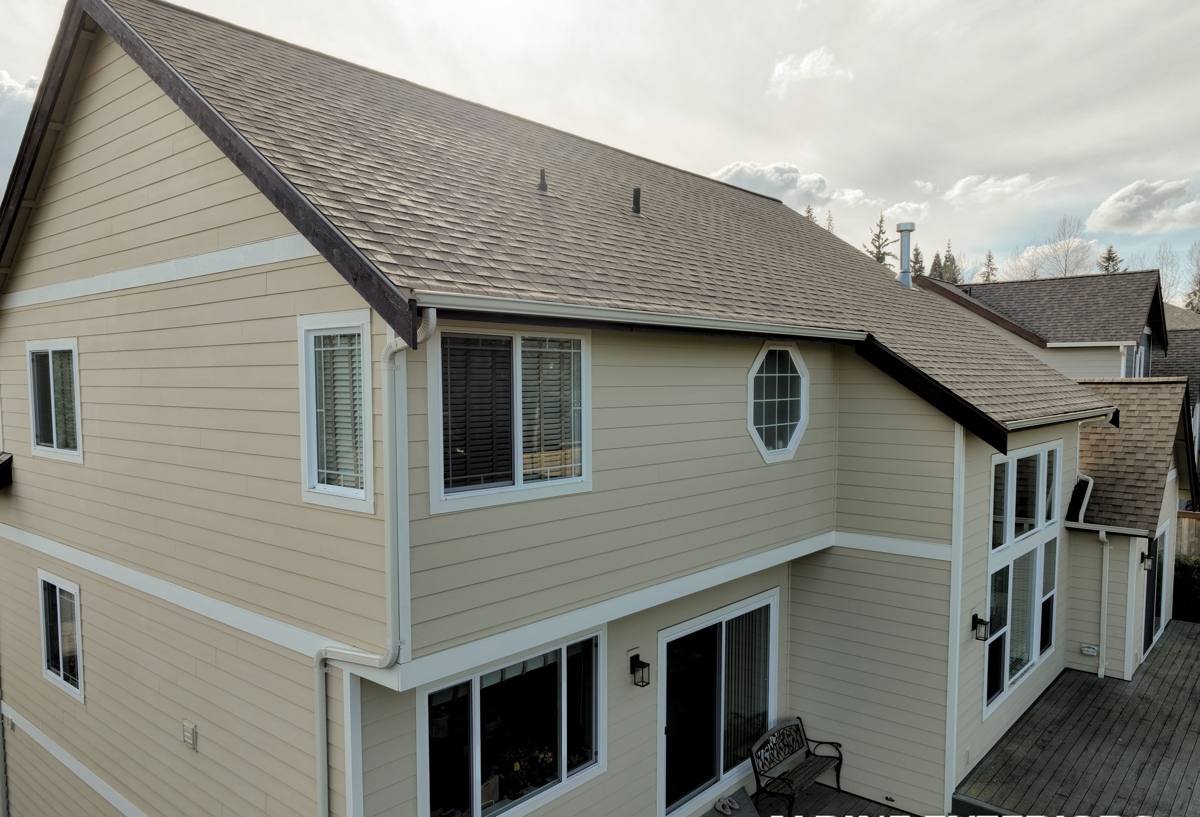
What Salt Air and Driving Rain Actually Do to Windows Over Time
Three things wear on window installations near the water, and they compound each other:
- Salt air accelerates corrosion on unprotected fasteners, hinges, and metal flashing. Once corrosion starts at a fastener head, water tends to follow it inward.
- Wind-driven rain doesn't just fall on a window — it gets pushed sideways and upward under sills and trim. A window that's watertight in a calm rain can still leak in a Flounder Bay storm if the flashing wasn't lapped correctly.
- Moss and moisture buildup around trim and sills during our long wet season traps water against wood surfaces longer than it would in a drier climate, which is exactly the condition that leads to rot at the sill and jack studs.
None of these are dramatic on their own. They're slow problems that show up as soft trim, stuck sashes, or a musty smell near the window two or three winters after a poor installation — long after the crew that did the work is gone.
Signs Your Current Windows Are Losing the Fight
Homeowners in Flounder Bay usually notice a handful of things before a window becomes an obvious failure:
- Sashes that used to open easily now stick, swell, or bind
- Visible gaps or cracked caulk at the trim, especially on the weather-facing side of the house
- A cold draft at the window even with it fully closed and locked
- Fogging or moisture between panes on double- or triple-glazed units
- Soft or discolored wood trim, or paint that bubbles and peels faster on one side of the house
- A musty smell near the window that comes and goes with the weather
Any one of these is worth a look. Several together usually means water has been getting past the seal for a while, not that the window glass itself has failed.
What a Correct Window Installation Actually Involves
Replacing a window is straightforward. Replacing it so it stays watertight through a marine winter is where the details matter. A proper installation in this area includes:
Flashing sequence, not just caulk
Sill pan flashing goes in first, sloped to drain any water that gets past the window back out — not into the wall. Side and head flashing lap over each other in the correct shingle-style order so water is always directed outward and down, never trapped behind the siding.
Sealant that's rated for the exposure
Not all sealants perform the same in salt air and UV exposure off the water. We use products rated for the exposure the window will actually see, applied at the joints that matter — not a bead of caulk around the outside trim as the only line of defense.
Fasteners that won't corrode first
Corrosion-resistant fasteners matter more here than a few miles inland. A rusted fastener head is a future leak point, even if the window itself is fine.
Insulation and air-sealing at the rough opening
Gaps around the window frame get properly insulated and air-sealed — not stuffed with excess fiberglass, which can hold moisture instead of shedding it.
Proper shimming and level/plumb/square setting
A window that's not set level, plumb, and square will stress the frame over time, which strains the seals and hardware and shortens the life of the whole unit regardless of how good the window itself is.
Choosing Window Materials for a Marine Environment
Every window material has trade-offs. In a salt-air, high-moisture setting like Flounder Bay, those trade-offs shift a little compared to a dry inland climate.
| Material | How it handles this climate | Maintenance |
|---|---|---|
| Vinyl | Doesn't corrode or rot; handles moisture well; a solid, low-maintenance default for this exposure | Low — occasional cleaning |
| Fiberglass | Very stable in temperature swings and moisture; strong long-term performer near the water | Low |
| Wood-clad (exterior clad, wood interior) | Good look, but the exterior cladding and flashing details need to be right — any gap in the cladding exposes wood to salt-laden moisture | Moderate — watch the cladding seams |
| Bare wood exterior | Requires the most upkeep in this environment; paint and seal need consistent attention or rot risk climbs | High |
| Aluminum (uncoated or poorly coated) | Prone to corrosion and condensation issues in salt air unless it has a proper marine-grade finish | Moderate to high |
We'll talk through what fits your home's style and your maintenance appetite — the goal is a window that still performs well ten and twenty years out, not just on install day.
Our Installation Process
- On-site assessment — we check the existing opening, look for any hidden rot or water damage behind the current trim, and measure for an exact fit.
- Material and product selection — we walk through options suited to the exposure on that side of your house, not a one-size answer for the whole building.
- Removal and opening prep — old window comes out, the opening is inspected and repaired if there's any soft framing or old flashing failure underneath.
- Flashing and sill pan installation — done in the correct sequence before the new window ever goes in.
- Window setting — shimmed level, plumb, and square, fastened with corrosion-resistant hardware.
- Sealing and insulation — exposure-rated sealant at the critical joints, proper insulation at the rough opening.
- Trim and finish work — exterior and interior trim reinstalled or replaced, finished to match the house.
- Final check — operation, seal, and weather-tightness confirmed before we call it done.
Cost Factors for Window Installation Near the Water
| Factor | Why it affects cost |
|---|---|
| Window material and glazing | Vinyl and fiberglass typically cost less than wood-clad; upgraded glazing packages add cost but improve comfort and moisture resistance |
| Condition of the existing opening | Hidden rot or old flashing failures discovered during removal require repair before the new window can go in correctly |
| Number and size of windows | Larger openings and multi-window jobs affect labor time and material needs |
| Exposure of that wall | Walls facing prevailing wind and rain off the water may warrant upgraded flashing or sealant details |
| Trim and finish scope | Matching existing trim profiles or upgrading trim material adds to the finish-work cost |
We give straightforward, written estimates after seeing the actual openings — broad ballpark numbers over the phone don't account for what's often hiding behind old trim in a house that's been taking coastal weather for years.
A Quick Checklist Before You Hire
- Ask specifically how they flash and seal window openings — not just what brand of window they install
- Ask what happens if they find rot or water damage once the old window is out
- Confirm they're licensed and insured to work in Washington
- Ask about the manufacturer's warranty versus the installer's workmanship warranty — they're different things
- Ask if they've worked on homes in your specific area and understand its exposure
- Get the estimate in writing, including what's covered if hidden damage is found
Why a Crew That Already Works Flounder Bay Matters
Window installation isn't just a product install — it's a judgment call about flashing, sealant, and materials suited to the actual exposure your house sees. A crew that regularly works homes in Flounder Bay and around Anacortes has already seen how salt air and driving rain affect installations over time, and builds that experience into how they flash and seal every opening, not just the ones facing the water. That local pattern recognition is hard to get from a crew that mostly works dry, inland jobs.
If your windows are showing wear, or you're planning a remodel and want it done right the first time, we're happy to take a look and give you a straightforward, no-pressure estimate. Fill out the form below and we'll set up a time to come out.