 Anacortes Siding
 Flounder Bay Is a Tougher Environment on Siding Than Most Homeowners Realize
Flounder Bay sits close enough to the water that homes here deal with a different set of stresses than a house ten miles inland in Skagit County. Salt-laden air moves in off the Salish Sea and settles on every exterior surface, day after day, year-round. Add in driving rain that comes sideways during winter storms, and a moss season that can run from late fall through spring, and you've got a combination that finds every weakness in a siding system faster than a drier, calmer climate would.
None of this means a home near Flounder Bay is doomed to constant repairs. It means the siding, the details around it, and the way it's installed all have to be chosen with this specific environment in mind — not a generic Pacific Northwest install, but one that accounts for salt exposure, near-constant moisture, and shaded, moss-prone north and west faces that never fully dry out between rains.
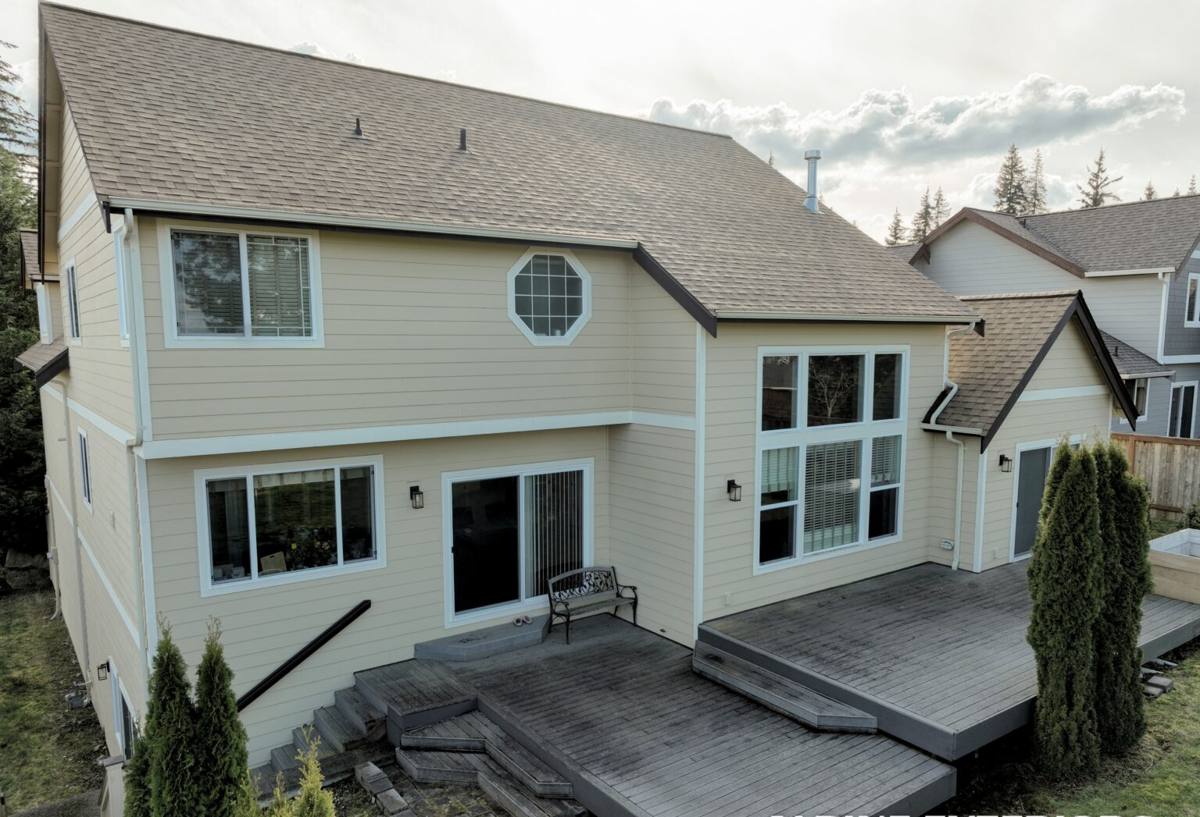
Why We Standardized on James Hardie Fiber Cement
We install James Hardie fiber cement siding exclusively. We don't install vinyl, LP SmartSide, Cemplank, Allura, primed spruce, or cedar, and that's a deliberate professional standard, not a sales pitch. Each of those alternatives has real advantages in the right setting — vinyl is inexpensive, wood has a traditional look, engineered wood products install fast — but in a salt-air, high-moisture environment like Flounder Bay, each one also carries a trade-off we're not willing to put our name behind: vinyl becomes brittle and can warp with heat and cold cycling, wood-based products are more sensitive to sustained moisture exposure at cut edges and seams, and cedar demands a maintenance commitment most owners underestimate until they're three years in.
James Hardie fiber cement is made from cement, sand, and cellulose fiber. It doesn't rot, it isn't attractive to pests, and it's non-combustible — a meaningful consideration anywhere in Washington given wildfire season concerns further inland, and simply good practice on a coastal home too. The factory-applied ColorPlus finish is baked on before the boards ever reach the job site, which matters in a place where UV, salt, and rain all attack a paint film simultaneously.
Matching the Right Hardie Line to a Marine Lot
James Hardie makes climate-engineered product lines, and choosing the right one for a property near Flounder Bay isn't a formality — it changes how the siding performs over the next few decades.
HZ5 vs. HZ10 Engineering
Hardie's HZ5 line is engineered for regions with freeze-thaw cycling and moderate moisture exposure; HZ10 is engineered for warmer, wetter, high-humidity climates. Western Washington's marine zone, and Flounder Bay specifically, sits in the range where HZ5 is the standard specification — it's built to handle the freeze-thaw swings we do get in winter while still holding up to sustained damp conditions. Getting this specification right at the ordering stage, rather than defaulting to whatever a supplier has in stock, is one of the quiet details that separates a correct install from one that just looks right on installation day.
Profile Choice
Lap siding (in various reveals), shingle-style panels, and vertical panel systems are all available in the Hardie lineup, and the right choice comes down to the home's architecture and how exposed each elevation is to wind-driven rain. Water-facing elevations sometimes benefit from a narrower exposure or a belt-and-suspenders approach to flashing regardless of profile — that's a call we make on-site, not from a catalog.
What a Correct Installation Actually Involves
Fiber cement siding fails early almost exclusively because of installation mistakes, not because the material itself gave out. In a climate like this one, the margin for error on those details is smaller than it would be somewhere drier.
Clearance and Drainage
Hardie's own installation instructions call for minimum clearances above grade, roof lines, and decks, plus a drainage plane behind the siding so any moisture that does get past the surface has somewhere to go besides the wall sheathing. On a lot close to the water table or with limited grading options, hitting those clearances sometimes takes extra planning rather than just nailing boards to the existing wall line.
Fastening and Joints
Corrosion-resistant fasteners, correct nailing patterns, and properly staggered, sealed joints all matter more here than in a dry inland climate, because any gap becomes an entry point for both wind-driven rain and salt-laden moisture. Butt joints need to be treated deliberately — caulked and painted per Hardie's specification, not left as a cosmetic afterthought.
Flashing at Every Penetration
Windows, doors, hose bibs, vents, and any other wall penetration are where siding systems actually fail. Correct flashing — installed in the right order relative to the water-resistive barrier and the siding itself — is what keeps water managed rather than trapped behind the cladding.
Our Process on Flounder Bay Projects
The steps don't change from project to project, but the amount of attention each one gets does, based on a home's exposure and condition.
| Step | What We're Checking or Doing |
|---|---|
| Site walk and assessment | Existing siding condition, moisture intrusion signs, grading and drainage around the foundation, sun/shade and wind exposure by elevation |
| Tear-off | Full removal of old cladding so the sheathing and framing underneath can actually be inspected, not covered over |
| Sheathing and moisture barrier repair | Replacing any damaged sheathing found, installing a correctly lapped water-resistive barrier and drainage plane |
| Flashing installation | Every window, door, and penetration flashed before siding goes up around it |
| Hardie installation | Correct HZ5 product, fastening pattern, clearances, and joint treatment per manufacturer specification |
| Caulking, paint touch-up, final inspection | Sealing per spec, touching up any factory-finish nicks from handling, walking the full exterior before calling it done |
James Hardie Against the Alternatives in This Climate
Every siding material trades off differently once you put it a few blocks from salt water.
| Material | How It Handles Salt Air & Sustained Moisture | Long-Term Consideration |
|---|---|---|
| James Hardie fiber cement | Non-combustible, resists moisture-driven rot, factory finish holds up to UV and salt | Higher upfront cost, strong transferable warranty when installed to spec |
| Vinyl | Doesn't rot, but can become brittle with temperature cycling and isn't rated for wildfire-adjacent zones | Lower cost, shorter realistic lifespan in demanding coastal exposure |
| Cedar | Attractive but absorbs moisture readily; sustained damp conditions accelerate maintenance needs | Requires ongoing sealing/staining commitment |
| LP SmartSide / engineered wood | Treated to resist moisture, but cut edges and seams are more sensitive to sustained water exposure than fiber cement | Installation quality has an outsized effect on lifespan |
This is why we don't stock or install the alternatives: for a property in a marine environment like Flounder Bay, we'd rather stand behind one product system we know performs when installed correctly than offer a menu of options with different failure modes.
Living With Hardie Siding Near the Water
Correctly installed Hardie siding is low-maintenance, not no-maintenance. A few habits keep it looking and performing the way it should through Anacortes winters:
- Rinse salt residue and grime off the siding periodically, especially on elevations facing the water
- Keep gutters clear so roof runoff isn't sheeting down the siding face
- Trim back vegetation and tree cover on shaded elevations to cut down on moss and mildew buildup
- Address any caulk cracking or paint chipping at joints promptly, before moisture gets behind the board
- Have the exterior walked periodically to catch flashing or sealant issues while they're still small repairs
Moss is worth calling out specifically. Shaded, north- and west-facing walls near the water can stay damp long enough for moss and algae to take hold on any siding material, Hardie included. It's a cosmetic issue, not a structural one, when the underlying install is correct — but leaving it unaddressed for years can trap additional moisture against the surface.
Why It Matters That We Already Work This Neighborhood
A siding installation crew that only occasionally works near the water treats every job like a generic install. A crew that regularly works properties near Flounder Bay and the rest of Fidalgo Island already knows which elevations tend to take the worst weather, where moss builds up fastest, and which flashing details need extra attention on a given lot before a problem ever shows up.
When you're vetting anyone to work on a home in this kind of environment, a few questions separate a serious crew from one that's just quoting a job:
- Do they specify the correct HZ product line for this climate zone, or just install whatever's on the truck?
- Will they show you the flashing and drainage plan before siding goes up, not just the finished look?
- Do they follow manufacturer fastening and clearance specifications, and can they explain why those specs exist?
- Are they familiar with how salt air and moss season specifically affect homes in this part of Skagit County?
If you're weighing a siding project on a Flounder Bay property, we're glad to walk the exterior with you, point out what the current siding is telling us, and put together a straightforward, no-pressure estimate — no obligation, just a clear look at what the job actually involves.