 Anacortes Siding
 Similk Beach sits close enough to the water that the weather off the strait shapes almost every exterior decision a homeowner makes, and the roof takes more of that punishment than any other surface on the house. Salt-laden air, driving rain that comes in sideways during winter storms, and a moss season that can run most of the year all work against a roof day after day, year after year. Metal roofing is one of the few systems that holds up well against that combination, but only when it's specified and installed correctly for this specific setting. This page covers what that actually looks like for homes in Similk Beach — not a generic metal roofing pitch, but the details that matter for a property this close to the water.
Why Similk Beach's Climate Is Harder on a Roof Than It Looks
From the road, Similk Beach looks like a lot of quiet residential shoreline in Skagit County — trees, water views, older and newer homes mixed together. What isn't obvious is how much the marine exposure changes the math on roofing materials. Salt air carries fine particulate that settles on every exterior surface, and over years it accelerates corrosion on unprotected metal fasteners, flashing, and any coating that isn't rated for coastal exposure. Add in wind-driven rain that gets pushed under standard shingle laps during winter fronts, plus a climate wet and shaded enough in places to grow moss on almost anything with texture, and you've got three separate stresses hitting the same roof at once.
None of that is unique to Similk Beach — it's true across most of the Anacortes shoreline and much of western Skagit County — but properties directly exposed to wind off the water tend to feel it sooner and harder than homes a few blocks inland with more tree cover or terrain shelter. That's the baseline we start from before we ever talk about panel style or color.
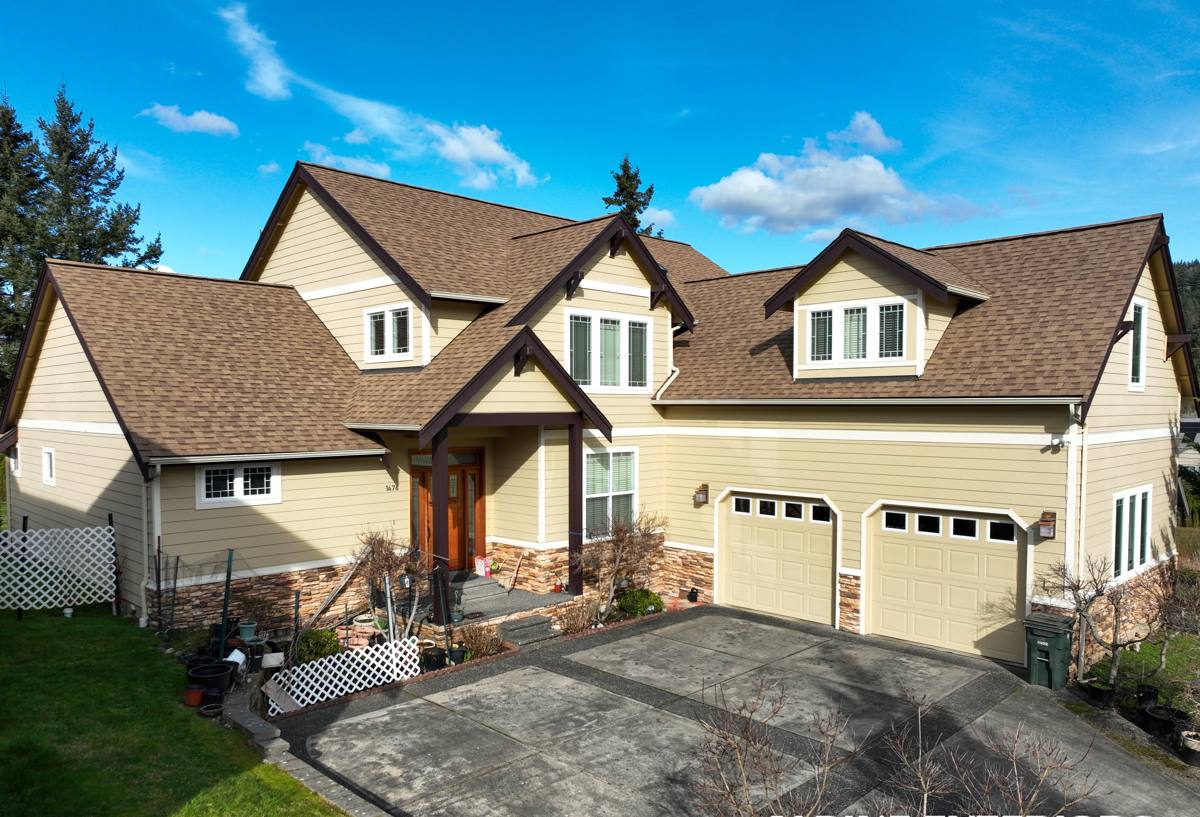
Why Metal Roofing Fits This Environment
Metal roofing earns its reputation in coastal climates for a few concrete reasons, not just because it looks good:
- Nothing for moss to grip. A properly installed metal roof has a hard, smooth, sloped surface that sheds water fast and gives moss and lichen almost nothing to root into, compared to the textured surface of composition shingles.
- Fewer overlapping seams for wind-driven rain to exploit. Panel systems with correctly lapped seams and properly detailed flashing resist the sideways rain that Similk Beach sees during winter storms far better than shingle roofs with dozens of small lap joints.
- Long service life when the coating is right. A quality factory finish, matched to the metal substrate and applied correctly, is built to resist UV breakdown and coastal corrosion far longer than a standard asphalt roof's granule surface holds up in this climate.
- Rigid enough to handle wind uplift. Waterfront and near-waterfront lots see higher sustained wind than sheltered inland properties, and a correctly fastened metal roof performs well against uplift when it's installed to spec.
None of that means metal roofing is maintenance-free or bulletproof — it means it starts from a stronger baseline against the specific stresses this location creates, provided the installation respects that same environment.
Where Metal Roofing Still Needs Respect
Metal roofs fail in coastal areas almost exclusively because of installation shortcuts, not because the material itself is weak. The failure points we watch for are consistent: fasteners and flashing that aren't matched to the panel metal (which sets up galvanic corrosion between dissimilar metals), underlayment that isn't rated for the moisture exposure, and cut edges left unsealed where salt air can start corrosion from the inside out. We treat every one of those as non-negotiable, not optional upgrades.
Panel Types and What They Mean for a Similk Beach Home
"Metal roofing" covers a range of products, and the right choice depends on the home's roof pitch, style, and how exposed the lot is to wind and salt air. The table below is a general comparison, not a recommendation for any specific home — that comes after we've actually looked at the roof.
| Panel Type | Typical Use | Coastal Considerations |
|---|---|---|
| Standing seam | Most residential roofs, modern and traditional styles | Concealed fasteners reduce corrosion entry points; strong choice for direct wind/salt exposure |
| Exposed-fastener panels | Simpler roof lines, outbuildings, budget-conscious projects | Fasteners are exposed to weather and need periodic inspection; workable near the water with the right fastener spec and maintenance plan |
| Metal shingles/shakes | Homes wanting a traditional look with metal's durability | More seams than standing seam; detailing at laps and flashing matters even more in driving rain |
| Steel vs. aluminum substrate | Depends on coastal proximity and budget | Aluminum resists salt corrosion inherently; steel needs a coating system rated for marine exposure |
What a Correct Metal Roofing Job Involves
The panels themselves get most of the attention, but the roof's actual performance against Similk Beach's weather comes down to the details underneath and around them.
Underlayment and Deck Prep
We check the roof deck for existing moisture damage before anything goes down — a metal roof installed over a compromised deck just locks in a problem. A synthetic or high-temp underlayment rated for this moisture load goes down next, giving the roof a second line of defense if wind ever drives water past a seam.
Flashing at Every Transition
Valleys, chimneys, skylights, and wall intersections are where roofs actually leak, far more often than open field panel areas. In a wind-driven rain climate like this one, flashing has to be sized, lapped, and sealed with more margin than a calmer inland climate would require. This is also where matching metals matters — mixing incompatible metals at flashing points is one of the more common corrosion mistakes we see on roofs that weren't installed with coastal exposure in mind.
Fastening and Panel Spacing
Fastener type, spacing, and torque all affect how a roof holds up to sustained wind. We fasten to the panel manufacturer's specification for the wind exposure category the lot actually sits in, not a generic inland default.
Ventilation
A roof deck that can't breathe traps moisture underneath the panels, which defeats a lot of the corrosion resistance metal roofing is chosen for in the first place. Proper intake and exhaust ventilation keeps the underside of the roof dry, which matters as much here as the panel finish does.
Our Process for a Similk Beach Metal Roof
- On-site assessment. We look at pitch, existing roof condition, deck condition, exposure to wind and salt off the water, and any moss or moisture staining already present.
- Panel and finish recommendation. Based on that assessment, we recommend a panel type and coating suited to the home's actual exposure, not a one-size answer.
- Written estimate. Materials, labor, flashing detail, ventilation work, and timeline are laid out clearly before anything is scheduled.
- Tear-off and deck inspection. Old roofing comes off and the deck gets inspected and repaired as needed before anything new goes down.
- Underlayment, flashing, and panel installation. Installed in the sequence and to the spec that this climate requires, not shortcuts that work fine somewhere drier.
- Final walkthrough. We review the finished roof with the homeowner and explain what routine maintenance, if any, the system will need going forward.
Maintenance in a Marine Climate
Metal roofing needs less upkeep than shingle roofing in this environment, but "less" isn't "none." A short seasonal checklist covers most of what a homeowner needs to watch for:
- Clear debris and needles from valleys and gutters, especially after fall storms — trapped debris holds moisture against the panel longer than it should sit.
- Do a visual check after the wettest part of winter for any lifted flashing, loose fasteners, or staining at seams.
- Keep overhanging branches trimmed back where practical — reduces both debris buildup and shade that encourages moss nearby.
- Watch for any dissimilar-metal contact from added fixtures, satellite mounts, or gutter hardware installed after the original roof — that's a common source of localized corrosion.
- Have the roof looked at after any major windstorm that hits the shoreline directly.
Why Local Experience on This Coastline Matters
A metal roof installed to a generic national spec will still function somewhere inland or in a milder climate. On a lot exposed to wind and salt air off the water near Anacortes, the margin for error is smaller — the same shortcut that would take a decade to show up on a sheltered inland roof can show up in a few years here. Crews who work this stretch of Skagit County regularly develop a feel for which flashing details, fastener choices, and ventilation setups actually hold up against this specific combination of salt, rain, and moss, because they've seen what happens when those details get skipped.
We treat every metal roof we install here the same way — matched materials, proper flashing, and ventilation that accounts for the moisture load this climate puts on a house, not just the load a textbook assumes.
If you're weighing a metal roof for a home in Similk Beach, we're happy to come take a look and give you a straight, no-pressure estimate — just fill out the form below and we'll get in touch.