 Anacortes Siding
 Roofing in Ship Harbor Comes With Its Own Set of Problems
Ship Harbor sits right where Fidalgo Island meets the water, close to the ferry landing and open to weather coming straight off Rosario Strait. That location is part of what makes the area beautiful, and it's also exactly what shortens the life of a roof. Salt-laden air, wind-driven rain that comes in sideways instead of straight down, and a long, damp moss season all put more stress on a roof here than they would on a home twenty minutes inland in Mount Vernon or Burlington.
A roof that would hold up fine in a drier, more sheltered part of Skagit County can fail early in Ship Harbor if it wasn't built with this specific exposure in mind. That's not a knock on any particular product — it's just physics. Salt accelerates corrosion of metal components, wind-driven rain finds gaps that a normal rainstorm never would, and shade plus moisture equals moss. A correct installation here accounts for all three from the start, not as an afterthought.
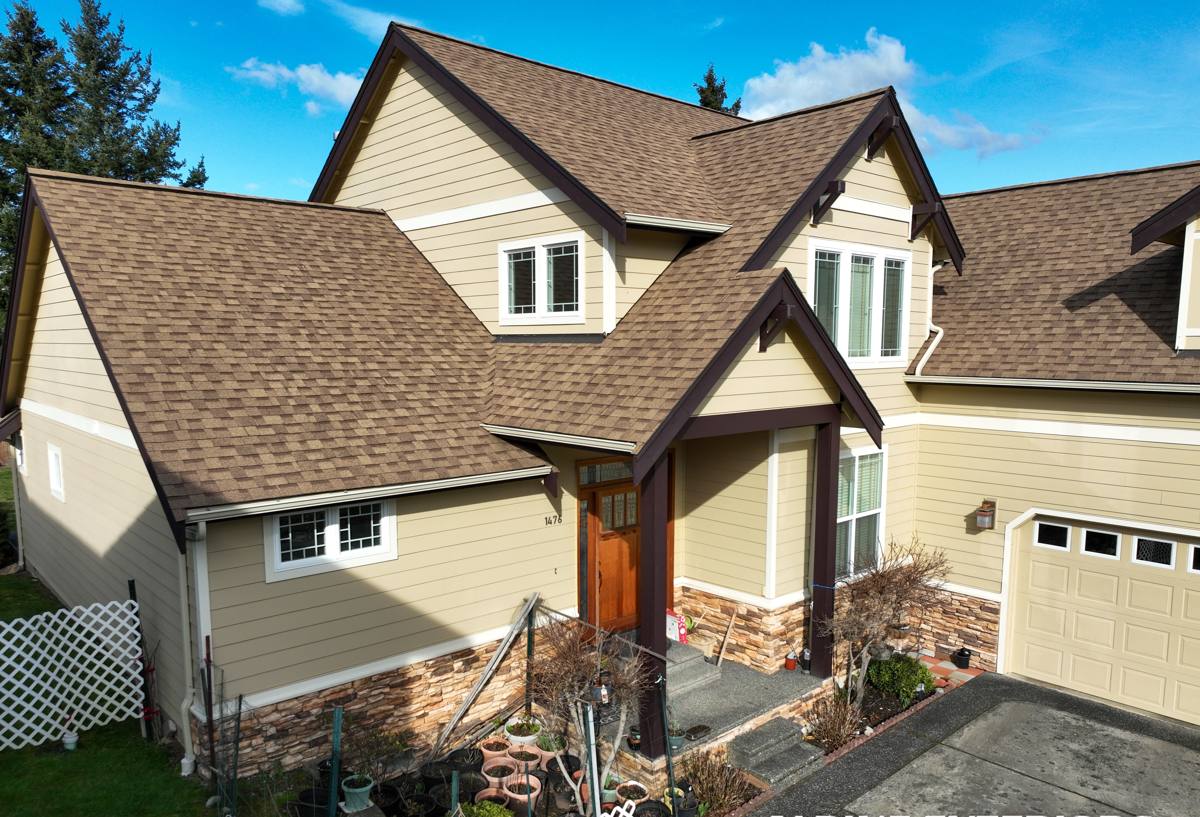
What Marine Exposure Actually Does to a Roof
Corrosion of Fasteners and Flashing
Salt air is hard on anything metal. Nails, flashing, drip edge, and roof vents all corrode faster in a salt-air environment than they do further from the water. Once a fastener starts to rust, it loses holding power, and once flashing starts to pit or thin, it stops shedding water the way it's supposed to. This is a slow process — you won't see it happening — but it's one of the most common reasons a roof in a waterfront-adjacent neighborhood needs attention years before its rated lifespan would suggest.
Wind-Driven Rain
Ordinary rain falls down and mostly runs off. Wind-driven rain gets pushed sideways and even slightly upward under eaves, into valleys, and around penetrations like vent pipes and chimneys. A roofing system that only relies on gravity to keep water out — thin underlayment, minimal flashing, standard nailing patterns — is more likely to develop leaks in a spot like Ship Harbor than in a calmer location.
Moss and Sustained Moisture
Skagit County's long wet season gives moss plenty of time to establish itself, especially on north-facing slopes and shaded sections of roof that stay damp longer after a storm. Moss isn't just cosmetic. As it grows, it holds moisture against the roofing material, works its way under shingle edges, and can lift shingles enough to let water in underneath.
Choosing a Roofing System Built for This Location
There's no single "best" roofing material for every home — the right choice depends on the roof's slope, shade exposure, budget, and how the house looks. What matters is picking a system, and installing it, in a way that accounts for salt air, wind, and moss rather than ignoring them.
| Material | Wind / Wind-Driven Rain Performance | Moss Resistance | Corrosion Considerations |
|---|---|---|---|
| Architectural (dimensional) asphalt shingles | Good, with proper nailing pattern and high wind-rated products | Moderate — benefits from algae-resistant granules and zinc strips | Fasteners and flashing should be corrosion-resistant grade |
| Standard 3-tab shingles | Lower wind rating, less margin in exposed spots | Lower — thinner profile holds less resistance to moss intrusion | Same fastener concerns as architectural shingles |
| Metal roofing (standing seam or panel) | Excellent — sheds wind-driven rain well when detailed correctly | Very good — moss struggles to gain a foothold on a smooth metal surface | Fastener and panel coating quality matters more near salt air |
| Synthetic/composite shingles | Good, varies by product | Good — many are formulated to resist moss and algae growth | Less metal exposure than fastener-heavy systems, but flashing still applies |
Whichever material a homeowner chooses, we treat the fasteners, flashing, and edge metal as separate decisions from the shingle or panel itself. In a location like Ship Harbor, upgrading those components is often a smarter use of budget than upgrading the shingle line alone.
The Roof Deck and Ventilation Matter as Much as the Surface
A new roof is only as good as what's underneath it. Before any new material goes down, the deck needs to be inspected for soft spots, delamination, or rot — issues that are more common on homes with a history of roof leaks or poor attic ventilation. Skipping this step to save time is one of the most common ways a "new roof" ends up with problems within a few years.
Ventilation is the other half of the equation. A roof deck that can't breathe traps moisture in the attic, which speeds up rot from the inside and can contribute to ice or condensation issues in colder months. Balanced intake (soffit) and exhaust (ridge) ventilation keeps temperature and moisture in the attic more even, which protects both the new roofing material and the deck underneath it.
Deck and Ventilation Checklist We Walk Through on Every Job
- Full deck inspection for soft spots, delamination, or water staining once old roofing is removed
- Replacement of any damaged sheathing before new underlayment goes down
- Confirming soffit vents are clear and not blocked by insulation
- Verifying ridge or other exhaust venting matches the home's intake capacity
- Checking for signs of past ice damming or condensation in the attic space
- Confirming penetrations (bath fans, plumbing vents) are properly sealed and flashed, not just caulked
Flashing, Underlayment, and Fasteners for Wind-Driven Rain
This is where a roof either holds up to Ship Harbor's weather or doesn't. We use a fully adhered ice-and-water membrane in vulnerable areas — valleys, eaves, around chimneys and skylights, and roof-to-wall transitions — rather than relying on standard felt alone in those spots. On walls where a roof meets siding, kick-out flashing is installed to direct water into the gutter instead of behind the siding, which is a small detail that prevents a disproportionately large amount of hidden water damage.
Fastener choice and nailing pattern both get adjusted for wind exposure. That means corrosion-resistant nails driven at the pattern and count the manufacturer specifies for high-wind installation, not the minimum. It's a small cost difference upfront and a meaningful difference in how the roof performs during the region's wind-driven storms.
Reducing Moss Before It Starts
You can't eliminate moss risk entirely on a shaded, damp roof, but you can install a system that resists it far longer. Zinc or copper strips near the ridge use natural runoff to inhibit moss growth over time, and choosing a shingle or panel product with built-in algae resistance gives the roof a head start. Beyond installation, keeping gutters and valleys clear of debris and trimming back overhanging branches where possible both reduce the standing moisture that lets moss take hold in the first place.
For homeowners in Ship Harbor specifically, we usually recommend planning a light annual roof check — not a full service call, just a look — since moss and debris buildup tend to show up faster here than in drier parts of Skagit County.
Our New Roof Installation Process
- On-site assessment — we look at the existing roof, deck condition, ventilation, and specific exposure of your home (wind direction, shade, proximity to the water)
- Material and system recommendation — based on your budget, the home's architecture, and what the location actually demands
- Tear-off and deck inspection — old roofing removed, deck checked and repaired as needed before anything new goes down
- Underlayment and flashing — ice-and-water membrane in vulnerable areas, new flashing at all transitions, valleys, and penetrations
- Installation — shingles, panels, or your chosen material installed to manufacturer spec and adjusted nailing/fastening for wind exposure
- Ventilation check — intake and exhaust venting confirmed and corrected if the existing setup is inadequate
- Final walkthrough — cleanup, site inspection, and a plain-language explanation of what was done and why
Why Local, Ship Harbor-Familiar Experience Matters
A roofing crew that mostly works inland doesn't run into corroded fasteners on a five-year-old roof or moss establishing itself within a single wet season the way a crew working Anacortes's shoreline neighborhoods does. That familiarity changes real decisions on the job — which flashing to prioritize, where to add extra underlayment, and which fastener grade is worth the upgrade. It also means we're used to the permitting and inspection process in the City of Anacortes and Skagit County, so there are no surprises partway through the job.
We're not going to tell you a generic roof is unsafe or that another contractor's work is bad — most roofing problems we see here aren't due to bad materials, they're due to a system that wasn't detailed for this specific exposure. Our standard is to detail for it every time, because that's what holds up in Ship Harbor.
What Affects the Cost of a New Roof Here
| Cost Factor | Why It Matters in Ship Harbor |
|---|---|
| Roof size and pitch | Steeper or larger roofs take more material, labor, and safety setup |
| Deck repair needed | Rot or moisture damage found during tear-off adds material and labor |
| Material choice | Metal and premium synthetic products cost more upfront but often need less maintenance in salt air |
| Flashing and underlayment upgrades | Extra membrane and better flashing add cost but reduce wind-driven-rain risk significantly |
| Ventilation corrections | Adding or fixing soffit/ridge venting is easier and cheaper during a full replacement than after |
| Access and site conditions | Steep lots, limited access, or extra height near the water can affect labor time |
We give homeowners a clear, itemized quote so it's obvious what you're paying for and why — no vague lump-sum numbers.
Get a Straightforward Estimate
If your roof is showing granule loss, moss buildup, corroded flashing, or you're just planning ahead before it becomes an emergency, we're happy to take a look. Fill out the form below for a free, no-pressure estimate — we'll walk the roof, explain what we see in plain language, and give you a written quote built for what your home actually needs in Ship Harbor's weather.