 Anacortes Siding
 Roof Repair Built Around Old Town Anacortes Conditions
Old Town Anacortes sits close to the water, under a mature tree canopy, with a mix of older homes and additions built over several decades. That combination creates a specific set of roofing problems that don't show up the same way on a newer, more exposed roof across town. Salt-laden marine air, wind-driven rain off the water, and a moss season that barely takes a break most winters all work on a roof at the same time. A repair here has to account for all three, not just patch the spot where water is currently getting in.
We work on roofs in this neighborhood regularly, which means we're not guessing at how a given slope, valley, or chimney flashing detail tends to fail. That familiarity matters more than it sounds like it should — it's the difference between a repair that holds and one that reopens with the next hard rain off Fidalgo Island.
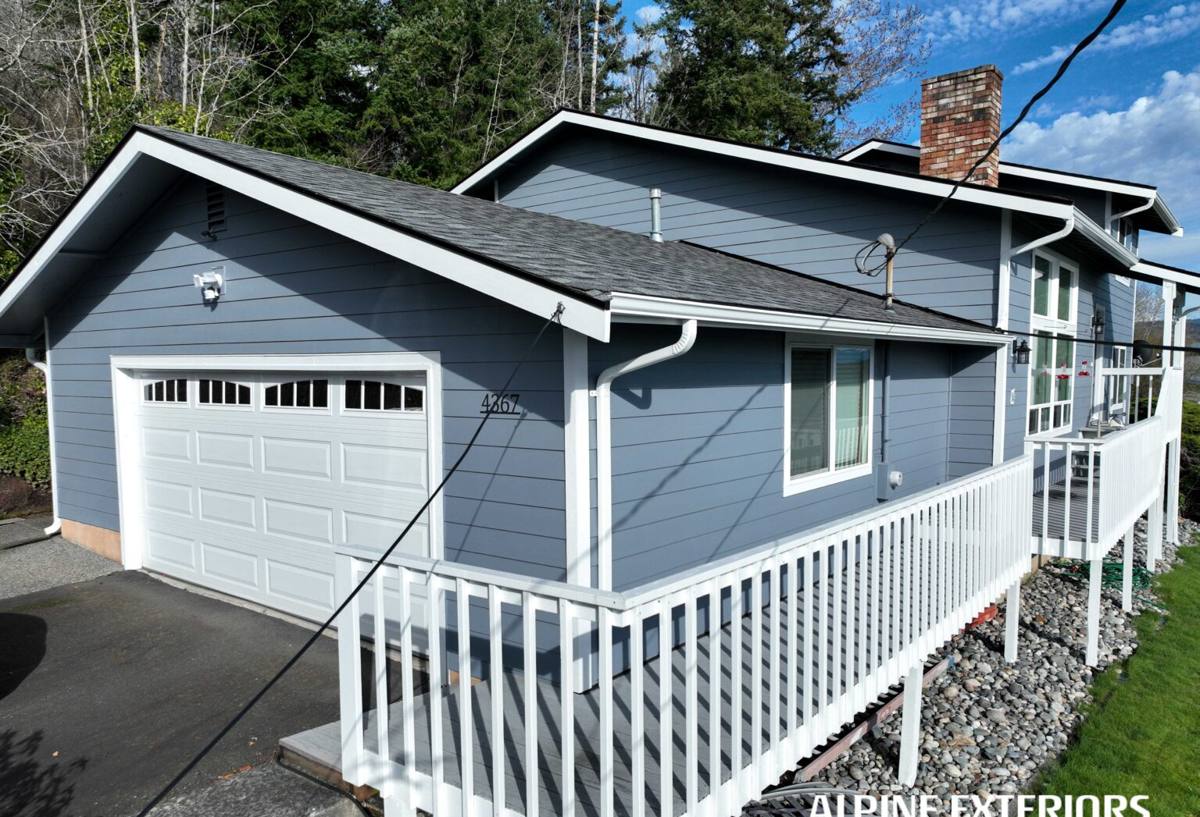
Why This Climate Wears Roofs Differently
Salt Air and Metal Fatigue
Anacortes' location on the water means airborne salt reaches roofing metal — flashing, fasteners, gutter hangers, vent caps — faster than it would on an inland roof of the same age. Salt exposure speeds up corrosion, and corroded flashing is one of the most common sources of hidden leaks we find during inspections, especially around chimneys and where a roof meets a wall.
Driving Rain and Wind-Driven Water
Skagit County winters bring rain that doesn't just fall straight down. Wind off the water pushes it sideways and up under shingle edges, especially on lower-slope sections, at valleys, and around dormers. A repair that only addresses the visible gap without accounting for wind-driven water tends to fail again in the next storm.
Moss Season
Mild, wet winters mean moss and lichen growth on north-facing and shaded slopes for much of the year, not just a few weeks. Moss holds moisture directly against the shingle surface, lifts edges as it grows, and works its way into valleys and gutters where it blocks drainage. Left alone, it turns a small maintenance issue into a repair, and eventually a repair into a replacement.
Signs Your Roof Needs Repair Now
Most roof repairs we handle in Old Town Anacortes start with one or two of these signs. If you're seeing any of them, it's worth having the roof looked at before the next storm system moves through.
- Heavy granule buildup collecting in gutters or at downspout outlets
- Shingle edges curling, cupping, or visibly lifting on one or more slopes
- Moss mats thicker than about an inch, especially on shaded or north-facing sections
- Daylight visible around chimney or vent flashing when viewed from inside the attic
- Water stains on ceilings or walls near chimneys, skylights, or dormers
- Soft or spongy spots felt when walking the roof deck
- Missing, cracked, or torn shingles after a windstorm
- Rusted or discolored streaking below metal flashing or fasteners
What Actually Fails First on Older Neighborhood Roofs
Old Town's housing stock includes a fair number of older homes with more architectural detail than a typical newer build — dormers, chimneys, roof-to-wall intersections, and multiple roof planes meeting at valleys. Those details are exactly where roofs fail first, regardless of age, because every joint and transition is a potential entry point for water.
In our experience, the repair calls in this area break down into a few repeat categories: step flashing that has corroded or was never properly lapped at a chimney or wall, valleys clogged with moss and debris that back water up under the shingles, nail pops from repeated wet-dry cycling, and gutter or roof-edge rot from years of standing moisture. Isolated storm damage — a section of shingles torn loose in high wind — is the other common call, and it's usually the most straightforward to repair cleanly.
Repair or Replace? How We Make the Call
Not every leak means a new roof, and not every "small" repair is actually small once you're up there looking at the decking. We walk through a few factors before recommending either direction, and we'll show you what we find rather than just telling you.
| What We Find | What It Usually Means | Typical Direction |
|---|---|---|
| Single area of storm-torn shingles, deck sound underneath | Localized wind damage | Repair |
| Corroded flashing at one chimney or wall, rest of roof sound | Isolated flashing failure | Repair |
| Moss damage confined to one shaded slope | Localized moisture retention | Repair plus moss treatment |
| Granule loss uniform across the whole roof | Shingles nearing end of service life | Replacement likely, timeline-dependent |
| Multiple soft spots found across different slopes | Widespread deck moisture damage | Replacement |
| Roof age at or past manufacturer's rated life plus active leaks | Materials broadly degraded, not just one weak point | Replacement |
The short version: if the damage is contained and the roof deck underneath is sound, repair is almost always the right call. We'll tell you plainly if we think a repair is a short-term patch on a roof that's better served by planning a replacement in the next year or two, rather than letting you spend money twice.
What a Correct Repair Actually Involves
Getting Back to Sound Material
A repair that just seals over the surface — caulk or roofing cement smeared across a crack or gap — doesn't hold up in this climate. We pull back shingles to expose the affected area, check the decking underneath for soft or rotted wood, and replace anything compromised before closing it back up. Skipping that step is the most common reason a "fixed" leak comes back a season later.
Flashing Done Right
Given how often flashing is the actual point of failure here, we replace it with correctly sized, correctly lapped metal — step flashing at walls, counter-flashing at chimneys, and proper valley metal or ice-and-water membrane where two planes meet. Flashing is installed in layers with the shingles, not caulked on top afterward, so water sheds over each layer the way it's designed to.
Underlayment and Ice-and-Water Shield
In areas prone to wind-driven rain — eaves, valleys, low-slope transitions — we use self-adhering ice-and-water shield underneath the shingles rather than standard felt alone. It's a small material cost difference that makes a real difference in whether wind-driven water actually reaches the deck.
Matching Nailing Patterns and Exposure
Shingles are nailed to the manufacturer's specified pattern and exposure, not just fast enough to close up the section. Underdriven or overdriven nails, or nails placed above the sealant strip, are a quiet cause of future leaks and lifted shingles that won't show up until the next storm.
Materials We Use and Why
For most repair work, we match the existing shingle profile and color as closely as the current product line allows, since patchwork that doesn't match the surrounding roof both looks poor and can behave differently under weather. Where moss has been a recurring problem, we'll talk through algae-resistant shingle options for the repaired section — these carry copper- or zinc-infused granules that slow regrowth, which matters more here than in drier parts of the state.
For flashing, we use metals suited to coastal exposure rather than the cheapest option available, since standard galvanized flashing corrodes faster under salt air than aluminum or better-coated alternatives. We won't recommend a surface-only patch product as a permanent fix — not because any particular product is bad, but because tar-and-patch repairs don't address trapped moisture underneath, and in a wet climate that moisture keeps working at the deck long after the visible leak seems to have stopped.
Our Process, Start to Finish
- Initial call or on-site look: We talk through what you're seeing — a stain, a draft, visible damage — and get a roof and attic inspection scheduled.
- Full inspection: We check the roof surface, flashing points, valleys, and the attic side for moisture or daylight, not just the spot you noticed.
- Written scope: You get a clear explanation of what's actually wrong, what we recommend, and why — repair, targeted replacement of a section, or a conversation about full replacement timing if that's what the roof needs.
- The repair itself: Tear-back to sound material, correct flashing and underlayment, matched shingles, proper nailing.
- Cleanup: Magnet sweep for nails, debris removed, gutters cleared if moss or granules were part of the problem.
- Follow-up: We're reachable if anything about the repair doesn't sit right once you've lived with it through a rain event or two.
Keeping a Repair From Becoming a Repeat Call
A good repair buys you time, but a few maintenance habits keep it from being undone by the same conditions that caused it. Moss control on shaded slopes, keeping gutters and valleys clear of needles and debris, and trimming back branches that keep a section of roof damp longer than the rest all reduce how often you need us back out. If overhanging trees are contributing to persistent moss or debris buildup, that's worth addressing alongside the roof work itself, not after the fact.
Why a Local Old Town Anacortes Crew Is Worth Choosing
Roofing crews that mostly work drier, more exposed areas inland don't always account for how differently salt air and near-constant moss pressure age a roof. Working in this neighborhood regularly means we've already seen how specific slopes here shed water, which flashing details tend to give out first on older homes, and how fast moss comes back on a shaded roof versus a sun-exposed one. That's the kind of judgment that comes from being in Skagit County roofs consistently, not from a one-time visit.
It also means faster response when a storm damages a section of roof and you need someone who can look at it soon, not weeks out. If you're seeing signs of a leak, moss buildup, or storm damage on your Old Town Anacortes home, we're glad to come take a look and give you an honest read on what it needs. The estimate is free, there's no pressure attached to it, and you can use the form below to get started.