 Anacortes Siding
 Why West Anacortes Roofs Age Differently
West Anacortes sits close enough to the water that the air itself works against a roof. Salt-laden marine air speeds up the breakdown of metal fasteners, flashing, and exposed granules, while the near-constant moisture off the Sound keeps roof surfaces damp far longer than homes just a few miles inland in Skagit County. Add in the region's long, wet moss season, and a roof here is under a different kind of stress than a roof in a drier part of the state. Homes closer to the water also tend to catch more wind-driven rain during winter storms, which pushes water into places a roof on a more sheltered lot rarely has to deal with.
None of that means a roof in this part of Anacortes needs to fail early. It means the replacement has to be built for these conditions from the start: the right underlayment, the right ventilation, and fasteners and flashing that won't corrode out from under a shingle that still looks fine on top. A lot of premature roof failure we see isn't the shingle wearing out — it's the details underneath it that were never suited to this climate in the first place.
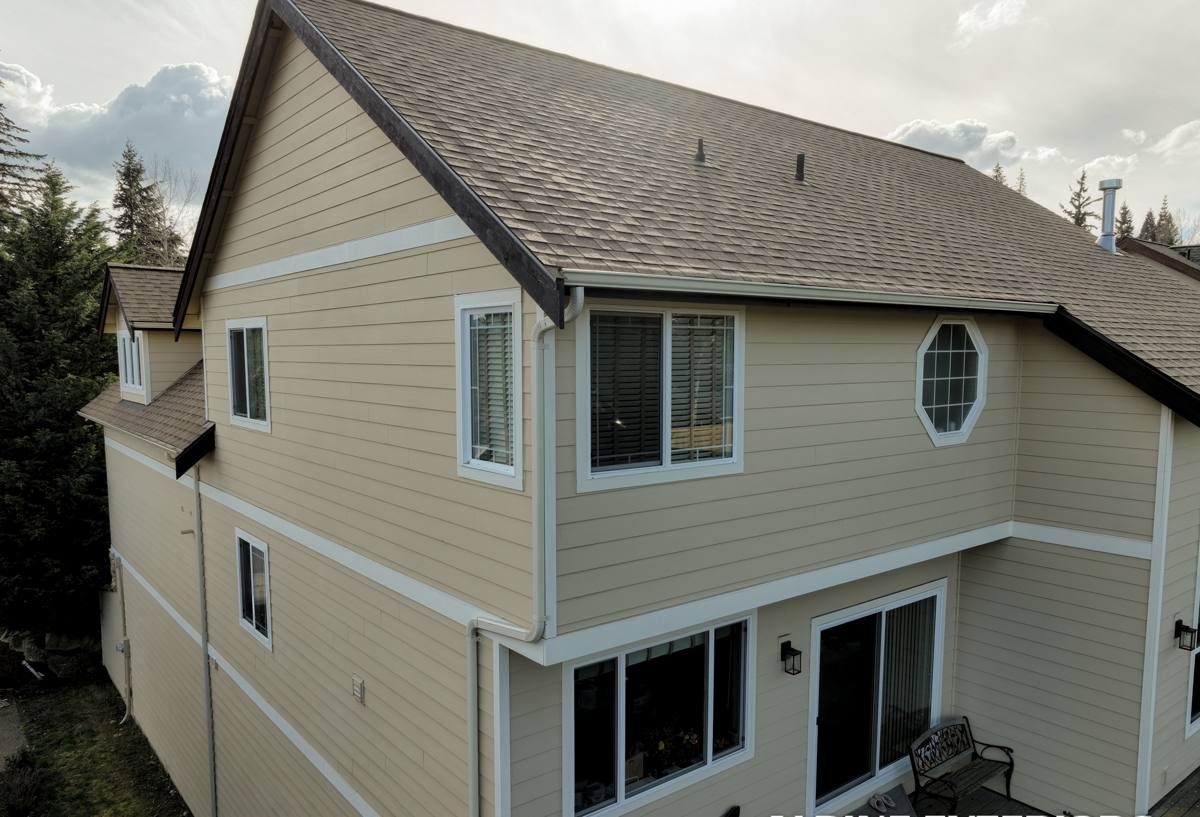
Signs a West Anacortes Roof Is Telling You It's Time
What to look for from the ground
- Moss or dark algae streaking that comes back within a season or two of cleaning
- Shingles that look cupped, curled at the edges, or noticeably darker in patches
- Granules collecting in gutters or at downspout splash points
- Visible sagging along the ridge or in the field of the roof
- Flashing around chimneys, vents, or skylights that looks rusted, lifted, or gapped
What to look for from inside
Staining on ceilings or in the attic, a musty smell after a stretch of rain, daylight showing through the roof deck, or insulation that feels damp are all signs moisture is already getting past the roofing system. In a climate that stays wet as much of the year as ours does, a small leak rarely stays small — it has months of rain to work with before it dries out on its own. Catching these signs early is usually the difference between a straightforward replacement and one that also has to deal with rotted decking or damaged framing.
What a Correct Roof Replacement Actually Involves
A roof replacement is more than swapping old shingles for new ones. Done right, on a home exposed to driving rain and salt air, it's a full system, and skipping any one layer of it is usually where early failures start:
Tear-off and deck inspection
We remove the old roofing down to the deck rather than layering over it. That's the only way to actually see what's underneath — soft or delaminated sheathing, rusted old fasteners, or moisture damage that's been hiding under intact-looking shingles. Any compromised decking gets replaced before anything new goes down.
Underlayment and water protection
In an area that gets sustained, driving rain off the water, underlayment quality matters more than it does in drier climates. We use synthetic underlayment across the field and add ice-and-water shield style membrane at vulnerable points — eaves, valleys, and around penetrations — where wind-driven rain is most likely to find a way in.
Ventilation
Proper intake and exhaust ventilation keeps moist air from condensing inside the attic, which matters year-round here, not just in winter. A roof can be installed perfectly on top and still fail early from the inside if the attic can't breathe.
Flashing and fasteners
We use corrosion-resistant flashing and fasteners appropriate for salt-air exposure, particularly on the sides of the home facing the water. This is one of the most common places we see older roofs fail early in this neighborhood — not the shingle, but the metal underneath it.
Material installation
Correct nailing patterns, proper overlap, and manufacturer-spec installation aren't optional extras — they're what the material's warranty actually depends on, and what determines whether the roof performs the way it's supposed to in wind and heavy rain.
Choosing the Right Roofing Material for This Climate
There's no single "best" roofing material for every home, but some hold up better than others against salt air, sustained moisture, and moss. Here's how the common options compare for a home in this part of Anacortes:
| Material | Salt Air & Moisture Resistance | Moss Resistance & Upkeep | Typical Lifespan | Relative Cost |
|---|---|---|---|---|
| Standard 3-tab asphalt shingle | Fair — granule loss accelerates near the water | Needs regular cleaning; no built-in moss resistance | 15–20 years | Lowest |
| Architectural (laminate) asphalt shingle | Good — thicker profile sheds water better | Better than 3-tab; algae-resistant options available | 25–30 years | Moderate |
| Algae-resistant / copper-granule shingle | Good | Best moss and algae resistance among asphalt options | 25–30 years | Moderate to higher |
| Standing seam metal | Excellent when properly coated and fastened | Sheds moss and debris well due to smooth, steep-shedding surface | 40+ years | Highest |
We'll walk through these trade-offs during your estimate based on your roof's pitch, sun and shade exposure, and how much upkeep you actually want to do. A steeper, more shaded roof under fir trees benefits more from moss-resistant materials than a sunny, exposed roof does — there's no reason to pay for a feature your roof doesn't need. For homes with a clear water-facing exposure, we'll also talk through fastener and flashing upgrades regardless of which shingle or panel you choose, since that's often where salt air does the most damage first.
Ventilation and Moisture: The Part You Don't See
A roof replacement is a good time to fix ventilation problems that have been quietly working against the roof for years. Balanced intake at the soffits and exhaust at the ridge keeps the attic close to outdoor temperature and humidity, which reduces condensation, prevents ice-related issues in colder snaps, and helps the roofing material and decking last as long as they're rated to. If your current attic has ever felt damp, musty, or noticeably warmer than outside, that's usually a ventilation issue, not a roofing material issue — and it's worth fixing while the roof is already open rather than as a separate project later.
Our Process, From Estimate to Cleanup
1. On-site inspection
We look at the roof, the attic, and the specific exposure of your home — which sides face prevailing wind and rain, how much shade and moss buildup you're dealing with, and the condition of the decking where we can assess it.
2. Honest estimate
You get a clear, written estimate that spells out materials, scope, and price — no vague allowances that turn into surprise add-ons later.
3. Scheduling around the weather
We plan roof replacements around Skagit County's rain patterns as best we can, and we don't leave a roof partially open and exposed if weather moves in faster than expected.
4. Tear-off, repair, and installation
Full removal, deck inspection and repair as needed, new underlayment and flashing, then correct installation of your chosen material.
5. Cleanup and walkthrough
We clear the site of old materials and debris, including a magnetic sweep for stray nails, and walk the finished roof with you before we consider the job done.
Why Hire a Crew That Already Works in West Anacortes
A roofing crew that regularly works this part of Anacortes already understands how the water, wind exposure, and moss season here differ from a job five or ten miles inland. That shows up in small but real ways: knowing which sides of a home in this area tend to take the worst weather, not underestimating how fast moss returns without the right materials, and specifying flashing and fasteners that are actually built for salt air instead of standard hardware that corrodes early.
It also means a crew that's familiar with local permitting and inspection expectations for Skagit County, so the job moves without avoidable delays. And because we're not new to this stretch of Anacortes, we're not guessing at how a roof here should be built — we're applying what we've already seen hold up, and what hasn't, on homes with the same exposure as yours.
Maintaining Your New Roof
A correctly installed roof still benefits from basic upkeep, especially in a climate that stays wet as much of the year as ours does. A little attention goes a long way toward hitting the full lifespan of the material:
- Clear gutters and downspouts at least twice a year so water isn't backing up under the roof edge
- Have moss or algae growth treated promptly rather than letting it establish and spread
- Trim back overhanging branches to reduce shade, debris, and abrasion on the roof surface
- After major windstorms, do a visual check (or have us do one) for lifted shingles or displaced flashing
- Keep attic vents clear of insulation and debris so airflow isn't blocked
- Schedule a roof check every couple of years even if nothing looks obviously wrong
What Affects the Cost of a West Anacortes Roof Replacement
Every roof is different, but a few factors consistently move the price up or down: the size and pitch of the roof, how many layers of old roofing need to come off, the condition of the decking underneath, the complexity of the roofline (valleys, dormers, chimneys, skylights), and the material you choose. A simple, single-layer asphalt shingle roof on a straightforward roofline will cost less than a steep, cut-up roofline needing deck repair and a premium material. Homes with heavier moss buildup or visible granule loss often need more deck repair once the old roofing comes off, which is something we flag honestly during the inspection rather than after the tear-off has already started. We'll break all of this down clearly in your estimate rather than giving you a single number with no explanation behind it.
If your roof is showing its age, or you just want an honest read on how many years it has left, we're glad to come take a look. Reach out for a free, no-pressure estimate using the form below — we'll give you a straight answer about what your roof actually needs.