 Anacortes Siding
 Metal Roofing Built for Ship Harbor's Marine Climate
Ship Harbor sits right where Anacortes meets the water, and that location comes with a roofing problem most inland Skagit County homes never have to think about: constant exposure to salt-laden marine air, driving rain off the water, and long stretches of shade and moisture that keep moss thriving nearly year-round. A roof here isn't just shedding water — it's fighting corrosion, biological growth, and wind-driven rain intrusion at the same time. Metal roofing, installed correctly, handles all three better than almost any other roofing material available. Installed incorrectly, or with the wrong fasteners and flashing details, it can fail faster in this environment than a standard asphalt roof would.
This page is about what a metal roof needs to actually perform on a Ship Harbor home — not a generic rundown of metal roofing everywhere. The details that matter here are specific to living on Fidalgo Island, a few hundred yards from saltwater, in a climate that swings between long dry summers and wet, mossy winters.
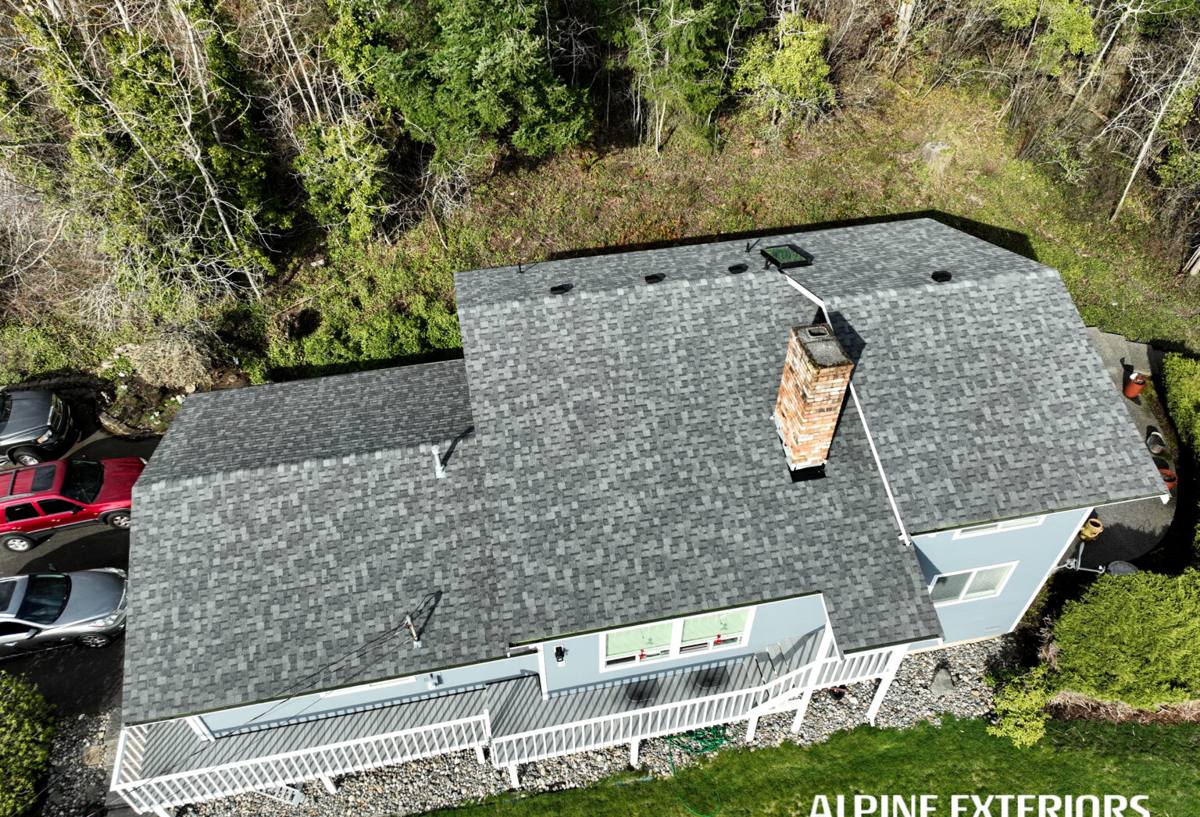
What the Local Climate Actually Does to a Roof
Before talking about the roofing system itself, it's worth understanding what it's up against. Three things define roofing conditions near the water in Anacortes:
Salt Air and Corrosion
Airborne salt from Rosario Strait and the surrounding channels settles on every exterior surface, including roofing metal, fasteners, and flashing. Bare or low-grade steel components corrode faster here than they would even a mile or two inland. This is the single biggest reason product selection and fastener choice matter more in Ship Harbor than in most parts of Skagit County.
Driving, Wind-Driven Rain
Waterfront and near-waterfront lots catch wind off the water that pushes rain sideways into roof edges, valleys, and penetrations. A roof that would shed water fine on a calm, inland lot can leak here if flashing details, underlayment laps, and fastener seals aren't done to a higher standard.
Extended Moss and Moisture Season
Shade from mature trees, marine humidity, and our long wet season combine to make moss and algae growth an almost year-round concern rather than a seasonal one. Moss holds moisture against roofing materials and, on the wrong surface, works its way under laps and fasteners over time.
None of these conditions are unique to any one house — they affect the whole neighborhood similarly, which is exactly why the roofing approach here should be consistent and deliberate rather than whatever happens to be the cheapest option that week.
Why Metal Roofing Is a Strong Fit for This Location
Metal roofing isn't the right answer for every home or every budget, but for Ship Harbor's conditions specifically, it has real advantages:
- Moss resistance: Metal doesn't give moss and algae the porous surface they need to root into, so growth stays on the surface where it can be rinsed off rather than embedding into the material.
- Steep water shed: Smooth panel surfaces move water off the roof quickly, which matters when wind is pushing rain toward laps and seams.
- Long service life when detailed correctly: A properly installed, correctly specified metal roof can outlast several cycles of asphalt shingles, which matters when re-roofing a waterfront-adjacent home is neither cheap nor something you want to repeat often.
- Wind performance: Panel systems with the right fastening pattern hold up well to the gusts that come off the water, which is a real consideration on exposed Ship Harbor lots.
The trade-off is that metal roofing is less forgiving of shortcuts. Every fastener, flashing detail, and panel lap either seals correctly the first time or becomes a slow leak years down the road. That's the whole reason installation quality matters more here than the brand name on the panel.
Metal Roofing Systems We Install
Not all metal roofing is the same product wearing different colors. The systems differ in how they're fastened, how they handle expansion and contraction, and how well they hold up to salt exposure over time.
| System | How It's Fastened | Best Fit For | Salt-Air Considerations |
|---|---|---|---|
| Standing seam | Concealed clips, no exposed fasteners on the field | Waterfront and near-waterfront homes, long-term ownership | Best corrosion resistance since fasteners aren't exposed to weather |
| Exposed-fastener panel | Screws through the panel face into the deck | Budget-conscious projects, outbuildings, accessory structures | Fastener gaskets degrade faster in salt air and need earlier re-checks |
| Stone-coated steel | Interlocking panels, concealed fasteners | Homeowners who want a shingle or shake look with metal's durability | Coating adds a protective layer but seams still need careful detailing |
For homes closest to the water, we generally steer clients toward standing seam because it has no field-exposed fasteners for salt air to attack. Exposed-fastener panel systems can still be a sound, cost-effective choice further from direct wind exposure, but we're upfront that the gaskets on those fasteners are the first thing to watch as the roof ages.
What a Correct Installation Actually Involves
The panels themselves get most of the attention, but the parts of a metal roof that determine whether it actually performs in this climate are mostly things you won't see once the job is done.
Deck Inspection and Prep
We check the existing roof deck for soft spots, rot, or moisture damage before anything goes down — this is especially important on older Ship Harbor homes where long-term moisture exposure may have gone unnoticed under old roofing.
Underlayment
A high-temperature synthetic or self-adhered underlayment goes down as the water barrier beneath the panels. In a wind-driven rain environment, underlayment laps and fastening patterns matter as much as the panels above them — this layer is what protects the deck if wind ever forces water past a seam.
Fastening and Clip Spacing
Fastener type, coating, and spacing are set based on wind exposure and panel system — not a one-size-fits-all pattern. Exposed lots near the water get tighter clip spacing and corrosion-resistant fasteners rated for coastal use.
Flashing at Valleys, Penetrations, and Edges
Valleys, chimneys, vents, and roof-to-wall transitions are where the overwhelming majority of roof leaks originate, metal or otherwise. Every one of these gets custom-formed flashing and proper layering with the underlayment, not generic trim pieces caulked into place.
Ventilation
Proper ridge and intake ventilation keeps moisture from condensing on the underside of the roof deck, which matters in our humid marine climate just as much as keeping rain out from above.
Our Process, Start to Finish
- On-site assessment: We walk the roof, check the deck condition, note wind exposure and drainage patterns specific to the lot, and measure for an accurate material estimate.
- System recommendation: Based on exposure, budget, and the home's style, we recommend a panel system and walk through the honest trade-offs of each option — no upselling toward whatever has the best margin.
- Written estimate: A clear scope of work and pricing before anything is scheduled, so there are no surprises mid-project.
- Tear-off and deck repair: Old roofing comes off, the deck gets inspected, and any rot or soft sheathing is repaired before underlayment goes down.
- Underlayment and flashing installation: The water-management layer goes in first and gets inspected before panels are installed over it.
- Panel installation: Panels are set, fastened, and seamed to the specification appropriate for the site's wind and salt exposure.
- Final walkthrough and cleanup: We walk the finished roof with the homeowner, check every penetration and edge, and make sure the site is left clean — magnet-swept for stray fasteners included.
Cost Factors for a Ship Harbor Metal Roof
Every roof is priced from its own measurements and conditions, but the factors that move the number up or down are consistent:
| Factor | Why It Matters |
|---|---|
| Panel system chosen | Standing seam costs more upfront than exposed-fastener panel but needs less long-term attention |
| Roof complexity | More valleys, dormers, and penetrations mean more custom flashing labor |
| Deck condition | Rot or soft sheathing found during tear-off adds repair cost before roofing can proceed |
| Wind exposure of the lot | Homes with direct water exposure may need tighter fastening patterns and upgraded fastener coatings |
| Existing roof removal | Layers of old roofing to strip off add labor and disposal cost |
We'd rather give you a real range once we've seen the roof than a number over the phone that doesn't hold up once tear-off starts. That's what the free estimate below is for.
Maintenance in a Salt-Air, Moss-Prone Climate
Metal roofing needs less maintenance than shingles, but "less" isn't "none" — especially this close to the water. A short annual check catches problems while they're still cheap to fix.
- Rinse debris and organic buildup out of valleys and gutters, particularly after fall leaf drop
- Check exposed fasteners (if that system was used) for gasket wear or early rust
- Look at flashing around chimneys, vents, and skylights for gaps or lifted edges
- Watch shaded, north-facing roof sections for moss or algae starting to establish
- Confirm gutters and downspouts are draining freely, especially before the wet season ramps up
Most of this can be a five-minute visual check from the ground with binoculars. If something looks off, that's the time to call — small flashing or fastener issues are quick fixes; ignored ones become deck repairs.
Why Hiring a Crew That Already Works Ship Harbor Matters
Roofing crews that mostly work inland don't run into salt-air fastener corrosion or wind-driven rain at a valley the way a crew working Ship Harbor and the rest of Anacortes' waterfront neighborhoods does regularly. That familiarity shows up in small decisions — which fastener coating to spec, how tight to run clip spacing on an exposed gable end, where to add extra flashing on a roof-to-wall transition facing the water. None of those decisions show up on a spec sheet; they come from having repaired the roofs that skipped them.
We're a Skagit County crew that works Anacortes and the surrounding communities directly, not a regional outfit dispatching whoever's available. That means the person quoting your roof is familiar with the same wind patterns, moss conditions, and salt exposure your neighbors' roofs deal with — and prices and details the job accordingly, rather than treating every roof in the county the same.
If you're weighing a metal roof for a Ship Harbor home, we're happy to take a look and give you a straight answer on what it needs and what it'll cost — no pressure, no obligation. Use the form below to request a free estimate.