 Anacortes Siding
 Siding Built for West Anacortes Conditions
West Anacortes sits close enough to the water that salt air is part of daily life, not an occasional nuisance. Combine that with the driving rain that rolls in off Rosario Strait and the long, damp moss season that stretches across much of the year in Skagit County, and you've got one of the tougher exterior environments in Washington for a home's siding. Whatever material goes on the walls here has to handle constant moisture exposure, wind-driven rain that gets forced into every lap and seam, and a near-permanent film of dampness that feeds algae and moss growth on anything that holds water.
We install James Hardie fiber cement siding exclusively, and West Anacortes is exactly the kind of location that shows why. This page walks through what the local climate actually does to siding, what a correct installation looks like here, and how our process is built around getting it right the first time.
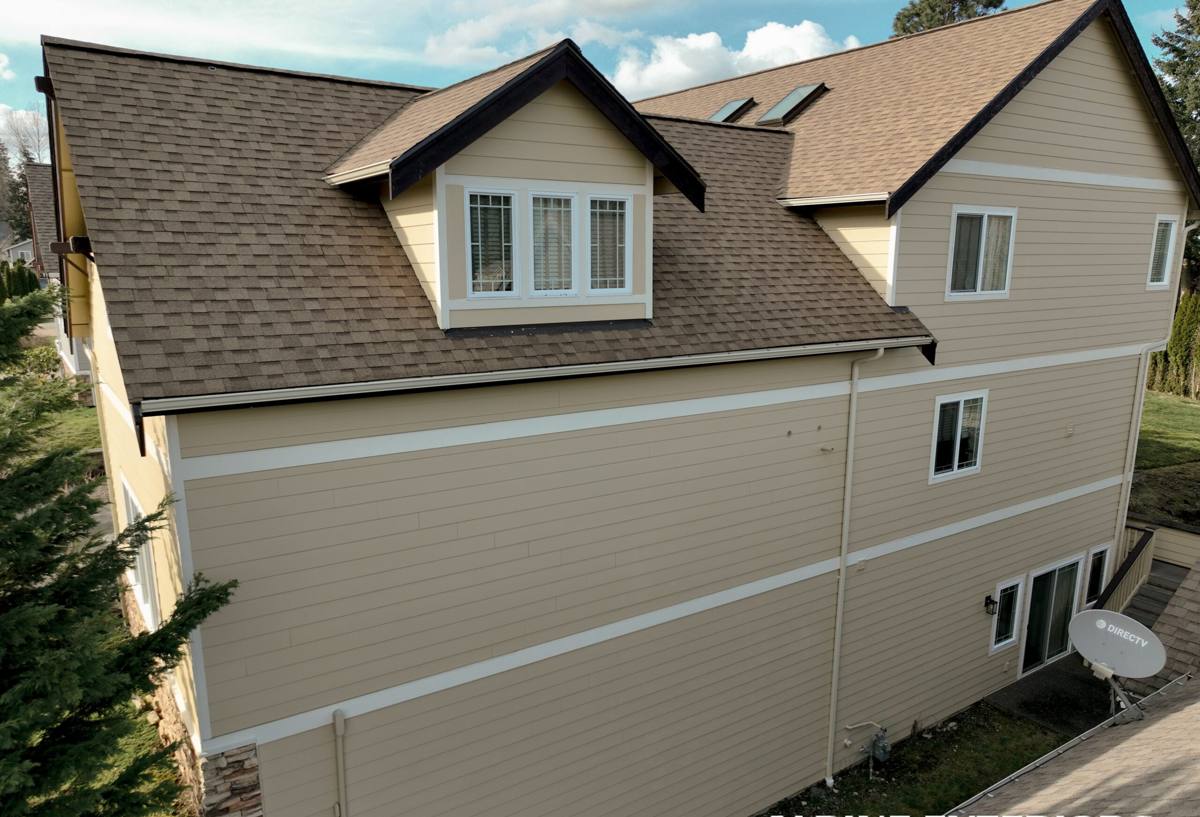
What Salt Air and Coastal Moisture Do to a Home's Exterior
Salt air isn't just a smell — it's airborne moisture carrying dissolved salts that settle on every exterior surface and accelerate corrosion and material breakdown. On siding specifically, that means:
- Fasteners and metal trim corrode faster than they would further inland, so fastener quality and placement matter more here
- Painted and coated surfaces take more UV and salt exposure, which is why factory-cured finishes hold up better than field-applied paint over time
- Wood-based products absorb moisture more readily near the water, which shortens the window before rot sets in at joints and end cuts
- Caulking and sealant joints break down faster under repeated wet-dry cycling, so those details need to be done right and checked periodically
None of this means a home near the water is doomed to constant repairs — it means the material and the installation details need to be matched to the environment instead of treated like a generic siding job.
Driving Rain and Wind-Driven Moisture
Anacortes gets weather systems that push rain sideways, not just down. That matters for siding because wind-driven rain gets forced up under laps and into gaps that would never see water in a calmer climate. A siding system with tight, consistent overlaps and properly flashed penetrations sheds that water instead of trapping it against the wall assembly.
Moss and Algae Growth
The extended damp season in western Skagit County is ideal for moss and algae to take hold on any surface that stays wet longer than it should — north-facing walls, areas shaded by trees, and spots where drainage is poor. Growth on siding isn't just cosmetic; moss and algae hold moisture against the surface longer, which speeds up whatever deterioration process the underlying material is prone to.
Why We Standardized on James Hardie for This Climate
We don't install vinyl, LP SmartSide, primed wood, cedar, or other fiber cement brands. That's a deliberate standard, not a lack of options. In a coastal, high-moisture climate like West Anacortes, the material differences show up faster and matter more:
| Factor | Why It Matters in West Anacortes |
|---|---|
| Non-combustible core | Fiber cement doesn't feed a fire the way wood-based products can — a real factor given regional wildfire seasons and insurance considerations |
| Moisture resistance | Engineered fiber cement resists swelling, warping, and rot in ways that matter directly in a climate with sustained dampness |
| Factory-applied finish | ColorPlus finish is baked on under controlled conditions, which holds up to UV and salt exposure better than field-applied paint |
| Climate-engineered product lines | HZ5 formulations are built specifically for wetter, colder regions like the Pacific Northwest |
| Warranty structure | A strong, transferable manufacturer warranty backed by decades of real-world performance data |
We're not claiming other products can't work anywhere — we're saying that for the specific combination of salt air, driving rain, and moss exposure that West Anacortes homes deal with, Hardie's engineered fiber cement gives homeowners the best long-term outcome for the investment, and it's the only material we're willing to put our name behind.
What a Correct Siding Installation Involves Here
The material is only half the equation. A James Hardie installation done to spec in a coastal Skagit County climate needs a handful of details that generic installation guides gloss over:
Water Management Behind the Siding
A weather-resistant barrier and properly integrated drainage plane behind the siding give any moisture that does get past the surface a way out instead of trapping it against the sheathing. This is arguably more important in West Anacortes than in drier parts of the state, because the assumption has to be that water will find its way in eventually.
Flashing at Every Penetration
Windows, doors, vents, hose bibs, and any other wall penetration are the places where wind-driven rain finds its way in. Correct flashing — installed in the right order relative to the water-resistive barrier and siding — is non-negotiable in this climate.
Fastener Selection and Placement
Corrosion-resistant fasteners, installed per manufacturer specification (not overdriven, properly spaced, into solid backing), keep salt-air corrosion from becoming a long-term failure point.
Proper Clearances
Hardie siding needs minimum clearance from grade, roofing, decks, and patios so water doesn't wick up into the bottom edge of the boards. This detail gets skipped more often than it should, and it's one of the most common causes of moisture problems at the base of a wall.
Caulking and Joint Treatment
Butt joints, trim intersections, and penetrations need the right sealant applied correctly — not as an afterthought, but as part of the water management plan for the whole wall.
Our Process for West Anacortes Homes
- On-site assessment — we look at the home's exposure (how close to the water, prevailing wind and rain direction, shaded or damp areas prone to moss) before recommending a product line or approach
- Tear-off and inspection — removing the existing siding lets us check the sheathing and framing underneath for hidden moisture damage before anything new goes on
- Water-resistive barrier and flashing — installed and integrated correctly at every penetration, following manufacturer and code requirements
- Hardie board installation — HZ5 product line, installed to manufacturer spec for fastening, clearance, and joint treatment
- Trim, caulking, and final detailing — the finishing details that determine how well the whole system sheds water over the long run
- Final walkthrough — reviewing the completed work with the homeowner before we consider the job done
Why a Local Crew Matters for This Job
Siding installation isn't a one-size-fits-all trade. A crew that regularly works West Anacortes and the surrounding Skagit County coastline has already seen how salt exposure, wind direction, and moss patterns play out on real homes in this specific area — which siding orientations take the worst weather, where drainage tends to be a problem, and what details get overlooked by installers who aren't used to coastal conditions. That local experience shows up in the quality of the flashing details, the fastener choices, and the overall judgment calls that a spec sheet alone doesn't cover.
It also means faster response for warranty questions, follow-up service, or simply someone who already knows the neighborhood's building patterns when you call.
Signs Your Current Siding Is Struggling With the Climate
- Persistent moss or algae staining that comes back shortly after cleaning
- Soft spots, bubbling, or visible warping, especially near the ground or roofline
- Paint that's peeling, chalking, or needs repainting far more often than it should
- Gaps opening up at seams, trim, or corner boards
- Visible fastener corrosion or staining running down from nail heads
- Musty smell or moisture signs on interior walls that back up to exterior siding
Any of these is worth a closer look before it turns into a bigger repair. Even well-built siding systems eventually reach the end of their service life, and catching it early keeps the project a straightforward re-side instead of a structural repair.
What Affects Cost for a West Anacortes Siding Project
| Factor | Why It Changes the Estimate |
|---|---|
| Home size and wall complexity | More square footage, corners, and architectural detail means more material and labor |
| Existing siding removal | Tear-off and disposal of the old material adds time and cost versus new construction |
| Sheathing condition | Hidden moisture or rot damage found during tear-off may need repair before new siding goes on |
| Product line and profile | Lap width, trim style, and finish selections vary in material cost |
| Site access | Tight lots, second-story work, or limited staging space affect labor time |
We provide detailed, itemized estimates so homeowners can see exactly what's driving the number rather than a single lump figure.
If you're in West Anacortes and dealing with siding that's showing its age against the salt air, rain, and moss this area is known for, we're happy to take a look and walk you through what we'd recommend. Reach out for a free, no-pressure estimate using the form below.