 Anacortes Siding
 Ship Harbor's Weather Is Harder on Siding Than Most of Anacortes Realizes
Ship Harbor sits close to the water on the west side of Fidalgo Island, near the ferry terminal, which means homes here take a different kind of beating than houses tucked further inland in Skagit County. Wind comes off the water with real force, driving rain sideways into wall assemblies that were never designed to shed water horizontally. Salt-laden air settles on siding, trim, and fasteners day after day, and the tree cover common to this part of Anacortes keeps roofs and north-facing walls shaded and damp long after a storm has passed. That combination — salt, wind-driven moisture, and shade — is exactly the recipe that produces moss, algae streaking, and slow water intrusion faster than almost anywhere else in the county.
None of that means Ship Harbor homes are doomed to constant repair. It means the repairs need to account for why the damage happened in the first place, not just patch over what's visible. A lot of siding repair work in this neighborhood fails a second time because the crew fixed the symptom and left the underlying moisture path untouched.
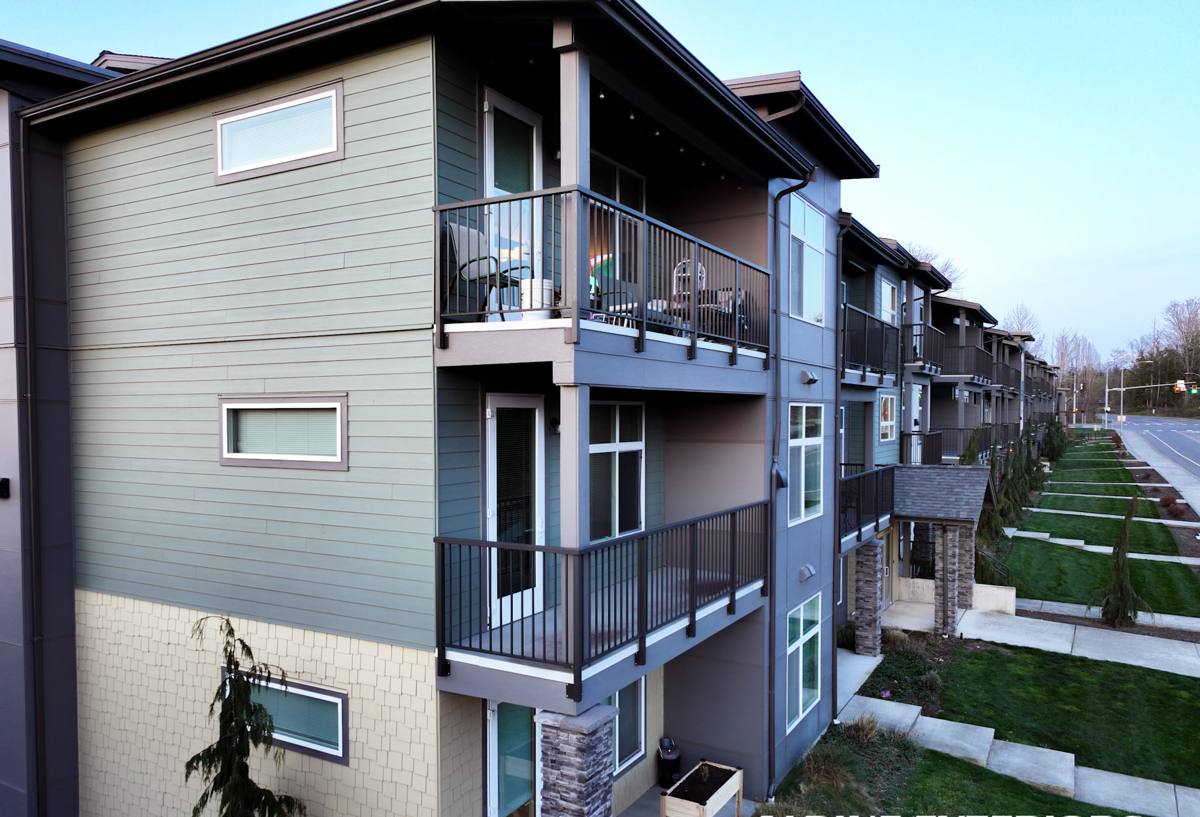
What "Siding Repair" Actually Covers
Siding repair is a broader category than most homeowners expect. It ranges from cosmetic fixes — a cracked panel, a chipped corner, caulk that's pulled away from a trim joint — to structural moisture repair, where water has been getting behind the siding long enough to affect the sheathing or framing underneath. The right approach depends entirely on which one you're actually dealing with, and that's not always obvious from the outside.
Cosmetic Repair
Cracked or impact-damaged panels, failed caulking, loose trim, and surface staining fall into this category. These fixes are straightforward once the panel or trim piece is properly matched and the flashing details around it are done correctly — which is where a lot of quick patch jobs go wrong.
Moisture and Structural Repair
Soft spots, bulging panels, staining that keeps returning after cleaning, or a musty smell near an exterior wall usually point to water that's found its way behind the siding. This kind of repair means opening up the wall assembly, finding the actual entry point, correcting it, and then replacing whatever's compromised — not just capping it with new siding and hoping.
Common Failure Points We See on Ship Harbor Homes
Every coastal neighborhood in Skagit County has its own failure pattern, and Ship Harbor's is fairly consistent from house to house:
- Butt joints and corner trim: caulk here takes the most direct hit from driving rain and is usually the first thing to fail.
- North and west-facing walls: these stay wet longest after storms and grow moss and algae well before the rest of the house shows it.
- Fasteners: in salt air, exposed or improperly countersunk nail heads corrode faster than inland installations, leaving rust streaks and eventually a loose panel.
- Low clearance areas: siding installed too close to grade, decks, or roof lines holds moisture against the material far longer than it should.
- Old caulk-and-paint patch jobs: a common shortcut on older repairs that buys a season or two before the underlying gap reopens.
Signs Your Siding Needs Repair — Not Just a Cleaning
A lot of what looks like a maintenance issue is actually an early repair need. Here's what should move siding repair up your list rather than a simple wash:
- Panels that flex, feel soft, or have any spring to them when pressed
- Staining or discoloration that returns within weeks of being cleaned
- Visible gaps at butt joints, corners, or window and door trim
- Paint or ColorPlus finish that's bubbling, peeling, or lifting in one specific spot rather than evenly across the wall
- Any musty smell near an exterior wall, especially after a stretch of wind-driven rain
- Moss or algae concentrated in one area of the house rather than spread evenly, which often signals a moisture source, not just shade
What a Correct Repair Job Actually Involves
A repair that holds up through another Skagit County winter starts with figuring out why the original section failed — not just replacing what's visibly damaged. That means checking the flashing above windows and doors, confirming the water-resistive barrier behind the siding is intact, and tracing any staining back to its actual source before a single new panel goes up.
Once the cause is identified, the fix itself needs to match the existing siding in profile, exposure, and finish so the repair doesn't stand out as an obvious patch — and needs to be installed with the same fastening and clearance standards the product was engineered for. A repair that ignores manufacturer clearance and fastening specs is just a shorter-lived version of the original problem.
Why We Repair With — and Only Install — James Hardie Fiber Cement
Our company installs and repairs with James Hardie fiber cement exclusively. We don't patch damaged siding with vinyl, LP SmartSide, cedar, or primed wood, even when it would be a faster or cheaper fix in the moment. In an environment like Ship Harbor, that standard matters more than in a drier inland neighborhood.
Wood-based products, including engineered wood siding, depend on an intact factory coating to resist moisture, and once that coating is compromised at a cut edge or fastener hole, ongoing salt air and rain exposure can shorten their service life. Vinyl handles moisture well on its own but can warp under sustained heat and doesn't offer the impact resistance or paintable, factory-finished surface that fiber cement does. These aren't defects in those products — they're honest trade-offs, and they're the reason we don't put them on homes we work on.
James Hardie fiber cement is non-combustible, dimensionally stable in wet climates, and comes with a factory-applied ColorPlus finish backed by a real warranty. Its HZ5 product line is engineered specifically for climates like ours, with freeze-thaw cycling and sustained moisture exposure in mind. When we repair a Ship Harbor home, matching into existing Hardie siding — or recommending a transition to it during a larger repair — keeps the whole wall system performing the same way, rather than mixing materials that age and move differently.
How Hardie Fiber Cement Compares on the Trade-offs That Matter Here
| Factor | Vinyl Siding | Wood-Based Siding | James Hardie Fiber Cement |
|---|---|---|---|
| Salt air / moisture resistance | Good, but can warp under heat cycling | Depends heavily on coating integrity | Engineered for wet, coastal climates (HZ5) |
| Fire resistance | Melts under direct heat | Combustible | Non-combustible |
| Finish durability | Color molded in, can fade | Needs repainting on a cycle | Factory ColorPlus finish, warrantied |
| Repair matching | Colors can be hard to match after fading | New wood weathers differently than old | Consistent profile and finish across repairs |
Repair vs. Replacement: How We Help You Decide
Not every siding problem on a Ship Harbor home needs a full re-side, and not every damaged section can be responsibly patched. The honest answer depends on how much of the wall is affected and how long the underlying issue has been active.
| Situation | Repair Usually Makes Sense | Replacement Is Usually the Better Call |
|---|---|---|
| Damage extent | Isolated to one or two panels or a single wall section | Recurring across multiple walls or elevations |
| Cause | Impact damage, a single failed caulk joint, isolated flashing gap | Long-term moisture intrusion affecting sheathing |
| Siding age | Newer installation with a clear, isolated cause | Older siding nearing the end of its service life |
| Material match | Existing Hardie profile and color still available or closely matchable | Discontinued profile or heavily faded finish that won't blend |
We'll always tell you plainly which category your situation falls into, including when a full re-side is genuinely the more cost-effective path over the next several years rather than repeated repairs.
How We Handle a Ship Harbor Repair Job
- Inspection first. We look at the damaged area and the wall assembly around it, not just the panel that's visibly cracked or stained.
- Find the cause. Flashing, caulk joints, clearance issues, and the water-resistive barrier get checked before we quote a fix.
- Honest scope and price. You get a clear explanation of what needs to happen and why, in plain terms, before any work starts.
- Matched materials. We source Hardie panels and trim that match your existing profile, exposure, and ColorPlus finish as closely as possible.
- Correct install. Repairs are fastened, flashed, and cleared to Hardie's specifications — the same standard we'd use on a full install.
- Cleanup and walkthrough. We leave the site clean and walk you through what was done and what to watch for going forward.
Why a Crew That Already Works Ship Harbor Matters
A crew that repairs siding in this neighborhood regularly already knows which walls take the worst of the wind-driven rain, how fast moss returns on shaded north sides, and what corrosion on fasteners near the water actually looks like before it becomes a bigger problem. That familiarity shortens the diagnostic part of the job and means fewer surprises once a wall is opened up. It also means we're realistic with you about timelines — coastal weather windows in Anacortes can be narrow, and a crew that works this area knows how to plan around them instead of leaving a wall exposed and hoping the forecast holds.
If you're seeing staining that won't clean off, a panel that feels soft, or caulk joints opening up on your Ship Harbor home, we're happy to take a look and give you a straight answer about what's actually going on. Reach out for a free, no-pressure estimate — there's a short form below.