 Anacortes Siding
 Roofing on the Water's Edge: What Similk Beach Homes Are Up Against
Similk Beach sits close enough to the water that its homes deal with a different set of roofing conditions than a house a few miles inland in Anacortes. The salt-laden air off the water accelerates the breakdown of metal flashing, fasteners, and lower-grade shingle granules. Add in the driving rain that comes sideways during winter storms off Fidalgo and Similk Bay, plus a moss and mildew season that can stretch for much of the year in Skagit County's marine climate, and you have a roofing environment that punishes shortcuts. A shingle roof that would hold up fine in a drier, more sheltered part of the state can wear out years early here if it wasn't built for these specific conditions.
This page covers what we've learned installing and repairing asphalt shingle roofs in and around Similk Beach: what the climate demands, what a correct installation actually involves, and how to think about materials, maintenance, and timing for a roof in this exact location.
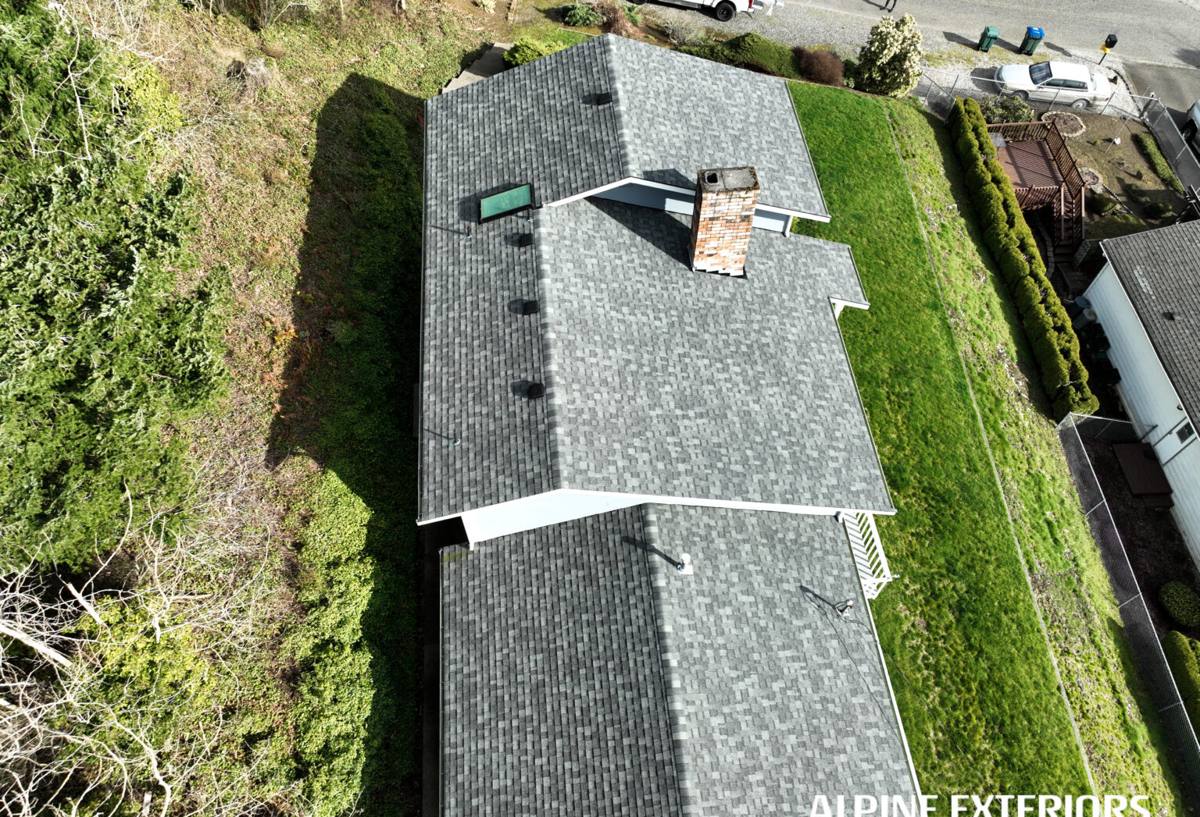
Why Standard Installation Practices Fall Short Here
A lot of roofing problems we get called out for in coastal Skagit County neighborhoods aren't shingle failures — they're installation shortcuts that a drier, calmer climate might have tolerated for a while longer. Near the water, those same shortcuts show up as leaks, granule loss, and premature aging much faster.
Driving Rain and Wind-Driven Water
Wind off the water doesn't just drop rain straight down — it pushes it sideways and up under shingle edges, especially at eaves, valleys, and roof-to-wall transitions. That means underlayment coverage, proper shingle overlap, and correctly sealed flashing matter more here than in sheltered inland areas. We pay particular attention to valleys and any place the roof meets a wall, chimney, or dormer, since those are the spots wind-driven rain finds first.
Salt Air and Metal Components
Every asphalt shingle roof depends on metal in places you don't see from the ground: drip edge, step flashing, valley metal, nail heads, and vent flashing. Salt air speeds up corrosion on lower-grade or poorly coated metal. We use flashing and fasteners rated for coastal exposure rather than whatever is cheapest, because replacing corroded flashing under an otherwise sound shingle roof is a much bigger job than doing it right the first time.
Moss, Algae, and Constant Moisture
Shade, moisture, and mild temperatures are exactly what moss and algae need to establish themselves, and Similk Beach has all three for a good part of the year. Moss doesn't just look bad — it holds moisture against the shingle surface, lifts shingle edges as it grows, and can work its way under tabs over time. Roof design choices like ventilation and shingle selection can slow this down significantly, which we'll get into below.
What a Correctly Installed Roof Includes
There's no shortcut version of this that holds up long-term near the water. A properly installed asphalt shingle roof for a Similk Beach home includes:
- Ice-and-water shield membrane at eaves, valleys, and roof penetrations — not just the code minimum, but extended coverage where wind-driven rain is most likely to reach
- Synthetic underlayment across the full roof deck, properly lapped and fastened
- Corrosion-resistant drip edge and flashing at every edge, valley, and wall transition
- Properly sealed and flashed penetrations for vents, chimneys, and skylights
- Correct nailing pattern and nail placement per manufacturer specs — not gun-speed guesswork
- Balanced intake and exhaust ventilation sized to the attic, not a single vent style dropped in without calculation
- Shingles rated for the wind exposure your specific lot faces
Skipping any one of these doesn't usually cause an immediate problem. It shows up two, five, or ten years later as a leak, premature granule loss, or a shortened shingle lifespan — right when you thought you were done thinking about your roof.
Choosing the Right Shingle for This Location
Not every asphalt shingle product is a good match for a home exposed to salt air and heavy moisture. We steer homeowners toward shingles with algae-resistant granules (usually copper- or zinc-infused) and a wind rating that fits an exposed or semi-exposed Similk Beach lot. Here's how the common tiers compare for this kind of location:
| Shingle Type | Typical Lifespan Here | Best For | Trade-Offs |
|---|---|---|---|
| 3-Tab Asphalt | Shorter end of the range in coastal exposure | Budget-conscious projects, secondary structures | Lower wind rating, less algae resistance unless specifically upgraded |
| Architectural (Laminate) | Mid-to-long range, holds up well with proper install | Most primary homes in this area | Higher upfront cost than 3-tab, but better wind and weather performance |
| Premium/Designer Architectural | Longest range of the asphalt options | Homes wanting a heavier, dimensional look plus maximum durability | Highest cost tier; benefit is durability and appearance, not dramatically different maintenance needs |
For most Similk Beach homes, we recommend architectural shingles with algae-resistant granules and a wind rating matched to the lot's exposure. It's the point where durability, appearance, and cost line up best for a coastal Anacortes property.
Ventilation: The Part of the Roof You Never See
Attic ventilation matters everywhere, but it matters more in a marine climate where humidity is already high outside the house. Poor ventilation traps moisture in the attic, which condensates on the underside of the roof deck, encourages mold and rot from the inside, and can shorten shingle life from below at the same time salt air and moss are working on it from above.
A balanced system pulls cool, dry air in low (typically through soffit vents) and pushes warm, moist air out high (through ridge or roof vents). We calculate intake and exhaust based on your attic's square footage rather than installing a standard package regardless of the space — undersized or mismatched ventilation is one of the more common issues we find when inspecting existing roofs in this area.
Moss and Mildew Maintenance Reality
Even a well-built roof in Similk Beach needs periodic attention because of the local moss and mildew pressure. This isn't unique to us — it's true of any home in a shaded, moist part of Skagit County — but it's worth planning for rather than being surprised by. A reasonable maintenance rhythm looks like:
- Visual roof check once or twice a year, especially after major storms
- Gentle moss removal before it establishes heavily — brushing and low-pressure treatment rather than aggressive pressure washing, which can strip granules
- Keeping overhanging branches trimmed back to reduce shade and debris buildup
- Clearing gutters and valleys regularly so water isn't sitting against shingle edges
- Zinc or copper strip installation near the ridge on roofs that don't already have algae-resistant shingles, to slow future moss growth
None of this replaces a correctly installed roof, but it extends the life of one significantly.
Repair or Replace: How We Help You Decide
Not every roofing problem in Similk Beach means a full replacement. We inspect first and give you a straight answer about what's actually needed.
| Factor | Leans Toward Repair | Leans Toward Replacement |
|---|---|---|
| Age of roof | Well within expected lifespan | At or past expected lifespan for the shingle type |
| Extent of damage | Isolated to one area (a valley, a vent boot, a section of flashing) | Widespread granule loss, multiple leak points, or curling shingles across the roof |
| Underlying deck condition | Deck is solid, dry, and sound | Soft spots, rot, or moisture damage found in the decking |
| Ventilation | Already balanced and adequate | Undersized or missing — often bundled into a replacement |
If a repair is the honest answer, that's what we recommend. If the roof has reached the point where repairs are just delaying the inevitable, we'll explain why and what a replacement would involve — no pressure either direction.
Our Process for Similk Beach Roofing Projects
Every roofing job we take on in this area follows the same basic sequence, adjusted for the specifics of your roof:
- Inspection. We look at the shingles, flashing, ventilation, and — where accessible — the attic and decking, so any estimate reflects the real condition of your roof, not just what's visible from the ground.
- Written estimate. You get a clear scope of work and pricing before anything starts, including what shingle and underlayment options we recommend and why.
- Tear-off and deck check. On replacement projects, we remove old roofing down to the deck and inspect it for rot or soft spots before anything new goes down.
- Underlayment, flashing, and ventilation. These go in first and correctly, since they're the parts you won't see again once shingles are on.
- Shingle installation. Installed to manufacturer specification for nailing pattern, exposure, and sealing — the details that determine wind performance and warranty validity.
- Cleanup and walkthrough. We clear job-site debris, including magnetic sweeps for stray nails, and walk the finished roof with you.
Why Local Experience in Similk Beach Matters
A roofing crew that mostly works dry, inland jobs isn't automatically prepared for what a Similk Beach roof needs. Knowing how far wind-driven rain travels under an eave in a coastal exposure, which flashing metals actually hold up against salt air over time, and how aggressively moss establishes itself on a shaded, moist roof in this part of Skagit County comes from doing this work here repeatedly — not from a general roofing background alone. We build every asphalt shingle roof in this area with those specific conditions in mind, from the underlayment up.
If you're dealing with an aging roof, visible moss, a leak, or you're just trying to plan ahead for your Similk Beach home, we're happy to take a look and give you a straightforward, no-pressure estimate. Use the form below to get started.